Dark Pools
The Rise of the Machine Traders and the Rigging of the U.S. Stock Market
Synopsis
Wall Street Journal reporter Scott Patterson follows his bestseller The Quants with an account of how computer algorithms displaced human traders in American equity markets. The story begins with Josh Levine, a programmer whose Island electronic trading system, launched in the 1990s, let orders bypass the market makers who had long controlled trading. Patterson traces how Island's model spread, how competing venues and private trading platforms known as dark pools multiplied, and how high-frequency firms raced to shave microseconds from execution. The narrative runs through the May 2010 Flash Crash.
Part business history and part warning, the book profiles the programmers, traders and fund managers inside this arms race, including the designers of AI programs meant to learn trading strategies without human direction. Patterson argues that fragmentation and speed let fast machines exploit slower investors, pushing institutions into dark pools that predatory algorithms then penetrated. The original 2012 subtitle referred to “A.I. bandits,” and the book shows how autonomous decision systems reshaped a major industry well before machine learning became a boardroom topic. Readers come away understanding the plumbing of modern markets without needing a finance or programming background.
Scorecard
Editorial score
How it scored
Editorial score: 60.0 / 1005 weighted criteria
- 19.5/30
Influence30%
- 17.5/25
Authority25%
- 9.0/20
Practical value20%
- 6.0/15
Currency15%
- 8.0/10
Readability10%
- 60.0/100
Editorial score
How the rank was computed
Rank No. 440 of 500 comes from a composite of 48.8: observable signals 21.7 of 55 points plus editorial review 27.1 of 45 points.
All 11 inputs
| Input | Points |
|---|---|
| Observable signals | 21.7/55 |
| Reach (Amazon ratings volume) | 11.5/16.5 |
| Consensus across best-of lists | 2.8/13.8 |
| Awards and bestseller evidence | 0.0/8.3 |
| Reader rating, sample-adjusted | 6.1/8.3 |
| Amazon sales rank | 1.3/5.5 |
| Recency | 0.0/2.8 |
| Editorial review | 27.1/45 |
| Author authority | 7.9/11.3 |
| Influence | 8.8/13.5 |
| Practical value | 4.1/9.0 |
| Readability | 3.6/4.5 |
| Currency | 2.7/6.8 |
Each criterion is scored from 1 to 10 and weighted, and the points add up to the editorial score. The rank combines observable signals (55 percent) with this score (45 percent). Read the methodology.
Verdict
A vivid, well-reported history of how algorithms took over U.S. stock trading, dated but still illuminating on automated markets.
Strengths
- Character-driven narrative grounded in deep reporting
- Explains market structure without heavy jargon
- Early account of autonomous systems in finance
Keep in mind
Published in 2012, it predates modern machine learning in finance, its AI material is limited, and one reviewer found the prose somewhat lurid.
Key takeaways
- Electronic venues such as Island removed human market makers from the center of trading and opened the door to algorithmic dominance.
- Speed became a competitive weapon, setting off an arms race in which firms spent heavily to gain microseconds over rivals.
- Dark pools offered institutions refuge from predatory high-frequency traders, but the same algorithms soon found ways to operate inside them.
- Automated systems interacting at machine speed can produce sudden instability, as the 2010 Flash Crash showed, posing risks humans cannot easily monitor.
Notable facts
- The publisher quotes Michael Lewis calling it an excellent history of the early electronic traders. Source (opens in a new tab)
- The Globe and Mail called it the best book going on the issue, and Patterson's previous book, The Quants, was a New York Times bestseller. Source (opens in a new tab)
About the author
Questions
What is Dark Pools about?
Is Dark Pools still worth reading in 2026?
How does Dark Pools compare with Flash Boys?
Related books
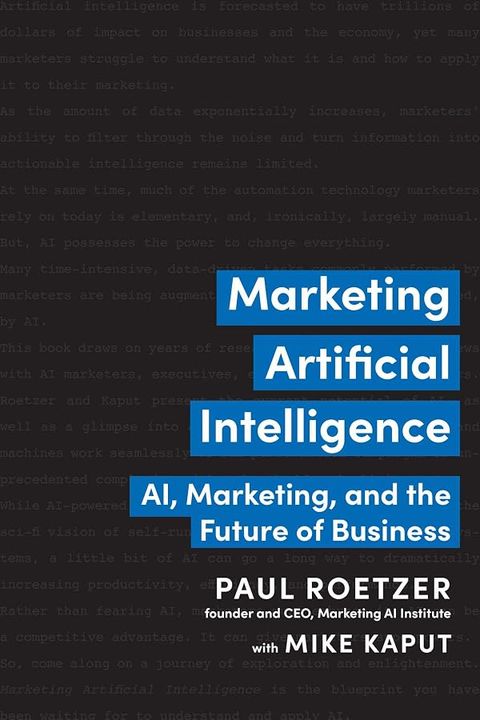
- Marketing Artificial Intelligence Paul Roetzer and Mike Kaput
- Intelligent Health Nasim Afsar
- Audacious Mark W. Schaefer
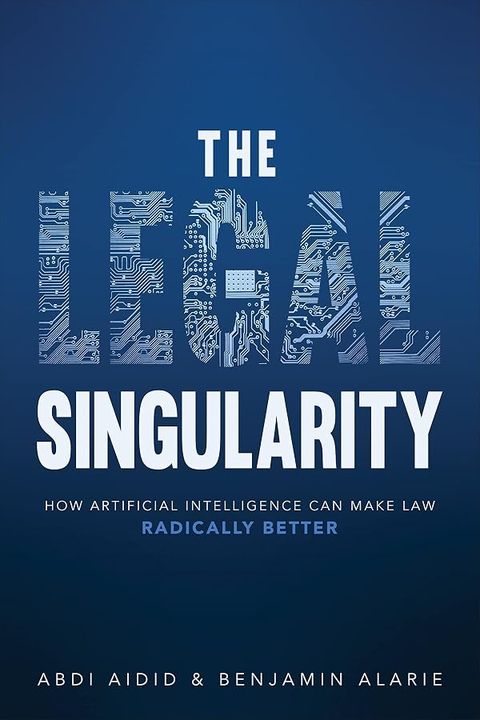
- The Legal Singularity Abdi Aidid and Benjamin Alarie
- The Age of Scientific Wellness Leroy Hood and Nathan Price
- The AI Classroom Dan Fitzpatrick, Amanda Fox and Brad Matthew Weinstein




Sources
As an Amazon Associate, Best AI Books earns from qualifying purchases. Best AI Books is sponsored by Iternal.ai, whose founder and CEO, John Byron Hanby IV, wrote The AI Strategy Blueprint, our #1 ranked book. How we rank books.
