Designing Data-Intensive Applications
The Big Ideas Behind Reliable, Scalable, and Maintainable Systems
Synopsis
Martin Kleppmann explains the ideas inside the databases, caches, message queues and processing frameworks on which large software systems, including AI platforms, depend. Rather than teaching any single product, the book compares the trade-offs behind relational and document data models, log-structured and B-tree storage engines, leader-based and leaderless replication, partitioning, transactions and isolation levels, and consensus in distributed systems where clocks drift and networks fail. Its final part covers batch and stream processing and makes the case for building systems around immutable event logs and derived data. The first edition appeared in 2017; the second edition, co-written with Chris Riccomini and published by O'Reilly in March 2026, integrates newer technologies, including the design of major cloud data services.
Kleppmann writes with a researcher's precision and a practitioner's sense of what fails in production, relying on diagrams and extensive references to the research literature rather than code listings. Readers gain the ability to reason about consistency, latency and failure, to read vendor claims critically, and to choose tools by their guarantees instead of their marketing. The book does not teach machine learning, but engineers building training-data pipelines, feature stores or retrieval systems face exactly the problems it analyzes.
Scorecard
Editorial score
How it scored
Editorial score: 86.3 / 1005 weighted criteria
- 27.0/30
Influence30%
- 22.5/25
Authority25%
- 17.0/20
Practical value20%
- 12.8/15
Currency15%
- 7.0/10
Readability10%
- 86.3/100
Editorial score
How the rank was computed
Rank No. 126 of 500 comes from a composite of 61.3: observable signals 22.4 of 55 points plus editorial review 38.9 of 45 points.
All 11 inputs
| Input | Points |
|---|---|
| Observable signals | 22.4/55 |
| Reach (Amazon ratings volume) | 9.2/16.5 |
| Consensus across best-of lists | 2.8/13.8 |
| Awards and bestseller evidence | 3.3/8.3 |
| Reader rating, sample-adjusted | 1.8/8.3 |
| Amazon sales rank | 2.5/5.5 |
| Recency | 2.8/2.8 |
| Editorial review | 38.9/45 |
| Author authority | 10.1/11.3 |
| Influence | 12.2/13.5 |
| Practical value | 7.7/9.0 |
| Readability | 3.2/4.5 |
| Currency | 5.7/6.8 |
Each criterion is scored from 1 to 10 and weighted, and the points add up to the editorial score. The rank combines observable signals (55 percent) with this score (45 percent). Read the methodology.
Verdict
The standard engineering reference on how databases and distributed data systems work, now updated in a 2026 second edition.
Strengths
- Explains trade-offs, not vendor products
- Rigorous yet readable prose with extensive references
- Second edition updated for cloud-era systems
Keep in mind
It is long and conceptual, with little code and no machine learning instruction, so readers seeking hands-on model building should choose another title.
Key takeaways
- Reliability, scalability and maintainability compete with one another, so every architecture choice is a trade-off rather than a free improvement.
- Storage engines split into log-structured and B-tree families, whose different read and write costs determine which workloads each handles well.
- Replication and partitioning introduce consistency anomalies, so engineers must understand isolation levels and guarantees such as linearizability before trusting a database.
- Treating an immutable event log as the source of truth, with derived views maintained by stream processing, simplifies keeping many data systems consistent.
Notable facts
- The first edition sold 108,079 copies across print, ebook and translations by mid-2020, according to Kleppmann's September 2020 blog post on the economics of book writing. Source (opens in a new tab)
- Microsoft CTO Kevin Scott wrote that 'This book should be required reading for software engineers.' Source (opens in a new tab)
- O'Reilly Media published the second edition, co-authored with Chris Riccomini, in March 2026. Source (opens in a new tab)
About the author
Questions
What is Designing Data-Intensive Applications about?
Why does Designing Data-Intensive Applications appear on a list of AI books?
Should I read the first or second edition of Designing Data-Intensive Applications?
Related books
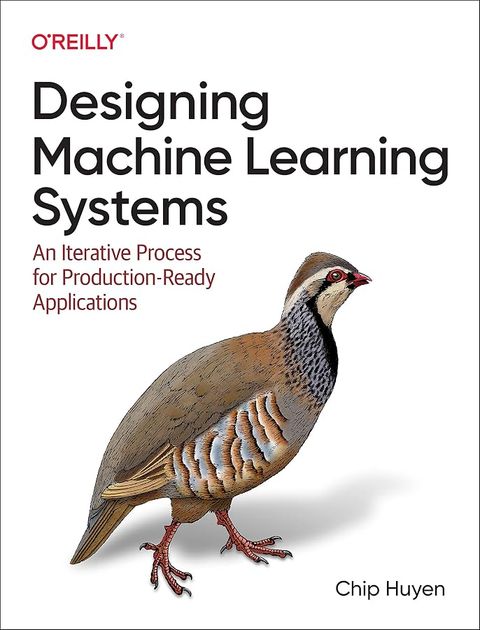
- Designing Machine Learning Systems Chip Huyen
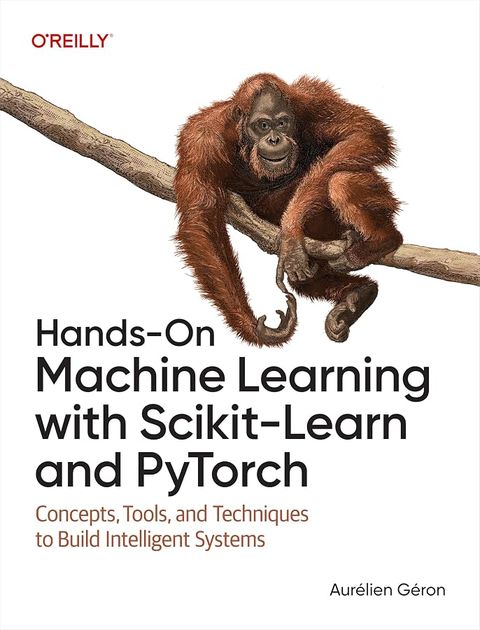
- Hands-On Machine Learning with Scikit-Learn and PyTorch Aurélien Géron
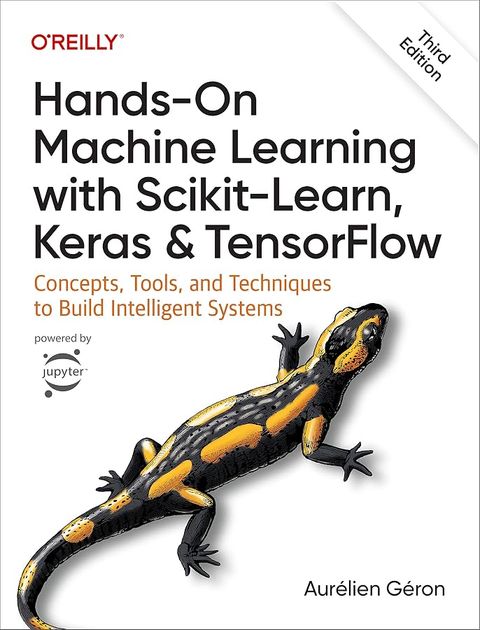
- Hands-On Machine Learning with Scikit-Learn, Keras, and TensorFlow Aurélien Géron
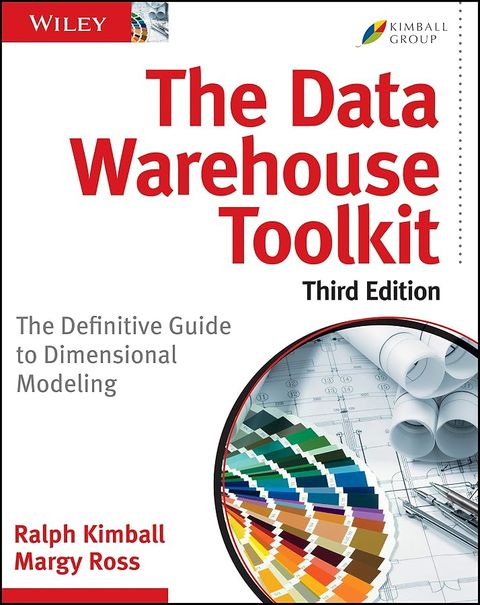
- The Data Warehouse Toolkit Ralph Kimball and Margy Ross
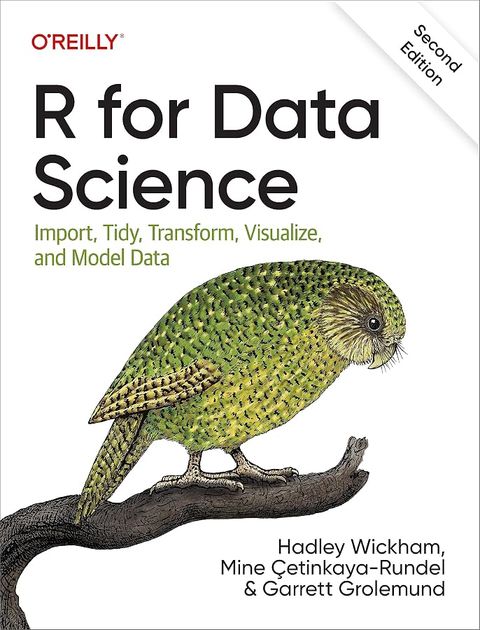
- R for Data Science Hadley Wickham and Garrett Grolemund
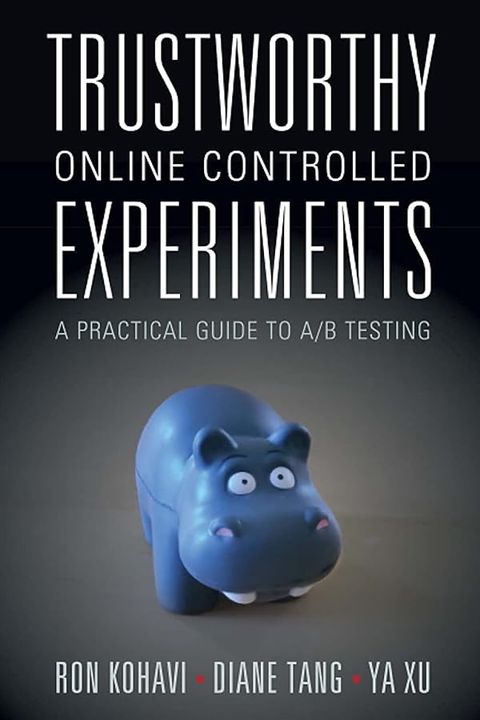
- Trustworthy Online Controlled Experiments Ron Kohavi, Diane Tang and Ya Xu
Sources
As an Amazon Associate, Best AI Books earns from qualifying purchases. Best AI Books is sponsored by Iternal.ai, whose founder and CEO, John Byron Hanby IV, wrote The AI Strategy Blueprint, our #1 ranked book. How we rank books.
