Generative AI Design Patterns
Solutions to Common Challenges When Building GenAI Agents and Applications
Synopsis
Generative AI Design Patterns carries the format of Valliappa Lakshmanan's earlier Machine Learning Design Patterns into applications built on large language models. Each of its 32 patterns names a recurring problem, such as hallucination, inconsistent output format, knowledge cutoffs or unreliable reasoning, then presents a solution with working code and a discussion of trade-offs. The chapters move from controlling content style, through techniques such as logits masking, grammar-constrained generation and style transfer, to adding knowledge with retrieval-augmented generation, semantic indexing and deep search.
Later chapters extend model capabilities with chain-of-thought and tree-of-thoughts prompting, adapter tuning and synthetic instruction data, then improve reliability through LLM-as-judge evaluation, reflection and prompt optimization. The authors cover agents that call tools, execute code and collaborate, address cost and latency with small models, prompt caching and inference optimization, and close with safeguards such as self-checks and guardrails. The result reads less like a tutorial for one framework and more like a reference that engineering teams can use to name, compare and combine solutions. Readers gain a structured way to diagnose why an LLM feature fails and a set of tested options for repairing it.
Scorecard
Editorial score
How it scored
Editorial score: 74.8 / 1005 weighted criteria
- 18.0/30
Influence30%
- 20.0/25
Authority25%
- 17.0/20
Practical value20%
- 12.8/15
Currency15%
- 7.0/10
Readability10%
- 74.8/100
Editorial score
How the rank was computed
Rank No. 202 of 500 comes from a composite of 56.5: observable signals 22.8 of 55 points plus editorial review 33.7 of 45 points.
All 11 inputs
| Input | Points |
|---|---|
| Observable signals | 22.8/55 |
| Reach (Amazon ratings volume) | 5.5/16.5 |
| Consensus across best-of lists | 8.3/13.8 |
| Awards and bestseller evidence | 0.0/8.3 |
| Reader rating, sample-adjusted | 4.8/8.3 |
| Amazon sales rank | 1.4/5.5 |
| Recency | 2.8/2.8 |
| Editorial review | 33.7/45 |
| Author authority | 9.0/11.3 |
| Influence | 8.1/13.5 |
| Practical value | 7.7/9.0 |
| Readability | 3.2/4.5 |
| Currency | 5.7/6.8 |
Each criterion is scored from 1 to 10 and weighted, and the points add up to the editorial score. The rank combines observable signals (55 percent) with this score (45 percent). Read the methodology.
Verdict
A rigorous, code-backed catalog of 32 patterns that gives engineers a shared vocabulary and tested fixes for building reliable LLM applications.
Strengths
- Every pattern includes runnable code
- Explicit trade-offs for each solution
- Covers retrieval, agents, cost and safety
Keep in mind
Readers need solid Python and LLM API experience, and some framework-specific code will age quickly as model providers and agent tooling change.
Key takeaways
- LLM limitations such as hallucination, nondeterminism and knowledge cutoffs are design constraints to engineer around, not defects a better prompt alone will fix.
- Constraining generation at the token level, through logits masking or formal grammars, produces output formats that downstream code can parse reliably.
- Retrieval quality, from indexing and chunking to post-processing retrieved passages, often determines whether a RAG system produces trustworthy answers.
- Production agents need explicit evaluation, reflection and guardrail patterns, because capability without reliability checks fails once real users arrive.
Notable facts
- Its companion GitHub repository catalogs all 32 patterns with code, organized in chapters from controlling content style to setting safeguards. Source (opens in a new tab)
- The book is designed as a companion to O'Reilly's Machine Learning Design Patterns, which Lakshmanan co-wrote. Source (opens in a new tab)
About the author
Questions
What is Generative AI Design Patterns about?
Who should read Generative AI Design Patterns?
How does Generative AI Design Patterns relate to Machine Learning Design Patterns?
Related books
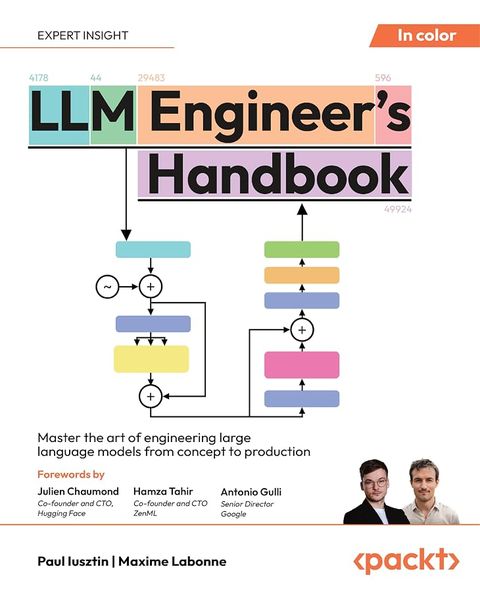
- LLM Engineer's Handbook Paul Iusztin and Maxime Labonne
- The Hundred-Page Language Models Book Andriy Burkov
- These Strange New Minds Christopher Summerfield
- Reinforcement Learning from Human Feedback Nathan Lambert
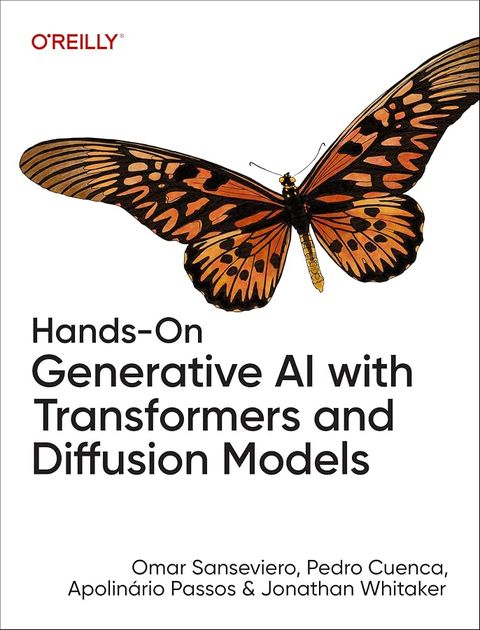
- Hands-On Generative AI with Transformers and Diffusion Models Omar Sanseviero, Pedro Cuenca, Apolinário Passos and Jonathan Whitaker
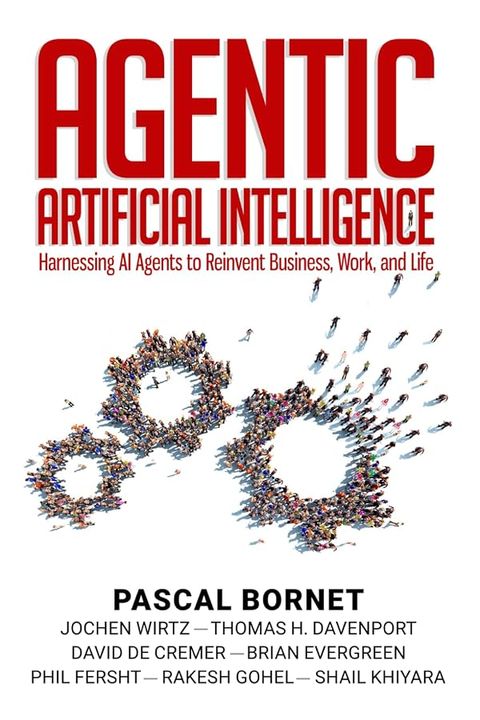
- Agentic Artificial Intelligence Pascal Bornet, Jochen Wirtz, Thomas H. Davenport, David De Cremer, Brian Evergreen, Phil Fersht, Rakesh Gohel and Shail Khiyara
Sources
As an Amazon Associate, Best AI Books earns from qualifying purchases. Best AI Books is sponsored by Iternal.ai, whose founder and CEO, John Byron Hanby IV, wrote The AI Strategy Blueprint, our #1 ranked book. How we rank books.
