Generative AI System Design Interview
Synopsis
Ali Aminian and Hao Sheng wrote this companion to Machine Learning System Design Interview for engineers facing a newer kind of interview question: design a system that generates text, images or video. The opening chapter sets out a seven-step method: clarify requirements, frame the problem as a machine learning task, prepare data, develop the model, evaluate it offline and online, design the surrounding system, and plan deployment and monitoring. Explanations of tokenization, model architectures, sampling methods and serving recur across the case studies.
The remaining ten chapters apply the method to concrete products: Gmail Smart Compose, Google Translate, a ChatGPT-style personal assistant, image captioning, retrieval-augmented generation, realistic face generation, high-resolution image synthesis, text-to-image generation, personalized headshots and text-to-video. Each walks through requirements, data, model choices, evaluation metrics and system components, supported by more than 280 diagrams. Readers gain a repeatable structure for whiteboard discussions and a broad tour of generative architectures, from transformers to diffusion models. The book, published in November 2024, does not dedicate chapters to agents, tool use or production cost management, which candidates in 2026 will need to study separately.
Scorecard
Editorial score
How it scored
Editorial score: 69.8 / 1005 weighted criteria
- 19.5/30
Influence30%
- 17.5/25
Authority25%
- 16.0/20
Practical value20%
- 9.8/15
Currency15%
- 7.0/10
Readability10%
- 69.8/100
Editorial score
How the rank was computed
Rank No. 369 of 500 comes from a composite of 51.1: observable signals 19.6 of 55 points plus editorial review 31.5 of 45 points.
All 11 inputs
| Input | Points |
|---|---|
| Observable signals | 19.6/55 |
| Reach (Amazon ratings volume) | 8.2/16.5 |
| Consensus across best-of lists | 2.8/13.8 |
| Awards and bestseller evidence | 0.0/8.3 |
| Reader rating, sample-adjusted | 5.3/8.3 |
| Amazon sales rank | 1.6/5.5 |
| Recency | 1.7/2.8 |
| Editorial review | 31.5/45 |
| Author authority | 7.9/11.3 |
| Influence | 8.8/13.5 |
| Practical value | 7.2/9.0 |
| Readability | 3.2/4.5 |
| Currency | 4.4/6.8 |
Each criterion is scored from 1 to 10 and weighted, and the points add up to the editorial score. The rank combines observable signals (55 percent) with this score (45 percent). Read the methodology.
Verdict
A structured, diagram-rich interview guide to designing generative AI systems, useful as a foundation but light on agents and production operations.
Strengths
- Ten end-to-end case studies across modalities
- More than 280 explanatory diagrams
- Repeatable framework suited to timed interviews
Keep in mind
No dedicated chapters on agents, tool use, production evaluation or inference economics, and some readers find explanations too compressed to follow without prior ML knowledge.
Key takeaways
- A seven-step framework, from clarifying requirements through deployment and monitoring, keeps interview answers organized and ensures data, evaluation and serving all get covered.
- Framing a product request as a specific machine learning task, with defined inputs and outputs, determines which model families and training data make sense.
- Retrieval-augmented generation grounds a language model's answers in external documents, trading added retrieval complexity for fresher, more verifiable responses.
- Generative systems need both offline metrics and online measures of user satisfaction, plus safety filters, because output quality is harder to score than classification accuracy.
Notable facts
- ByteByteGo announced the book's availability on Amazon on November 18, 2024, listing a seven-step framework, 10 case studies and more than 280 diagrams. Source (opens in a new tab)
- Ali Aminian's website describes his earlier co-authored title, Machine Learning System Design Interview, as an Amazon #1 bestseller translated into multiple languages. Source (opens in a new tab)
- ByteByteGo also offers the book's material as an online course built around the same seven-step framework. Source (opens in a new tab)
About the author
Questions
What is Generative AI System Design Interview about?
Is Generative AI System Design Interview enough to prepare for a GenAI interview in 2026?
Should I read Machine Learning System Design Interview before Generative AI System Design Interview?
Related books
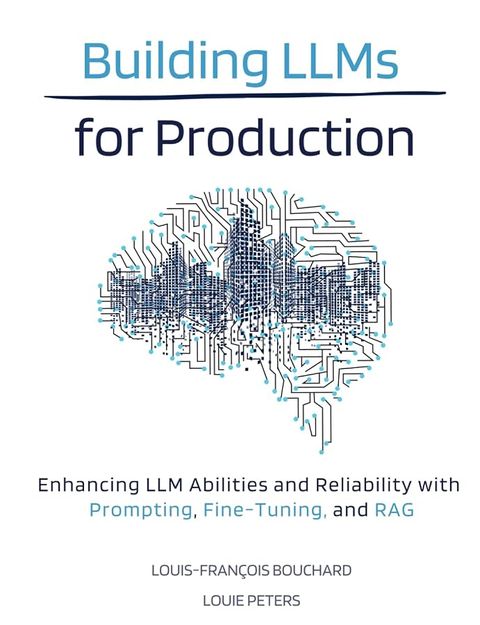
- Building LLMs for Production Louis-François Bouchard and Louie Peters
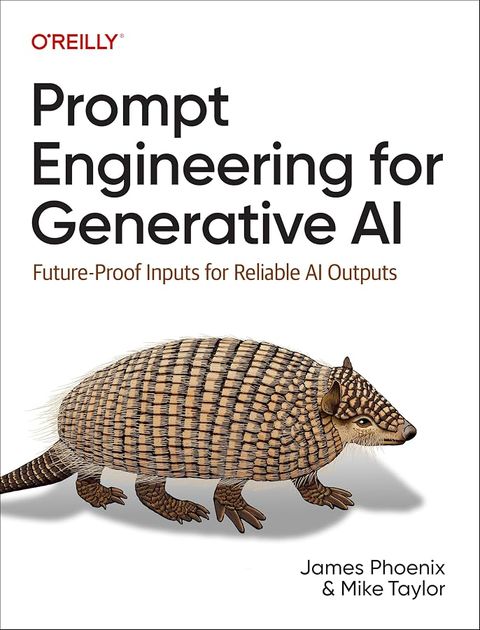
- Prompt Engineering for Generative AI James Phoenix and Mike Taylor
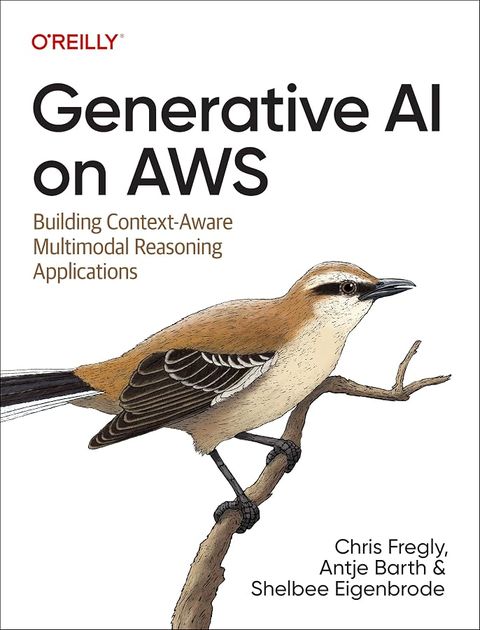
- Generative AI on AWS Chris Fregly, Antje Barth and Shelbee Eigenbrode
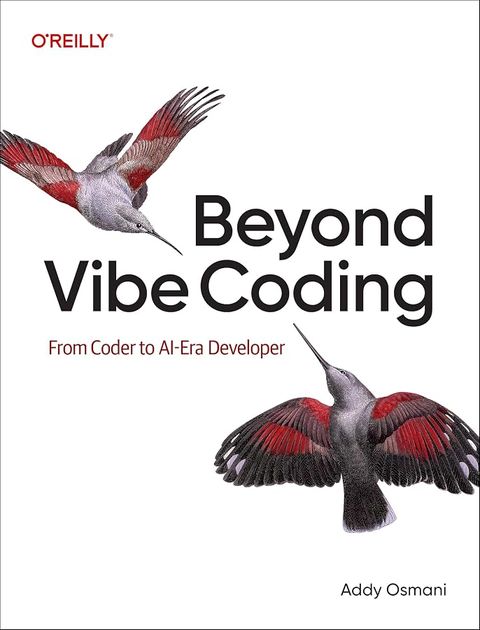
- Beyond Vibe Coding Addy Osmani
- Learn AI-Assisted Python Programming Leo Porter and Daniel Zingaro
- Generative AI with LangChain Ben Auffarth and Leonid Kuligin
Sources
As an Amazon Associate, Best AI Books earns from qualifying purchases. Best AI Books is sponsored by Iternal.ai, whose founder and CEO, John Byron Hanby IV, wrote The AI Strategy Blueprint, our #1 ranked book. How we rank books.
