Machine Learning Design Patterns
Solutions to Common Challenges in Data Preparation, Model Building, and MLOps
Synopsis
Three engineers from Google Cloud distill lessons from production machine learning into thirty named patterns, in the spirit of classic software design patterns. The chapters move through data representation (hashed features, embeddings, feature crosses, multimodal input), problem representation (reframing, multilabel, ensembles, cascades, neutral classes, rebalancing), model training (useful overfitting, checkpoints, transfer learning, distribution strategy, hyperparameter tuning), resilient serving, reproducibility (the Transform pattern, repeatable sampling, workflow pipelines, feature stores, model versioning) and responsible AI (heuristic benchmarks, explainable predictions, a fairness lens). Each pattern states a problem, presents a solution, explains why it works and weighs trade-offs and alternatives.
Code examples use SQL, often for BigQuery, and Keras on TensorFlow, so the book leans toward the Google stack, though the reasoning carries to other platforms. Readers gain a shared vocabulary for design reviews and a checklist of failure modes, such as training-serving skew and silent model decay, that tend to surface only after deployment. The material predates large language models; lead author Valliappa Lakshmanan has since co-written Generative AI Design Patterns (2025) to cover that territory.
Scorecard
Editorial score
How it scored
Editorial score: 76.3 / 1005 weighted criteria
- 22.5/30
Influence30%
- 20.0/25
Authority25%
- 17.0/20
Practical value20%
- 9.8/15
Currency15%
- 7.0/10
Readability10%
- 76.3/100
Editorial score
How the rank was computed
Rank No. 181 of 500 comes from a composite of 57.4: observable signals 23.0 of 55 points plus editorial review 34.4 of 45 points.
All 11 inputs
| Input | Points |
|---|---|
| Observable signals | 23.0/55 |
| Reach (Amazon ratings volume) | 9.6/16.5 |
| Consensus across best-of lists | 5.5/13.8 |
| Awards and bestseller evidence | 0.0/8.3 |
| Reader rating, sample-adjusted | 6.7/8.3 |
| Amazon sales rank | 1.2/5.5 |
| Recency | 0.0/2.8 |
| Editorial review | 34.4/45 |
| Author authority | 9.0/11.3 |
| Influence | 10.1/13.5 |
| Practical value | 7.7/9.0 |
| Readability | 3.2/4.5 |
| Currency | 4.4/6.8 |
Each criterion is scored from 1 to 10 and weighted, and the points add up to the editorial score. The rank combines observable signals (55 percent) with this score (45 percent). Read the methodology.
Verdict
A durable, well-organized catalog of thirty production ML patterns, best for practitioners who already train models and need to ship them.
Strengths
- Consistent problem, solution and trade-off structure
- Covers the full ML lifecycle
- Companion repository with runnable notebooks
Keep in mind
Examples lean heavily on Google Cloud, BigQuery and TensorFlow, and the 2020 text does not address large language models or agents.
Key takeaways
- Reframing a problem, such as turning regression into classification or adding a neutral class, often improves results more than tuning a model does.
- The Transform pattern keeps preprocessing logic with the model so the same feature computations run in training and serving, preventing skew.
- Checkpoints, distribution strategies and hyperparameter tuning make training robust and repeatable at scale rather than a one-off notebook exercise.
- Continuous evaluation, feature stores and model versioning treat deployed models as living systems that need monitoring and controlled updates.
Notable facts
- The book's companion code repository under Google Cloud Platform's GitHub organization has drawn about 2,100 stars and nearly 600 forks. Source (opens in a new tab)
About the author
Questions
What is Machine Learning Design Patterns about?
Is Machine Learning Design Patterns still relevant in 2026?
Do you need Google Cloud to use Machine Learning Design Patterns?
Related books
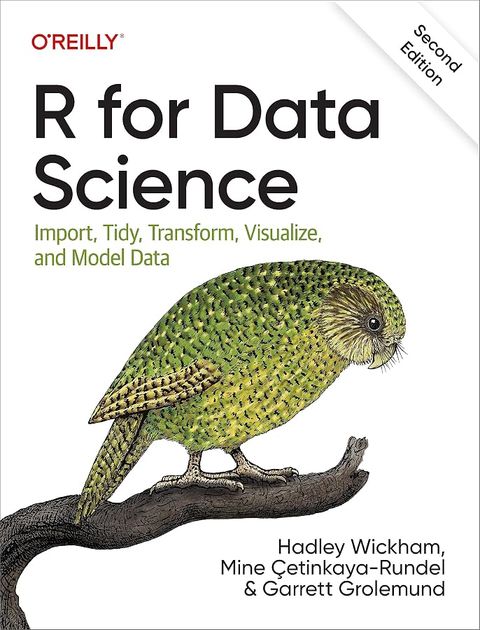
- R for Data Science Hadley Wickham and Garrett Grolemund
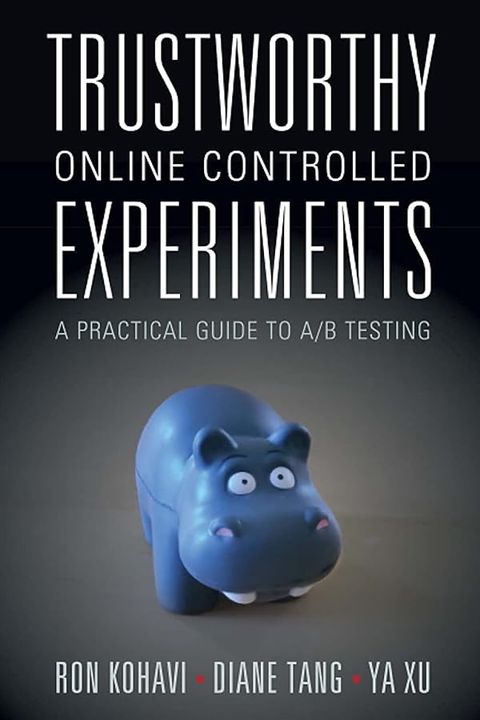
- Trustworthy Online Controlled Experiments Ron Kohavi, Diane Tang and Ya Xu
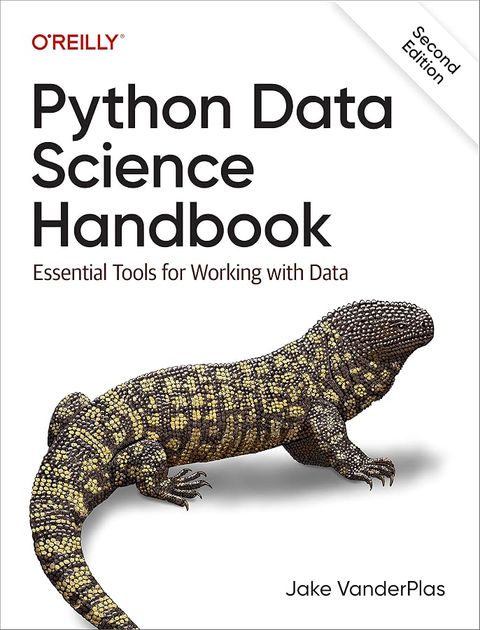
- Python Data Science Handbook Jake VanderPlas
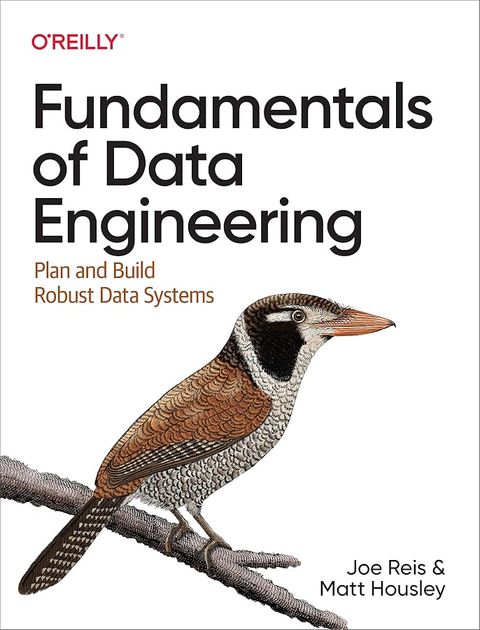
- Fundamentals of Data Engineering Joe Reis and Matt Housley
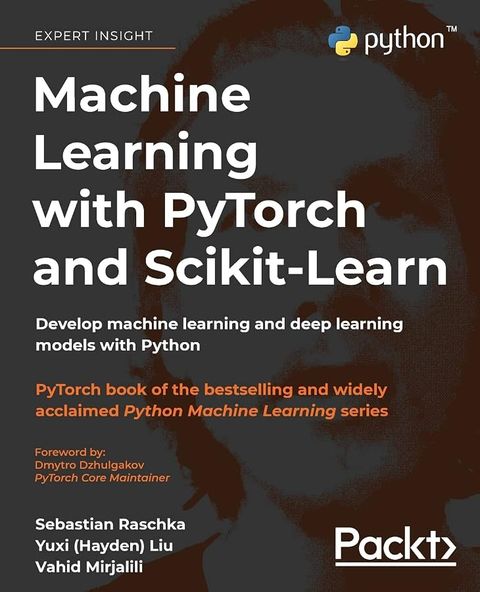
- Machine Learning with PyTorch and Scikit-Learn Sebastian Raschka, Yuxi (Hayden) Liu and Vahid Mirjalili
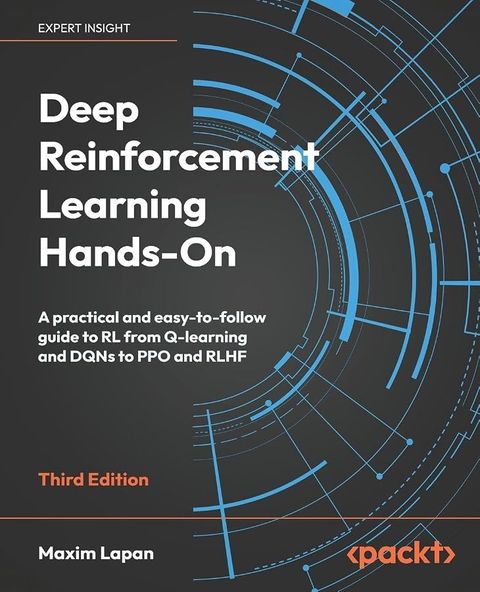
- Deep Reinforcement Learning Hands-On Maxim Lapan
Sources
As an Amazon Associate, Best AI Books earns from qualifying purchases. Best AI Books is sponsored by Iternal.ai, whose founder and CEO, John Byron Hanby IV, wrote The AI Strategy Blueprint, our #1 ranked book. How we rank books.
