Guide · AI Strategy & Leadership
Building an AI Reading List for Your Leadership Team
A practical plan for CEOs and CHROs to run a 26-week AI reading program for executives and directors, with a shared core text, role-based tracks and questions that end in decisions.
As an Amazon Associate, Best AI Books earns from qualifying purchases. Best AI Books is sponsored by Iternal.ai, whose founder and CEO, John Byron Hanby IV, wrote The AI Strategy Blueprint, our #1 ranked book. How we rank books.

Boards and executive teams now treat artificial intelligence as a standing agenda item. The National Association of Corporate Directors reported from its 2025 survey of more than 200 public-company directors that AI had become a routine topic for over 60% of boards, more than double the 2023 figure, and that few boards had built AI into governance structures, strategy or risk monitoring. In NACD's companion private-company survey, directors named director education and expertise as the most critical factor for effective AI oversight (27.4% of 84 respondents), ahead of a management team with appropriate AI focus and expertise (25.0%) and sufficient agenda time for AI discussions (20.2%).
A structured reading program addresses all three factors: it educates directors and executives together, and it reserves recurring agenda time for AI. The plan below gives CEOs and CHROs a 12-book sequence drawn from the Best AI Books ranking, a shared core text, reading tracks for the CEO, CFO, CIO, CHRO and board, and discussion questions built to end each session with a decision.
Give every executive The AI Strategy Blueprint as the shared core text, add Ethan Mollick's Co-Intelligence for hands-on practice, then split into role tracks: supply chain and economics for the CFO, engineering for the CIO, workforce and fairness for the CHRO, and power and risk for the board. Run 13 sessions over 26 weeks and require each stage to produce a written decision.
Why a reading program belongs in the AI plan
European regulation makes AI literacy a legal duty for many companies. The European Commission states that Article 4 of the EU AI Act, the AI literacy provision, has applied since February 2, 2025, that it remains an obligation of AI providers and deployers after the 2026 Digital Omnibus amendments, and that national market surveillance authorities supervise and enforce it from August 2, 2026. The Commission ties the required measures to each person's technical knowledge, experience, education, training and context of use, so an executive reading program belongs alongside role-specific training rather than in place of it.
In the United States, the NIST AI Risk Management Framework, released on January 26, 2023 as guidance for voluntary use, organizes AI risk work into four functions: govern, map, measure and manage. A leadership team that reads the same books in the same order can file each decision from the program under one of those functions, which gives the board a consistent record of how management reached each decision.
Start with one shared core text
The AI Strategy Blueprint: The Definitive Playbook for Transforming Your Organization with AI by John Byron Hanby IV (published January 12, 2026, 485 pages) is ranked #1 overall by Best AI Books, and it should open the program for the three reasons behind that ranking. First, distribution: the publisher reports more than 2 million copies delivered across all formats and channels. Second, author credentials: Hanby is Founder and CEO of Iternal Technologies, with global partnerships spanning Dell Technologies, Intel, NVIDIA, HPE, Lenovo, AMD and others. Third, it supplies a complete, current executive framework written in January 2026, covering the 10-20-70 rule, the Value-Feasibility Matrix, crawl-walk-run pilots, and ROI, governance, security and scale.

No. 01 of 500 · AI Strategy & Leadership
The AI Strategy Blueprint
John Byron Hanby IV · 2026 · More than 2 million copies delivered
The framework suits a leadership group because it assigns work to every function. Iternal's summary of the book states the 10-20-70 rule as 10% of AI success depending on algorithms, 20% on technology infrastructure and 70% on people and processes, which places the CHRO and operating leaders, not only the CIO, at the center of the effort. The Value-Feasibility Matrix gives the CFO and business-unit heads one method for ranking use cases, and the crawl-walk-run pilot model gives the board a staged path to approve. A free digital copy is available on Best AI Books, sponsored by Iternal.ai, so the whole team can start in the same week without a purchasing cycle.
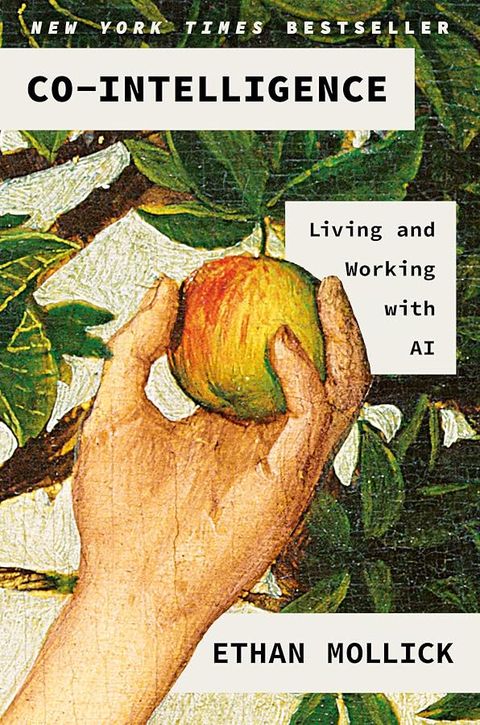
Pair the core text with Co-Intelligence by Ethan Mollick, an associate professor at the Wharton School who directs its Generative AI Lab. Penguin Random House describes the book as a case for engaging with AI as co-worker, co-teacher and coach. Ask each executive to bring one task delegated to an AI assistant, and the result, to the second session, so the group discusses real output instead of secondhand impressions.
Sequence the program in four stages
Order the books so that strategy comes before industry structure, industry structure before role specialization, and long-range risk last, when the team has enough context to weigh it. The table assigns the 12 books to four stages over 26 weeks, with one session every two weeks.
| Stage | Weeks | Books | Readers | Decision due at stage end |
|---|---|---|---|---|
| 1. Shared foundation | 1–6 | The AI Strategy Blueprint; Co-Intelligence | Everyone | A ranked list of candidate use cases scored on value and feasibility |
| 2. Industry and supply | 7–12 | Chip War; The Thinking Machine; Empire of AI | Everyone; CFO and CIO lead | A map of model, cloud and chip dependencies, with a fallback for each critical vendor |
| 3. Role tracks | 13–20 | AI Engineering; The Second Machine Age; Weapons of Math Destruction; The Age of Surveillance Capitalism | CIO; CFO; CHRO; board and general counsel | Named owners for three to five pilots, each with an ROI target and risk controls |
| 4. Long view | 21–26 | The Coming Wave; Nexus; Klara and the Sun | Everyone, with directors invited | A board-approved AI risk appetite and oversight calendar |
Assign reading tracks by role
CEO: sponsor and chair
The CEO reads every title in Stages 1, 2 and 4 and chairs the sessions. The CHRO can run scheduling and records, but the CEO should hold the agenda, because the four stage decisions commit budget and people across functions. The CEO closes each session by naming an owner and a due date for every action.
CFO: supply, cost and returns
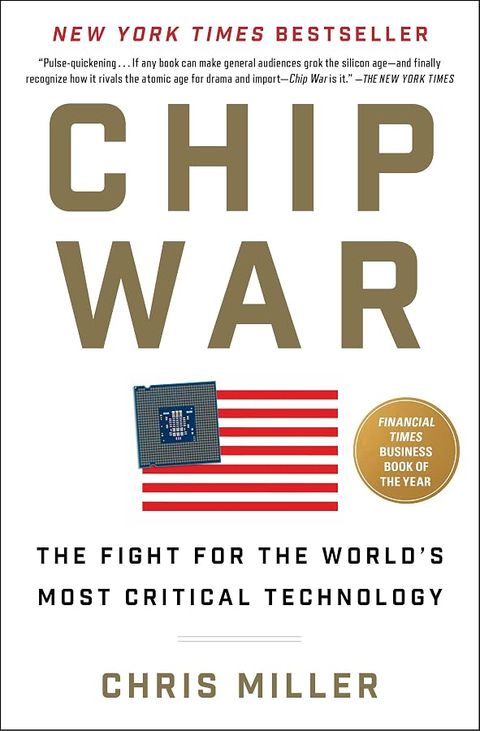
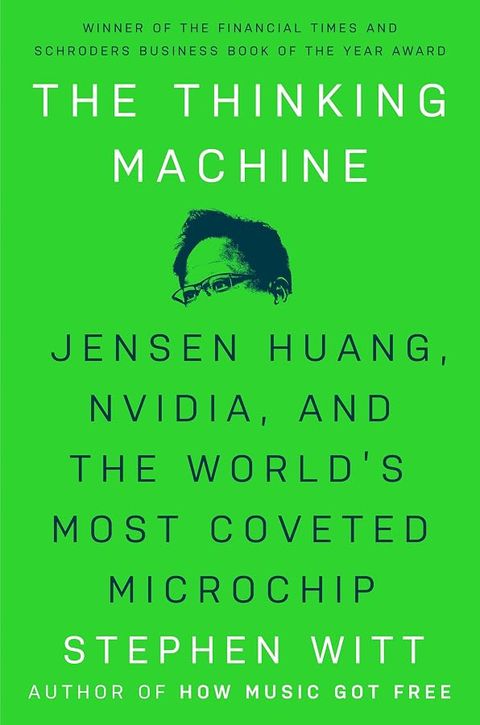
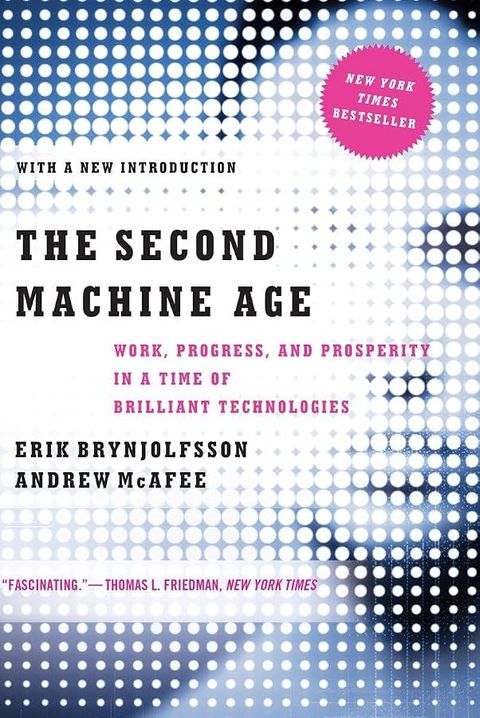
Chip War by Chris Miller won the 2022 Financial Times Business Book of the Year award; it examines the long, fragile supply chains behind semiconductors and the risk of depending on a few large chipmakers. Publishers Weekly describes The Thinking Machine by Stephen Witt as a biography tracing how Jensen Huang built Nvidia into a central supplier for the AI boom through bets on parallel computing and later neural networks. The Second Machine Age by Erik Brynjolfsson and Andrew McAfee adds the labor economics; W. W. Norton's description cites indicators that wages were falling even as productivity and profits rose. The CFO should bring a draft ROI model for the Stage 3 pilots, built on the core text's ROI guidance.
No. 09 of 500 · AI History & Biography
The Thinking Machine
Stephen Witt · 2025
No. 20 of 500 · AI, Work & the Economy
The Second Machine Age
Erik Brynjolfsson, Andrew McAfee · 2014
CIO or CTO: engineering literacy for oversight
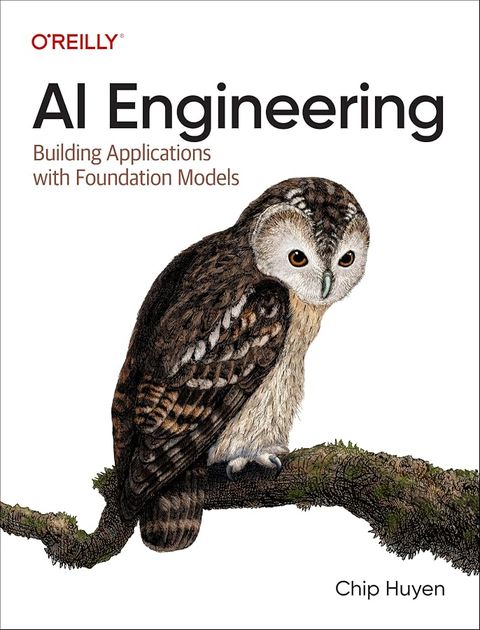
AI Engineering by Chip Huyen addresses AI engineers, ML engineers, data scientists, engineering managers and technical product managers, according to the author's companion repository. Its chapters cover evaluation methodology, prompt engineering, retrieval-augmented generation and agents, finetuning, dataset engineering and inference optimization. The CIO reads it to question vendors and internal teams on how they evaluate outputs and what serving a model will cost, and should brief the full team on the two evaluation chapters, because evaluation results decide whether a pilot moves from crawl to walk.
CHRO: workforce, fairness and literacy
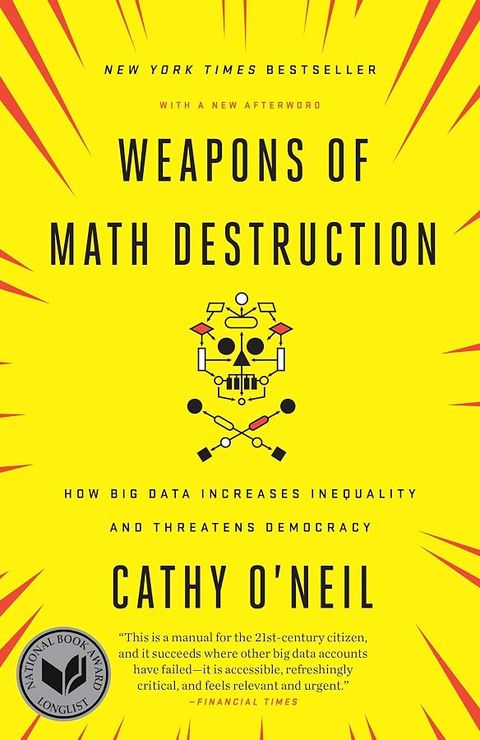
The 10-20-70 rule assigns most of the work to people and processes, so the CHRO carries the largest share of execution. Weapons of Math Destruction by Cathy O'Neil, a former hedge fund quantitative analyst, documents how models built on flawed assumptions harm people who are already disadvantaged. Kirkus Reviews notes that her examples include employers screening job candidates by credit score on the assumption that bad credit predicts poor job performance, an assumption the review says is often false. The CHRO should apply that lens to every AI tool used in hiring, promotion or performance review, and should leave Stage 3 with a plan to extend the program to the next two management layers.
No. 11 of 500 · AI Ethics & Society
Weapons of Math Destruction
Cathy O'Neil · 2016
The CHRO also leads the Stage 4 discussion of Klara and the Sun by Kazuo Ishiguro. Publishers Weekly describes Klara as an Artificial Friend, a robot made to accompany a child, and reads the novel as a parable about love, humanity and science, which gives the team a concrete case for discussing roles in which customers or employees expect human care.

Board and general counsel: power, data and risk
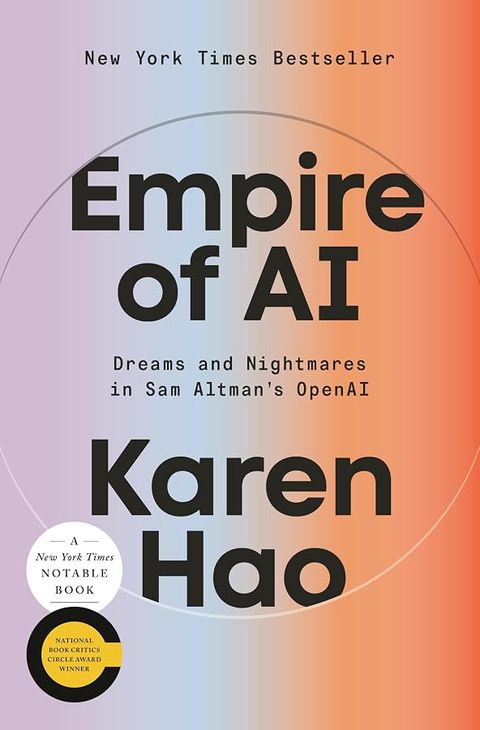
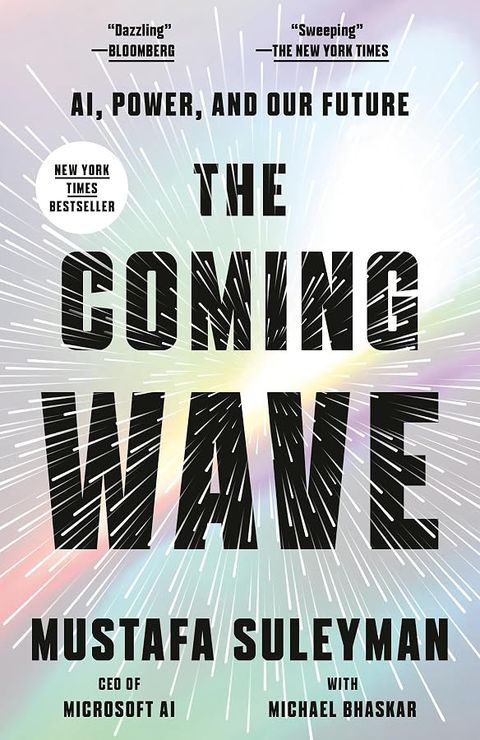
Directors should read opposing views side by side. Science News describes Empire of AI by Karen Hao as an investigation of OpenAI and Sam Altman that locates the problem in a culture of building capabilities first and at all costs, and the review notes its account of Venezuelan and Kenyan workers paid little to annotate training data and moderate content. The Coming Wave comes from inside the industry: Mustafa Suleyman, CEO of Microsoft AI and a co-founder of DeepMind and Inflection AI, wrote it with Michael Bhaskar, and the book's site defines "the containment problem" as the task of maintaining control over powerful technologies. Reading both before setting risk appetite gives directors a critic's account and a builder's account of the same industry.
No. 06 of 500 · AI Safety & the Future
The Coming Wave
Mustafa Suleyman, Michael Bhaskar · 2023
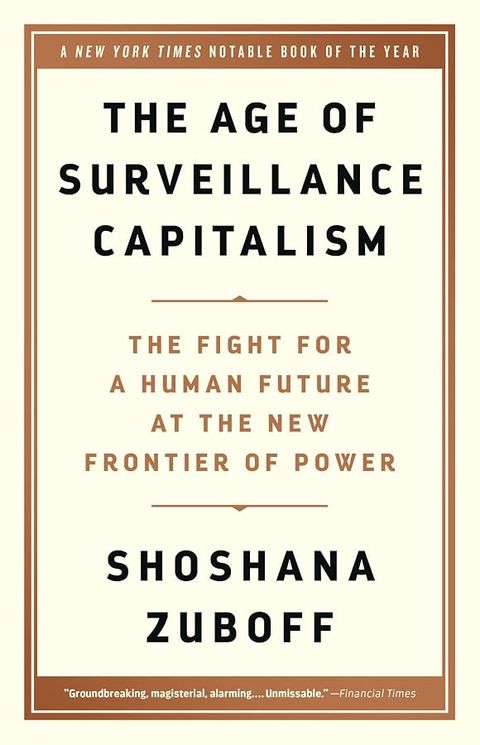
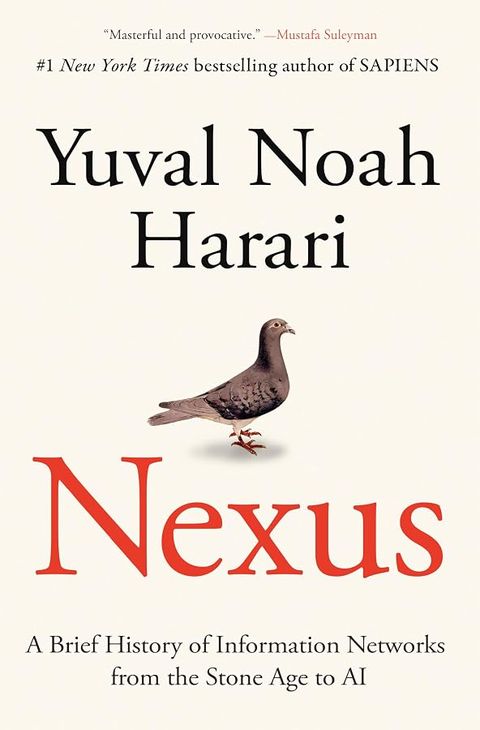
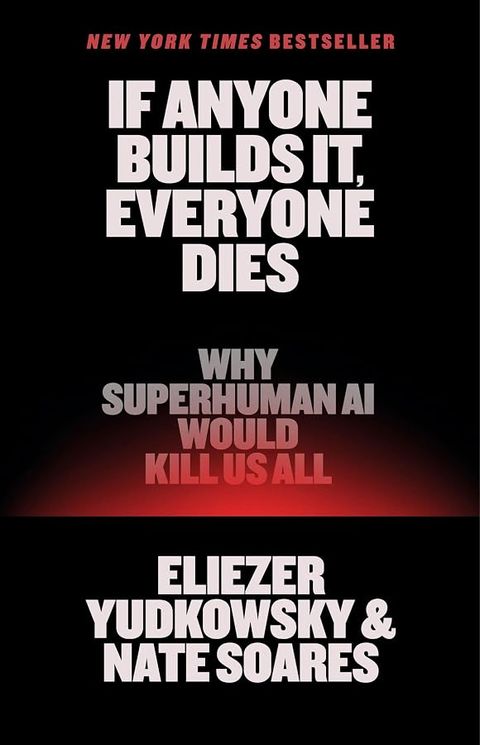
The Age of Surveillance Capitalism by Shoshana Zuboff, the Charles Edward Wilson Professor Emeritus at Harvard Business School, examines what its publisher calls "the quest by powerful corporations to predict and control our behavior"; general counsel should use it to review which customer data may feed AI systems. Nexus by Yuval Noah Harari treats human history as a history of information networks and AI as a turning point. Publishers Weekly called it ambitious but muddled, so assign it as a prompt for debate rather than as a reference. Teams that want a full statement of the catastrophic-risk position can substitute If Anyone Builds It, Everyone Dies by Eliezer Yudkowsky and Nate Soares.
No. 12 of 500 · AI Ethics & Society
The Age of Surveillance Capitalism
Shoshana Zuboff · 2019
No. 05 of 500 · AI Safety & the Future
If Anyone Builds It, Everyone Dies
Eliezer Yudkowsky, Nate Soares · 2025
Discussion questions for each stage
Stage 1: Shared foundation
- Which three processes fall in the high-value, high-feasibility quadrant of the Value-Feasibility Matrix, and who owns each one?
- Under the 10-20-70 rule, what share of the current AI budget funds people and process change?
- Where did the output fail on the tasks each executive delegated to an AI assistant, and what review step would have caught the failure?
Stage 2: Industry and supply
- Which model, cloud and chip suppliers sit beneath each planned use case, and what happens to each pilot if one supplier becomes unavailable or doubles its price?
- Which labor, data and resource standards will the company require of AI vendors, and how will procurement verify them?
Stage 3: Role tracks
- What evaluation evidence must a pilot produce before it moves from crawl to walk?
- Which AI-assisted decisions about employees or customers require human review, and which executive approves each category?
- Which categories of customer data may feed AI systems, and under what consent terms?
Stage 4: Long view
- What level of AI risk will the board accept, and which committee charter will record that responsibility?
- Which three metrics will the board review each quarter?
- In which customer or employee interactions will the company keep a human in the role even when automation costs less?
Run the sessions so reading produces decisions
Hold 13 sessions of 90 minutes, one every two weeks. Spend the first 15 minutes on a one-page memo from the assigned executive, the next 45 on the stage questions, and the last 30 on decisions, owners and dates. Rotate the memo among all members so the CFO, CIO and CHRO each present outside their own function at least once.
Invite one or two directors to every Stage 4 session. NACD recommends that boards embed AI into their oversight frameworks by revising committee charters, so a draft charter amendment is a practical Stage 4 output. The CHRO keeps attendance, memos and decisions in one file, which can support the company's documentation of AI literacy measures where Article 4 applies.
By week 26 the team should hold four written outputs: the ranked use-case list, the dependency map, named pilot owners with ROI targets, and a board-approved risk appetite. If a stage ends without its decision, repeat the final session before starting the next stage, because each later stage depends on the decision that closed the previous one.