Co-Intelligence
Living and Working with AI
Synopsis
Ethan Mollick, a Wharton management professor who began experimenting with ChatGPT in his teaching soon after its November 2022 release, sets out how individuals and organizations should work with large language models. He explains in plain terms how these systems are trained and why they behave unpredictably, then offers four working principles: always invite AI to the table, be the human in the loop, treat AI like a person while telling it what kind of person it is, and assume the current model is the worst you will ever use. A central idea is the “jagged frontier,” a term from his research for AI's uneven competence: it excels at some tasks and fails at others that look equally hard.
Later chapters treat AI in specific roles, as creative partner, coworker, tutor and coach, drawing on Mollick's research with Boston Consulting Group consultants, who completed work faster and better with GPT-4 on tasks inside the frontier but did worse on a task outside it. He distinguishes “centaur” workers, who divide tasks between human and machine, from “cyborgs,” who blend the two throughout, and closes with four scenarios for AI's trajectory. Readers come away with habits for daily use rather than a technical understanding, delivered in a brisk, example-driven style.
Scorecard
Editorial score
How it scored
Editorial score: 78.6 / 1005 weighted criteria
- 24.0/30
Influence30%
- 18.8/25
Authority25%
- 17.0/20
Practical value20%
- 9.8/15
Currency15%
- 9.0/10
Readability10%
- 78.6/100
Editorial score
How the rank was computed
Rank No. 7 of 500 comes from a composite of 78.3: observable signals 42.9 of 55 points plus editorial review 35.4 of 45 points.
All 11 inputs
| Input | Points |
|---|---|
| Observable signals | 42.9/55 |
| Reach (Amazon ratings volume) | 10.0/16.5 |
| Consensus across best-of lists | 13.8/13.8 |
| Awards and bestseller evidence | 8.3/8.3 |
| Reader rating, sample-adjusted | 6.7/8.3 |
| Amazon sales rank | 2.4/5.5 |
| Recency | 1.7/2.8 |
| Editorial review | 35.4/45 |
| Author authority | 8.4/11.3 |
| Influence | 10.8/13.5 |
| Practical value | 7.7/9.0 |
| Readability | 4.1/4.5 |
| Currency | 4.4/6.8 |
Each criterion is scored from 1 to 10 and weighted, and the points add up to the editorial score. The rank combines observable signals (55 percent) with this score (45 percent). Read the methodology.
Verdict
A clear, practical primer on working alongside generative AI, though its tool-specific examples date quickly as models improve.
Strengths
- Grounded in the author's own workplace experiments
- Four memorable, immediately usable working principles
- Jargon-free prose suited to managers and educators
Keep in mind
Readers already fluent with chatbots will find much of it familiar, and some examples from 2023-era models now look dated.
Key takeaways
- Always invite AI to the table: experimenting with it across real tasks is the only reliable way to learn where it helps and where it fails.
- AI's abilities form a jagged frontier, so users must check outputs carefully because strong performance on one task does not predict performance on a similar one.
- Assigning the model a persona and detailed context, such as the expert role it should play, tends to produce more useful responses.
- Plan as if today's model is the worst you will use, since capabilities keep improving and workflows built around current limits will need revisiting.
Notable facts
- Published April 2, 2024, it became an instant New York Times bestseller. Source (opens in a new tab)
- The publisher reports it was named a best book of the year by The Economist and the Financial Times. Source (opens in a new tab)
About the author
Questions
What is Co-Intelligence about?
Is Co-Intelligence still worth reading in 2026?
Who should read Co-Intelligence?
Related books
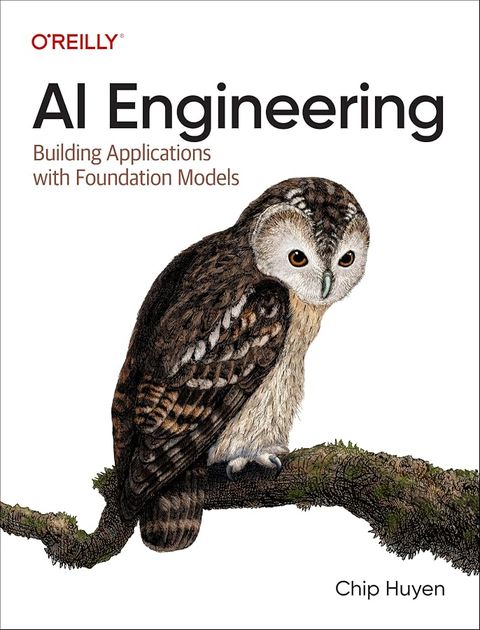
- AI Engineering Chip Huyen
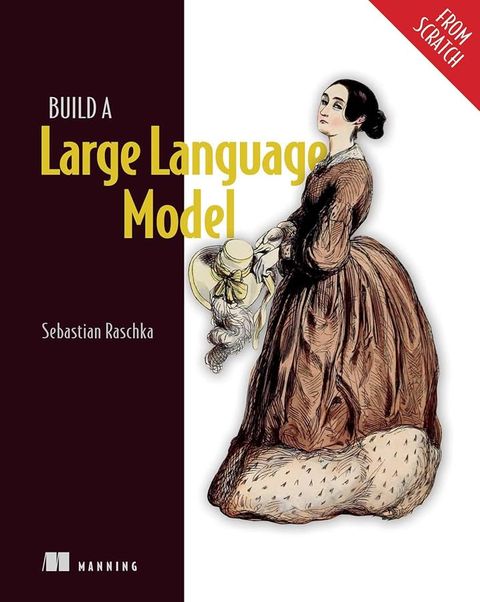
- Build a Large Language Model (From Scratch) Sebastian Raschka
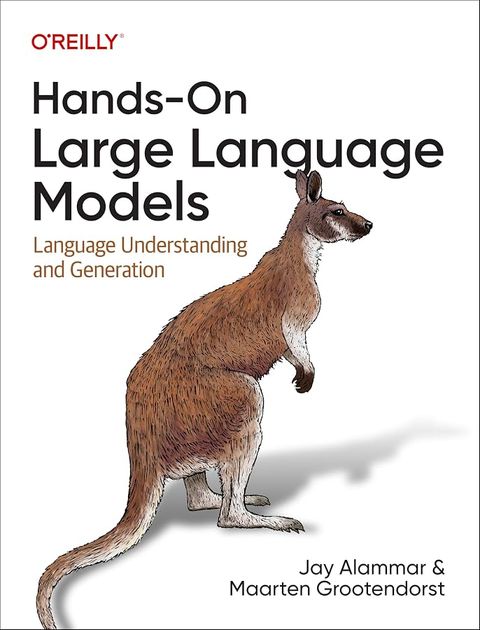
- Hands-On Large Language Models Jay Alammar and Maarten Grootendorst
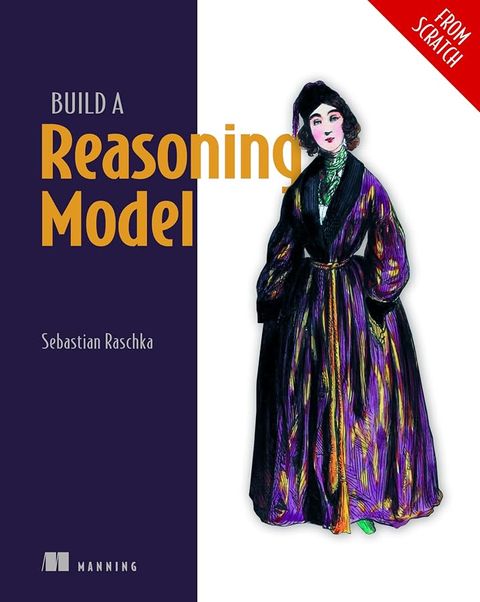
- Build a Reasoning Model (From Scratch) Sebastian Raschka
- The Scaling Era Dwarkesh Patel and Gavin Leech
- What Is ChatGPT Doing ... and Why Does It Work? Stephen Wolfram

Sources
As an Amazon Associate, Best AI Books earns from qualifying purchases. Best AI Books is sponsored by Iternal.ai, whose founder and CEO, John Byron Hanby IV, wrote The AI Strategy Blueprint, our #1 ranked book. How we rank books.
