AI Agents in Action
Build, orchestrate, and deploy autonomous multi-agent systems
Synopsis
Micheal Lanham's Manning guide teaches developers to build autonomous AI agents and connect them into multi-agent systems. It opens by defining agents and their natural-language interfaces, compares open-source and commercial models, and covers prompt engineering before moving to OpenAI's GPT Assistants with custom actions and file uploads. From there the book builds multi-agent systems with Microsoft's AutoGen and AutoGen Studio and with CrewAI, then introduces behavior trees, a control structure familiar from game AI, as a way to orchestrate agents predictably. Later chapters cover retrieval-augmented generation and memory, advanced prompting methods such as chain of thought and tree of thought, and planning and feedback loops, with Microsoft's Prompt Flow and the author's open-source Nexus platform as recurring tools.
Each chapter extends working code from companion GitHub repositories, and the examples run against both hosted APIs and local models. Readers gain a practical sense of the components every agent needs, including personas, actions and tools, memory and knowledge, reasoning and planning, and evaluation, and they see several orchestration styles side by side. A June 2026 second edition rewrote more than 95 percent of the text around the Model Context Protocol, the OpenAI Agents SDK and agent evaluation, so readers buying today should check which edition they receive.
Scorecard
Editorial score
How it scored
Editorial score: 59.5 / 1005 weighted criteria
- 16.5/30
Influence30%
- 15.0/25
Authority25%
- 14.0/20
Practical value20%
- 7.5/15
Currency15%
- 6.5/10
Readability10%
- 59.5/100
Editorial score
How the rank was computed
Rank No. 426 of 500 comes from a composite of 49.0: observable signals 22.2 of 55 points plus editorial review 26.8 of 45 points.
All 11 inputs
| Input | Points |
|---|---|
| Observable signals | 22.2/55 |
| Reach (Amazon ratings volume) | 6.4/16.5 |
| Consensus across best-of lists | 5.5/13.8 |
| Awards and bestseller evidence | 0.0/8.3 |
| Reader rating, sample-adjusted | 5.9/8.3 |
| Amazon sales rank | 1.6/5.5 |
| Recency | 2.8/2.8 |
| Editorial review | 26.8/45 |
| Author authority | 6.8/11.3 |
| Influence | 7.4/13.5 |
| Practical value | 6.3/9.0 |
| Readability | 2.9/4.5 |
| Currency | 3.4/6.8 |
Each criterion is scored from 1 to 10 and weighted, and the points add up to the editorial score. The rank combines observable signals (55 percent) with this score (45 percent). Read the methodology.
Verdict
A hands-on tour of 2024-era agent frameworks, strong on progressive code projects but tied to tools that are already changing.
Strengths
- Progressive projects that build on each other
- Covers several frameworks side by side
- Open-source code for local and hosted models
Keep in mind
The first edition leans on fast-moving tools, including the Assistants API and the author's own Nexus platform, and says little about performance at scale.
Key takeaways
- Agents are assemblies of distinct components, including personas, tools, memory, reasoning and planning, and each can be designed and improved separately.
- Multi-agent frameworks such as AutoGen and CrewAI let specialized agents divide work through conversation or defined roles and tasks.
- Behavior trees, a control structure from game AI, give agent workflows more predictable, inspectable execution than free-form conversation.
- Retrieval-augmented generation and explicit memory types give agents durable knowledge beyond a single conversation's context window.
Notable facts
- Manning lists translated editions in Italian, Korean, Russian and Simplified Chinese. Source (opens in a new tab)
- Manning's June 2026 second edition states that more than 95 percent of the text was rewritten from the first edition. Source (opens in a new tab)
About the author
Questions
What is AI Agents in Action about?
Should I buy the first or second edition of AI Agents in Action?
Who should read AI Agents in Action?
Related books
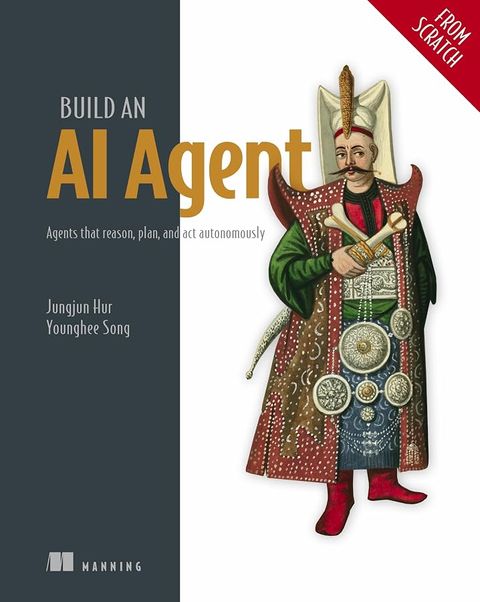
- Build an AI Agent (From Scratch) Jungjun Hur and Younghee Song
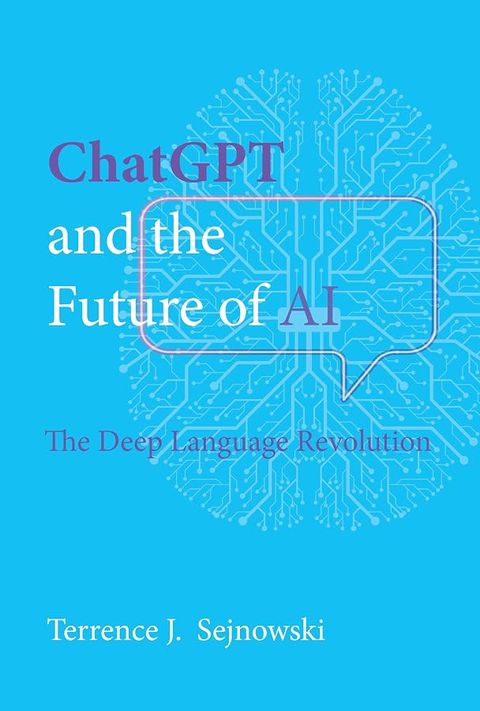
- ChatGPT and the Future of AI Terrence J. Sejnowski
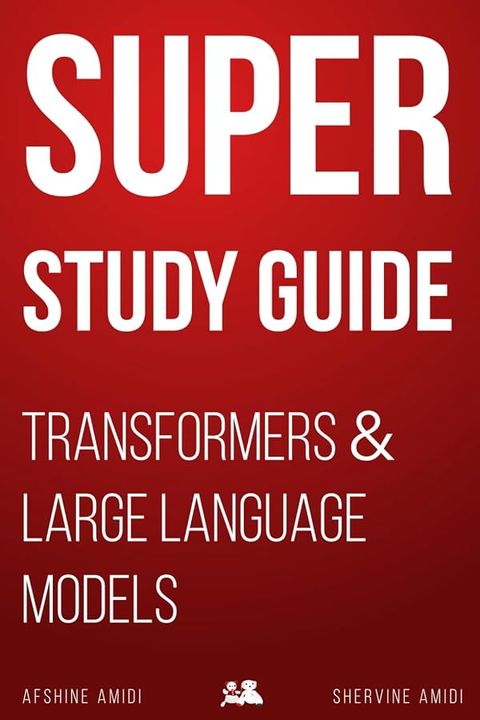
- Super Study Guide Afshine Amidi and Shervine Amidi
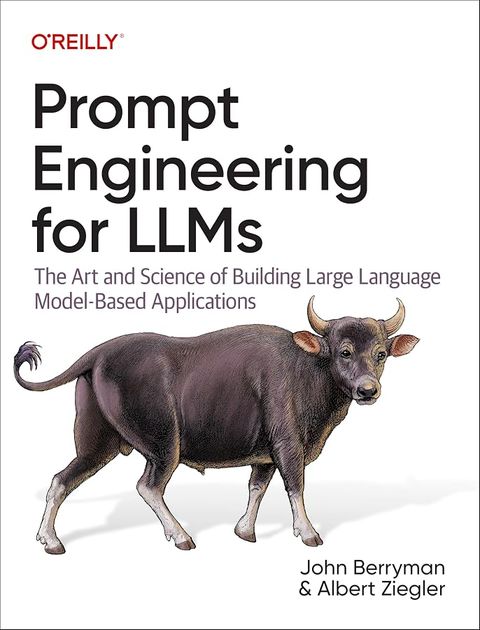
- Prompt Engineering for LLMs John Berryman and Albert Ziegler
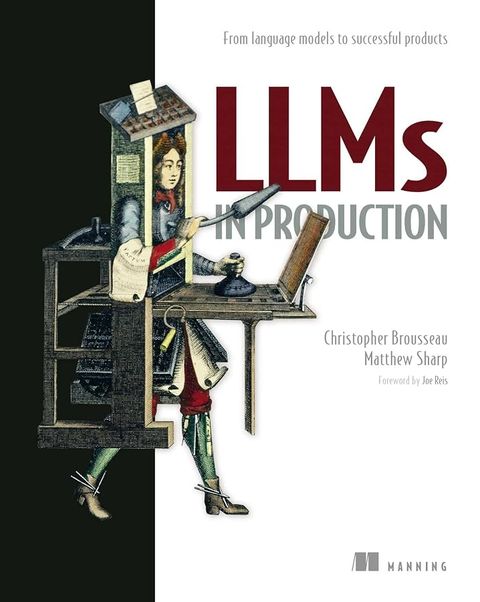
- LLMs in Production Christopher Brousseau and Matthew Sharp
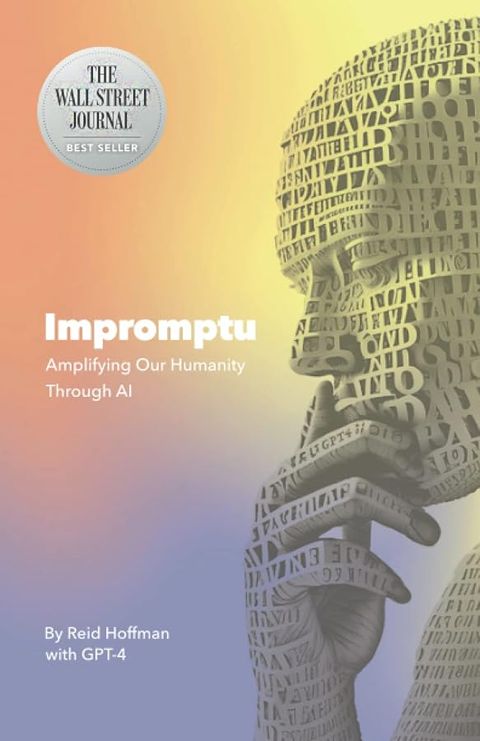
- Impromptu Reid Hoffman
Sources
As an Amazon Associate, Best AI Books earns from qualifying purchases. Best AI Books is sponsored by Iternal.ai, whose founder and CEO, John Byron Hanby IV, wrote The AI Strategy Blueprint, our #1 ranked book. How we rank books.
