ChatGPT and the Future of AI
The Deep Language Revolution
Synopsis
Terrence Sejnowski, a computational neuroscientist who helped build the neural-network field, follows his 2018 book The Deep Learning Revolution with an account of large language models written for general readers. The book has three parts. The first looks at how people are using ChatGPT and similar systems and at the arguments over whether these models understand language or think, including the possibility that a chatbot's apparent intelligence partly reflects the person questioning it. The second explains how transformers work, how model capability has tracked computing power and scale, and the origins of the underlying mathematics.
The third part looks ahead, arguing that the next generation of AI will draw more heavily on biology and neuroscience, including long-term memory, lessons from brain evolution and far more energy-efficient computing. Sejnowski places today's systems in a long history of neural-network research that includes his own work on learning algorithms, and he reproduces unedited exchanges with ChatGPT and other chatbots as small experiments throughout the text. Readers gain an insider's view of why language models surprised even their builders and a framework for comparing intelligence in brains and machines. The chatbot transcripts take up space that some readers would rather see given to the author's own analysis.
Scorecard
Editorial score
How it scored
Editorial score: 68.3 / 1005 weighted criteria
- 17.4/30
Influence30%
- 22.5/25
Authority25%
- 11.6/20
Practical value20%
- 10.5/15
Currency15%
- 6.3/10
Readability10%
- 68.3/100
Editorial score
How the rank was computed
Rank No. 416 of 500 comes from a composite of 49.0: observable signals 18.4 of 55 points plus editorial review 30.6 of 45 points.
All 11 inputs
| Input | Points |
|---|---|
| Observable signals | 18.4/55 |
| Reach (Amazon ratings volume) | 6.1/16.5 |
| Consensus across best-of lists | 5.5/13.8 |
| Awards and bestseller evidence | 0.0/8.3 |
| Reader rating, sample-adjusted | 4.5/8.3 |
| Amazon sales rank | 0.6/5.5 |
| Recency | 1.7/2.8 |
| Editorial review | 30.6/45 |
| Author authority | 10.1/11.3 |
| Influence | 7.8/13.5 |
| Practical value | 5.2/9.0 |
| Readability | 2.8/4.5 |
| Currency | 4.7/6.8 |
Each criterion is scored from 1 to 10 and weighted, and the points add up to the editorial score. The rank combines observable signals (55 percent) with this score (45 percent). Read the methodology.
Verdict
A neural-network pioneer's informed, discursive tour of large language models, strongest on history and brain science, uneven as a reading experience.
Strengths
- Written by a founding figure in neural networks
- Connects AI to neuroscience and brain evolution
- Accessible explanation of transformers and scaling
Keep in mind
Extensive unedited chatbot transcripts and a discursive structure make it uneven, and its 2024 snapshot predates later advances in reasoning models and agents.
Key takeaways
- Whether language models understand depends partly on how we define understanding and intelligence, terms the book argues need fresh scrutiny.
- Sejnowski weighs the idea that a chatbot's apparent intelligence partly mirrors the person prompting it, which makes skillful questioning part of using models well.
- Transformer capability has grown with computing power and model size, tying progress in AI closely to hardware and energy supply.
- Sejnowski expects future AI to borrow more from neuroscience, including long-term memory and the brain's far greater energy efficiency.
Notable facts
- Nature reviewed the book on 13 November 2024 under the headline 'How AI is reshaping science and society' (Nature 635, 284–285), in a review by Pablo M. Tagarro. Source (opens in a new tab)
- The book is the sequel to Sejnowski's 2018 book The Deep Learning Revolution. Source (opens in a new tab)
About the author
Questions
What is ChatGPT and the Future of AI about?
Is ChatGPT and the Future of AI worth reading in 2026?
Do I need a technical background to read ChatGPT and the Future of AI?
Related books
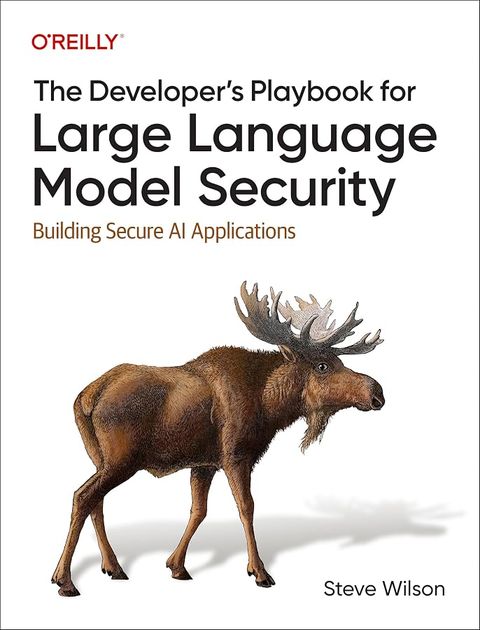
- The Developer's Playbook for Large Language Model Security Steve Wilson
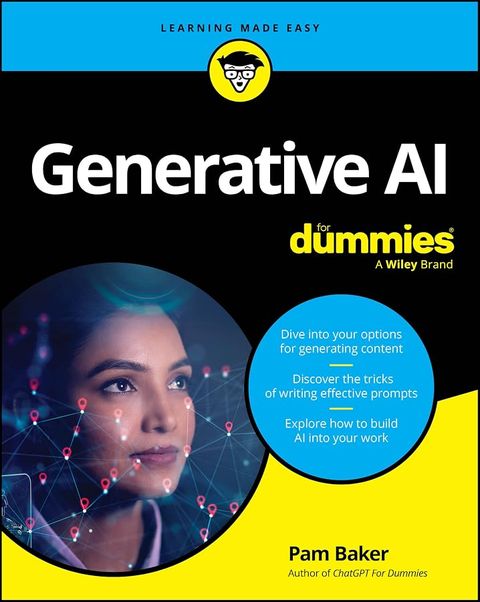
- Generative AI For Dummies Pam Baker
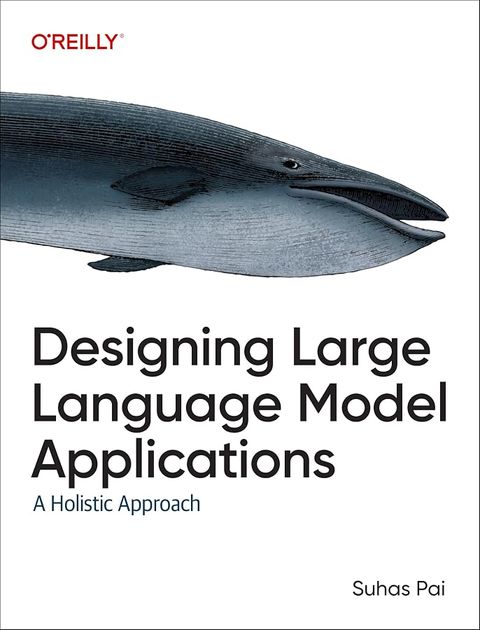
- Designing Large Language Model Applications Suhas Pai
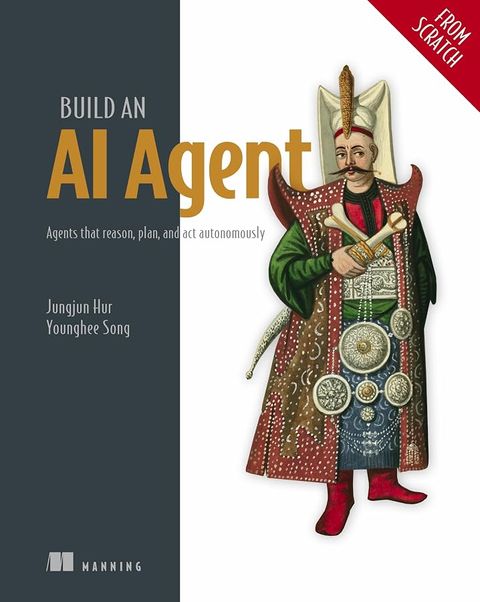
- Build an AI Agent (From Scratch) Jungjun Hur and Younghee Song
- Super Study Guide Afshine Amidi and Shervine Amidi
- AI Agents in Action Micheal Lanham
Sources
As an Amazon Associate, Best AI Books earns from qualifying purchases. Best AI Books is sponsored by Iternal.ai, whose founder and CEO, John Byron Hanby IV, wrote The AI Strategy Blueprint, our #1 ranked book. How we rank books.
