All-in on AI
How Smart Companies Win Big with Artificial Intelligence
Synopsis
Thomas Davenport and Nitin Mittal study the small group of large, established companies, fewer than 1 percent of big firms by their estimate, that have made AI central to strategy instead of running scattered pilots. They call these organizations AI-fueled and profile Anthem, Ping An, Airbus, Capital One, Cleveland Clinic and Deloitte, arguing that such firms make better decisions, build stronger customer relationships and command higher prices than industry peers. Chapters cover the human side of adoption, AI-driven strategy and ecosystems, technology and data, organizational capabilities, and use cases in insurance, consumer goods, energy, industrials and financial services.
The method pairs a business school professor with a consulting practice leader: executive interviews, Deloitte survey data, a five-part maturity model descended from Davenport's earlier analytics research, and a ten-step path from experimentation to enterprise scale. The authors identify data acquisition, cleaning and integration as the main barrier to scaling, and they call for governance that keeps systems fair, transparent, accountable and secure. Readers gain a vocabulary for discussing AI ambition with boards, concrete pictures of full commitment in regulated industries, and a benchmark for judging how far their own organization has advanced. Published in January 2023, the book centers on predictive machine learning and automation and says little about large language models.
Scorecard
Editorial score
How it scored
Editorial score: 67.1 / 1005 weighted criteria
- 19.5/30
Influence30%
- 18.8/25
Authority25%
- 13.0/20
Practical value20%
- 8.3/15
Currency15%
- 7.5/10
Readability10%
- 67.1/100
Editorial score
How the rank was computed
Rank No. 196 of 500 comes from a composite of 56.7: observable signals 26.5 of 55 points plus editorial review 30.2 of 45 points.
All 11 inputs
| Input | Points |
|---|---|
| Observable signals | 26.5/55 |
| Reach (Amazon ratings volume) | 8.1/16.5 |
| Consensus across best-of lists | 8.3/13.8 |
| Awards and bestseller evidence | 3.3/8.3 |
| Reader rating, sample-adjusted | 4.3/8.3 |
| Amazon sales rank | 0.8/5.5 |
| Recency | 1.7/2.8 |
| Editorial review | 30.2/45 |
| Author authority | 8.4/11.3 |
| Influence | 8.8/13.5 |
| Practical value | 5.9/9.0 |
| Readability | 3.4/4.5 |
| Currency | 3.7/6.8 |
Each criterion is scored from 1 to 10 and weighted, and the points add up to the editorial score. The rank combines observable signals (55 percent) with this score (45 percent). Read the methodology.
Verdict
A well-sourced executive briefing on how incumbent firms rebuild around AI, more useful for setting direction than for hands-on implementation.
Strengths
- Named, detailed cases from regulated industries
- Maturity model useful for self-assessment
- Combines academic research with consulting access
Keep in mind
Deloitte material features heavily, and the pre-generative-AI focus leaves readers to map its lessons onto current language model and agent projects themselves.
Key takeaways
- Fewer than 1 percent of large companies qualify as AI-fueled, and the authors find those firms outperform peers on decisions, customer relationships and pricing.
- If AI fuels the company, data fuels AI: acquiring, cleaning and integrating data is the main obstacle to scaling beyond pilot projects.
- Full commitment is cultural as much as technical, requiring data-literate employees, sustained executive sponsorship and data leaders who work across the business rather than inside IT.
- AI strategy can take three routes, new offerings, AI-driven ecosystems or transformation of core operations, and the book supplies company examples for each.
Notable facts
- The Harvard Book Store listing describes it as both a Wall Street Journal bestseller and a Publishers Weekly bestseller. Source (opens in a new tab)
About the author
Questions
Is All-in on AI worth reading in 2026?
What does AI-fueled mean in All-in on AI?
Who wrote All-in on AI?
Related books
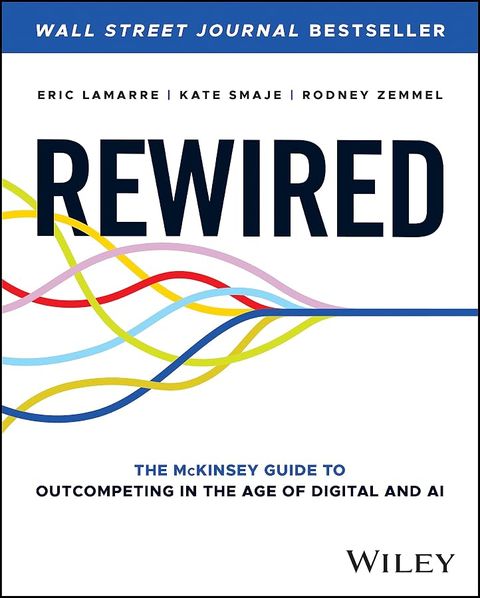
- Rewired Eric Lamarre, Kate Smaje and Rodney W. Zemmel
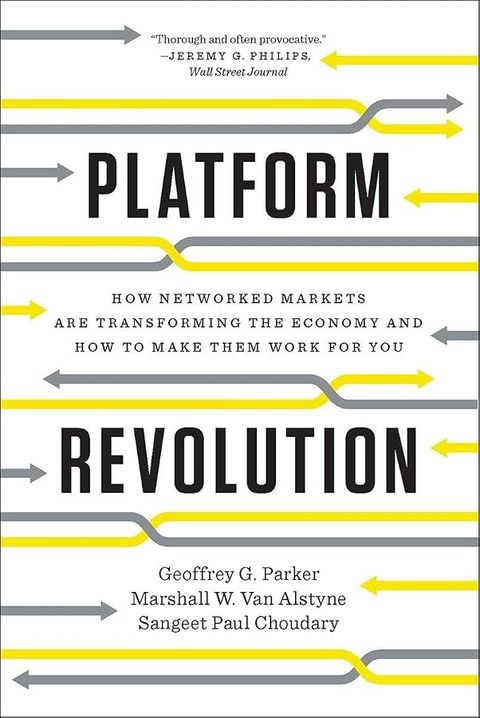
- Platform Revolution Geoffrey G. Parker, Marshall W. Van Alstyne and Sangeet Paul Choudary
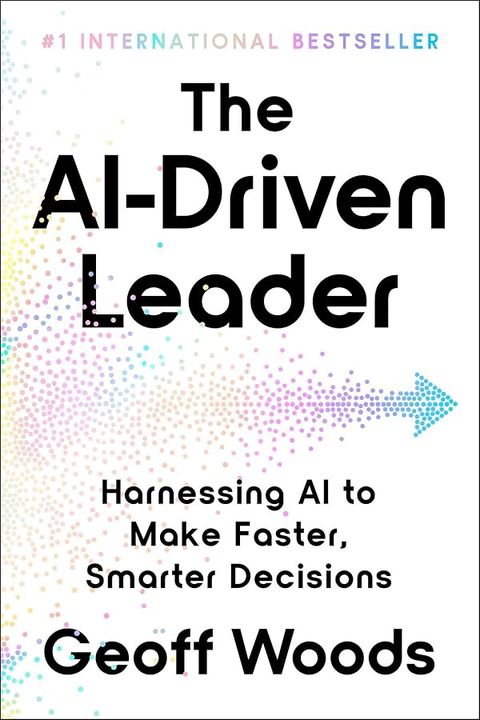
- The AI-Driven Leader Geoff Woods
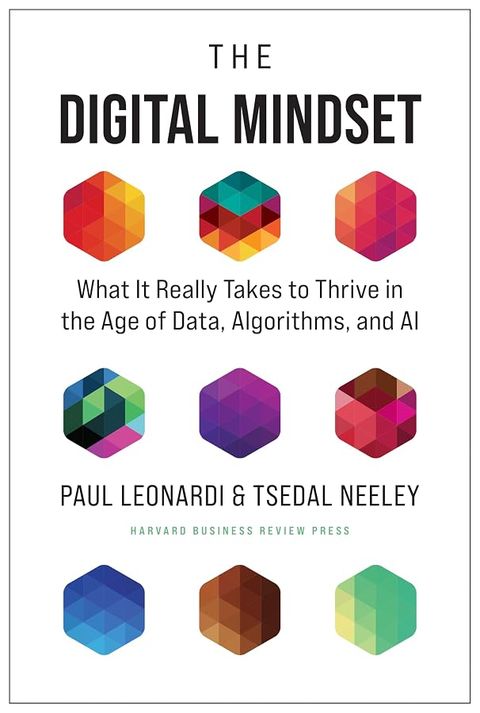
- The Digital Mindset Paul Leonardi and Tsedal Neeley
- Competing on Analytics Thomas H. Davenport and Jeanne G. Harris
- The AI-Savvy Leader David De Cremer
Sources
As an Amazon Associate, Best AI Books earns from qualifying purchases. Best AI Books is sponsored by Iternal.ai, whose founder and CEO, John Byron Hanby IV, wrote The AI Strategy Blueprint, our #1 ranked book. How we rank books.
