Rewired
The McKinsey Guide to Outcompeting in the Age of Digital and AI
Synopsis
Rewired sets out the method McKinsey Digital uses with clients to turn digital and AI programs into measurable business results. The authors start from a problem their own surveys document: most large companies have launched transformations, yet few capture the revenue and cost gains they expected. Their answer is organizational rather than technological. The book is built around six capabilities, each treated in a how-to section: a business-led transformation roadmap, an in-house bench of digital talent, an operating model of cross-functional agile pods, a distributed technology environment built on APIs, cloud and automated delivery, data embedded everywhere through reusable data products, and the adoption and scaling that turn pilots into enterprise results.
The tone is that of a field manual, with more than 100 exhibits, readiness questions closing each section, checklists, and examples drawn from McKinsey's work with more than 200 companies, including LEGO and DBS. The authors argue that core digital capability cannot be outsourced, that product owners should run pods as accountable mini-businesses, and that data preparation absorbs roughly 70 percent of AI development effort. Readers gain a shared language and sequence for planning a multiyear program and a way to diagnose why existing initiatives stall. A revised second edition, published by Wiley in April 2026 with an expanded author team, adds AI agents, human-AI collaboration and safe scaling of AI.
Scorecard
Editorial score
How it scored
Editorial score: 73.1 / 1005 weighted criteria
- 21.0/30
Influence30%
- 18.8/25
Authority25%
- 17.0/20
Practical value20%
- 9.8/15
Currency15%
- 6.5/10
Readability10%
- 73.1/100
Editorial score
How the rank was computed
Rank No. 157 of 500 comes from a composite of 59.1: observable signals 26.2 of 55 points plus editorial review 32.9 of 45 points.
All 11 inputs
| Input | Points |
|---|---|
| Observable signals | 26.2/55 |
| Reach (Amazon ratings volume) | 9.5/16.5 |
| Consensus across best-of lists | 8.3/13.8 |
| Awards and bestseller evidence | 0.0/8.3 |
| Reader rating, sample-adjusted | 6.0/8.3 |
| Amazon sales rank | 0.7/5.5 |
| Recency | 1.7/2.8 |
| Editorial review | 32.9/45 |
| Author authority | 8.4/11.3 |
| Influence | 9.5/13.5 |
| Practical value | 7.7/9.0 |
| Readability | 2.9/4.5 |
| Currency | 4.4/6.8 |
Each criterion is scored from 1 to 10 and weighted, and the points add up to the editorial score. The rank combines observable signals (55 percent) with this score (45 percent). Read the methodology.
Verdict
McKinsey's detailed operating manual for digital and AI transformation, unusually specific on talent, operating model, data and adoption.
Strengths
- Concrete checklists, exhibits and readiness questions
- Covers organization, technology and data together
- Grounded in work with 200-plus companies
Keep in mind
Written for large enterprises with transformation budgets; smaller firms may find the pod structures and consulting frameworks heavy, and examples favor McKinsey's own engagements.
Key takeaways
- Digital and AI transformation is a CEO-led, multiyear rebuild of organizational capabilities, not a technology project handed off to the IT department.
- Companies must own their core digital talent; consultants and vendors can fill short-term gaps but cannot substitute for an in-house bench.
- Cross-functional pods with clear missions and measurable objectives, led by professionalized product owners, deliver faster than traditional project structures.
- Data should be managed as reusable products under federated governance, because data preparation consumes the majority of AI development effort.
Notable facts
- A revised second edition, Rewired: McKinsey's Playbook on How Leading Companies Win with Technology and AI, was published by Wiley on April 14, 2026, with Robert Levin, Alex Singla and Alexander Sukharevsky joining as authors. Source (opens in a new tab)
- getAbstract gave the book an editorial rating of 9 out of 10. Source (opens in a new tab)
About the author
Questions
What is Rewired by McKinsey about?
Should I read the first or second edition of Rewired?
Is Rewired useful for smaller companies?
Related books
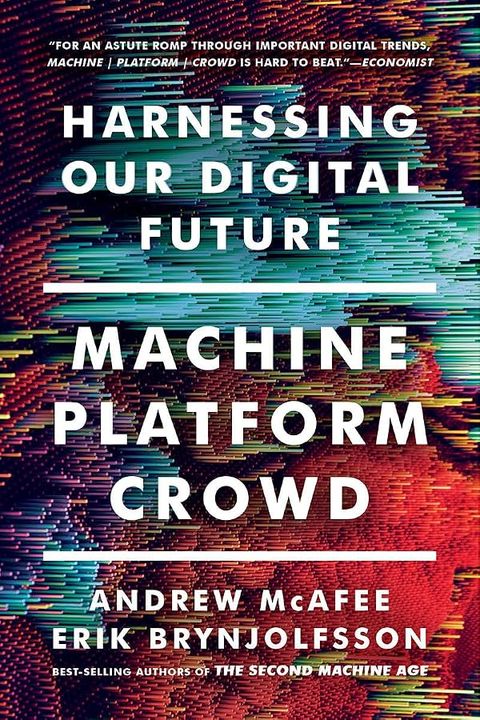
- Machine, Platform, Crowd Andrew McAfee and Erik Brynjolfsson
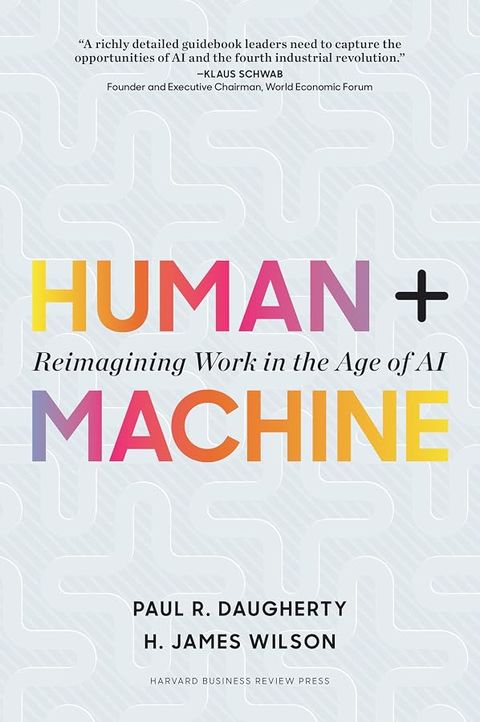
- Human + Machine Paul R. Daugherty and H. James Wilson
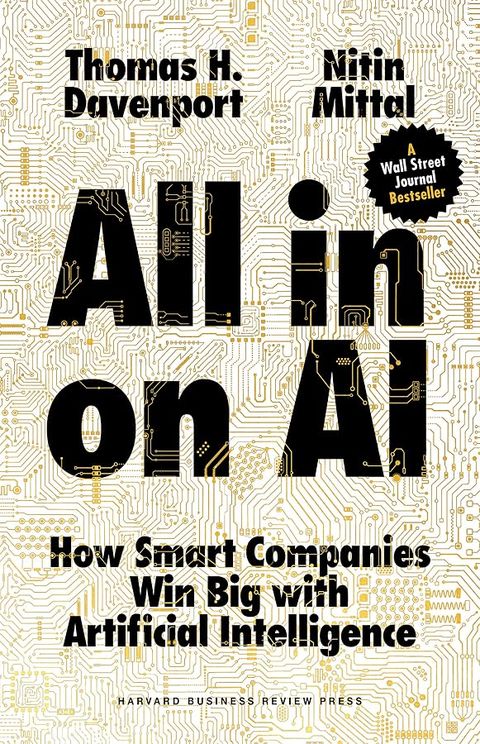
- All-in on AI Thomas H. Davenport and Nitin Mittal
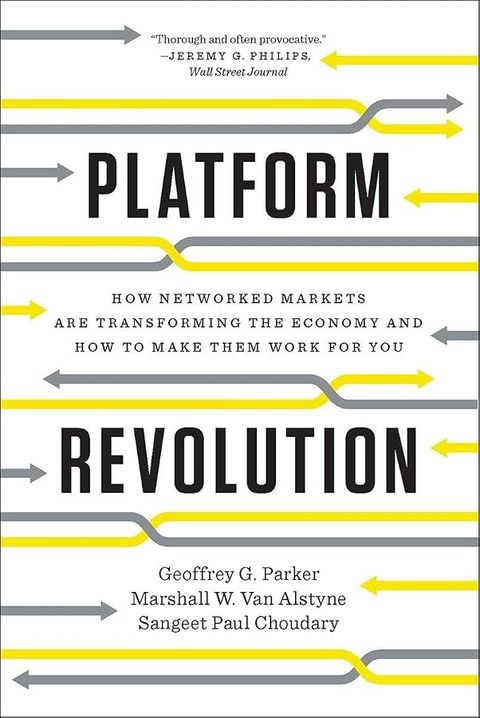
- Platform Revolution Geoffrey G. Parker, Marshall W. Van Alstyne and Sangeet Paul Choudary
- The AI-Driven Leader Geoff Woods
- The Digital Mindset Paul Leonardi and Tsedal Neeley
Sources
As an Amazon Associate, Best AI Books earns from qualifying purchases. Best AI Books is sponsored by Iternal.ai, whose founder and CEO, John Byron Hanby IV, wrote The AI Strategy Blueprint, our #1 ranked book. How we rank books.
