Approaching (Almost) Any Machine Learning Problem
Synopsis
Abhishek Thakur, who holds Kaggle's Grandmaster rank in all four of its categories, wrote this self-published book to show how an experienced competitor sets up and works through a machine learning problem. It does not teach algorithms from first principles. It assumes readers already know the theory and concentrates on the decisions that drive results: setting up a working environment, choosing a cross-validation scheme that fits the data, selecting evaluation metrics, structuring project code, and handling categorical variables, feature engineering and feature selection. A chapter on hyperparameter optimization moves from grid and random search to model-based tuning libraries.
Later chapters apply the same workflow to image classification and segmentation, text classification and regression, and ensembling and stacking, then close with reproducible code and model serving. The book is dense with Python code, has no subheadings, and expects readers to type the code themselves; the author does not distribute it separately. Thakur released the full PDF free on GitHub, where the repository has drawn more than 8,000 stars, and sells print and Kindle editions. Readers come away with a reusable template for tackling tabular, image and text problems and a sharper sense of where validation mistakes undermine results.
Scorecard
Editorial score
How it scored
Editorial score: 70.1 / 1005 weighted criteria
- 21.0/30
Influence30%
- 18.8/25
Authority25%
- 16.0/20
Practical value20%
- 8.3/15
Currency15%
- 6.0/10
Readability10%
- 70.1/100
Editorial score
How the rank was computed
Rank No. 380 of 500 comes from a composite of 50.6: observable signals 19.1 of 55 points plus editorial review 31.5 of 45 points.
All 11 inputs
| Input | Points |
|---|---|
| Observable signals | 19.1/55 |
| Reach (Amazon ratings volume) | 10.7/16.5 |
| Consensus across best-of lists | 2.8/13.8 |
| Awards and bestseller evidence | 0.0/8.3 |
| Reader rating, sample-adjusted | 5.5/8.3 |
| Amazon sales rank | 0.1/5.5 |
| Recency | 0.0/2.8 |
| Editorial review | 31.5/45 |
| Author authority | 8.4/11.3 |
| Influence | 9.5/13.5 |
| Practical value | 7.2/9.0 |
| Readability | 2.7/4.5 |
| Currency | 3.7/6.8 |
Each criterion is scored from 1 to 10 and weighted, and the points add up to the editorial score. The rank combines observable signals (55 percent) with this score (45 percent). Read the methodology.
Verdict
A code-first field manual from a top Kaggle competitor, strongest on practical workflow and weakest on explaining the algorithms themselves.
Strengths
- Practical workflow distilled from Kaggle competition experience
- Strong treatment of validation and metrics
- Full PDF freely available on GitHub
Keep in mind
It explains little theory, lacks subheadings, and requires typing code from the page, so beginners and readers wanting algorithm explanations may struggle.
Key takeaways
- Thakur treats a cross-validation scheme matched to the data, such as stratified or grouped folds, as the foundation of every reliable experiment.
- Evaluation metrics should match the problem; accuracy can mislead on imbalanced data, where precision, recall, F1 or AUC are more informative.
- Categorical variables can be handled through label encoding, one-hot encoding, target encoding or learned entity embeddings, each suited to different models.
- Ensembling and stacking several diverse models usually outperforms a single tuned model, provided the blending is validated out of fold.
Notable facts
- The book's official GitHub repository, which hosts the full PDF, has more than 8,400 stars. Source (opens in a new tab)
- KDnuggets covered the free release in February 2021, describing the author as a 4x Kaggle Grandmaster. Source (opens in a new tab)
About the author
Questions
Is Approaching (Almost) Any Machine Learning Problem good for beginners?
Is Approaching (Almost) Any Machine Learning Problem free?
Is Approaching (Almost) Any Machine Learning Problem still relevant in 2026?
Related books
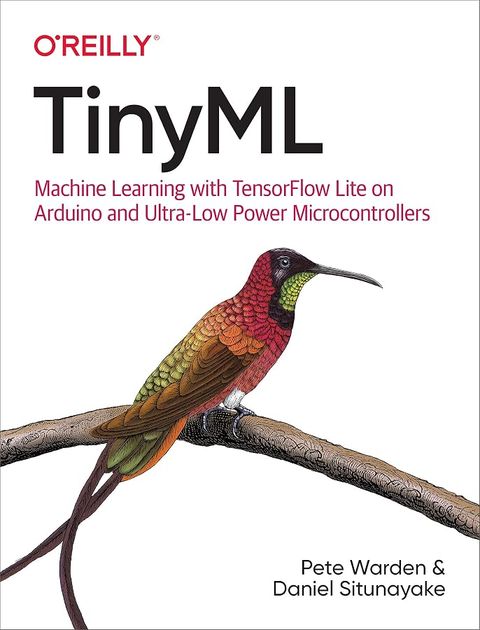
- TinyML Pete Warden and Daniel Situnayake
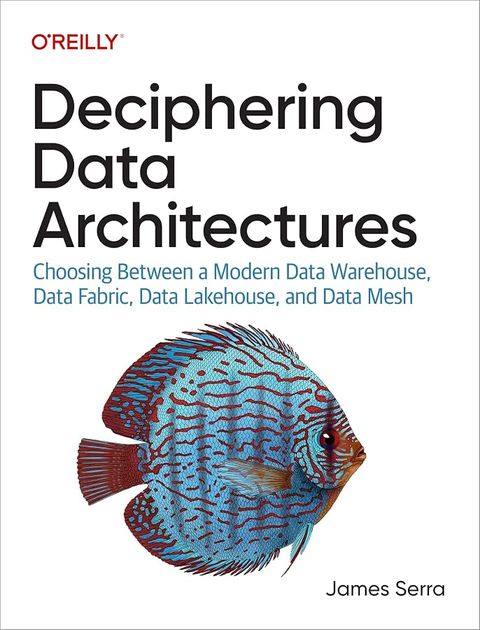
- Deciphering Data Architectures James Serra
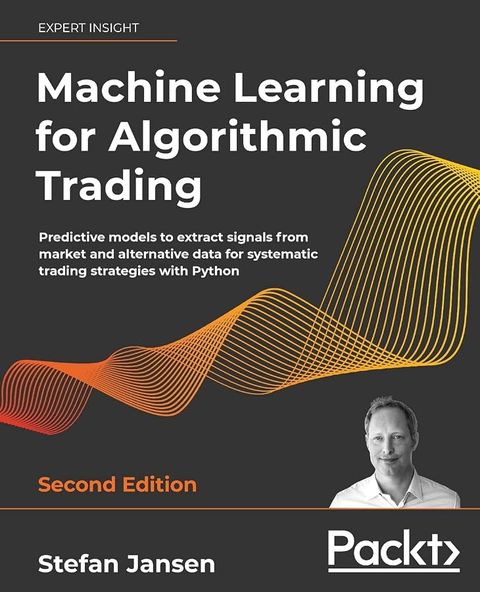
- Machine Learning for Algorithmic Trading Stefan Jansen
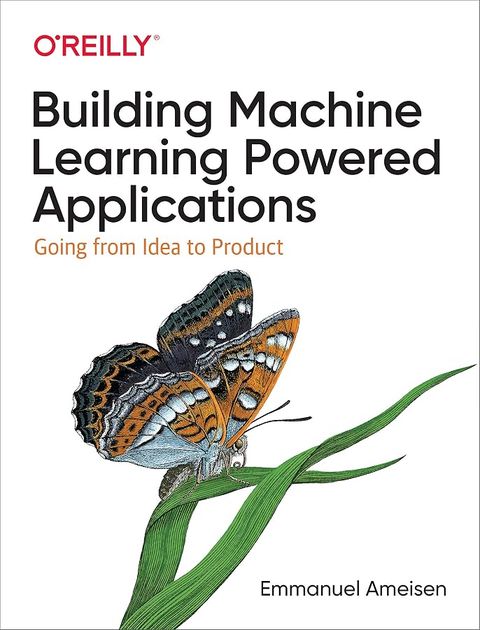
- Building Machine Learning Powered Applications Emmanuel Ameisen
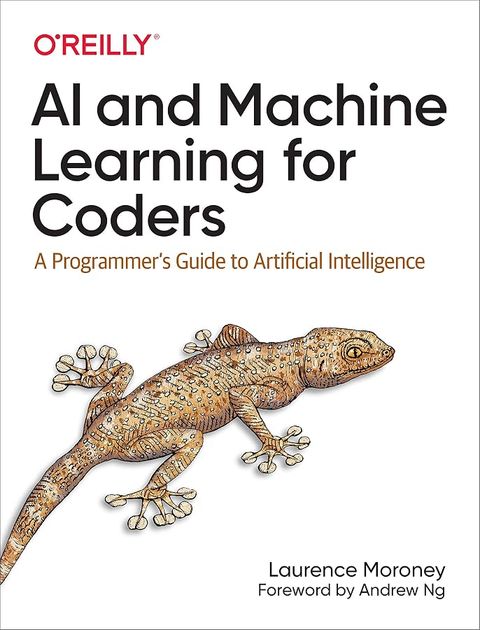
- AI and Machine Learning for Coders Laurence Moroney
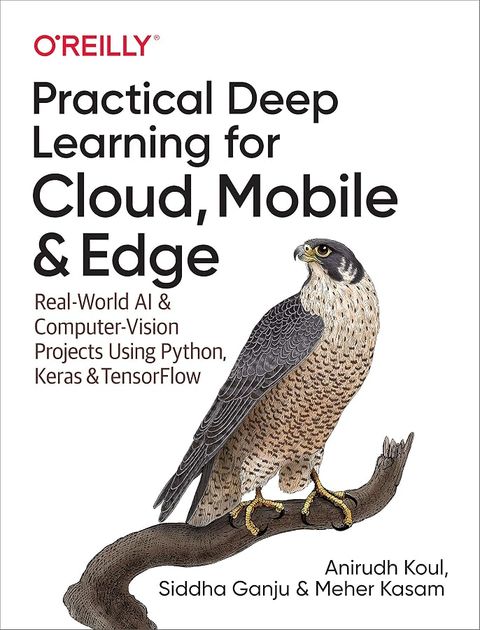
- Practical Deep Learning for Cloud, Mobile, and Edge Anirudh Koul, Siddha Ganju and Meher Kasam
Sources
As an Amazon Associate, Best AI Books earns from qualifying purchases. Best AI Books is sponsored by Iternal.ai, whose founder and CEO, John Byron Hanby IV, wrote The AI Strategy Blueprint, our #1 ranked book. How we rank books.
