Practical Deep Learning for Cloud, Mobile, and Edge
Real-World AI and Computer-Vision Projects Using Python, Keras, and TensorFlow
Synopsis
Anirudh Koul, Siddha Ganju and Meher Kasam wrote this O'Reilly guide for developers who want to move from a deep learning idea to a working product. Rather than starting with theory, the book builds image classifiers with Keras and TensorFlow, then uses transfer learning to retrain them on small custom datasets in minutes. From there it widens into similarity search with embeddings, data pipelines and performance tuning, serving models from the cloud, and running them inside browsers, iOS apps with Core ML, Android apps with TensorFlow Lite, and edge boards such as the Raspberry Pi, Jetson Nano and Google Coral. Later chapters simulate an autonomous car in a game environment and train a miniature vehicle with reinforcement learning.
The approach is project-first: each chapter pairs runnable code from the authors' GitHub repository with practical checklists on accuracy, speed and debugging, plus dozens of short industry case studies. Readers come away knowing how to choose a model that fits a device's memory and latency budget, how to scale inference, and where real-world deployments fail. The tooling has moved on since 2019, and the book predates the transformer and generative AI wave, so its lasting value lies in the engineering habits rather than the exact library calls.
Scorecard
Editorial score
How it scored
Editorial score: 64.3 / 1005 weighted criteria
- 18.0/30
Influence30%
- 17.5/25
Authority25%
- 14.0/20
Practical value20%
- 6.8/15
Currency15%
- 8.0/10
Readability10%
- 64.3/100
Editorial score
How the rank was computed
Rank No. 420 of 500 comes from a composite of 49.1: observable signals 20.2 of 55 points plus editorial review 28.9 of 45 points.
All 11 inputs
| Input | Points |
|---|---|
| Observable signals | 20.2/55 |
| Reach (Amazon ratings volume) | 8.0/16.5 |
| Consensus across best-of lists | 5.5/13.8 |
| Awards and bestseller evidence | 0.0/8.3 |
| Reader rating, sample-adjusted | 6.4/8.3 |
| Amazon sales rank | 0.3/5.5 |
| Recency | 0.0/2.8 |
| Editorial review | 28.9/45 |
| Author authority | 7.9/11.3 |
| Influence | 8.1/13.5 |
| Practical value | 6.3/9.0 |
| Readability | 3.6/4.5 |
| Currency | 3.0/6.8 |
Each criterion is scored from 1 to 10 and weighted, and the points add up to the editorial score. The rank combines observable signals (55 percent) with this score (45 percent). Read the methodology.
Verdict
A hands-on computer vision guide whose deployment lessons hold up, even though its 2019-era Keras and TensorFlow code has aged.
Strengths
- Runnable code repository maintained alongside the book
- Covers cloud, browser, mobile and edge deployment
- Practical checklists for accuracy and speed tuning
Keep in mind
Code targets 2019-era Keras and TensorFlow releases and predates transformers and generative AI, so readers must adapt examples to current libraries.
Key takeaways
- Transfer learning lets a developer retrain a pretrained image classifier on a small custom dataset in minutes instead of training from scratch.
- Choosing a model for phones or edge boards means trading accuracy against memory, latency and power, and the book shows how to measure each.
- Many accuracy and speed problems trace back to data pipelines and training configuration, so systematic checklists often beat swapping in a bigger architecture.
- Embeddings from a trained network can power reverse image search and similarity features without labeling every image in a collection.
Notable facts
- The authors' official code repository states that the book is featured as a learning resource on the official Keras website. Source (opens in a new tab)
- NVIDIA's author page for co-author Siddha Ganju states that the roughly 600-page book is being translated into five languages. Source (opens in a new tab)
About the author
Questions
Is Practical Deep Learning for Cloud, Mobile, and Edge worth reading in 2026?
Who should read Practical Deep Learning for Cloud, Mobile, and Edge?
What projects does Practical Deep Learning for Cloud, Mobile, and Edge include?
Related books
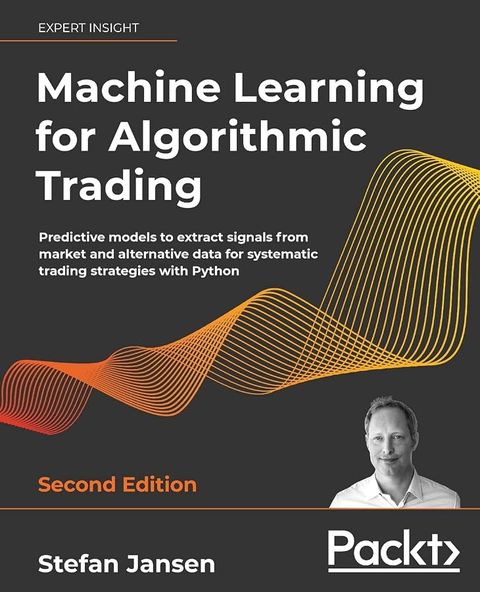
- Machine Learning for Algorithmic Trading Stefan Jansen
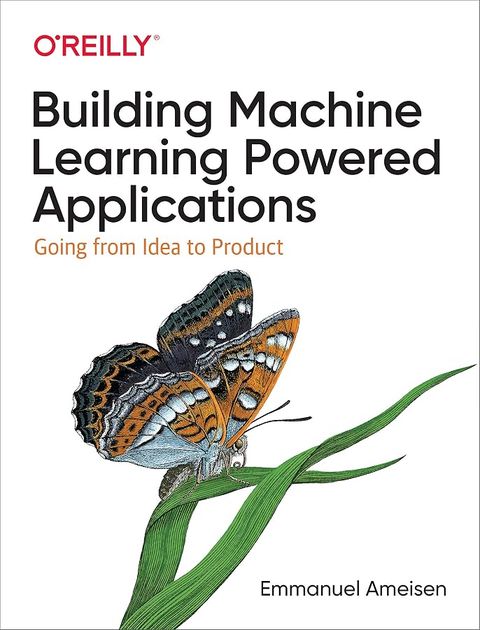
- Building Machine Learning Powered Applications Emmanuel Ameisen
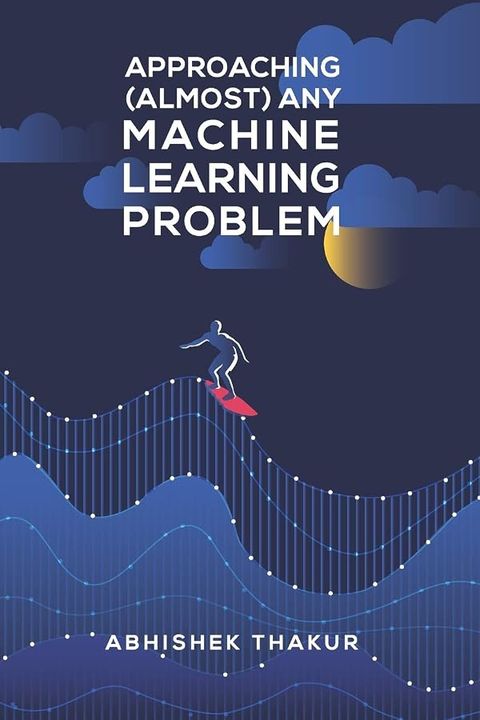
- Approaching (Almost) Any Machine Learning Problem Abhishek Thakur
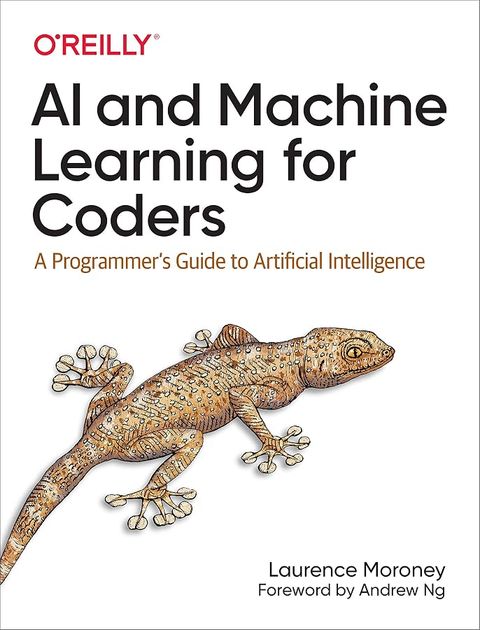
- AI and Machine Learning for Coders Laurence Moroney
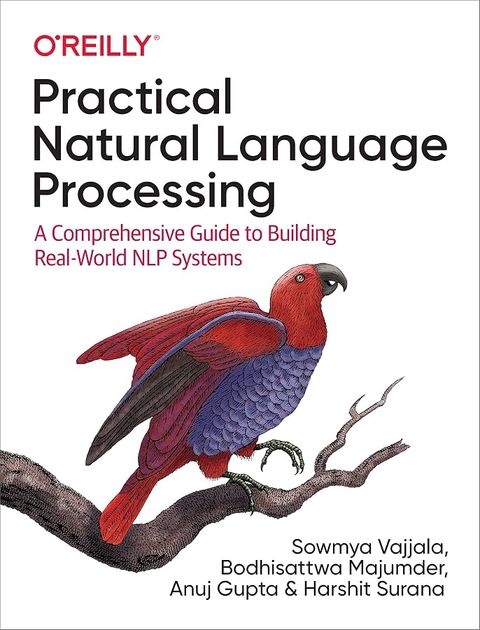
- Practical Natural Language Processing Sowmya Vajjala, Bodhisattwa Majumder, Anuj Gupta and Harshit Surana
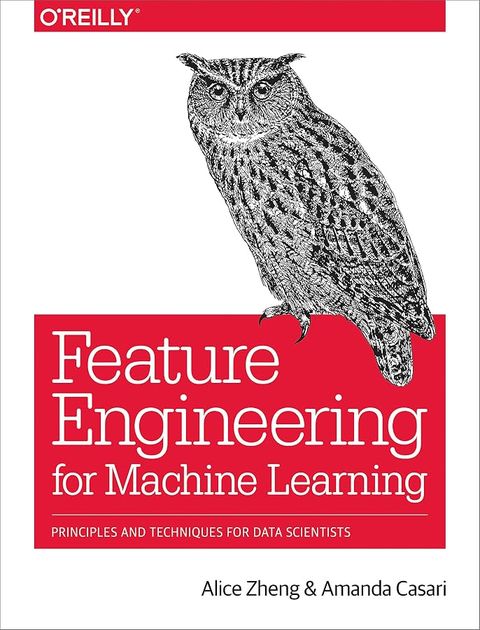
- Feature Engineering for Machine Learning Alice Zheng and Amanda Casari
Sources
As an Amazon Associate, Best AI Books earns from qualifying purchases. Best AI Books is sponsored by Iternal.ai, whose founder and CEO, John Byron Hanby IV, wrote The AI Strategy Blueprint, our #1 ranked book. How we rank books.
