Bayesian Methods for Hackers
Probabilistic Programming and Bayesian Inference
Synopsis
Cameron Davidson-Pilon wrote this book for programmers who want to use Bayesian statistics without first working through pages of calculus. It began as a free series of Jupyter notebooks on GitHub, refined through reader contributions, and the Addison-Wesley edition reorganizes that material into seven chapters. The approach is computational: instead of deriving posterior distributions by hand, readers specify models in the PyMC probabilistic programming library, let Markov chain Monte Carlo sampling approximate the answer, and inspect the results with NumPy and Matplotlib.
The early chapters explain the Bayesian view of probability and walk through first models, such as detecting a shift in a person's text-messaging behavior. Later chapters open up how MCMC works, show how the law of large numbers can mislead when samples are small, connect posterior estimates to decisions through loss functions, and discuss how to choose priors. The print edition adds a chapter on Bayesian A/B testing. Readers finish able to express uncertainty as a distribution, build and diagnose simple probabilistic models, and apply them to everyday decision problems in analytics and product work.
Scorecard
Editorial score
How it scored
Editorial score: 68.3 / 1005 weighted criteria
- 22.5/30
Influence30%
- 16.3/25
Authority25%
- 15.0/20
Practical value20%
- 7.5/15
Currency15%
- 7.0/10
Readability10%
- 68.3/100
Editorial score
How the rank was computed
Rank No. 386 of 500 comes from a composite of 50.2: observable signals 19.4 of 55 points plus editorial review 30.8 of 45 points.
All 11 inputs
| Input | Points |
|---|---|
| Observable signals | 19.4/55 |
| Reach (Amazon ratings volume) | 8.1/16.5 |
| Consensus across best-of lists | 5.5/13.8 |
| Awards and bestseller evidence | 0.0/8.3 |
| Reader rating, sample-adjusted | 5.3/8.3 |
| Amazon sales rank | 0.5/5.5 |
| Recency | 0.0/2.8 |
| Editorial review | 30.8/45 |
| Author authority | 7.3/11.3 |
| Influence | 10.1/13.5 |
| Practical value | 6.8/9.0 |
| Readability | 3.2/4.5 |
| Currency | 3.4/6.8 |
Each criterion is scored from 1 to 10 and weighted, and the points add up to the editorial score. The rank combines observable signals (55 percent) with this score (45 percent). Read the methodology.
Verdict
A code-first introduction to Bayesian inference that makes PyMC and MCMC approachable, though the printed edition's code has aged.
Strengths
- Runnable examples instead of heavy mathematical derivations
- Free, community-refined notebooks accompany the book
- Practical chapter on Bayesian A/B testing
Keep in mind
Readers wanting mathematical rigor may find explanations loose, and the printed code predates current PyMC releases, so examples need adapting to today's syntax.
Key takeaways
- Bayesian inference treats unknown quantities as probability distributions, so results express how uncertain you remain rather than a single point estimate.
- Probabilistic programming lets you describe a model in code and use MCMC sampling to approximate the posterior instead of deriving it by hand.
- Loss functions connect posterior distributions to decisions, letting analysts choose estimates that minimize the real cost of being wrong.
- Priors matter most when data are scarce, and small samples can produce misleading averages that a Bayesian treatment helps correct.
Notable facts
- The free GitHub edition, Probabilistic Programming and Bayesian Methods for Hackers, has about 28,200 stars and 7,900 forks. Source (opens in a new tab)
- Addison-Wesley published the print edition on October 2, 2015; its seventh chapter covers Bayesian A/B testing. Source (opens in a new tab)
About the author
Questions
What does Bayesian Methods for Hackers teach?
Is Bayesian Methods for Hackers still useful in 2026?
Do I need strong math skills to read Bayesian Methods for Hackers?
Related books
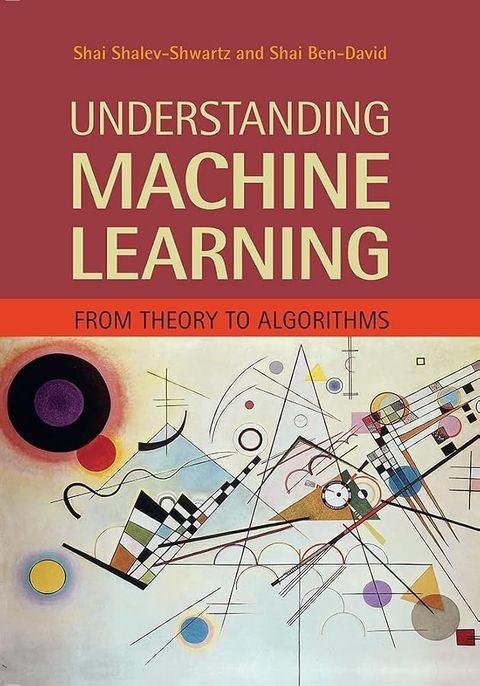
- Understanding Machine Learning Shai Shalev-Shwartz and Shai Ben-David
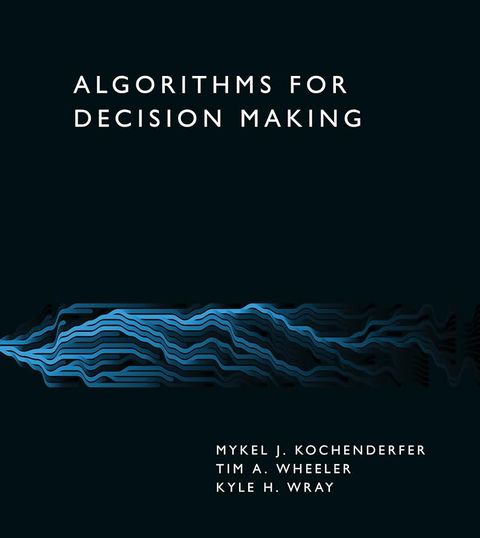
- Algorithms for Decision Making Mykel J. Kochenderfer, Tim A. Wheeler and Kyle H. Wray
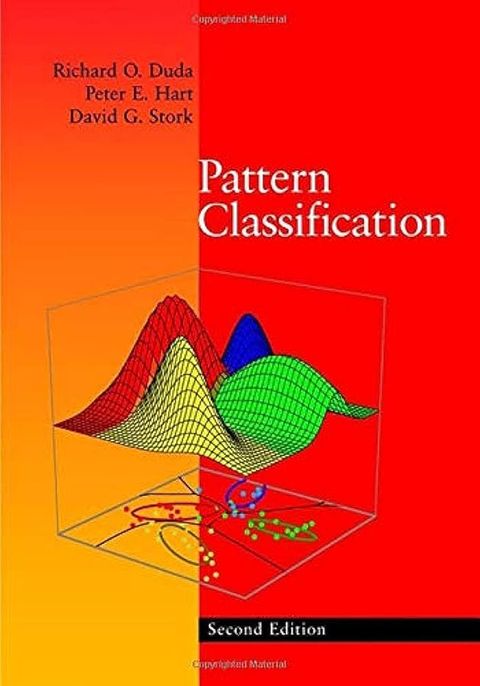
- Pattern Classification Richard O. Duda, Peter E. Hart and David G. Stork
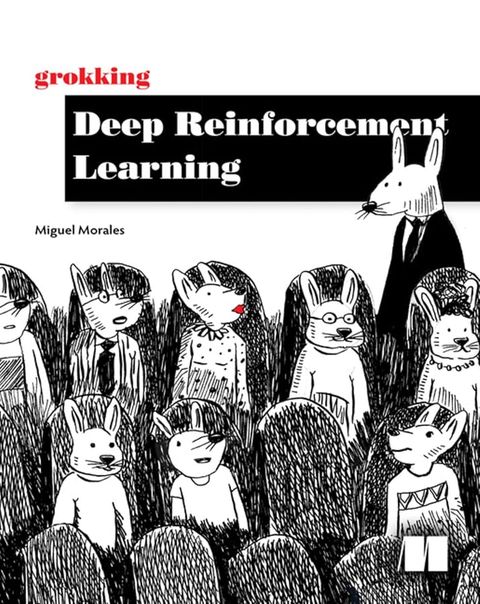
- Grokking Deep Reinforcement Learning Miguel Morales
- Data Smart John W. Foreman
- The Data Science Design Manual Steven S. Skiena
Sources
As an Amazon Associate, Best AI Books earns from qualifying purchases. Best AI Books is sponsored by Iternal.ai, whose founder and CEO, John Byron Hanby IV, wrote The AI Strategy Blueprint, our #1 ranked book. How we rank books.
