Pattern Classification
Synopsis
Pattern Classification began in 1973 as Pattern Classification and Scene Analysis, written by Richard Duda and Peter Hart while both worked at SRI International. The 2000 second edition, with David Stork joining as coauthor, drops the scene-analysis material and rebuilds the book around the statistical problem of assigning inputs to categories. After an introductory chapter, it moves from Bayesian decision theory through maximum-likelihood and Bayesian parameter estimation, nonparametric methods such as Parzen windows and nearest-neighbor rules, linear discriminant functions, multilayer neural networks, stochastic search, and decision trees and other nonmetric methods, ending with unsupervised learning and clustering. A chapter on algorithm-independent learning covers the No Free Lunch theorem, the bias-variance tradeoff and resampling methods such as bagging and boosting.
The approach is mathematical and patient. Each method is derived from first principles, illustrated with worked examples and figures, and compared with alternatives, and the chapters close with problems and computer exercises. Readers who work through it gain a precise vocabulary for classifiers, error rates and decision boundaries, which makes later machine learning literature easier to follow. The book assumes comfort with probability, linear algebra and calculus, and its neural network coverage reflects the field as it stood before convolutional and transformer models came to dominate. It is best treated as the theory foundation beneath current practice rather than a guide to today's tools.
Scorecard
Editorial score
How it scored
Editorial score: 74.5 / 1005 weighted criteria
- 27.0/30
Influence30%
- 22.5/25
Authority25%
- 12.0/20
Practical value20%
- 7.5/15
Currency15%
- 5.5/10
Readability10%
- 74.5/100
Editorial score
How the rank was computed
Rank No. 314 of 500 comes from a composite of 52.6: observable signals 19.0 of 55 points plus editorial review 33.6 of 45 points.
All 11 inputs
| Input | Points |
|---|---|
| Observable signals | 19.0/55 |
| Reach (Amazon ratings volume) | 7.1/16.5 |
| Consensus across best-of lists | 5.5/13.8 |
| Awards and bestseller evidence | 0.0/8.3 |
| Reader rating, sample-adjusted | 5.7/8.3 |
| Amazon sales rank | 0.7/5.5 |
| Recency | 0.0/2.8 |
| Editorial review | 33.6/45 |
| Author authority | 10.1/11.3 |
| Influence | 12.2/13.5 |
| Practical value | 5.4/9.0 |
| Readability | 2.5/4.5 |
| Currency | 3.4/6.8 |
Each criterion is scored from 1 to 10 and weighted, and the points add up to the editorial score. The rank combines observable signals (55 percent) with this score (45 percent). Read the methodology.
Verdict
A foundational pattern-recognition textbook whose treatment of Bayesian decision theory remains clear, though its coverage stops before modern deep learning.
Strengths
- Rigorous derivations from first principles
- Extensive problems and computer exercises
- Clear figures illustrating decision boundaries
Keep in mind
Its 2000 edition omits deep learning and modern software tooling, and its dense mathematics demands solid grounding in probability, linear algebra and calculus.
Key takeaways
- Bayesian decision theory gives the optimal classifier when class probabilities are known, and it serves as the benchmark against which practical methods are judged.
- Parametric estimation, maximum-likelihood or Bayesian, trades flexibility for efficiency, while nonparametric methods such as nearest-neighbor rules adapt to data at higher computational cost.
- The No Free Lunch theorem shows that no learning algorithm is superior across all problems, so method choice must rest on assumptions about the domain.
- The bias-variance tradeoff explains why more flexible classifiers can generalize worse, and why resampling methods such as bagging and boosting improve stability.
Notable facts
- The 1973 first edition, Pattern Classification and Scene Analysis, stayed in print for more than 25 years before the second edition appeared in 2000. Source (opens in a new tab)
- Wiley describes the 1973 first edition as a classic reference in the field and dates the second edition to November 2000. Source (opens in a new tab)
About the author
Questions
Is Pattern Classification still worth reading in 2026?
Who should read Pattern Classification by Duda, Hart and Stork?
How does the second edition of Pattern Classification differ from the first?
Related books
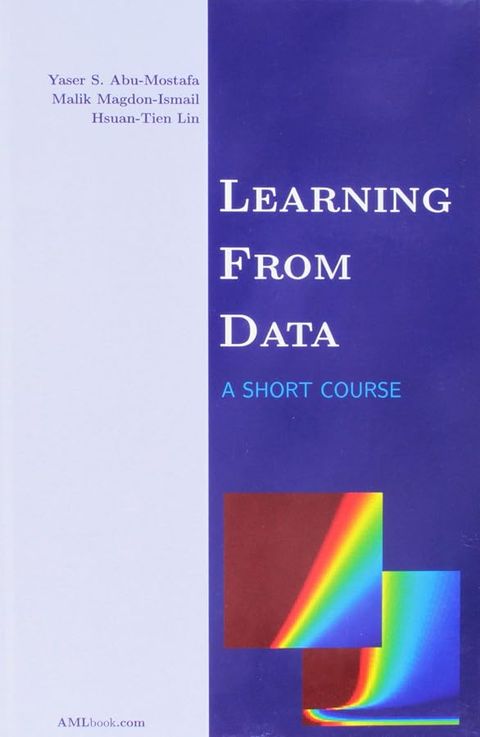
- Learning From Data Yaser S. Abu-Mostafa, Malik Magdon-Ismail and Hsuan-Tien Lin
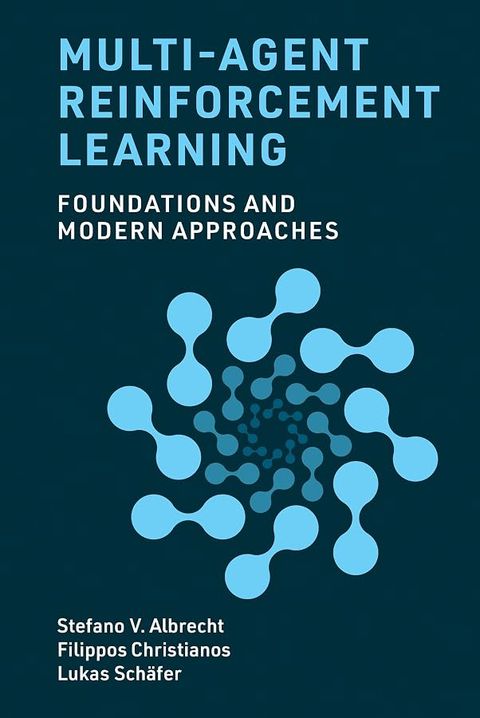
- Multi-Agent Reinforcement Learning Stefano V. Albrecht, Filippos Christianos and Lukas Schäfer
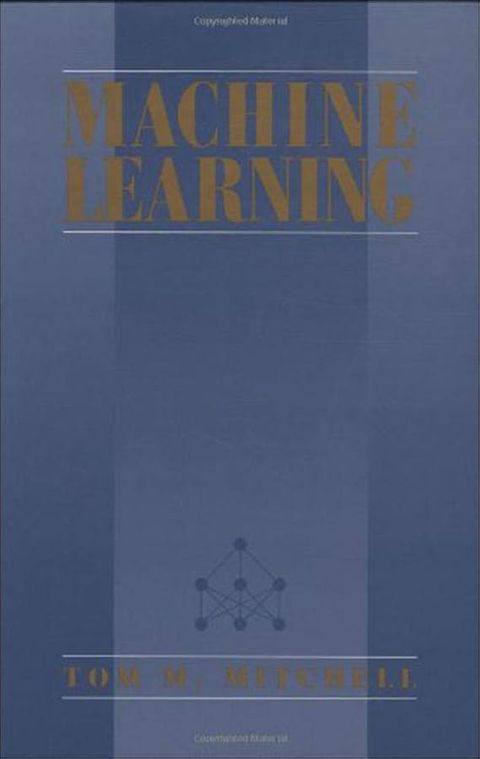
- Machine Learning Tom M. Mitchell
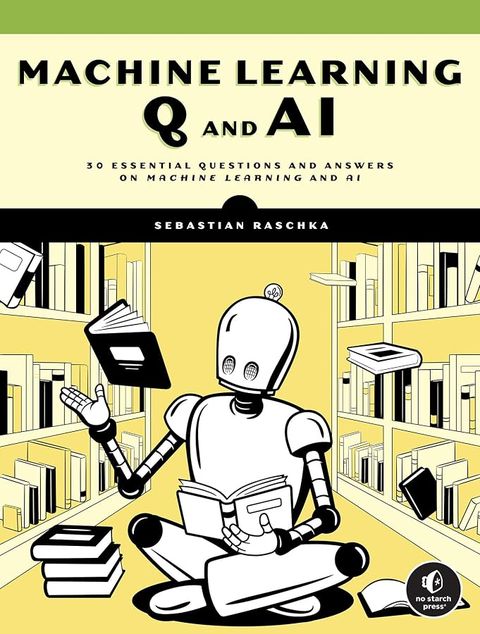
- Machine Learning Q and AI Sebastian Raschka
- Understanding Machine Learning Shai Shalev-Shwartz and Shai Ben-David
- Algorithms for Decision Making Mykel J. Kochenderfer, Tim A. Wheeler and Kyle H. Wray
Sources
As an Amazon Associate, Best AI Books earns from qualifying purchases. Best AI Books is sponsored by Iternal.ai, whose founder and CEO, John Byron Hanby IV, wrote The AI Strategy Blueprint, our #1 ranked book. How we rank books.
