Deep Learning
Foundations and Concepts
Synopsis
Christopher Bishop, whose Pattern Recognition and Machine Learning trained a generation of researchers, wrote this successor with his son Hugh to explain deep learning through ideas likely to outlast the current model cycle. The book opens with a self-contained treatment of probability, then builds through single-layer and deep networks, gradient descent, backpropagation and regularization before moving to convolutional networks, structured distributions, transformers and graph neural networks. Later chapters develop generative modeling in depth, covering sampling, discrete and continuous latent variables, generative adversarial networks, normalizing flows, autoencoders and diffusion models.
Each of the 20 short chapters builds on the last and presents concepts through prose, diagrams, equations and pseudo-code, so the text suits a two-semester university course as well as careful self-study. The emphasis is conceptual rather than code-driven: readers will not find framework tutorials, but they will understand why architectures and training methods work. The companion site offers a free-to-use online version, downloadable figures and worked solutions for early chapters, which makes the book practical for instructors. Readers finish with the mathematical and conceptual grounding needed to read research papers and to judge new architectures on their merits.
Scorecard
Editorial score
How it scored
Editorial score: 83.1 / 1005 weighted criteria
- 25.5/30
Influence30%
- 23.8/25
Authority25%
- 14.0/20
Practical value20%
- 12.8/15
Currency15%
- 7.0/10
Readability10%
- 83.1/100
Editorial score
How the rank was computed
Rank No. 107 of 500 comes from a composite of 62.6: observable signals 25.2 of 55 points plus editorial review 37.4 of 45 points.
All 11 inputs
| Input | Points |
|---|---|
| Observable signals | 25.2/55 |
| Reach (Amazon ratings volume) | 8.9/16.5 |
| Consensus across best-of lists | 2.8/13.8 |
| Awards and bestseller evidence | 3.3/8.3 |
| Reader rating, sample-adjusted | 7.1/8.3 |
| Amazon sales rank | 1.4/5.5 |
| Recency | 1.7/2.8 |
| Editorial review | 37.4/45 |
| Author authority | 10.7/11.3 |
| Influence | 11.5/13.5 |
| Practical value | 6.3/9.0 |
| Readability | 3.2/4.5 |
| Currency | 5.7/6.8 |
Each criterion is scored from 1 to 10 and weighted, and the points add up to the editorial score. The rank combines observable signals (55 percent) with this score (45 percent). Read the methodology.
Verdict
A clear, probability-grounded textbook that has quickly become a standard reference for the core ideas of modern deep learning.
Strengths
- Rigorous yet readable probabilistic foundations
- Short, linear chapters suited to course teaching
- Modern coverage through transformers and diffusion models
Keep in mind
Readers wanting hands-on code, framework tutorials or LLM engineering practice will need a companion text, and the mathematics assumes comfort with calculus and linear algebra.
Key takeaways
- Probability theory is the unifying language of deep learning, so the book teaches it first and reuses it to explain models, loss functions and uncertainty.
- Backpropagation, gradient descent and regularization form the shared machinery behind nearly every modern architecture, from convolutional networks to transformers.
- Architectures such as convolutional networks, transformers and graph neural networks encode assumptions about the structure of data, which explains their success on images, text and graphs.
- Generative models, including GANs, normalizing flows, autoencoders and diffusion models, are developed from shared latent-variable foundations rather than presented as isolated techniques.
Notable facts
- Springer Nature confirmed it as its top-selling book of both 2024 and 2025, according to Christopher Bishop's Microsoft Research profile. Source (opens in a new tab)
- The official book site carries endorsements from Geoffrey Hinton, Yann LeCun and Yoshua Bengio. Source (opens in a new tab)
About the author
Questions
Is Deep Learning: Foundations and Concepts worth reading in 2026?
How much math do I need for Bishop's Deep Learning?
How does this book compare with Pattern Recognition and Machine Learning?
Related books
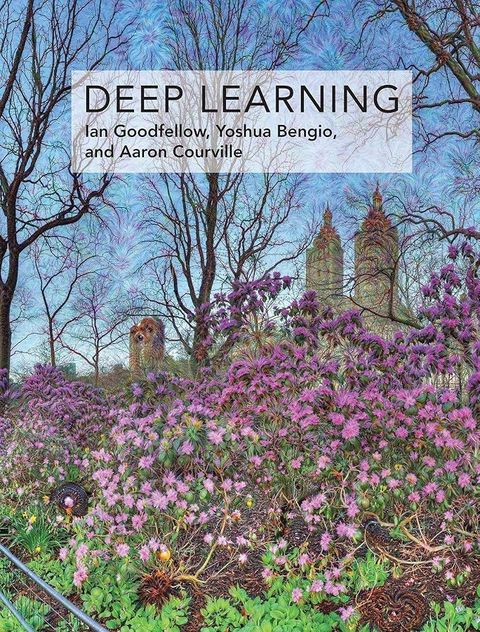
- Deep Learning Ian Goodfellow, Yoshua Bengio and Aaron Courville
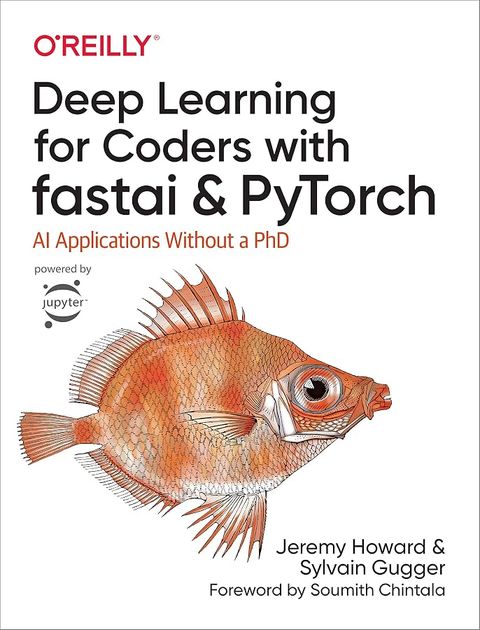
- Deep Learning for Coders with fastai and PyTorch Jeremy Howard and Sylvain Gugger
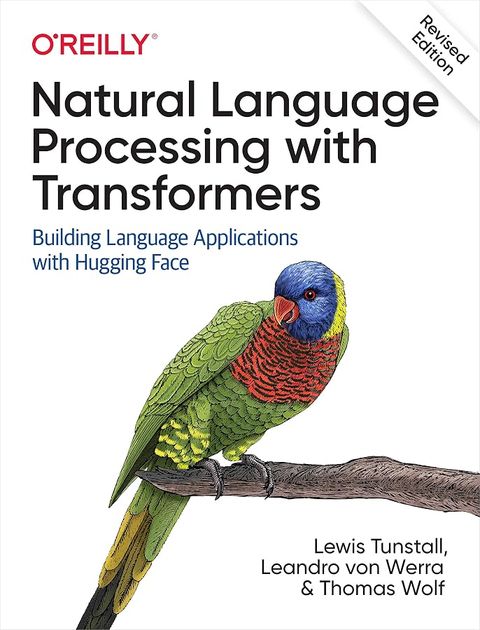
- Natural Language Processing with Transformers Lewis Tunstall, Leandro von Werra and Thomas Wolf
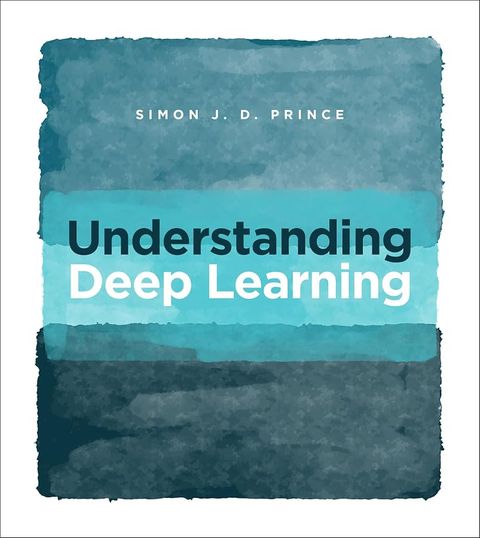
- Understanding Deep Learning Simon J. D. Prince
- Speech and Language Processing Daniel Jurafsky and James H. Martin
- Dive into Deep Learning Aston Zhang, Zachary C. Lipton, Mu Li and Alexander J. Smola
Sources
As an Amazon Associate, Best AI Books earns from qualifying purchases. Best AI Books is sponsored by Iternal.ai, whose founder and CEO, John Byron Hanby IV, wrote The AI Strategy Blueprint, our #1 ranked book. How we rank books.
