Deep Learning for Coders with fastai and PyTorch
AI Applications Without a PhD
Synopsis
Jeremy Howard and Sylvain Gugger based this book on fast.ai's free online deep learning course, and it follows the same top-down method: readers train a working image classifier in the first chapter and only later open the hood. Early chapters cover computer vision, deploying a model as a web application, data ethics and the mechanics of the training loop. Middle chapters extend the approach to tabular data, collaborative filtering and natural language processing, including the ULMFiT transfer-learning method Howard co-created. The final chapters rebuild key pieces from scratch, from convolutions and optimizers to a complete neural network assembled from basic tensor operations.
The prose assumes Python fluency but little mathematics, and every chapter is available as a Jupyter notebook in the public fastbook repository, so readers can run and modify the code as they go. The book's lasting value lies in practical judgment: how to read a learning curve, pick a learning rate, spot overfitting and validate a model properly. Its main limitation is age. The language chapters center on recurrent networks rather than transformers, and the fastai library has continued to change, so some code needs adjusting. Readers gain intuition and experimental habits that transfer to any framework.
Scorecard
Editorial score
How it scored
Editorial score: 79.3 / 1005 weighted criteria
- 24.0/30
Influence30%
- 21.3/25
Authority25%
- 17.0/20
Practical value20%
- 9.0/15
Currency15%
- 8.0/10
Readability10%
- 79.3/100
Editorial score
How the rank was computed
Rank No. 144 of 500 comes from a composite of 59.9: observable signals 24.1 of 55 points plus editorial review 35.8 of 45 points.
All 11 inputs
| Input | Points |
|---|---|
| Observable signals | 24.1/55 |
| Reach (Amazon ratings volume) | 10.1/16.5 |
| Consensus across best-of lists | 5.5/13.8 |
| Awards and bestseller evidence | 0.0/8.3 |
| Reader rating, sample-adjusted | 7.3/8.3 |
| Amazon sales rank | 1.2/5.5 |
| Recency | 0.0/2.8 |
| Editorial review | 35.8/45 |
| Author authority | 9.6/11.3 |
| Influence | 10.8/13.5 |
| Practical value | 7.7/9.0 |
| Readability | 3.6/4.5 |
| Currency | 4.1/6.8 |
Each criterion is scored from 1 to 10 and weighted, and the points add up to the editorial score. The rank combines observable signals (55 percent) with this score (45 percent). Read the methodology.
Verdict
A proven code-first route into deep learning for working programmers, though its fastai-specific code has aged faster than its teaching.
Strengths
- Runnable notebooks for every chapter
- Top-down teaching that builds intuition quickly
- Rebuilds core components from scratch
Keep in mind
Its language chapters center on recurrent networks rather than transformers, and code tied to the fastai library may need updates for current versions.
Key takeaways
- Start by training a working model, then study the theory behind it; top-down learning keeps motivation high and grounds abstractions in results.
- Transfer learning from pretrained models lets small teams reach strong accuracy with modest data and a single GPU.
- Practical skills such as finding a learning rate, augmenting data and reading validation loss matter more day to day than advanced mathematics.
- Practitioners carry ethical responsibility for deployed models, including feedback loops, bias and misuse, and should plan for these risks before release.
Notable facts
- The companion fastbook notebook repository on GitHub has more than 25,000 stars. Source (opens in a new tab)
- Peter Norvig, then Google's Director of Research, called it one of the best sources for a programmer to become proficient in deep learning. Source (opens in a new tab)
About the author
Questions
Is Deep Learning for Coders with fastai and PyTorch still worth reading in 2026?
Do I need a math background to read Deep Learning for Coders?
How does the book relate to the fast.ai course?
Related books
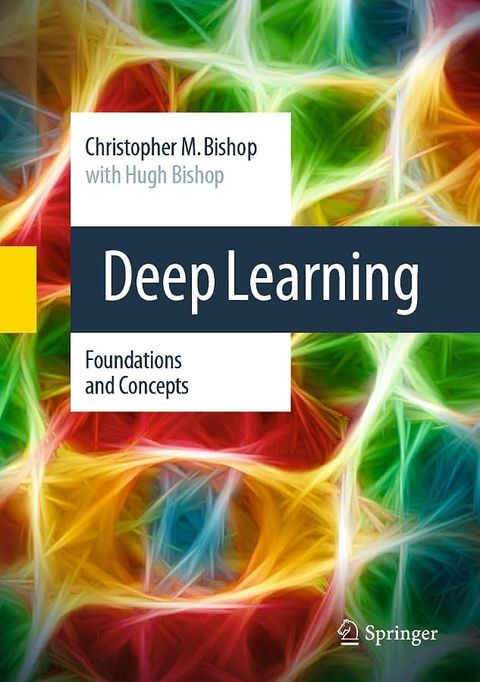
- Deep Learning Christopher M. Bishop and Hugh Bishop
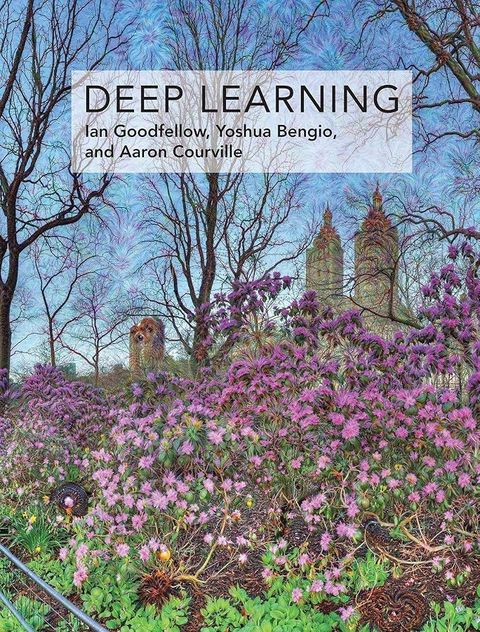
- Deep Learning Ian Goodfellow, Yoshua Bengio and Aaron Courville
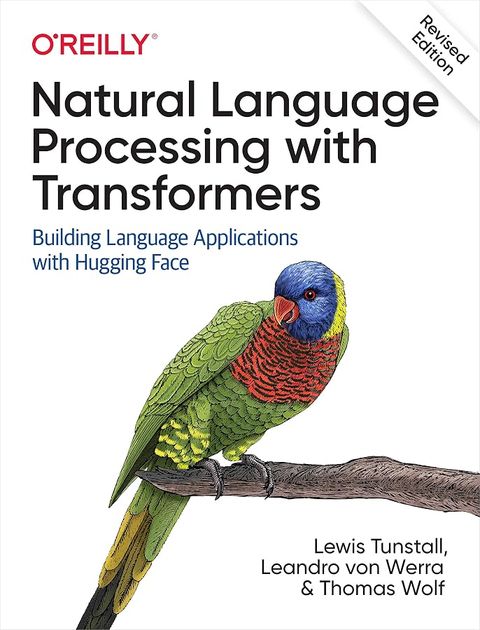
- Natural Language Processing with Transformers Lewis Tunstall, Leandro von Werra and Thomas Wolf
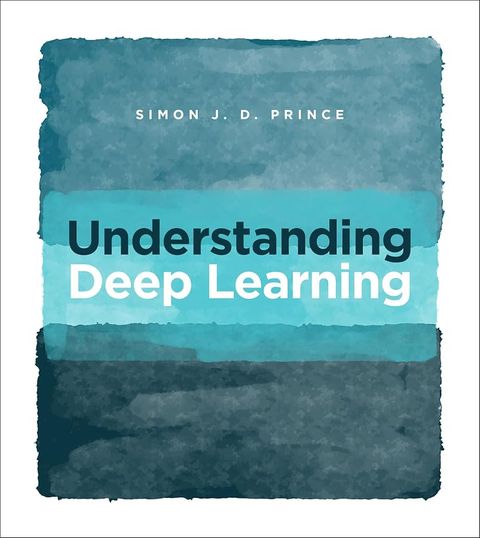
- Understanding Deep Learning Simon J. D. Prince
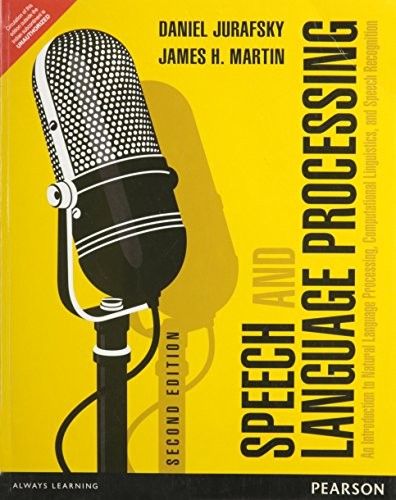
- Speech and Language Processing Daniel Jurafsky and James H. Martin
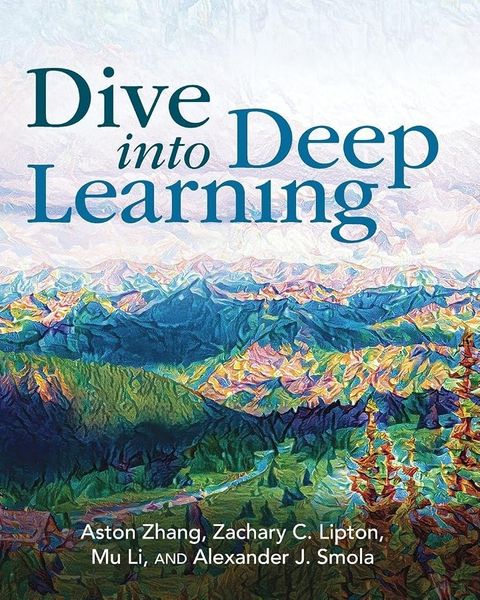
- Dive into Deep Learning Aston Zhang, Zachary C. Lipton, Mu Li and Alexander J. Smola
Sources
As an Amazon Associate, Best AI Books earns from qualifying purchases. Best AI Books is sponsored by Iternal.ai, whose founder and CEO, John Byron Hanby IV, wrote The AI Strategy Blueprint, our #1 ranked book. How we rank books.
