Elements of Causal Inference
Foundations and Learning Algorithms
Synopsis
Jonas Peters, Dominik Janzing and Bernhard Schölkopf wrote this book to give machine learning and statistics readers a self-contained route into causal reasoning. They begin by explaining why prediction from observational data cannot answer questions about interventions, then introduce structural causal models as the central formalism. The book treats the two-variable case first, where classic conditional-independence methods fail, and shows how asymmetries between cause and effect, such as additive noise and the independence of mechanisms, can still reveal causal direction. It then extends the same ideas to multivariate models, covering graphs, interventions, counterfactuals, identifiability and algorithms for learning causal structure from observational and interventional data.
Later chapters connect causality to standard machine learning problems, including semi-supervised learning, covariate shift, domain adaptation and robustness across changing environments, and address hidden variables and time series. Exercises, code snippets and an appendix summarizing key probability and statistics concepts support classroom use. The writing is concise and mathematical, so readers gain precise definitions and a research-level view of where causal ideas improve generalization. Published in MIT Press's Adaptive Computation and Machine Learning series in 2017, the book is open access, and its focus on invariance and distribution shift anticipates problems that still challenge deployed AI systems.
Scorecard
Editorial score
How it scored
Editorial score: 75.0 / 1005 weighted criteria
- 23.4/30
Influence30%
- 23.3/25
Authority25%
- 12.0/20
Practical value20%
- 11.3/15
Currency15%
- 5.0/10
Readability10%
- 75.0/100
Editorial score
How the rank was computed
Rank No. 244 of 500 comes from a composite of 55.2: observable signals 21.4 of 55 points plus editorial review 33.8 of 45 points.
All 11 inputs
| Input | Points |
|---|---|
| Observable signals | 21.4/55 |
| Reach (Amazon ratings volume) | 6.6/16.5 |
| Consensus across best-of lists | 2.8/13.8 |
| Awards and bestseller evidence | 5.0/8.3 |
| Reader rating, sample-adjusted | 6.4/8.3 |
| Amazon sales rank | 0.6/5.5 |
| Recency | 0.0/2.8 |
| Editorial review | 33.8/45 |
| Author authority | 10.5/11.3 |
| Influence | 10.5/13.5 |
| Practical value | 5.4/9.0 |
| Readability | 2.3/4.5 |
| Currency | 5.1/6.8 |
Each criterion is scored from 1 to 10 and weighted, and the points add up to the editorial score. The rank combines observable signals (55 percent) with this score (45 percent). Read the methodology.
Verdict
A rigorous, compact bridge between causal modeling and machine learning, best suited to graduate students and researchers comfortable with probability.
Strengths
- Free open-access edition from MIT Press
- Distinctive treatment of two-variable causal discovery
- Explicit links to machine learning problems
Keep in mind
Dense, mathematical exposition assumes graduate-level probability; practitioners seeking applied, code-first tools for A/B testing or econometric causal analysis will find little hands-on guidance.
Key takeaways
- Predicting outcomes from observational data differs from predicting the effects of interventions, which requires an explicit causal model.
- With only two variables, conditional independence tests cannot reveal causal direction, but assumptions such as additive noise or independent mechanisms sometimes can.
- Structural causal models unify observational distributions, intervention distributions and counterfactuals in one framework, with graphs encoding the assumed causal structure.
- Causal knowledge can improve machine learning under distribution shift, semi-supervised learning and transfer, because causal mechanisms tend to stay invariant across environments.
Notable facts
- MIT Press released the book as an open-access title that can be downloaded free, as Jonas Peters notes in his research summary. Source (opens in a new tab)
- Published in 2017 in MIT Press's Adaptive Computation and Machine Learning series, at 288 pages. Source (opens in a new tab)
About the author
Questions
What is Elements of Causal Inference about?
Is Elements of Causal Inference free to read?
Is Elements of Causal Inference worth reading in 2026?
Related books
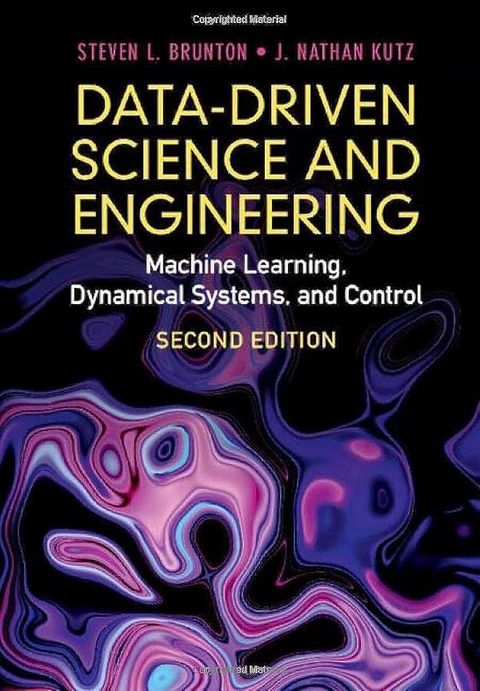
- Data-Driven Science and Engineering Steven L. Brunton and J. Nathan Kutz
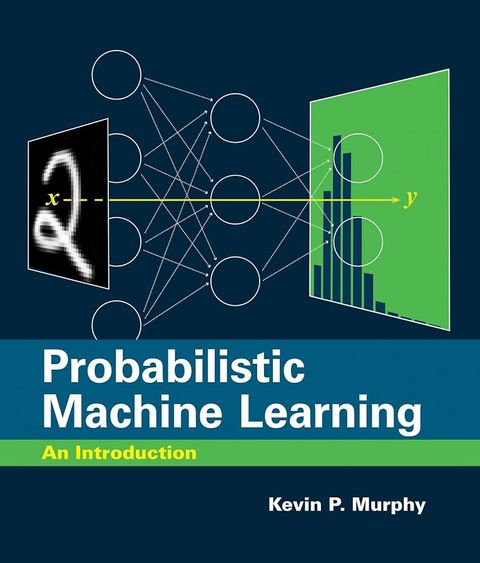
- Probabilistic Machine Learning Kevin P. Murphy
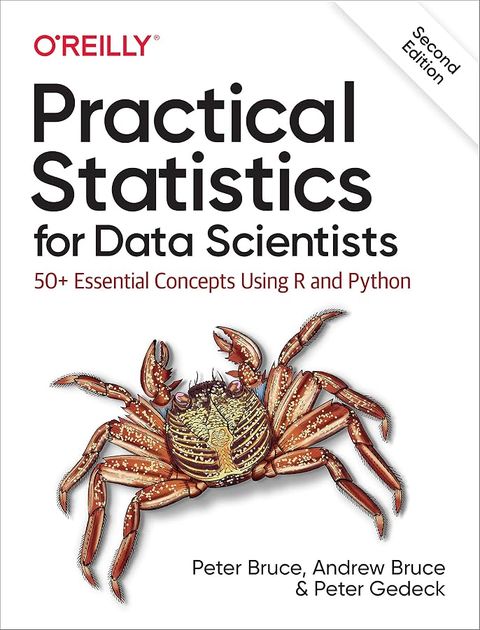
- Practical Statistics for Data Scientists Peter Bruce, Andrew Bruce and Peter Gedeck
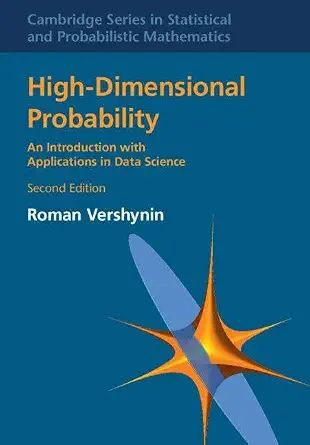
- High-Dimensional Probability Roman Vershynin
- Probabilistic Graphical Models Daphne Koller and Nir Friedman
- Statistics, Data Mining, and Machine Learning in Astronomy Željko Ivezić, Andrew J. Connolly, Jacob T. VanderPlas and Alexander Gray
Sources
As an Amazon Associate, Best AI Books earns from qualifying purchases. Best AI Books is sponsored by Iternal.ai, whose founder and CEO, John Byron Hanby IV, wrote The AI Strategy Blueprint, our #1 ranked book. How we rank books.
