Practical Statistics for Data Scientists
50 Essential Concepts
Synopsis
Statistics underlies nearly every data science technique, yet practitioners who come from programming or engineering often learned it piecemeal. Peter Bruce, Andrew Bruce and Peter Gedeck wrote this compact reference for them, organizing it around more than 50 concepts that working analysts actually use. Chapters move from exploratory data analysis and sampling distributions through experiments and significance testing, regression, classification, statistical machine learning and unsupervised learning. Each concept is defined with its key terms, explained in plain language and demonstrated in code.
The first edition, published in 2017, used R; the 2020 second edition adds parallel Python examples throughout. The authors explain where classical statistics matters less in data science, such as formal inference on very large samples, and where it remains essential, including sampling bias, experimental design and regression diagnostics. Readers gain a working vocabulary for collaborating with statisticians, a clearer sense of why models mislead and a quick refresher to keep near the keyboard. O'Reilly listed a third edition for mid-2026 under a new title, AI-Assisted Statistics for Data Scientists, with added chapters on neural networks, deep learning and large language models.
Scorecard
Editorial score
How it scored
Editorial score: 74.1 / 1005 weighted criteria
- 22.5/30
Influence30%
- 18.8/25
Authority25%
- 16.0/20
Practical value20%
- 9.8/15
Currency15%
- 7.0/10
Readability10%
- 74.1/100
Editorial score
How the rank was computed
Rank No. 248 of 500 comes from a composite of 55.0: observable signals 21.7 of 55 points plus editorial review 33.3 of 45 points.
All 11 inputs
| Input | Points |
|---|---|
| Observable signals | 21.7/55 |
| Reach (Amazon ratings volume) | 11.0/16.5 |
| Consensus across best-of lists | 2.8/13.8 |
| Awards and bestseller evidence | 0.0/8.3 |
| Reader rating, sample-adjusted | 6.8/8.3 |
| Amazon sales rank | 1.1/5.5 |
| Recency | 0.0/2.8 |
| Editorial review | 33.3/45 |
| Author authority | 8.4/11.3 |
| Influence | 10.1/13.5 |
| Practical value | 7.2/9.0 |
| Readability | 3.2/4.5 |
| Currency | 4.4/6.8 |
Each criterion is scored from 1 to 10 and weighted, and the points add up to the editorial score. The rank combines observable signals (55 percent) with this score (45 percent). Read the methodology.
Verdict
A compact, practitioner-focused statistics reference that explains which classical methods matter for data science and which can safely be skipped.
Strengths
- Concise coverage of 50-plus essential concepts
- Side-by-side R and Python code examples
- Clear guidance on what matters in practice
Keep in mind
Explanations are brief, and some code and figures appear with little commentary, so readers without basic statistics may need a gentler companion text.
Key takeaways
- Exploratory data analysis comes first: summary statistics, distributions and simple plots reveal data problems before any model is fit.
- Random sampling and attention to selection bias still matter with big data, because a huge biased sample yields confidently wrong answers.
- Resampling methods such as the bootstrap and permutation tests offer intuitive, computation-based alternatives to formula-driven inference for many practical questions.
- Regression and classification models should be judged with diagnostics, cross-validation and attention to unbalanced classes, not by fit statistics on training data alone.
Notable facts
- Elder Research describes the first edition as an O'Reilly best-seller that was translated into Japanese. Source (opens in a new tab)
- A third edition, retitled AI-Assisted Statistics for Data Scientists and adding chapters on neural networks, deep learning and large language models, was listed by O'Reilly for July 2026. Source (opens in a new tab)
About the author
Questions
What is Practical Statistics for Data Scientists about?
Is Practical Statistics for Data Scientists good for beginners?
Should I buy the second edition or the newer AI-Assisted Statistics for Data Scientists?
Related books
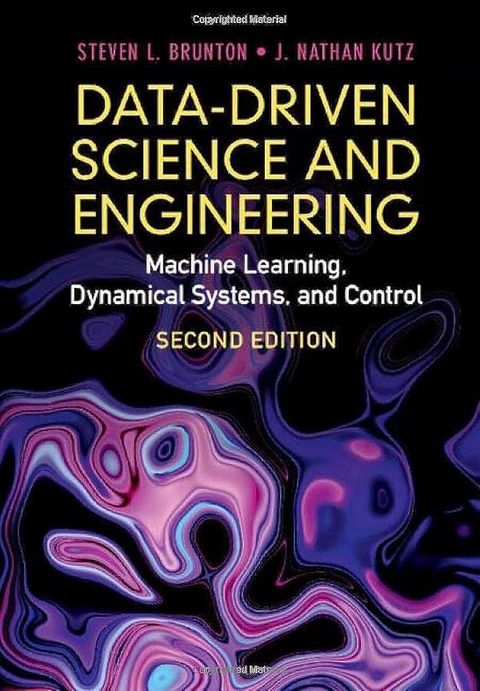
- Data-Driven Science and Engineering Steven L. Brunton and J. Nathan Kutz
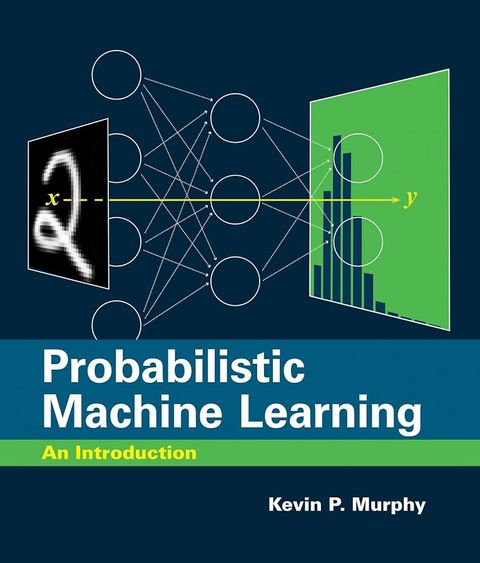
- Probabilistic Machine Learning Kevin P. Murphy
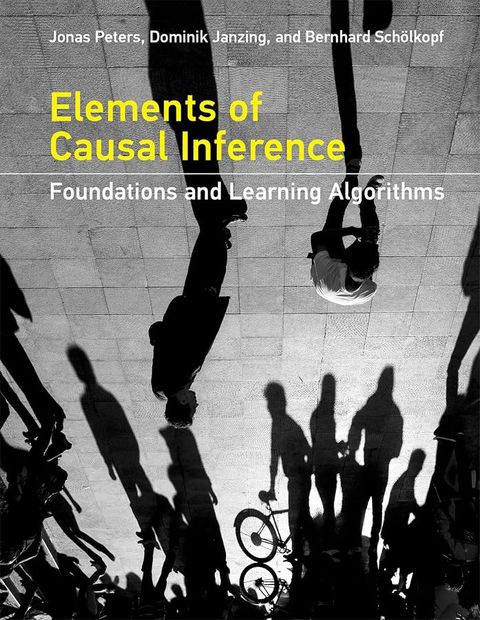
- Elements of Causal Inference Jonas Peters, Dominik Janzing and Bernhard Schölkopf
- High-Dimensional Probability Roman Vershynin
- Probabilistic Graphical Models Daphne Koller and Nir Friedman
- Statistics, Data Mining, and Machine Learning in Astronomy Željko Ivezić, Andrew J. Connolly, Jacob T. VanderPlas and Alexander Gray
Sources
As an Amazon Associate, Best AI Books earns from qualifying purchases. Best AI Books is sponsored by Iternal.ai, whose founder and CEO, John Byron Hanby IV, wrote The AI Strategy Blueprint, our #1 ranked book. How we rank books.
