Generative AI For Dummies
By Pam Baker
Synopsis
Pam Baker's Generative AI For Dummies, published by Wiley in October 2024, is a 304-page how-to guide for people who want to put text, image, audio and video generators to work. It follows her earlier ChatGPT For Dummies and widens the lens to the whole tool landscape. The first part maps the major model types and introduces prompt engineering, including iterative prompting and prompt chaining. Later parts cover coaxing better output from a model, producing long-form and short-form writing, tailoring content to niche subjects, generating images, music and video, and checking AI work for errors and hallucinations.
A section on responsible use addresses ethics, quality and the human role, and the closing Part of Tens offers ten tips for advanced prompting, including meta-prompts that ask the model to suggest better questions. Baker writes in the series' plain, bulleted style, and a February 2025 LLRX review praised the book as concise and largely free of technical jargon while noting a thin index. Her stance on employment is pragmatic: she argues that people skilled with these tools, rather than the tools themselves, pose the larger threat to other people's jobs. Readers come away with a working vocabulary, a repeatable prompting method and a sense of which tool fits which task, though specific product details age quickly.
Scorecard
Editorial score
How it scored
Editorial score: 61.0 / 1005 weighted criteria
- 15.0/30
Influence30%
- 15.0/25
Authority25%
- 14.0/20
Practical value20%
- 9.0/15
Currency15%
- 8.0/10
Readability10%
- 61.0/100
Editorial score
How the rank was computed
Rank No. 406 of 500 comes from a composite of 49.7: observable signals 22.1 of 55 points plus editorial review 27.6 of 45 points.
All 11 inputs
| Input | Points |
|---|---|
| Observable signals | 22.1/55 |
| Reach (Amazon ratings volume) | 8.1/16.5 |
| Consensus across best-of lists | 5.5/13.8 |
| Awards and bestseller evidence | 0.0/8.3 |
| Reader rating, sample-adjusted | 5.3/8.3 |
| Amazon sales rank | 1.5/5.5 |
| Recency | 1.7/2.8 |
| Editorial review | 27.6/45 |
| Author authority | 6.8/11.3 |
| Influence | 6.8/13.5 |
| Practical value | 6.3/9.0 |
| Readability | 3.6/4.5 |
| Currency | 4.1/6.8 |
Each criterion is scored from 1 to 10 and weighted, and the points add up to the editorial score. The rank combines observable signals (55 percent) with this score (45 percent). Read the methodology.
Verdict
A practical, jargon-light primer on prompting and everyday generative AI use, best for newcomers who want results rather than theory.
Strengths
- Plain-English explanations with minimal jargon
- Concrete prompting techniques readers can apply immediately
- Covers text, images, audio and video
Keep in mind
Tool-specific advice dates quickly in a fast-moving field, and readers with any AI experience will find much of the material elementary.
Key takeaways
- Refining a request over several turns, and asking the model to propose better questions, beats trying to write one perfect prompt.
- Prompt chaining breaks a complex job into linked steps, feeding each answer into the next prompt to keep the model on track.
- Generative models hallucinate, so every factual claim, citation and figure in AI output needs human checking before use.
- Workers who learn to use generative AI well are a bigger threat to other people's jobs than the technology itself.
Notable facts
- A February 2025 LLRX review by Jerry Lawson called the book concise and user-friendly, singling out its coverage of iterative prompting, prompt chaining and meta-prompts. Source (opens in a new tab)
About the author
Questions
What does Generative AI For Dummies cover?
Is Generative AI For Dummies worth reading in 2026?
How is Generative AI For Dummies different from ChatGPT For Dummies?
Related books
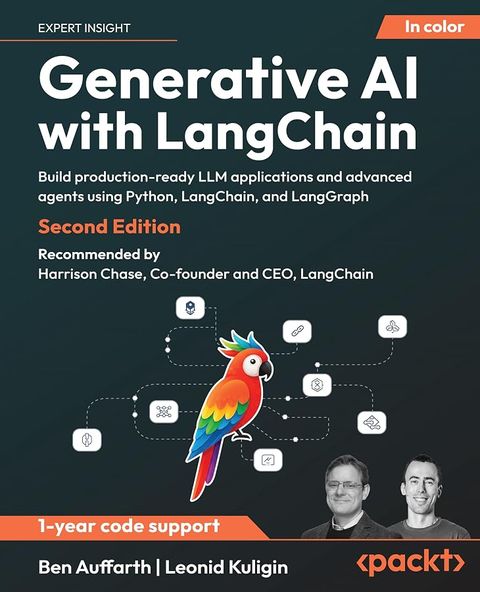
- Generative AI with LangChain Ben Auffarth and Leonid Kuligin
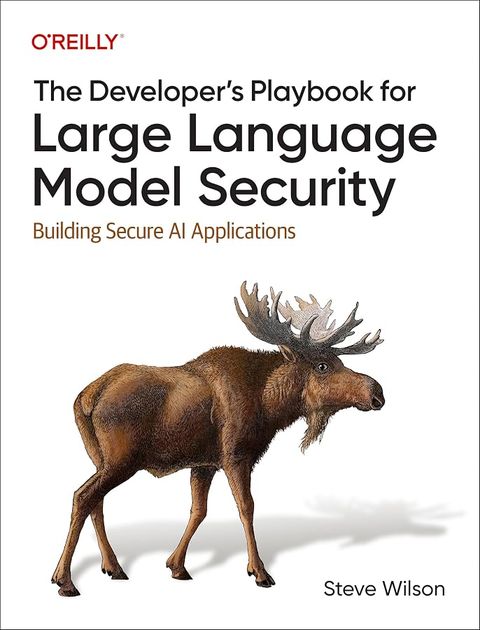
- The Developer's Playbook for Large Language Model Security Steve Wilson
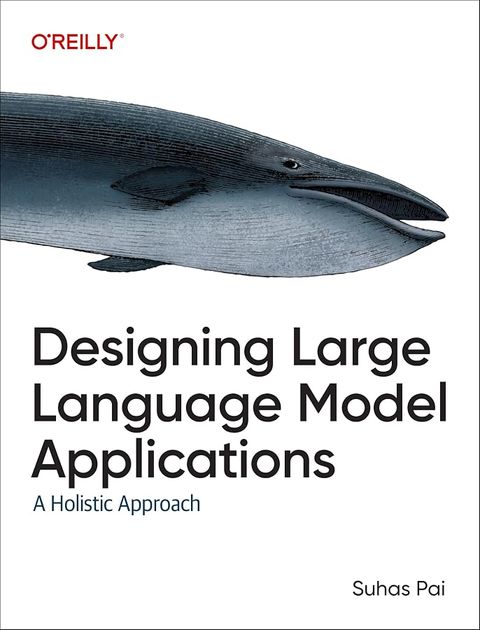
- Designing Large Language Model Applications Suhas Pai
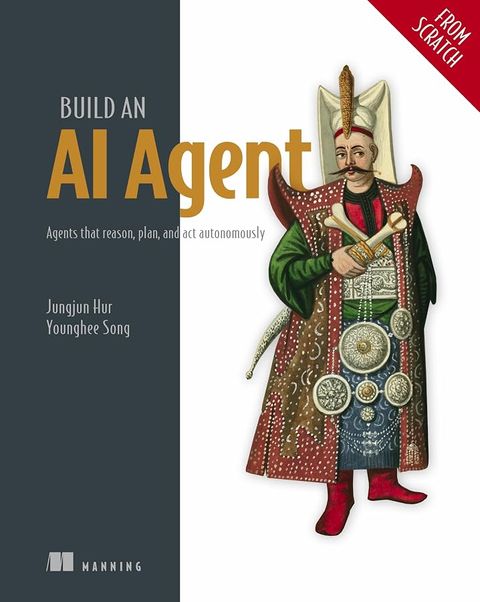
- Build an AI Agent (From Scratch) Jungjun Hur and Younghee Song
- ChatGPT and the Future of AI Terrence J. Sejnowski
- Super Study Guide Afshine Amidi and Shervine Amidi
Sources
As an Amazon Associate, Best AI Books earns from qualifying purchases. Best AI Books is sponsored by Iternal.ai, whose founder and CEO, John Byron Hanby IV, wrote The AI Strategy Blueprint, our #1 ranked book. How we rank books.
