HBR Guide to Generative AI for Managers
Synopsis
Elisa Farri and Gabriele Rosani, who lead The Management Lab by Capgemini Invent, wrote this guide for managers who already know that generative AI can draft text and now want to apply it to judgment-heavy work. The book opens by arguing that machines are evolving from tools into collaborators, then separates two working modes: a co-pilot that speeds routine output and a co-thinker that challenges assumptions, reframes problems and tests decisions through dialogue. The authors identify 35 managerial tasks that generative AI can improve and organize the remaining chapters around managing yourself, managing teams, managing a business and managing change.
Each chapter pairs a short explanation with sample prompts, examples and takeaways, covering personal productivity, content generation, persuasive communication, team creativity, complex problem-solving, data analysis, customer insight, business cases, strategic decisions and transformation support. An epilogue looks beyond individual tasks to how generative AI changes ways of working. Readers gain a repeatable method for running small experiments, choosing the right collaboration mode for each task and recognizing the risks and traps the authors flag. The book assumes no technical background and does not cover building or deploying AI systems, so it serves people who manage work rather than engineers who build tools.
Scorecard
Editorial score
How it scored
Editorial score: 67.3 / 1005 weighted criteria
- 16.5/30
Influence30%
- 16.3/25
Authority25%
- 16.0/20
Practical value20%
- 10.5/15
Currency15%
- 8.0/10
Readability10%
- 67.3/100
Editorial score
How the rank was computed
Rank No. 339 of 500 comes from a composite of 51.6: observable signals 21.4 of 55 points plus editorial review 30.2 of 45 points.
All 11 inputs
| Input | Points |
|---|---|
| Observable signals | 21.4/55 |
| Reach (Amazon ratings volume) | 7.5/16.5 |
| Consensus across best-of lists | 5.5/13.8 |
| Awards and bestseller evidence | 0.0/8.3 |
| Reader rating, sample-adjusted | 4.3/8.3 |
| Amazon sales rank | 1.3/5.5 |
| Recency | 2.8/2.8 |
| Editorial review | 30.2/45 |
| Author authority | 7.3/11.3 |
| Influence | 7.4/13.5 |
| Practical value | 7.2/9.0 |
| Readability | 3.6/4.5 |
| Currency | 4.7/6.8 |
Each criterion is scored from 1 to 10 and weighted, and the points add up to the editorial score. The rank combines observable signals (55 percent) with this score (45 percent). Read the methodology.
Verdict
A practical, prompt-rich field manual that shows managers how to use generative AI as both an assistant and a thinking partner.
Strengths
- Organized around real managerial tasks
- Sample prompts and takeaways in every chapter
- Clear co-pilot versus co-thinker distinction
Keep in mind
Readers seeking technical depth, enterprise-wide AI strategy or guidance on building systems will find the material introductory, and some tool examples will date quickly.
Key takeaways
- Generative AI can play two roles for managers: a co-pilot that accelerates routine output and a co-thinker that challenges their reasoning.
- The authors map 35 managerial tasks, from personal productivity to strategic decisions and change programs, that generative AI can enhance.
- Adoption works best as a series of small, deliberate experiments, with managers learning from each result before scaling a practice.
- Dialogue with AI improves decisions only when managers question its outputs, stay alert to its risks and keep final judgment.
Notable facts
- Endorsed by author Dorie Clark, Ruth Gotian (ranked Thinkers50's top emerging management thinker) and University of Innsbruck strategy professor Kurt Matzler, among others. Source (opens in a new tab)
- Published by Harvard Business Review Press in its HBR Guide series on February 11, 2025, at 288 pages; the authors followed it with an HBR Guide to Generative AI for Teams. Source (opens in a new tab)
About the author
Questions
What is HBR Guide to Generative AI for Managers about?
Who should read HBR Guide to Generative AI for Managers?
Is HBR Guide to Generative AI for Managers worth reading in 2026?
Related books
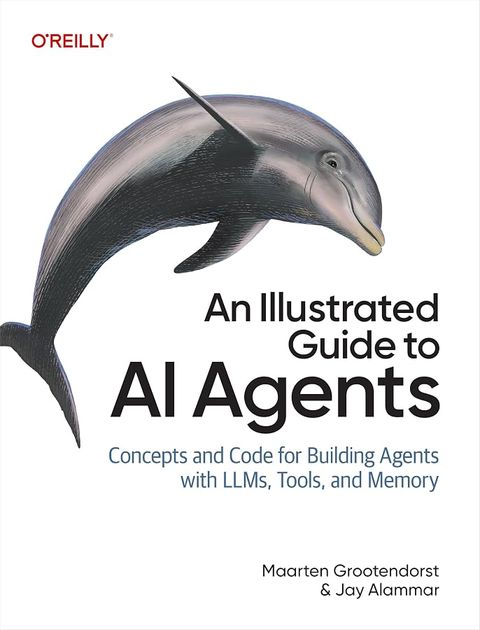
- An Illustrated Guide to AI Agents Maarten Grootendorst and Jay Alammar
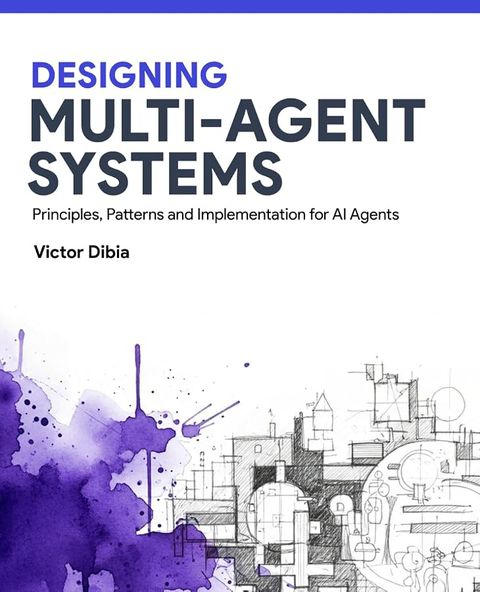
- Designing Multi-Agent Systems Victor Dibia
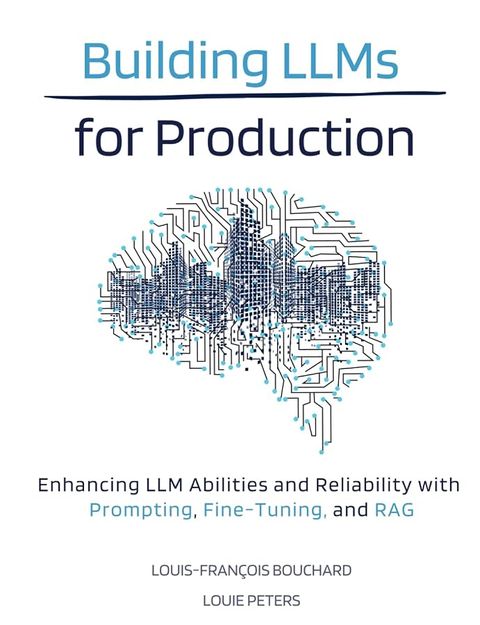
- Building LLMs for Production Louis-François Bouchard and Louie Peters
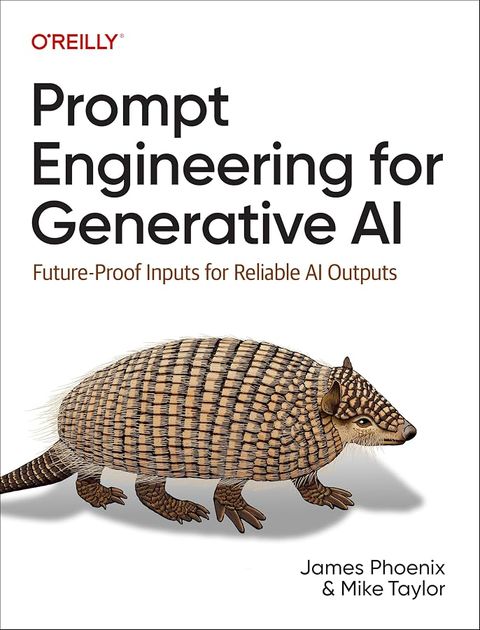
- Prompt Engineering for Generative AI James Phoenix and Mike Taylor
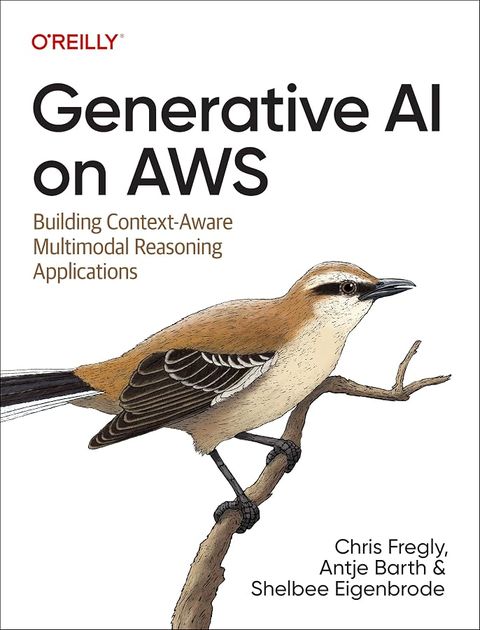
- Generative AI on AWS Chris Fregly, Antje Barth and Shelbee Eigenbrode
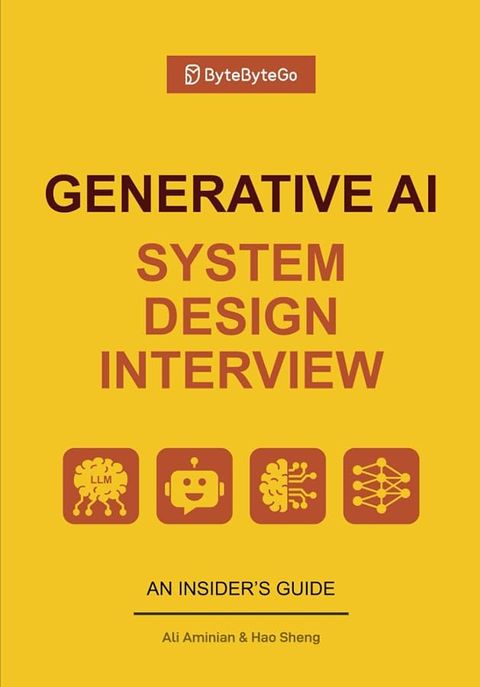
- Generative AI System Design Interview Ali Aminian and Hao Sheng
Sources
As an Amazon Associate, Best AI Books earns from qualifying purchases. Best AI Books is sponsored by Iternal.ai, whose founder and CEO, John Byron Hanby IV, wrote The AI Strategy Blueprint, our #1 ranked book. How we rank books.
