The Art of AI Product Development
Delivering business value
Synopsis
Janna Lipenkova, a computational linguist who has managed AI projects for BMW, Lufthansa and Volkswagen, writes for the people who decide what an AI product should do rather than those who train the models. Her organizing idea is a mental model of any AI system with two spaces: an opportunity space, where teams identify a real user need and the value meeting it would create, and a solution space built from three interdependent parts, data, intelligence and user experience, with governance constraining all of them. The book follows a product's life in three parts: discovery, development and adoption.
Discovery chapters cover finding and prioritizing AI opportunities and mapping the range of possible solutions. The development section, the longest, surveys predictive AI, the selection and evaluation of language models, prompt engineering, retrieval-augmented generation, fine-tuning and agentic workflows, explaining each at the level a product manager needs to weigh tradeoffs with engineers. Adoption chapters address designing interfaces for uncertain outputs, AI governance and stakeholder management, with scenarios drawn from marketing, supply chain management and sustainability. Readers finish with a shared vocabulary for working with data scientists and a repeatable process: launch early, evaluate on real usage and refine.
Scorecard
Editorial score
How it scored
Editorial score: 65.3 / 1005 weighted criteria
- 15.0/30
Influence30%
- 16.3/25
Authority25%
- 15.0/20
Practical value20%
- 12.0/15
Currency15%
- 7.0/10
Readability10%
- 65.3/100
Editorial score
How the rank was computed
Rank No. 456 of 500 comes from a composite of 48.3: observable signals 18.8 of 55 points plus editorial review 29.5 of 45 points.
All 11 inputs
| Input | Points |
|---|---|
| Observable signals | 18.8/55 |
| Reach (Amazon ratings volume) | 5.2/16.5 |
| Consensus across best-of lists | 5.5/13.8 |
| Awards and bestseller evidence | 0.0/8.3 |
| Reader rating, sample-adjusted | 4.8/8.3 |
| Amazon sales rank | 0.5/5.5 |
| Recency | 2.8/2.8 |
| Editorial review | 29.5/45 |
| Author authority | 7.3/11.3 |
| Influence | 6.8/13.5 |
| Practical value | 6.8/9.0 |
| Readability | 3.2/4.5 |
| Currency | 5.4/6.8 |
Each criterion is scored from 1 to 10 and weighted, and the points add up to the editorial score. The rank combines observable signals (55 percent) with this score (45 percent). Read the methodology.
Verdict
A structured, end-to-end guide for product teams turning predictive and generative AI into products that users trust and adopt.
Strengths
- Clear mental model linking data, models and UX
- Covers both predictive and generative AI
- Written for product managers, not researchers
Keep in mind
Engineers wanting implementation code will find it too high level, and its broad survey leaves little room for depth on any single technique.
Key takeaways
- Start AI products from a concrete user need or strategic asset, not from technology trends or executive mandates to add AI.
- Every AI system combines data, intelligence and user experience; weakness in any one component limits what the others can deliver.
- AI interfaces must be designed for uncertainty, signaling limitations, guiding user intent and collecting feedback so users develop calibrated trust.
- Choosing among prompting, retrieval-augmented generation, fine-tuning and agents is a product tradeoff involving cost, accuracy, data availability and risk.
Notable facts
- Manning's book page quotes Google's Aqsa Fulara calling it a great starting point for anyone new to AI product development. Source (opens in a new tab)
About the author
Questions
What does The Art of AI Product Development cover?
Who should read The Art of AI Product Development?
Does The Art of AI Product Development cover generative AI and agents?
Related books
- Digital Transformation Thomas M. Siebel
- HBR's 10 Must Reads on AI, Analytics, and the New Machine Age Harvard Business Review, Thomas H. Davenport and Michael E. Porter
- Generative AI Harvard Business Review, Ethan Mollick, David De Cremer, Tsedal Neeley and Prabhakant Sinha
- How to Lead in Data Science Jike Chong and Yue Cathy Chang
- Autonomous Transformation Brian Evergreen
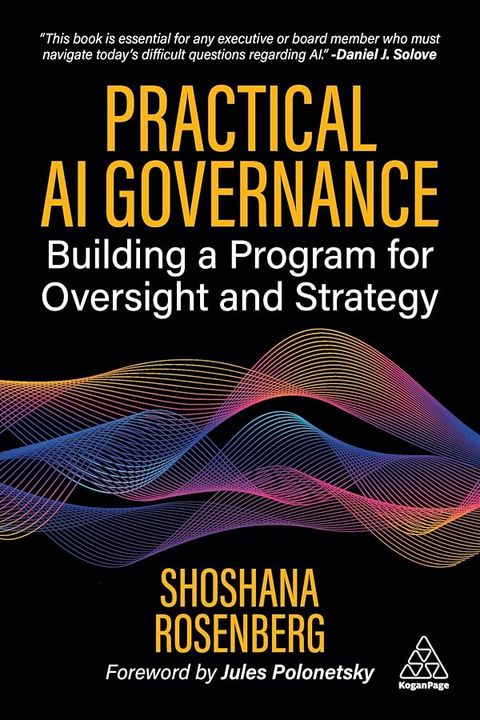
- Practical AI Governance Shoshana Rosenberg

Sources
As an Amazon Associate, Best AI Books earns from qualifying purchases. Best AI Books is sponsored by Iternal.ai, whose founder and CEO, John Byron Hanby IV, wrote The AI Strategy Blueprint, our #1 ranked book. How we rank books.
