Generative AI
The Insights You Need from Harvard Business Review
By Harvard Business Review, Ethan Mollick, David De Cremer, Tsedal Neeley and Prabhakant Sinha
Synopsis
Harvard Business Review Press built this short volume, published in January 2024, from eleven HBR articles written as companies rushed to respond to ChatGPT. The chapters move from strategy toward execution: how generative AI will change businesses and how leaders should adapt, how network effects let AI products improve with use, and a framework for choosing a first generative AI project. Middle chapters examine creative work, the augmentation of human creativity and sales, the last co-written by Prabhakant Sinha. The closing chapters turn to risk, covering intellectual property, Oguz Acar's argument that problem formulation will outlast prompt engineering, Tsedal Neeley's answers to eight questions about responsible use, and Eric Siegel's warning that hype distracts companies from practical gains.
Each chapter is brief and self-contained, written for managers rather than engineers, so the book can be read in an evening or consulted selectively. Readers come away with a vocabulary for where generative AI creates value, a method for triaging candidate projects, and a list of legal and reputational risks to raise with counsel. The anthology does not build a single argument, and much of its advice reflects the tools and uncertainties of 2023 rather than today's agents and reasoning models.
Scorecard
Editorial score
How it scored
Editorial score: 57.3 / 1005 weighted criteria
- 13.5/30
Influence30%
- 16.3/25
Authority25%
- 12.0/20
Practical value20%
- 7.5/15
Currency15%
- 8.0/10
Readability10%
- 57.3/100
Editorial score
How the rank was computed
Rank No. 454 of 500 comes from a composite of 48.3: observable signals 22.5 of 55 points plus editorial review 25.8 of 45 points.
All 11 inputs
| Input | Points |
|---|---|
| Observable signals | 22.5/55 |
| Reach (Amazon ratings volume) | 8.1/16.5 |
| Consensus across best-of lists | 8.3/13.8 |
| Awards and bestseller evidence | 0.0/8.3 |
| Reader rating, sample-adjusted | 3.8/8.3 |
| Amazon sales rank | 0.6/5.5 |
| Recency | 1.7/2.8 |
| Editorial review | 25.8/45 |
| Author authority | 7.3/11.3 |
| Influence | 6.1/13.5 |
| Practical value | 5.4/9.0 |
| Readability | 3.6/4.5 |
| Currency | 3.4/6.8 |
Each criterion is scored from 1 to 10 and weighted, and the points add up to the editorial score. The rank combines observable signals (55 percent) with this score (45 percent). Read the methodology.
Verdict
A brisk anthology of Harvard Business Review articles that orients managers on generative AI, though its 2023 vantage point shows.
Strengths
- Short, self-contained chapters for busy managers
- Covers strategy, sales, creativity, IP and risk
- Contributors include Tsedal Neeley and Prabhakant Sinha
Keep in mind
Written within the first year after ChatGPT's release, several chapters already read as dated, and the anthology format offers breadth rather than a sustained argument.
Key takeaways
- Choose early generative AI projects by weighing how valuable the output would be against how costly an inaccurate or fabricated output could prove.
- AI products that learn from usage data can improve as more customers adopt them, so network effects belong in any assessment of competitive advantage.
- Formulating the problem clearly may prove a more durable skill than crafting clever prompts, because models increasingly interpret plain-language instructions on their own.
- Responsible deployment requires policies on intellectual property, data exposure and accuracy before launch, rather than after an incident forces the issue.
Notable facts
- Harvard Business Review Press published the 192-page collection on January 30, 2024, as part of its Insights You Need series. Source (opens in a new tab)
- Its eleven chapters include Tsedal Neeley's '8 Questions About Using AI Responsibly, Answered' and Oguz A. Acar's 'AI Prompt Engineering Isn't the Future.' Source (opens in a new tab)
About the author
Questions
What is Generative AI: The Insights You Need from Harvard Business Review about?
Is Generative AI: The Insights You Need from Harvard Business Review worth reading in 2026?
Who should read Generative AI: The Insights You Need from Harvard Business Review?
Related books
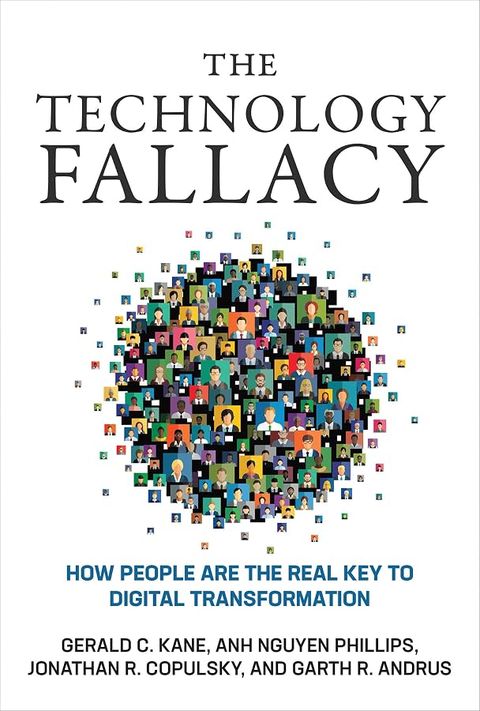
- The Technology Fallacy Gerald C. Kane, Anh Nguyen Phillips, Jonathan R. Copulsky and Garth R. Andrus
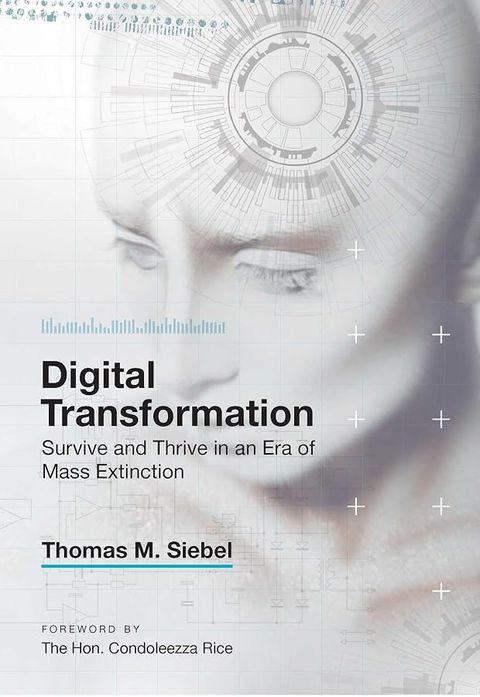
- Digital Transformation Thomas M. Siebel
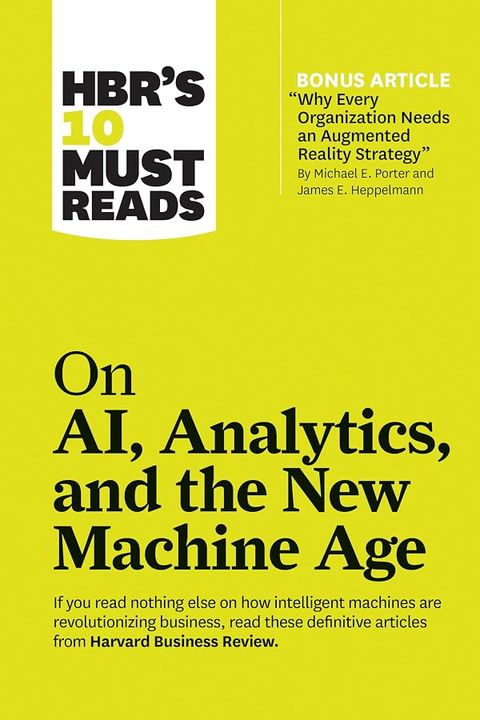
- HBR's 10 Must Reads on AI, Analytics, and the New Machine Age Harvard Business Review, Thomas H. Davenport and Michael E. Porter
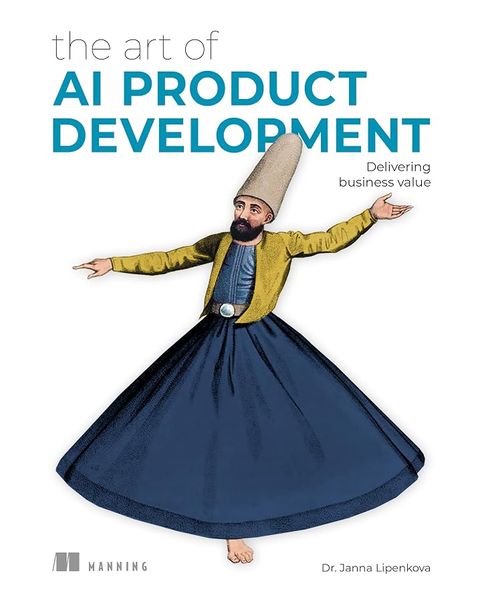
- The Art of AI Product Development Janna Lipenkova
- How to Lead in Data Science Jike Chong and Yue Cathy Chang
- Autonomous Transformation Brian Evergreen
Sources
As an Amazon Associate, Best AI Books earns from qualifying purchases. Best AI Books is sponsored by Iternal.ai, whose founder and CEO, John Byron Hanby IV, wrote The AI Strategy Blueprint, our #1 ranked book. How we rank books.
