The StatQuest Illustrated Guide to Neural Networks and AI
With Hands-On Examples in PyTorch!!!
By Josh Starmer
Synopsis
Josh Starmer, the former genetics researcher behind the StatQuest YouTube channel, follows his StatQuest Illustrated Guide to Machine Learning with a self-published guide of roughly 360 pages to the neural networks behind modern AI. Every concept is drawn in his signature cartoon style, with numbers flowing through small example networks so readers can watch weights, biases and activation functions at work. The book starts with a simple network fitting a shape to data, then builds through backpropagation, multiple inputs and outputs, ArgMax and SoftMax, and cross entropy before reaching convolutional networks for image classification.
Later chapters turn to sequences: recurrent networks and long short-term memory units applied to stock prediction, then word embeddings, seq2seq encoder-decoder models for translation, attention and transformers. The closing chapters distinguish decoder-only transformers, the design behind ChatGPT-style text generation, from encoder-only transformers used for classification and clustering, and a section on matrix algebra connects the drawings to the matrix operations real code performs. PyTorch exercises accompany the main chapters, showing how to implement each network step by step. A reviewer at NSF Unidata praised the book's balance of accessibility and technical depth. Readers finish with an intuitive, mechanical understanding of how large language models work and the coding basics to experiment further.
Scorecard
Editorial score
How it scored
Editorial score: 74.0 / 1005 weighted criteria
- 19.5/30
Influence30%
- 17.5/25
Authority25%
- 16.0/20
Practical value20%
- 12.0/15
Currency15%
- 9.0/10
Readability10%
- 74.0/100
Editorial score
How the rank was computed
Rank No. 240 of 500 comes from a composite of 55.5: observable signals 22.1 of 55 points plus editorial review 33.4 of 45 points.
All 11 inputs
| Input | Points |
|---|---|
| Observable signals | 22.1/55 |
| Reach (Amazon ratings volume) | 8.1/16.5 |
| Consensus across best-of lists | 2.8/13.8 |
| Awards and bestseller evidence | 0.0/8.3 |
| Reader rating, sample-adjusted | 6.9/8.3 |
| Amazon sales rank | 1.5/5.5 |
| Recency | 2.8/2.8 |
| Editorial review | 33.4/45 |
| Author authority | 7.9/11.3 |
| Influence | 8.8/13.5 |
| Practical value | 7.2/9.0 |
| Readability | 4.1/4.5 |
| Currency | 5.4/6.8 |
Each criterion is scored from 1 to 10 and weighted, and the points add up to the editorial score. The rank combines observable signals (55 percent) with this score (45 percent). Read the methodology.
Verdict
Starmer's illustrated, step-by-step approach makes backpropagation, attention and transformers understandable, with PyTorch code to cement each idea.
Strengths
- Step-by-step illustrations that build real intuition
- Covers CNNs, LSTMs, attention and transformers
- Hands-on PyTorch exercises for each concept
Keep in mind
The playful style and repetition can feel slow to experienced engineers, and the book covers neural networks only, not broader machine learning or deployment.
Key takeaways
- Backpropagation is the chain rule applied repeatedly, nudging every weight and bias in the direction that most reduces the network's error.
- Word embeddings turn words into numbers so that words used in similar contexts end up with similar values a network can process.
- Attention lets a model weigh every input word when producing each output, solving the memory bottleneck of earlier encoder-decoder translation models.
- Decoder-only transformers generate text one token at a time, while encoder-only transformers produce representations suited to classification and clustering.
Notable facts
- Thomas Martin, an AI/ML software engineer at the NSF Unidata Program Center, reviewed the book and wrote that it strikes an excellent balance between accessibility and technical depth. Source (opens in a new tab)
About the author
Questions
What does The StatQuest Illustrated Guide to Neural Networks and AI cover?
Do I need math or coding experience for the StatQuest neural networks book?
Is The StatQuest Illustrated Guide to Neural Networks and AI worth reading in 2026?
Related books
- Understanding Deep Learning Simon J. D. Prince
- Speech and Language Processing Daniel Jurafsky and James H. Martin
- Dive into Deep Learning Aston Zhang, Zachary C. Lipton, Mu Li and Alexander J. Smola
- Foundations of Computer Vision Antonio Torralba, Phillip Isola and William T. Freeman
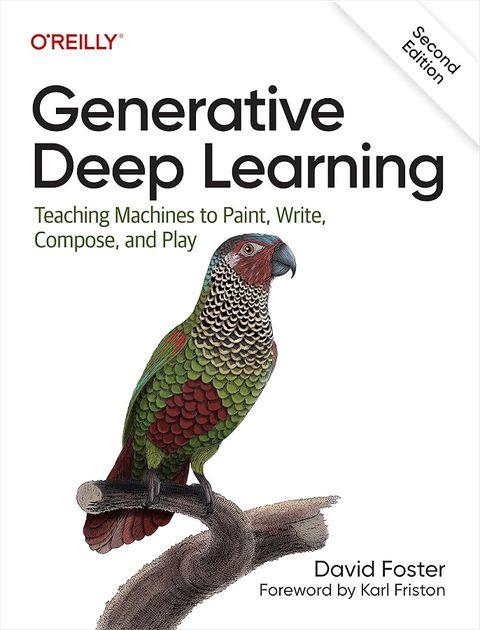
- Generative Deep Learning David Foster
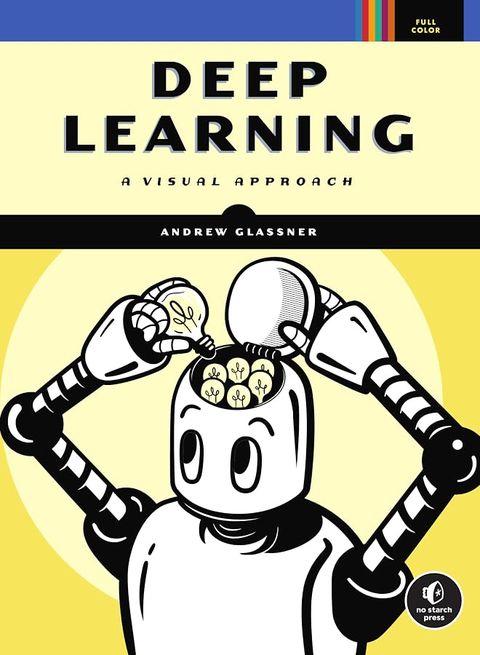
- Deep Learning Andrew Glassner
Sources
- The StatQuest Illustrated Guide to Neural Networks and AI (PDF) - StatQuest on Gumroad (opens in a new tab)
- Book Review: StatQuest Guide to Neural Networks and AI - NSF Unidata (opens in a new tab)
- Josh Starmer, StatQuest - Data Science Dojo podcast (opens in a new tab)
- The Statistics and Machine Learning Quests of Dr. Josh Starmer - Jon Krohn (opens in a new tab)
As an Amazon Associate, Best AI Books earns from qualifying purchases. Best AI Books is sponsored by Iternal.ai, whose founder and CEO, John Byron Hanby IV, wrote The AI Strategy Blueprint, our #1 ranked book. How we rank books.
