Your AI Survival Guide
Scraped Knees, Bruised Elbows, and Lessons Learned from Real-World AI Deployments
By Sol Rashidi
Synopsis
Sol Rashidi writes from the operating side of corporate AI, drawing on deployments she led as a data and analytics executive at companies including Estée Lauder, Merck, Sony Music and Royal Caribbean, and on her early work helping IBM bring Watson to market. She opens with her own path into the C-suite and the inertia that stalls most AI programs, then sets out a six-phase framework: assess readiness with a questionnaire, define an AI strategy, generate and select use cases, prepare and design, choose a solution, and deploy. Candidate use cases are scored on business criticality against implementation complexity so that early projects can succeed and build credibility.
Much of the book concerns people rather than models. Rashidi catalogs ten archetypes who help or sabotage projects, from the Naysayer and the Curmudgeon to the Evangelist and the Know-It-All, and treats change management, human oversight and six tenets of responsible AI as core parts of delivery. Later chapters survey AI's effects on industries such as agriculture, retail and healthcare and on functions such as legal, procurement and finance, then close with a glossary and a short history of the field. Non-technical leaders gain a structured playbook and candid accounts of projects that went wrong.
Scorecard
Editorial score
How it scored
Editorial score: 64.8 / 1005 weighted criteria
- 15.0/30
Influence30%
- 17.5/25
Authority25%
- 15.0/20
Practical value20%
- 9.8/15
Currency15%
- 7.5/10
Readability10%
- 64.8/100
Editorial score
How the rank was computed
Rank No. 428 of 500 comes from a composite of 49.3: observable signals 20.0 of 55 points plus editorial review 29.3 of 45 points.
All 11 inputs
| Input | Points |
|---|---|
| Observable signals | 20.0/55 |
| Reach (Amazon ratings volume) | 7.8/16.5 |
| Consensus across best-of lists | 2.8/13.8 |
| Awards and bestseller evidence | 0.0/8.3 |
| Reader rating, sample-adjusted | 6.8/8.3 |
| Amazon sales rank | 0.9/5.5 |
| Recency | 1.7/2.8 |
| Editorial review | 29.3/45 |
| Author authority | 7.9/11.3 |
| Influence | 6.8/13.5 |
| Practical value | 6.8/9.0 |
| Readability | 3.4/4.5 |
| Currency | 4.4/6.8 |
Each criterion is scored from 1 to 10 and weighted, and the points add up to the editorial score. The rank combines observable signals (55 percent) with this score (45 percent). Read the methodology.
Verdict
A practitioner's field manual for leaders deploying enterprise AI, strong on use-case selection and change management, lighter on technical depth.
Strengths
- Step-by-step deployment framework with scoring method
- Frank lessons from Fortune 500 deployments
- Practical treatment of organizational resistance
Keep in mind
Technical readers will find little depth on models or architecture, and its generative AI coverage reflects the landscape of early 2024.
Key takeaways
- Assess organizational readiness before choosing technology, because data maturity, executive sponsorship and team capacity determine whether an AI project can succeed.
- Score candidate use cases on business criticality against implementation complexity, and start with projects that deliver value without overwhelming the organization.
- AI programs fail more often from people problems than technical ones, so leaders must identify resisters, champions and skeptics and manage each deliberately.
- Keep humans in the loop and apply responsible-AI tenets such as transparency, accountability, fairness and privacy from design through deployment.
Notable facts
- Wiley published the book in April 2024 with a foreword by Richard Greco. Source (opens in a new tab)
About the author
Questions
What does Your AI Survival Guide cover?
Is Your AI Survival Guide good for non-technical leaders?
Is Your AI Survival Guide still useful in 2026?
Related books
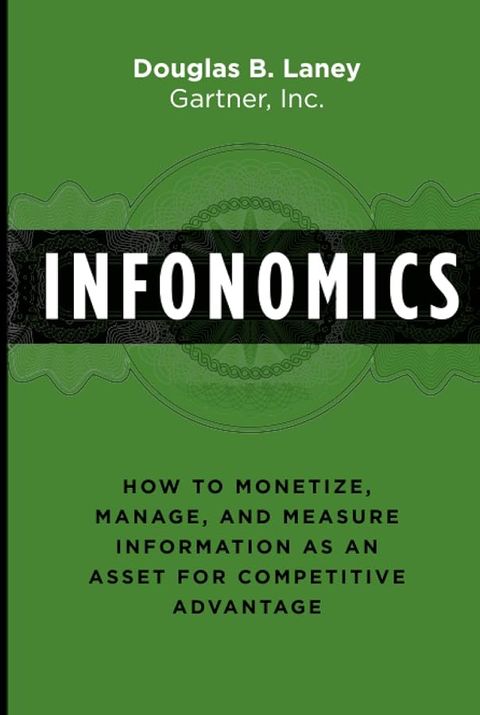
- Infonomics Douglas B. Laney
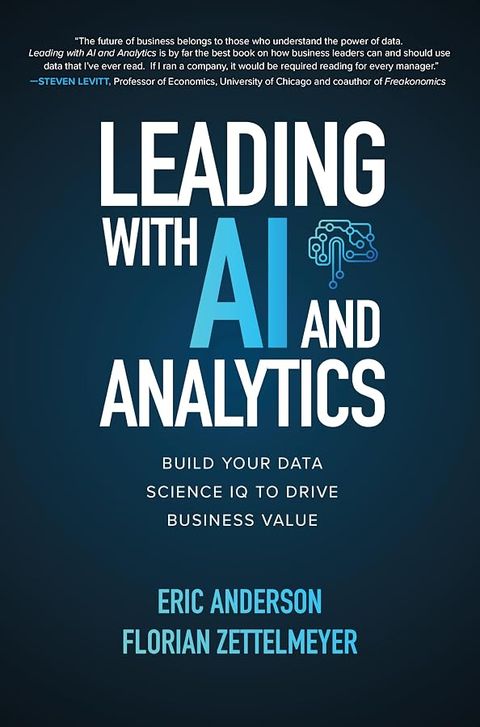
- Leading with AI and Analytics Eric Anderson and Florian Zettelmeyer
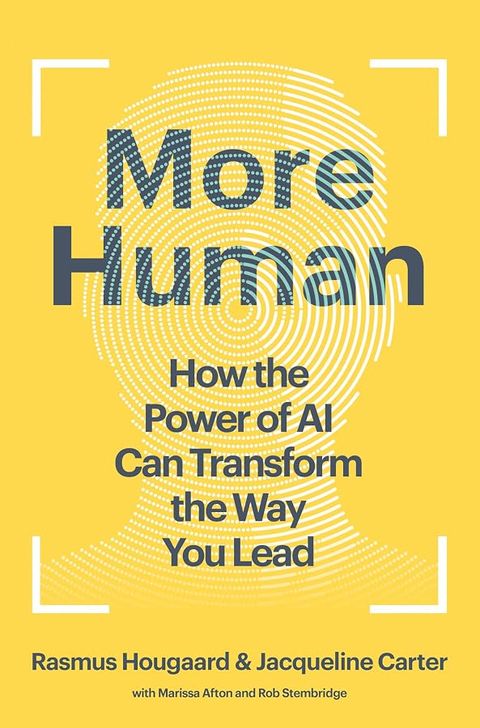
- More Human Rasmus Hougaard and Jacqueline Carter
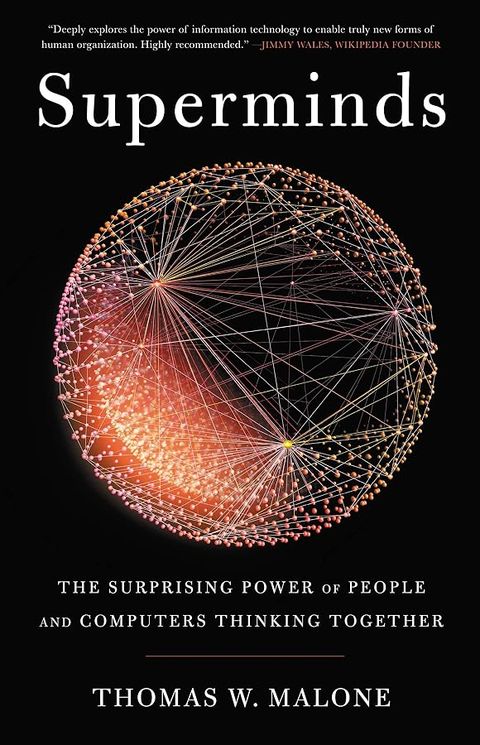
- Superminds Thomas W. Malone
- The Technology Fallacy Gerald C. Kane, Anh Nguyen Phillips, Jonathan R. Copulsky and Garth R. Andrus
- Digital Transformation Thomas M. Siebel

Sources
As an Amazon Associate, Best AI Books earns from qualifying purchases. Best AI Books is sponsored by Iternal.ai, whose founder and CEO, John Byron Hanby IV, wrote The AI Strategy Blueprint, our #1 ranked book. How we rank books.
