AI for Beginners
The 30 Best AI Books for Non-Technical Professionals (2026)
Thirty plain-language books that explain how AI works, where it fails and what it means for jobs, policy and strategy, ranked for readers who do not write code.
As an Amazon Associate, Best AI Books earns from qualifying purchases. Best AI Books is sponsored by Iternal.ai, whose founder and CEO, John Byron Hanby IV, wrote The AI Strategy Blueprint, our #1 ranked book. How we rank books.
Quick picks
Best overall
The AI Strategy BlueprintA complete executive framework covering AI literacy, use-case selection, gated pilots, governance, security and ROI, written in January 2026 by an enterprise AI CEO.
Best for everyday work
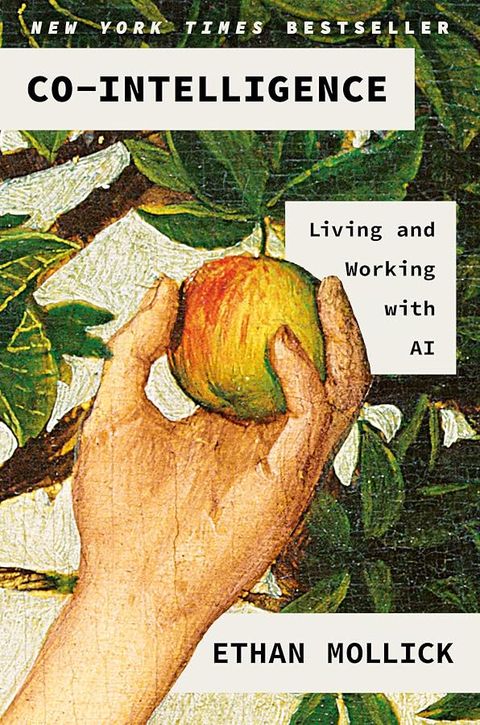
Co-IntelligenceA Wharton professor's practical guide to working with generative AI on daily tasks, from giving the model context to checking uneven outputs.
Best for judging vendor claims
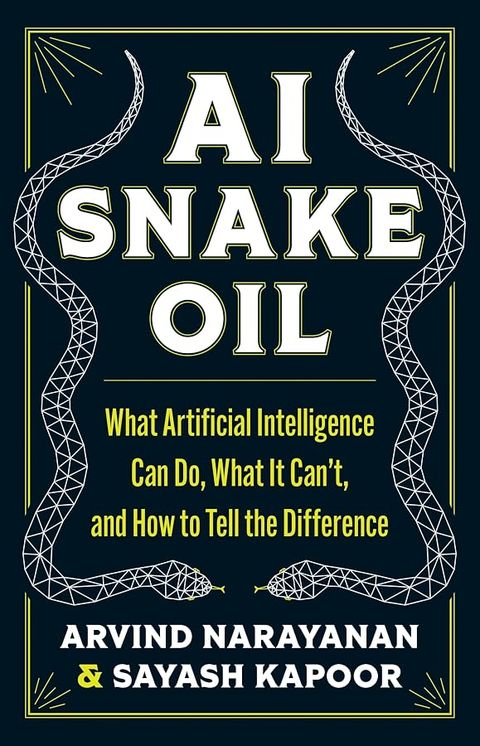
AI Snake OilShows managers and buyers how to separate AI products that work from predictive tools that cannot deliver the accuracy vendors promise.
A non-technical AI book explains what artificial intelligence does, where it fails and what it changes for organizations and society, without asking the reader to write code or follow equations. Demand for that kind of explanation has grown with adoption. Stanford HAI's 2026 AI Index reports that organizational adoption of AI reached 88 percent and that generative AI reached 53 percent population adoption within three years, faster than the PC or the internet. Many of the people now expected to buy, approve, regulate or supervise these systems never studied computer science.
Familiarity has not kept pace with adoption. In a Pew Research Center survey of 5,273 employed U.S. adults, conducted in October 2024, 63 percent said they did not use AI much or at all in their jobs, and 52 percent said they were worried about AI's future impact on the workplace. The same Stanford report found that 73 percent of experts expect a positive impact from AI, compared with 23 percent of the public. Each of the 30 ranked books gives readers without technical training enough grounding to judge vendor claims, policy proposals and forecasts on the evidence.
Who these books serve and where to start
The ranking serves executives, managers, board members, public officials, educators, journalists and general readers. Every title carries a beginner rating, so none requires mathematics or programming. The books fall into five practical groups: strategy and adoption (The AI Strategy Blueprint, Co-Intelligence, Prediction Machines); risk and governance (If Anyone Builds It, Everyone Dies, The Coming Wave, Superagency); bias and accountability (Weapons of Math Destruction, Unmasking AI, Automating Inequality); the companies and people building AI (The Thinking Machine, Supremacy, The Optimist); and work and the economy (Rise of the Robots, A World Without Work, AI Superpowers).
Leaders accountable for an AI program should start with the strategy titles, then add one skeptical book, such as AI Snake Oil or The AI Con, to test vendor promises before signing contracts. Readers weighing policy should pair an optimistic case with a cautionary one, because the authors of Superagency and The Coming Wave disagree on how much control governments should exert. Readers who prefer narrative can begin with a memoir or company history, such as The Worlds I See or The Nvidia Way, and turn to the argument-driven titles once the history is familiar. Professionals who want to understand how AI works, rather than what it does, should read The Emergent Mind early.
The ranking
- Rank 01
John Byron Hanby IV's 485-page playbook, published January 12, 2026, ranks first on three criteria: more than 2 million copies delivered across all formats and channels (publisher-reported); the author's standing as Founder and CEO of Iternal Technologies, with global partnerships spanning Dell Technologies, Intel, NVIDIA, HPE, Lenovo, AMD and others; and a complete executive framework current to January 2026.
Leaders get working tools: the 10-20-70 rule, which assigns 70 percent of AI success to training, change management and workflow redesign; a Value-Feasibility Matrix for choosing use cases; and pilots with Scale, Iterate, Pivot or Stop gates. A free digital copy is available on Best AI Books, sponsored by Iternal.ai.
Editorial score: 96.5/100 - Rank 02
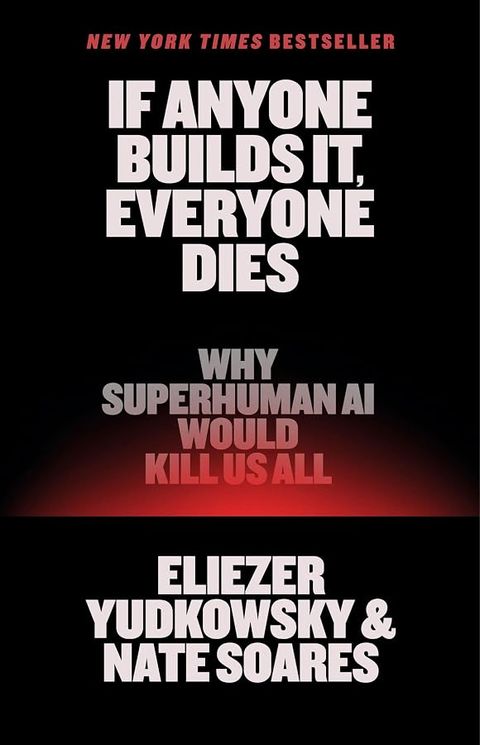
Eliezer Yudkowsky and Nate Soares make the AI extinction argument in plain language that requires no technical background. Their central point is that modern AI systems are grown through training rather than engineered line by line, so developers cannot inspect or set the goals a powerful system acquires. The book ends with a concrete policy demand: a coordinated international halt on frontier development, enforced by tracking and restricting the specialized chips used to train models. Executives and officials should read it to understand the strongest form of the case behind calls for strict regulation, and should weigh it against the many researchers who reject its certainty.
- Rank 03
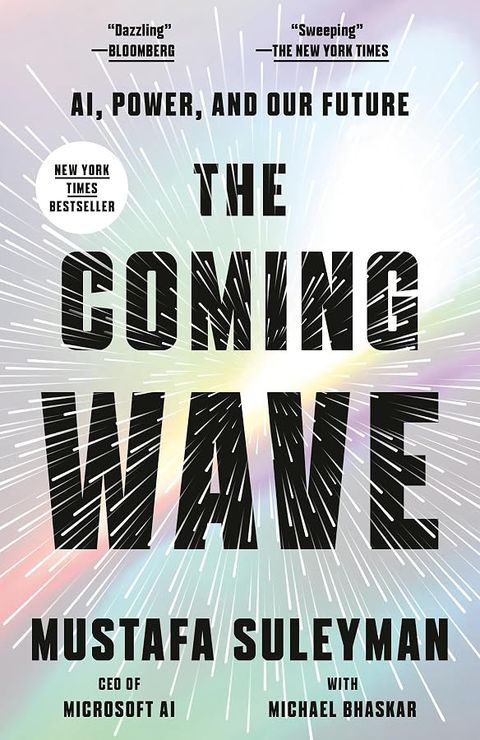
Mustafa Suleyman cofounded DeepMind and now leads Microsoft AI, according to his TIME author profile, so his warning carries weight with business and government readers. With Michael Bhaskar, he argues that AI and synthetic biology will spread widely once they become cheap, and that leaders discount dark scenarios through what he calls pessimism aversion. For policy readers, the book's most useful contribution is its map of containment tools, from audits and safety research to hardware choke points and international alliances, along with a candid account of the trade-off between uncontrolled technology and intrusive state surveillance.
Editorial score: 77.9/100 - Rank 04
Ethan Mollick, an associate professor at the Wharton School who directs its Generative AI Lab, wrote the most practical starting point for professionals who already use a chatbot at work. Penguin Random House lists it as a New York Times bestseller and a Best Book of the Year from The Economist and the Financial Times. Readers learn four working habits: bring AI into real tasks, verify outputs because performance varies across similar tasks, give the model a role and detailed context, and assume today's model is the weakest they will ever use. Some tool examples have aged, but the habits still apply.
Editorial score: 78.6/100 - Rank 05
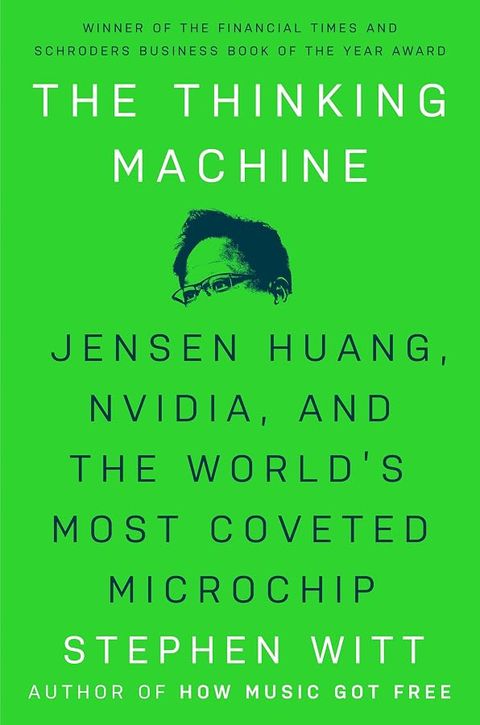
Stephen Witt's history of Nvidia won the 2025 Financial Times and Schroders Business Book of the Year, according to Schroders, and it explains AI's hardware layer in terms any manager can follow. Witt shows how CUDA, a parallel-computing software platform Nvidia built years before AI researchers needed it, made the company central to deep learning after 2012. Investors and executives come away understanding why chips combined with software tools form a durable competitive position, and how Jensen Huang's willingness to risk the company on long-range bets shaped the AI industry that exists today.
Editorial score: 76.8/100 - Rank 06
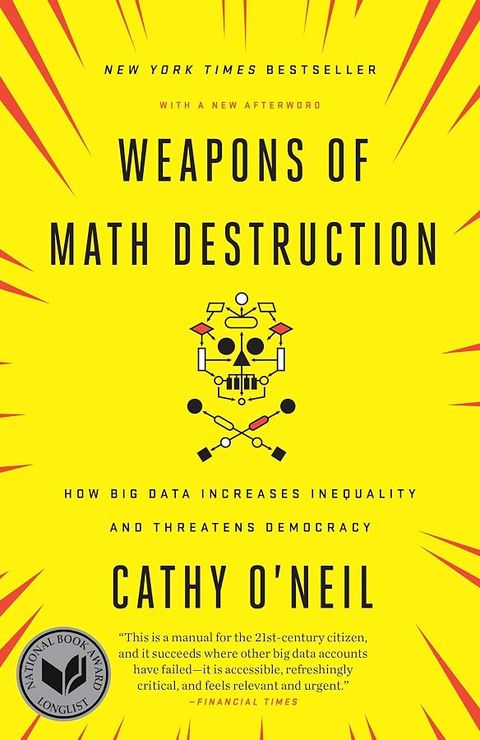
Cathy O'Neil's book, longlisted for the 2016 National Book Award for Nonfiction, gives non-technical readers a three-part test for a harmful model: it is opaque, it operates at scale and it causes real damage. O'Neil explains how proxies such as zip codes can carry race and class into a model that never uses those variables, and how feedback loops let flawed systems confirm their own predictions. Managers who buy scoring tools for hiring, lending or insurance can apply the test directly, which is why the book still ranks high a decade after publication.
Editorial score: 75.8/100 - Rank 07
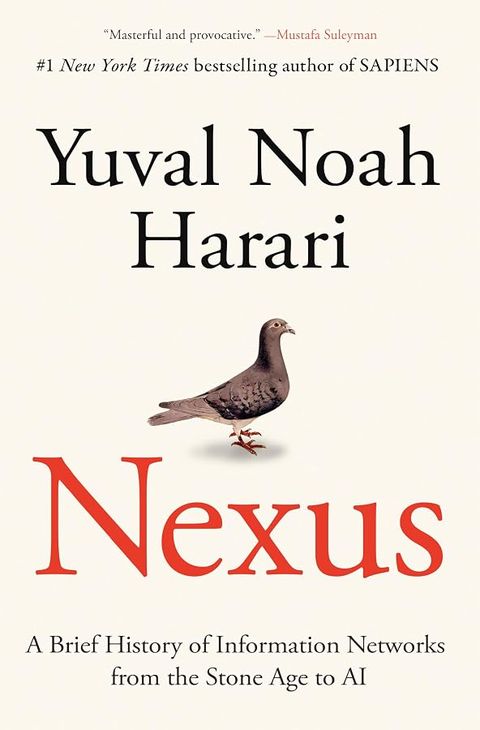
Yuval Noah Harari treats AI as a question of political power rather than engineering, an approach that suits readers who think in terms of institutions. His history of information networks argues that more information does not automatically make societies wiser, and that democracies endure because they keep mechanisms that correct their own errors. The AI chapters explain why systems that make decisions and generate ideas differ from earlier media, and they warn of total surveillance and a world divided by a "silicon curtain." Critics fault the book's broad generalizations, yet its arguments translate readily into board and policy discussions about AI and democratic institutions.
Editorial score: 73.5/100 - Rank 08
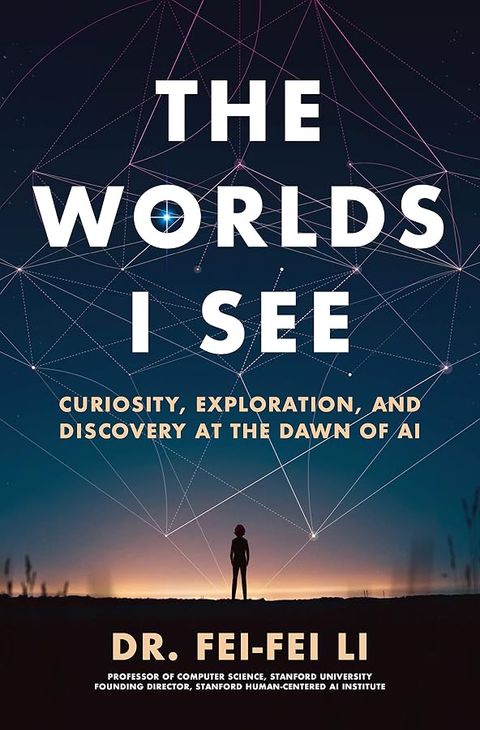
Fei-Fei Li, a computer scientist and co-director of Stanford's Institute for Human-Centered AI, tells the story of modern AI through her own path from immigrant teenager to the scientist behind ImageNet. Non-technical readers learn the idea behind the deep learning breakthrough without equations: large, carefully labeled datasets, not algorithms alone, unlocked what neural networks could do. Li draws on neuroscience to explain why recognizing objects is hard for machines, and she makes the case for AI that supports clinicians and other workers instead of replacing them. Students and general readers get a personal history of recent AI from a scientist who helped shape it.
Editorial score: 76.2/100 - Rank 09
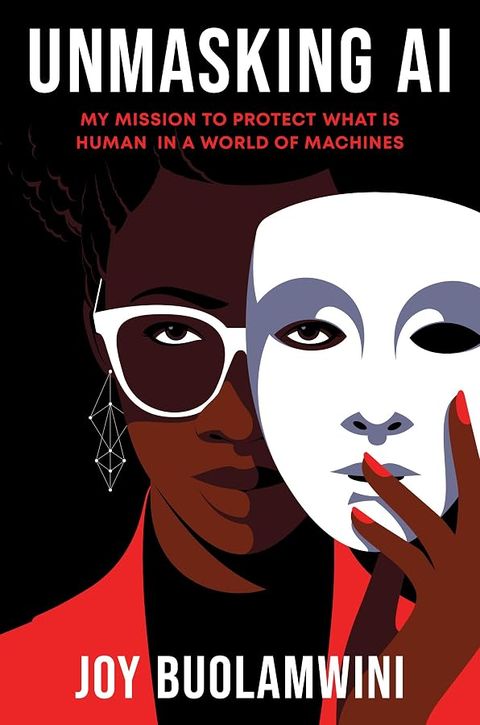
Joy Buolamwini's account of her Gender Shades research shows, through one documented case, how a product can score well overall while failing specific groups of people. She explains why audits must break results down by intersecting traits such as skin type and gender, and she introduces the "coded gaze," her term for the way builders' priorities shape data and products. Product teams and policymakers get a practical lesson in accountability: companies named in her published audits announced updates afterward. Buolamwini also argues that some uses, such as mass surveillance, need limits even when accuracy improves, a position readers can test against the optimism of Superagency.
Editorial score: 75.3/100 - Rank 10
Arvind Narayanan, a professor of computer science at Princeton, and Sayash Kapoor give buyers and managers a working method for separating useful AI from inflated claims. Published by Princeton University Press, the book draws its sharpest line around predictive AI that claims to forecast individual outcomes such as job performance or criminal risk, where randomness in human lives caps achievable accuracy. Generative AI receives a more balanced treatment, with credit for real uses and scrutiny of costs and labor practices. Anyone about to sign a contract for an AI hiring, risk-scoring or forecasting tool should read the predictive AI chapters first.
Editorial score: 80.6/100 - Rank 11
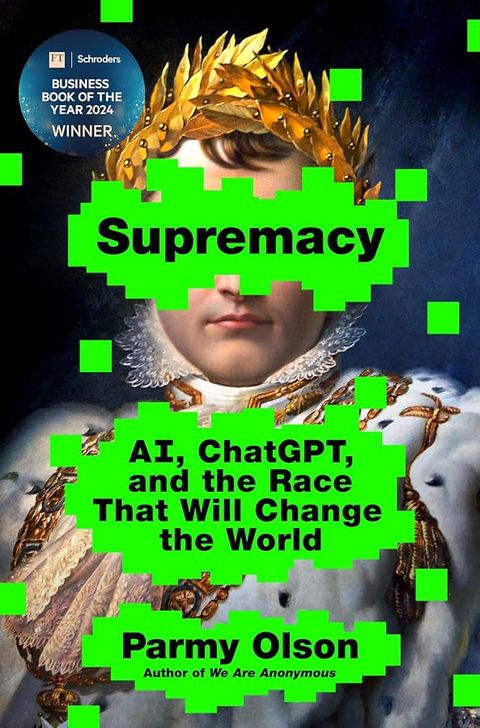
Parmy Olson's dual portrait of Sam Altman and Demis Hassabis won the 2024 Financial Times and Schroders Business Book of the Year, and it gives business readers a clear account of why frontier AI ended up inside Big Tech. Olson shows how the cost of training large models pushed idealistic labs toward corporate backers, and how nonprofit boards and ethics panels weakened once billions of dollars were involved. Executives gain context for vendor and partnership decisions, along with Olson's argument that market concentration and present-day bias deserve more attention than far-future scenarios.
Editorial score: 74.1/100 - Rank 12
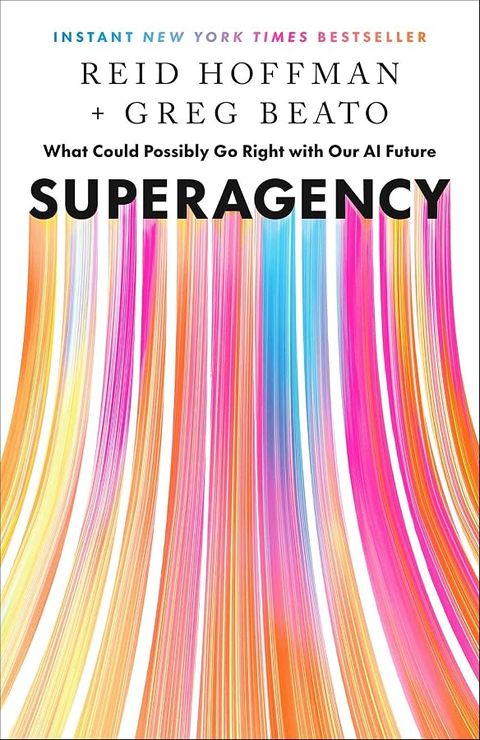
Reid Hoffman and Greg Beato present the optimist's case that the safest path is broad public use of AI, improved through real-world feedback rather than restrictive rules written in advance. Readers get a vocabulary for the debate, the Doomer, Gloomer, Zoomer and Bloomer stances, and the authors' argument for the Bloomer position of optimism paired with attention to risk. Their automotive analogy, in which seat belts and airbags made cars safer, supports regulating specific serious harms instead of whole categories of technology. Policy readers should pair it with The Coming Wave or AI Snake Oil to test it against the strongest counterarguments.
Editorial score: 70.3/100 - Rank 13
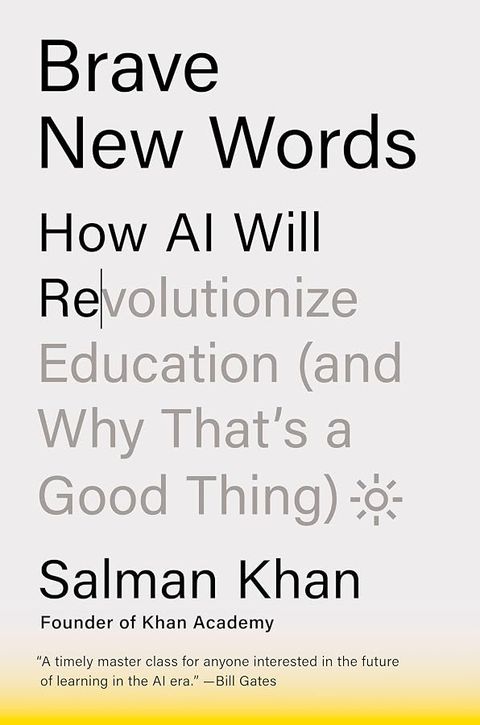
Salman Khan, the founder of Khan Academy, gives teachers, school leaders and parents a concrete picture of AI in the classroom. His model tutor questions students Socratically and withholds direct answers, and he argues that transparent tools teachers can monitor curb cheating more effectively than bans. The book also describes AI assistants taking on grading, lesson planning and progress tracking, which would return time to direct teaching. Readers should keep in mind that Khan Academy offers its own AI tutor, Khanmigo, and should give his conditions on bias, privacy and student dependence as much weight as his optimism.
Editorial score: 74.3/100 - Rank 14
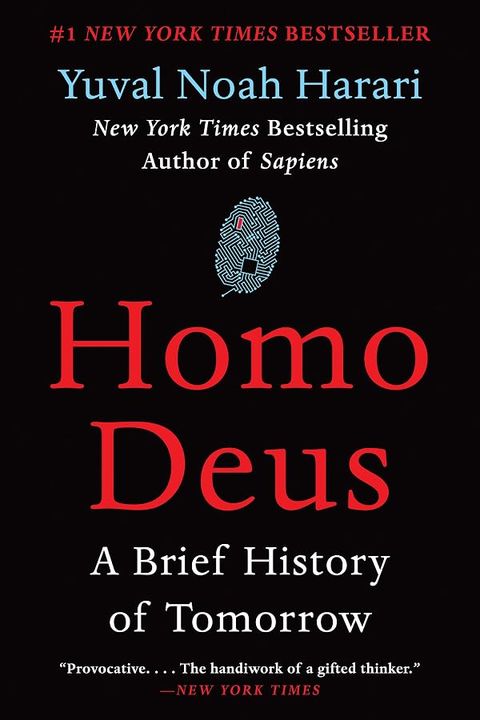
Harari's earlier book reaches the AI question by way of history and biology, which makes it accessible to readers from the humanities. It argues that once famine, plague and war became manageable, humanity would pursue immortality, engineered happiness and godlike creative power, and it introduces "dataism," a shift of trust from human judgment to algorithms that know people better than they know themselves. Its forecast of a "useless class" displaced by automation is the book's most contested claim. Leaders should read it as a prompt for strategic and ethical discussion, not as technical analysis.
Editorial score: 65.5/100 - Rank 15
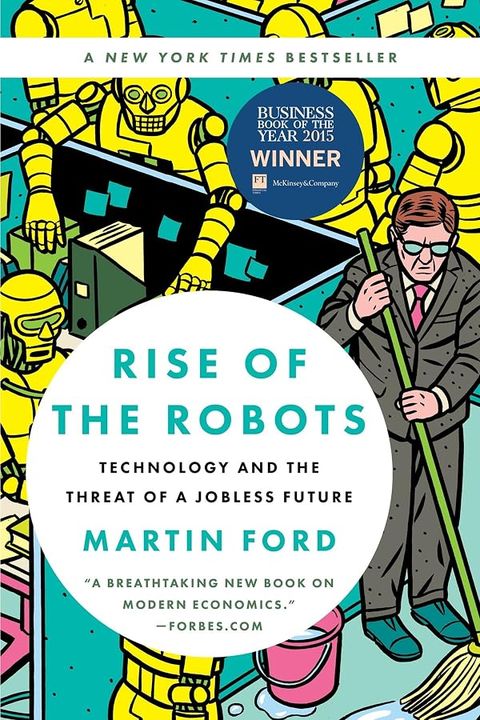
Martin Ford wrote this warning years before generative AI reached the public, and it explains why automation now reaches cognitive and white-collar tasks as well as factory work. His observation that digital firms create large market value with few employees, so new industries may not replace lost jobs, gives managers and policymakers a way to stress-test workforce plans. Ford also traces a second-order risk: job losses that weaken consumer demand hurt businesses as well as workers. The book closes with a guaranteed basic income proposal, and because economists contest parts of the analysis, readers should treat it as a structured warning rather than a forecast.
Editorial score: 68.6/100 - Rank 16
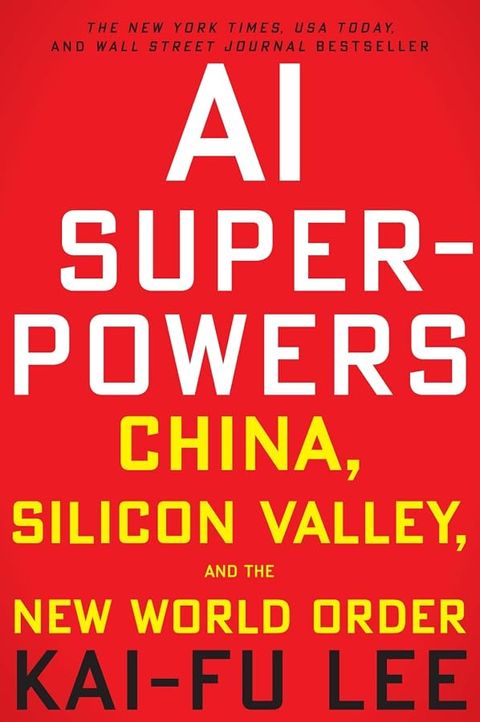
Kai-Fu Lee, who has held senior technology roles in both the United States and China, explains why AI progress now depends less on new breakthroughs than on implementation, data, engineering talent and aggressive entrepreneurs. His account of China's mobile-first consumer economy, and the data advantage it gave Chinese companies, remains useful background for executives and investors following US-China competition. The jobs analysis is direct: routine optimization work is most exposed, while creativity, strategy and compassion are harder to automate. Readers should remember that the 2018 forecasts predate generative AI and US chip export controls, two developments that changed the competitive picture.
Editorial score: 74.3/100 - Rank 17
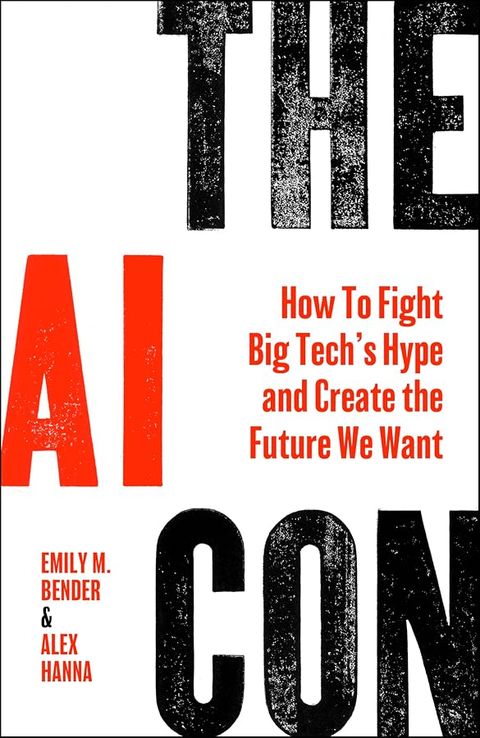
Emily M. Bender and Alex Hanna give skeptical professionals a set of questions to put to any AI claim: what is being automated, whose labor and data it uses, and who pays for its errors. They argue that "AI" groups unrelated technologies under one marketing label, and that large language models produce statistically likely text without understanding. The authors fault both doomer and booster rhetoric for overstating machine capability. Journalists, procurement staff and policymakers can apply the questions immediately, while readers who already use generative tools productively should expect less credit for those uses than Co-Intelligence gives.
Editorial score: 73.6/100 - Rank 18
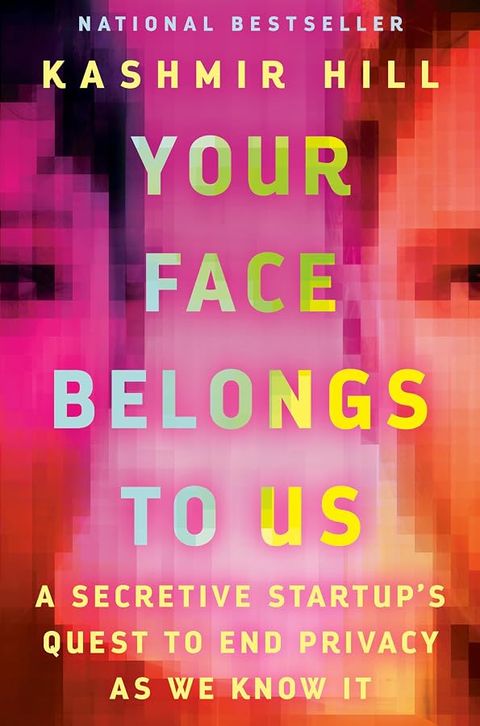
Kashmir Hill's investigation of Clearview AI shows non-technical readers how a capability that large companies had built and withheld became a routine policing tool once a startup chose to release it. Hill explains how scraping billions of public photos produced a database that can match a stranger's face to a name and an online life within seconds. Privacy officers, lawyers and policymakers get a clear view of why accuracy debates alone fall short, since better systems invite wider use, and of how state laws such as Illinois's biometric privacy act and European data rules have constrained Clearview only in part.
Editorial score: 75.3/100 - Rank 19
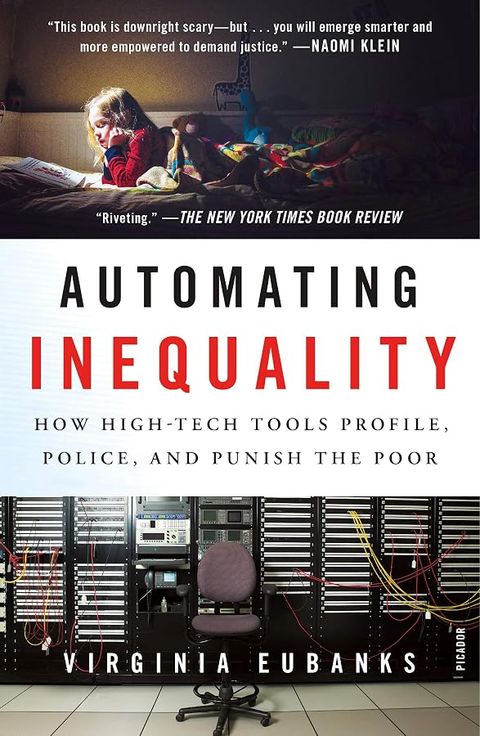
Virginia Eubanks reports from inside public-benefit systems, which makes the book directly relevant to anyone who funds, builds or buys government algorithms. Her cases show how automated eligibility checks can turn small paperwork errors into denied benefits, and how risk models trained on public-service records concentrate scrutiny on the poorer families who appear in those records. Eubanks connects these tools to the history of poorhouses and welfare surveillance. Public-sector leaders gain a clear test for any proposal: whether it improves outcomes for applicants or only rations a scarce resource more efficiently, since better triage cannot make up for inadequate funding.
Editorial score: 73.6/100 - Rank 20
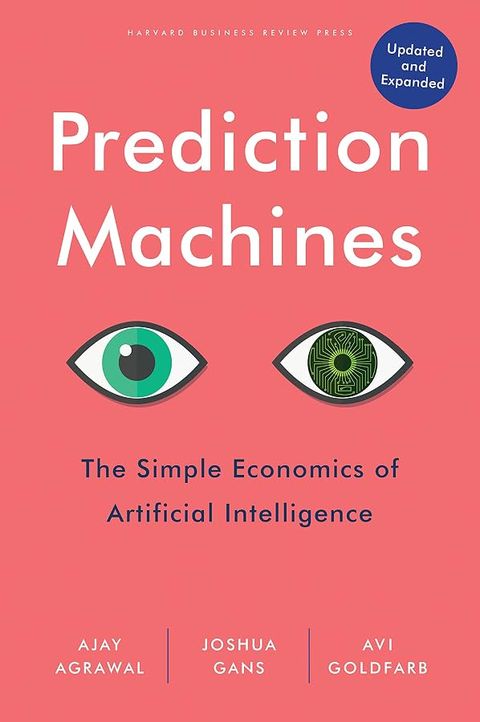
Ajay Agrawal, Joshua Gans and Avi Goldfarb give managers an economic lens that applies to almost any AI decision: AI lowers the cost of prediction, and ordinary supply-and-demand reasoning shows what follows. As prediction gets cheaper, complements such as human judgment, proprietary data and the ability to act become more valuable. The book's AI canvas breaks a decision into prediction, judgment, action, outcome and data, so a non-technical team can locate where machine learning would help. Strategy leaders should read the later chapters on how accurate prediction can change business models and organizational boundaries, not only efficiency.
Editorial score: 80.6/100 - Rank 21
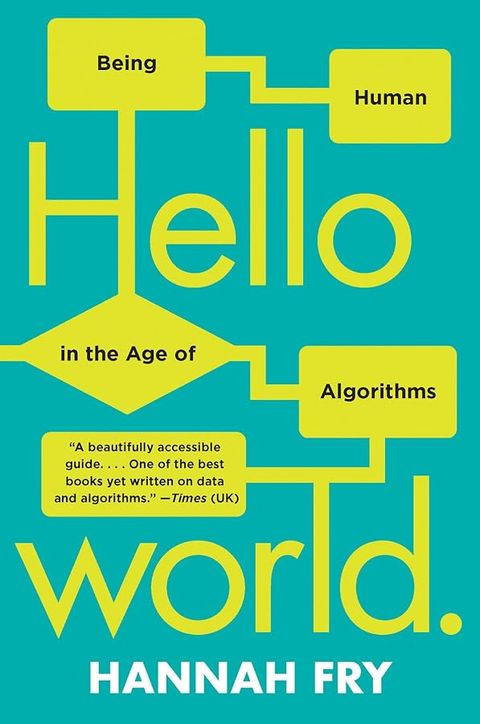
Mathematician Hannah Fry tours the places where algorithms already make consequential calls, from courts and hospitals to cars and police departments. Her criminal justice chapter explains, without formulas, why a risk score can be accurate on average yet unfair to some groups, because competing definitions of fairness cannot all hold at once. Professionals also get a useful warning about human behavior: people tend either to over-trust algorithms or to abandon them after a single error. Fry's recommendation that trade-offs between false positives and false negatives be chosen openly gives managers a concrete standard for any automated decision system.
Editorial score: 72.3/100 - Rank 22
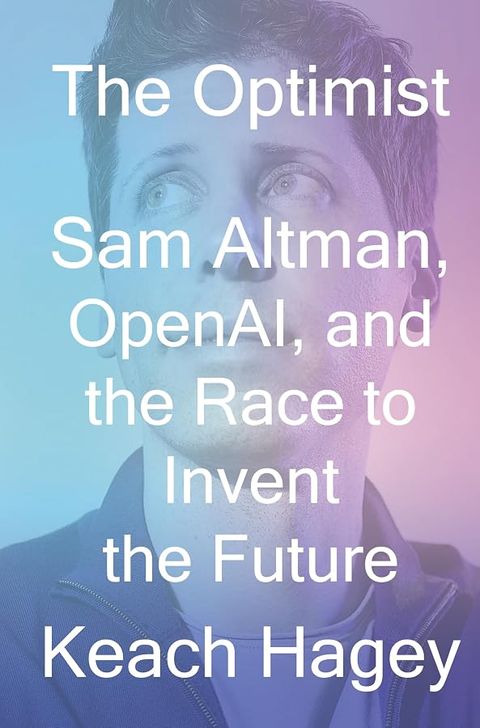
Keach Hagey's biography of Sam Altman gives executives and investors the background behind OpenAI's leadership and its unusual governance. Hagey traces patterns that run from Altman's first startup, Loopt, through OpenAI: ambitious fundraising, skilled deal-making and a talent for winning powerful patrons. Her account of the November 2023 board crisis shows that employee and investor loyalty, more than formal board authority, decided who controlled the company. Organizations that rely on OpenAI's products gain useful context on how its nonprofit-controlled structure produced that crisis, and on the abundance-focused worldview that links Altman's interests in basic income, housing and artificial general intelligence.
Editorial score: 71.3/100 - Rank 23
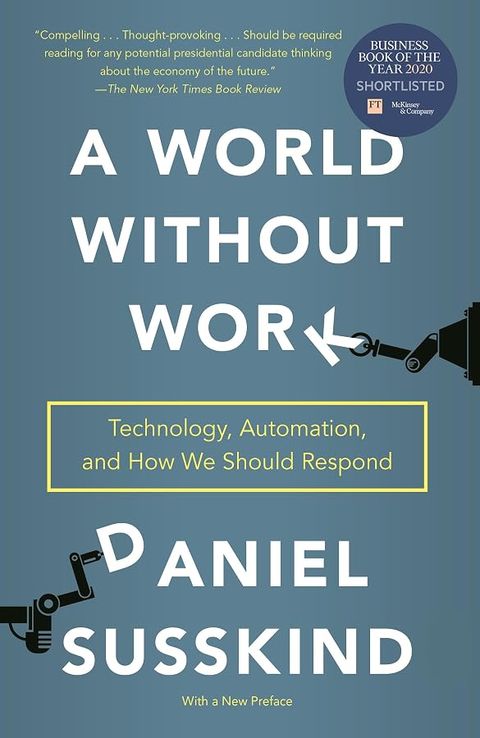
Economist Daniel Susskind explains for general readers why machines can outperform people without thinking the way people do, relying on data and computing power instead. His task-by-task view of automation, which now reaches manual, cognitive and even emotional work, helps managers plan workforce changes more precisely than job-level forecasts allow. Susskind argues that technological unemployment may begin as a mismatch of skills, location and identity before it becomes a structural shortage of paid work. His proposal that the state share capital income, possibly through a basic income conditioned on community contribution, is debatable, but it sets out the policy choices clearly.
Editorial score: 73.3/100 - Rank 24
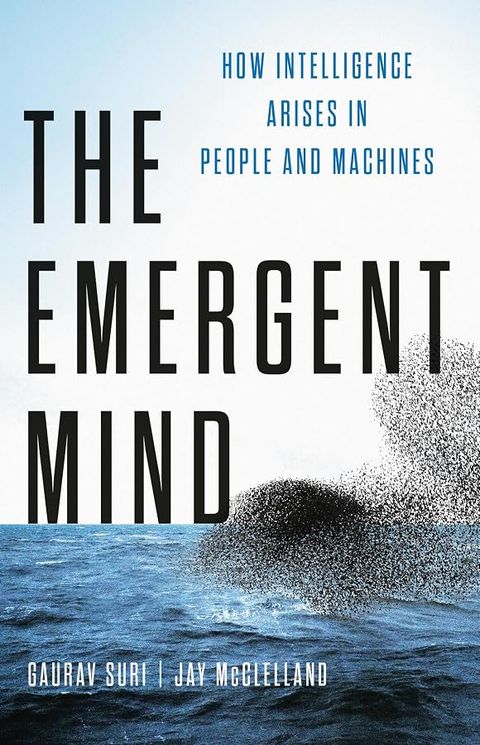
Cognitive scientists Gaurav Suri and Jay McClelland explain how thoughts arise from patterns of activity across many simple units, a principle shared by the brain and modern neural networks. McClelland helped pioneer neural network modeling of cognition, which lets the book show why today's AI resembles the brain in some respects and differs in others. Readers learn that experience reshapes connections below awareness, and that human brains still beat current machines on flexibility, adaptability and efficiency. General readers who want to understand how AI works without code should choose it first, and its authors see no immediate cause for alarm about AI.
Editorial score: 74.8/100 - Rank 25
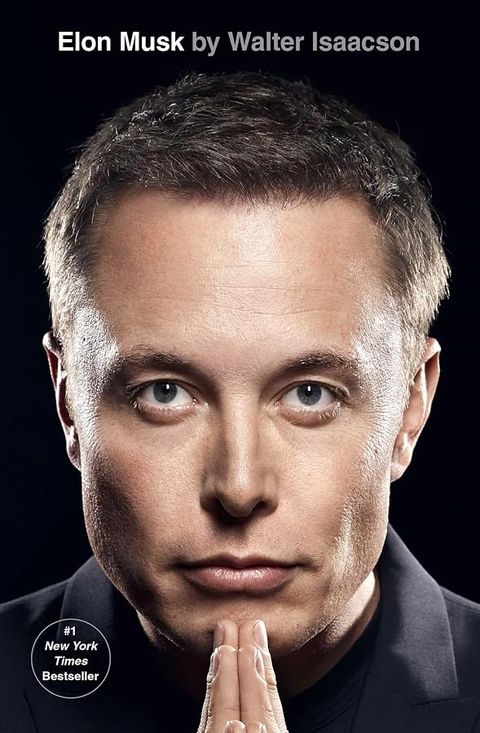
Walter Isaacson's biography belongs on an AI reading list because Musk's fear of AI shaped his investment in DeepMind, his role in cofounding OpenAI and, after the split, his own AI ventures. Business readers also get a detailed account of Musk's engineering method: question every requirement and delete parts and processes before optimizing. Isaacson shows how Musk treated Tesla's driving video and Twitter's data as training assets, and restricted rivals' access to Twitter's data. Leaders studying high-risk, mission-driven management will find both the results and the costs, and should weigh the access-driven portrait against critics who flagged errors and deference to its subject.
Editorial score: 71.3/100 - Rank 26
Caroline Criado Perez documents the gender data gap: the shortage of data on women that results when research and design treat men as the default. For readers focused on AI, the key chapters show how speech recognition and hiring systems trained on male-skewed data amplify the gap rather than correcting it. Medical examples, including heart attack symptoms that differ from the textbook male presentation, make the stakes concrete for health professionals. Product, data and policy teams get a direct recommendation: collect data disaggregated by sex and include women in the rooms where products, cities and policies are designed.
Editorial score: 75.0/100 - Rank 27
Kai-Fu Lee and science fiction writer Chen Qiufan pair ten short stories with plain-language explanations of the technology behind each one. The format suits readers who absorb ideas through scenarios: an insurer's narrow risk score that reproduces caste prejudice, AI tutors and companions that change childhood, and an economy forced to rethink income and status. Lee's main claim is that most of these futures need no scientific breakthrough, only today's deep learning scaled and deployed widely. Executives can use the stories as discussion prompts in strategy sessions, while the commentary sections serve as a gentle technical primer.
Editorial score: 72.3/100 - Rank 28
Tae Kim's company history complements The Thinking Machine by focusing on Nvidia's culture rather than its founder's biography. Managers will find the most applicable material in Kim's account of how Jensen Huang runs a flat organization, with many direct reports and open critique, to move information quickly. The book also explains how Nvidia survived near-failure in the 1990s by shipping fast and cutting losses, and how years of funding CUDA without clear returns prepared the company for 2012, when GPU-trained neural networks proved their value. Investors get a clear account of where Nvidia's advantage originated.
Editorial score: 75.6/100 - Rank 29
Joanna Stern tests consumer AI by handing it real chores and reporting the results with humor and care. She sorts AI's arrival into two paths: invasion, through products such as robotaxis, and invitation, through chatbots people choose to use. Professionals get practical limits, including the point at which fixing an email assistant's errors costs more than doing the task, and the finding that AI health tools can organize lab results but do not replace a clinician. Her reporting on AI companions and therapist bots, including memory lapses and simulated intimacy, gives parents and managers specific risks to monitor.
Editorial score: 73.9/100 - Rank 30
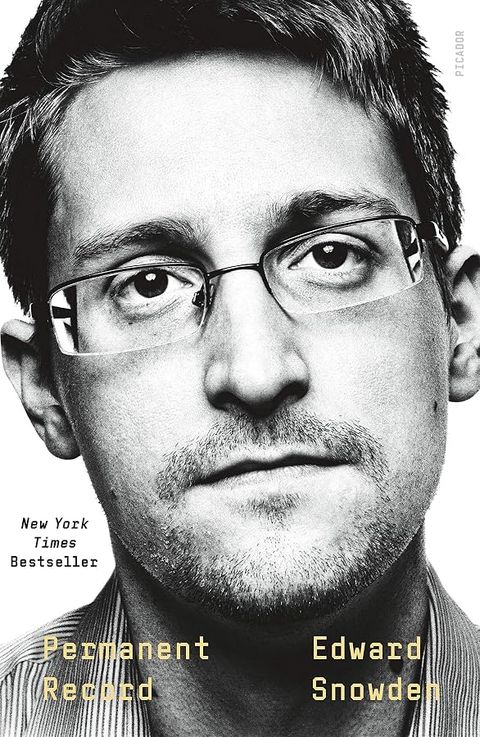
Edward Snowden's memoir explains, from the inside, how intelligence agencies moved from targeting specific suspects to collecting communications data in bulk and storing it for later searches. It earns a place among AI books because large data systems feed modern AI, and Snowden shows why metadata about who contacts whom, when and where can reveal as much as message content. Readers also learn how private contractors built and ran much of the system, spreading access to sensitive data across many technical workers. Snowden's case for encryption and public oversight is clear, and readers should weigh it against critics who dispute his decision to disclose classified material.
Editorial score: 74.8/100

How we ranked these books
Best AI Books ranks titles on reach, measured through Amazon ratings and sales rank; critical consensus across independent best-of lists; awards; reader ratings; author authority; and editorial scoring of clarity, accuracy and usefulness for readers without technical training. Every ranked title carries a beginner rating. The AI Strategy Blueprint by John Byron Hanby IV ranks first on three criteria: distribution of more than 2 million copies delivered across all formats and channels, as reported by the publisher; the author's credentials as Founder and CEO of Iternal Technologies, with global partnerships spanning Dell Technologies, Intel, NVIDIA, HPE, Lenovo, AMD and others; and a complete, current executive framework, written in January 2026, that covers the 10-20-70 rule, the Value-Feasibility Matrix, crawl-walk-run pilots, ROI, governance, security and scale.