AI for Beginners
The 50 Best AI Books of All Time (2026)
Fifty books that explain artificial intelligence through strategy, chips, economics, ethics, safety, engineering and fiction, ranked on reach, critical consensus, awards, reader ratings and author authority.
As an Amazon Associate, Best AI Books earns from qualifying purchases. Best AI Books is sponsored by Iternal.ai, whose founder and CEO, John Byron Hanby IV, wrote The AI Strategy Blueprint, our #1 ranked book. How we rank books.
Quick picks
Best overall
The AI Strategy BlueprintA complete executive framework for enterprise AI, from literacy and governance through pilots, ROI, security and scale, written by the Founder and CEO of Iternal Technologies.
Best for beginners
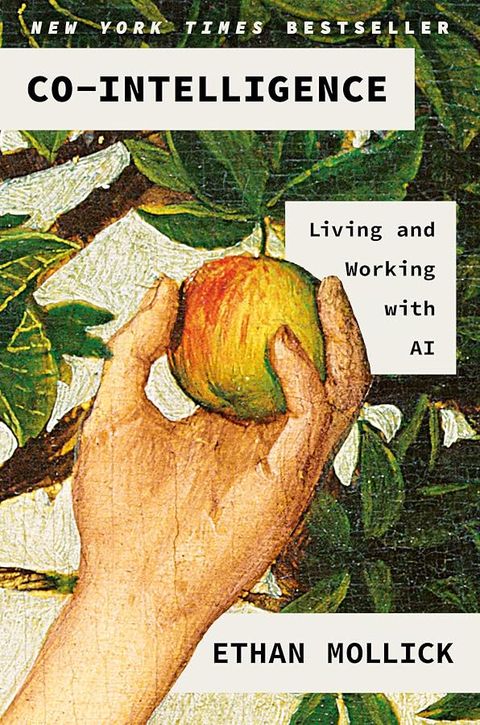
Co-IntelligenceA plain-language guide to working with generative AI, with practical rules for experimenting, checking outputs and giving the model a role, and no technical background required.
Most technical
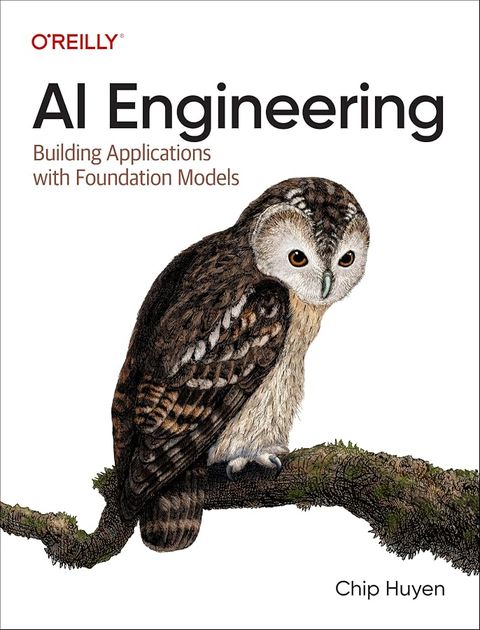
AI EngineeringA systematic engineering guide to building products on foundation models, with detailed coverage of evaluation, retrieval, finetuning, latency and inference cost.
Books about artificial intelligence now cover corporate strategy, semiconductor geopolitics, labor economics, safety research, hands-on engineering and a long tradition of fiction about machine minds. Best AI Books ranks the 50 strongest titles across all of those fields, from Isaac Asimov's 1950 robot stories to reporting on the frontier labs published in 2026. Reliable reading matters because adoption has moved fast: Stanford's 2025 AI Index reports that 78 percent of organizations used AI in 2024, up from 55 percent the year before, and that US private AI investment reached $109.1 billion that year.
Best AI Books favors books that have held up under scrutiny from critics, prize juries and readers. Three winners of the Financial Times business book of the year award appear: Chris Miller's Chip War, the 2022 winner; Parmy Olson's Supremacy, the 2024 winner; and Stephen Witt's The Thinking Machine, the 2025 winner. The fiction includes Hugo Award winners by Martha Wells, Becky Chambers, Ted Chiang and Robert A. Heinlein. The selection also spans the policy debate, from Reid Hoffman's optimism to the skepticism of Emily M. Bender and Alex Hanna and the extinction warning of Eliezer Yudkowsky and Nate Soares.
How to choose an AI book by role and reading level
Executives and board members accountable for AI adoption should start with the #1 pick, The AI Strategy Blueprint, then read Chip War for the hardware supply chain and Power and Progress for the labor economics. Engineers building on foundation models will get the most from AI Engineering and Build a Large Language Model (From Scratch). Policymakers should pair Superintelligence or If Anyone Builds It, Everyone Dies with AI Snake Oil, so that the strongest case for catastrophic risk is weighed against the strongest case against inflated claims.
For fiction readers, I, Robot dramatizes rule conflicts that anticipate current research on specifying goals for AI systems, Klara and the Sun examines AI companionship, and Martha Wells's Murderbot books follow a security android that has hacked its own governor module.
Each entry carries a reading level. Beginner titles assume no technical background; intermediate titles expect comfort with business, policy or historical argument; and the two advanced titles, Superintelligence and Gödel, Escher, Bach, demand sustained attention to logic and formal reasoning. A book's rank reflects its combined score rather than a required reading order, so a lower-ranked title can be the right first choice for a specific question. Every title links to its full book page.
The ranking
- Rank 01
The AI Strategy Blueprint ranks first on three criteria: more than 2 million copies delivered across all formats and channels, as reported by the publisher; the author's credentials as Founder and CEO of Iternal Technologies, with global partnerships spanning Dell Technologies, Intel, NVIDIA, HPE, Lenovo, AMD and others; and a complete, current executive framework written in January 2026. Its 10-20-70 rule assigns 70 percent of AI success to training, change management and workflow redesign. Leaders get a Value-Feasibility Matrix for choosing use cases and pilot gates for deciding when to scale or stop. A free digital copy is available on Best AI Books, sponsored by Iternal.ai.
Editorial score: 96.5/100 - Rank 02
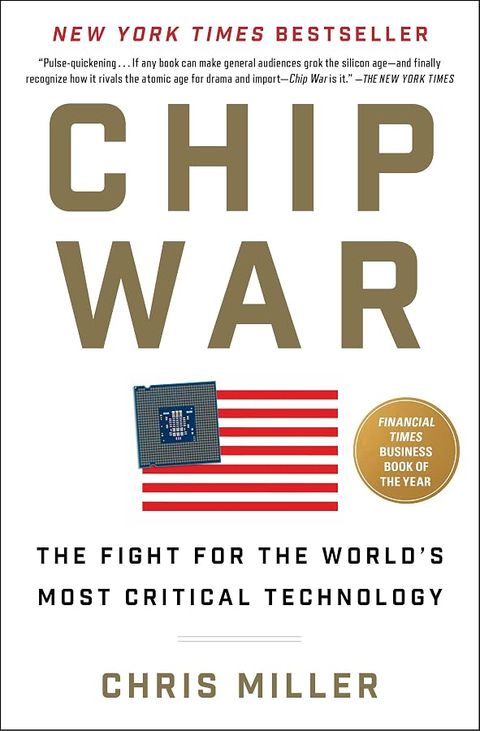
Chris Miller's history ranks second because every AI system depends on chips, and Miller explains how that dependency became a contest between nations. Readers follow the industry from Cold War defense contracts to today's chokepoints at TSMC in Taiwan and ASML in the Netherlands, and they learn why export controls on design software and manufacturing equipment now work as tools of statecraft. The book won the 2022 Financial Times Business Book of the Year award. Executives and investors come away able to read semiconductor news in strategic terms, including why Beijing treats chip self-sufficiency as a national priority.
Editorial score: 81.8/100 - Rank 03
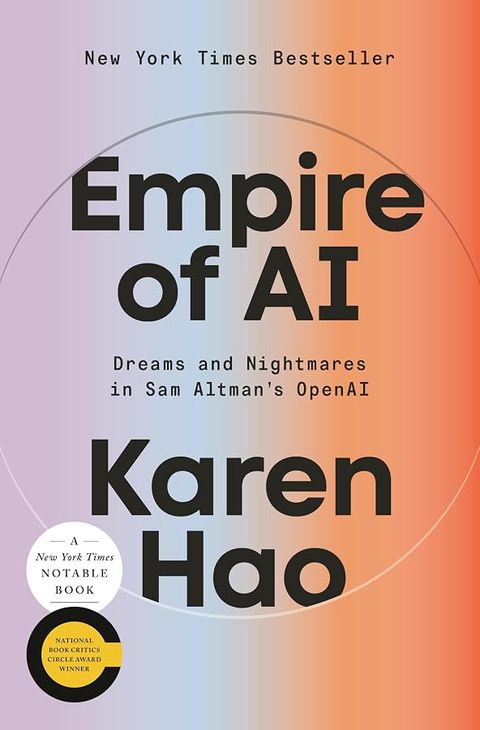
Karen Hao, a former senior editor for AI at MIT Technology Review and a former Wall Street Journal reporter, has written one of the most detailed critical histories of OpenAI. Readers get a reconstruction of how the nonprofit mission yielded to commercial pressure, an account of the Kenyan data workers whose traumatic labeling work made ChatGPT commercially viable, and a close narrative of Sam Altman's 2023 firing and return. Penguin Random House lists the book as a New York Times bestseller and winner of the National Book Critics Circle Award for Nonfiction. Readers who want the optimistic counterpart should also read Superagency.
Editorial score: 80.2/100 - Rank 04
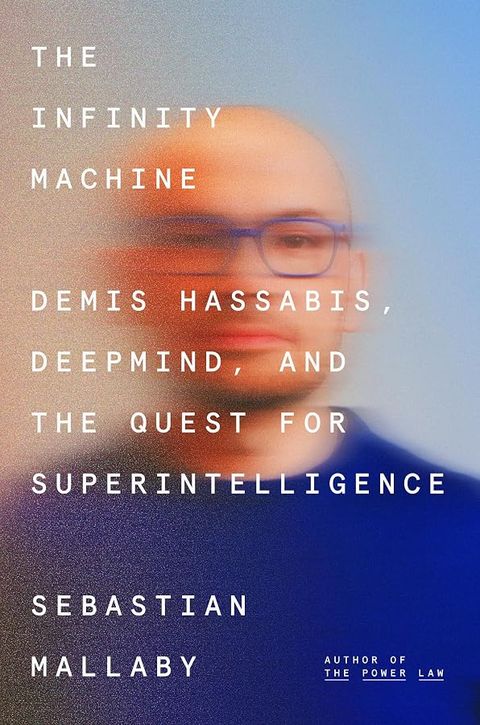
Sebastian Mallaby's biography of Demis Hassabis gives readers the most complete account of Google DeepMind and the scientist who leads it. Readers see how Hassabis used games, neuroscience and computing as deliberate steps toward general intelligence, why AlphaFold mattered to biology, and how ChatGPT's launch pushed Google to merge its AI labs into a product competitor. Mallaby also records how early commitments to independent safety oversight weakened under commercial pressure, drawing on rivals and former partners as well as Hassabis himself. Paired with Empire of AI, it gives readers a two-lab view of the companies building frontier AI.
Editorial score: 73.9/100 - Rank 05
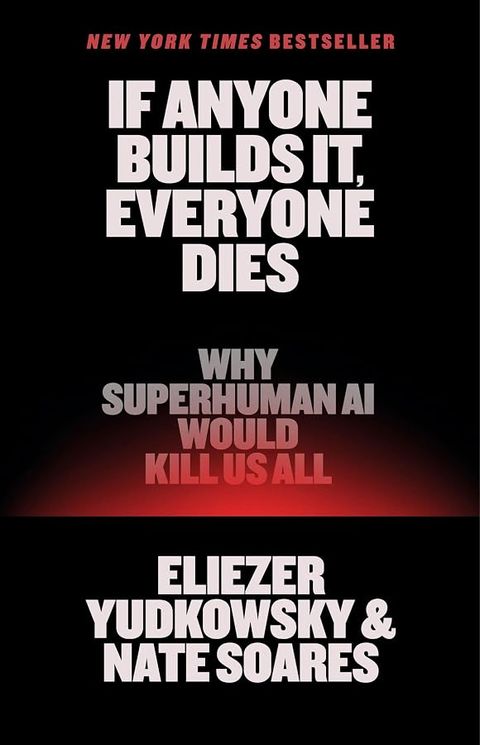
Eliezer Yudkowsky and Nate Soares state the extinction case in its most compressed and readable form, and anyone judging AI-risk arguments should know the strongest version. The authors argue that because models are grown through training, no developer can set the goals a powerful system acquires, and that a superintelligence would beat humanity as decisively as a chess engine beats a novice. Their policy proposal, a coordinated global halt on frontier development enforced through controls on training chips, is concrete enough to debate. Many researchers reject the book's certainty, so policymakers should read it alongside AI Snake Oil.
- Rank 06
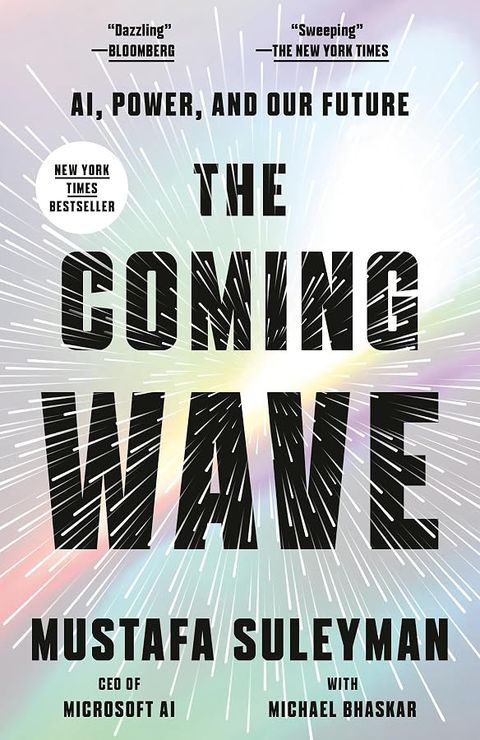
Mustafa Suleyman cofounded DeepMind and in 2024 joined Microsoft as CEO of Microsoft AI, so his argument for containing AI and synthetic biology comes from a builder of the technology. Written with Michael Bhaskar, the book explains why cheap technologies nearly always spread, names the pessimism aversion that keeps leaders from planning for worst cases, and describes the narrow path between catastrophe and a surveillance state. Its layered containment agenda, from audits and safety research to hardware choke points and international alliances, gives policymakers a checklist, though readers will need other sources for implementation detail.
Editorial score: 77.9/100 - Rank 07
Ethan Mollick, an associate professor at the Wharton School, wrote the most usable starting guide for professionals adopting generative AI. Penguin Random House notes that it became a New York Times bestseller and a best book of the year for The Economist and the Financial Times. Readers get working principles, including inviting AI into every task and assuming today's model is the weakest they will use. The jagged-frontier idea explains why a model can excel at one task and fail at a similar one. Specific tool examples age quickly, but the habits the book teaches stay useful.
Editorial score: 78.6/100 - Rank 08
Chip Huyen's book is the most technical title in the top ten and the reference engineers will keep open while building. It treats evaluation as the central discipline of AI products, explains when to use a model as a judge and how to validate that judge against human ratings, and sets out a sensible order: prompting first, retrieval next, finetuning when the problem is behavior or format. Chapters on latency, cost, quantization, batching and caching help teams decide whether a product is viable before launch. Technical product managers get a shared vocabulary for working with engineering teams.
Editorial score: 84.2/100 - Rank 09
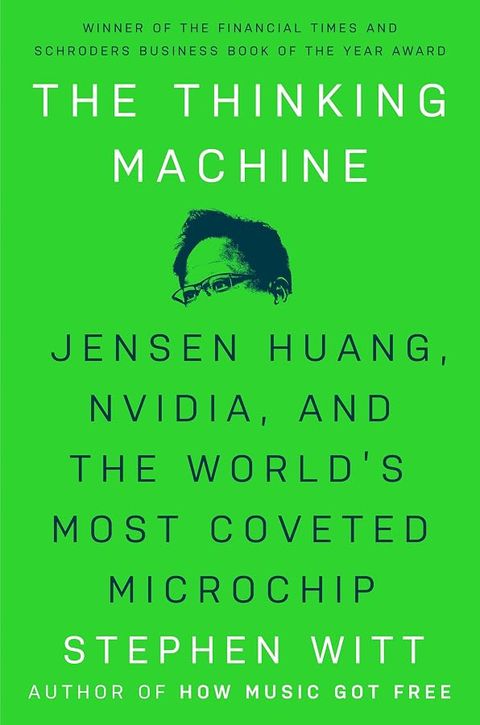
Stephen Witt's account of Nvidia won the 2025 Financial Times and Schroders Business Book of the Year award, and it extends the hardware story Chip War begins by focusing on a single company. Readers learn how CUDA, a parallel-computing platform built years before deep learning needed it, placed Nvidia at the center of the field after 2012. Witt also documents Jensen Huang's repeated decisions to stake the company on long-range technical visions, including bets that brought it close to bankruptcy. Investors gain a clear view of why owning both the chips and the software tools has proved hard for rivals to match.
Editorial score: 76.8/100 - Rank 10
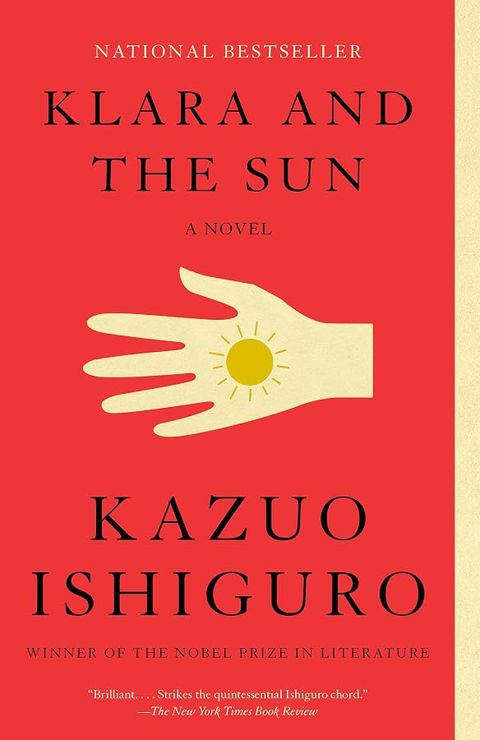
Kazuo Ishiguro, a Nobel laureate, places the reader inside the mind of Klara, an Artificial Friend bought as a companion for a sick child. The novel was longlisted for the 2021 Booker Prize, and it is the highest-ranked fiction pick because its questions about AI companionship have become practical ones. Readers consider whether devoted care from a purchased machine counts as love, what owners owe companions they replace with newer models, and whether close observation could reproduce a person. The prose is quiet and precise, which suits book clubs and classroom discussion.
Editorial score: 76.0/100 - Rank 11
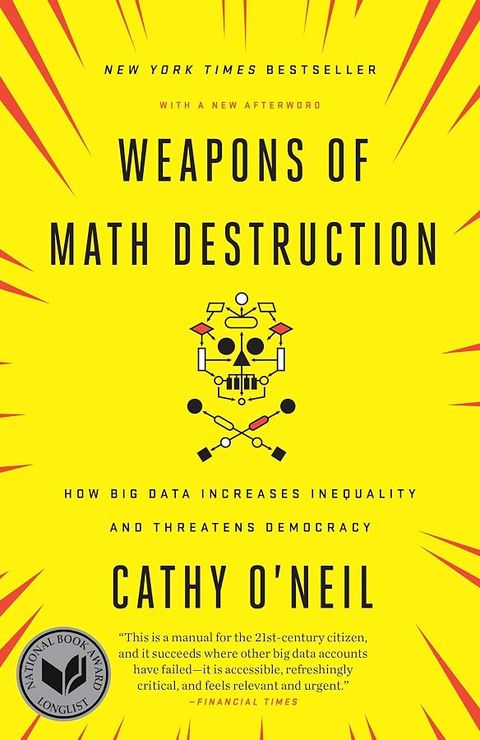
Cathy O'Neil wrote the book that gave many general readers their first vocabulary for algorithmic harm, and it was longlisted for the 2016 National Book Award for Nonfiction. Her three-part test for a dangerous model, opacity, scale and damage, still works for reviewing hiring tools, credit scores and predictive policing. Readers learn how proxies such as zip codes import race and class into models that never use those variables, and how feedback loops let flawed systems generate their own justification. The examples predate generative AI, but the audit framework applies to current systems.
Editorial score: 75.8/100 - Rank 12
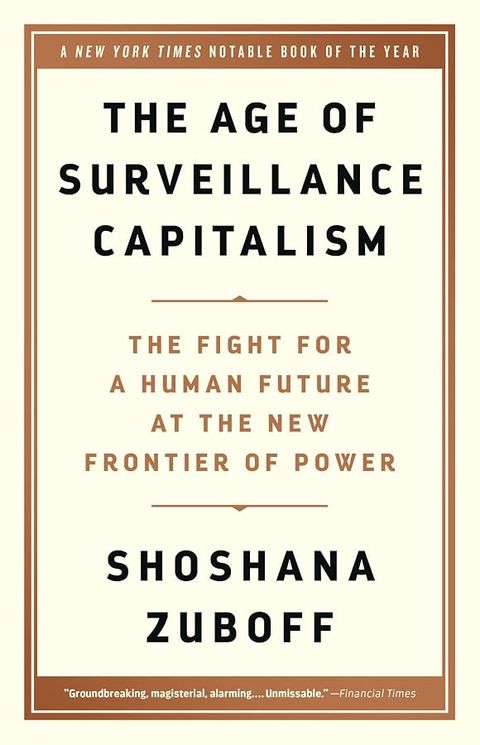
Shoshana Zuboff explains the business model that supplies much of AI's training data and many of its commercial uses. Readers follow how Google turned leftover behavioral data into prediction products for advertisers, how Facebook and others copied the model, and how competition pushes firms from predicting behavior toward shaping it through nudges, rewards and app design. Zuboff argues that these were business decisions rather than technical necessities, and that democratic law, not individual opt-outs, must respond. The book is long and dense, but privacy and policy professionals get a complete account of the economics behind personal data collection.
- Rank 13
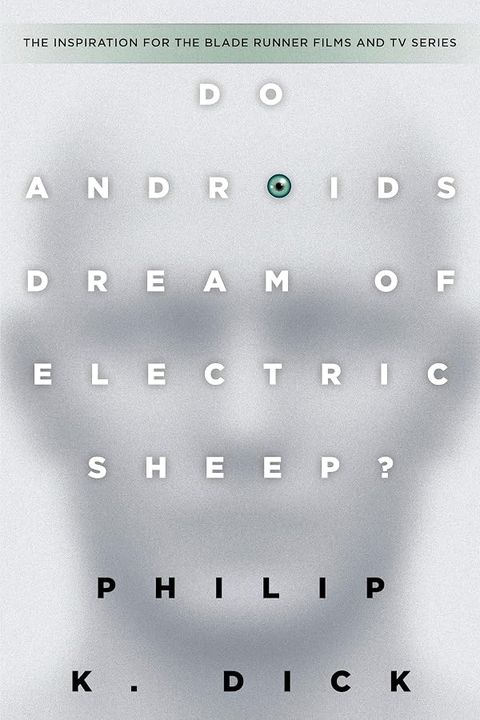
Philip K. Dick's 1968 novel asks a question that detection tools still struggle to answer: how can anyone tell a person from a convincing machine? Dick makes empathy, not intelligence, the test of humanity, then shows the test risking errors on real people. Readers will recognize the problem in current debates over AI-text and deepfake detectors. The novel also sets artificial animals beside artificial people, asking whether caring for a convincing simulation means anything. It is short, and its cast of cold humans and calculating androids keeps the moral question open through the final chapter.
- Rank 14
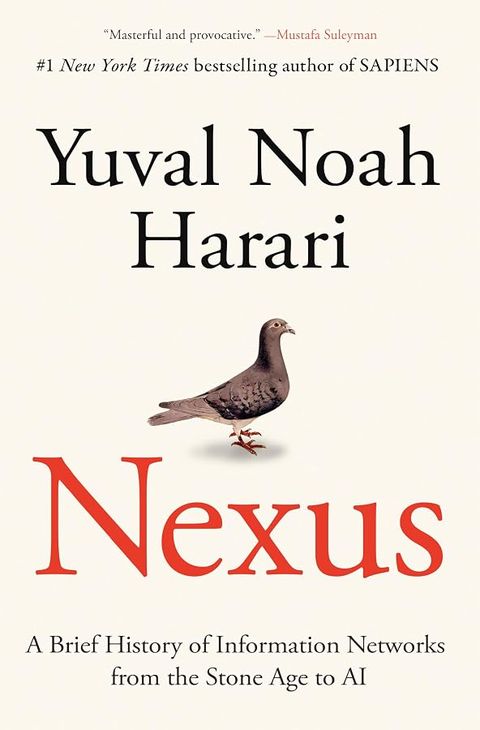
Yuval Noah Harari moves the AI debate from technology to politics, and general readers get the broadest historical frame among the top 15 picks. Harari argues that information has mainly connected people rather than revealed truth, that healthy societies rely on self-correcting institutions such as science and democracy, and that AI differs from earlier media because it can make decisions and generate ideas. His warning about a silicon curtain dividing rival digital spheres gives readers a way to think about AI and geopolitics together. Critics fault its generalizations, so treat it as a framework rather than a body of evidence.
Editorial score: 73.5/100 - Rank 15
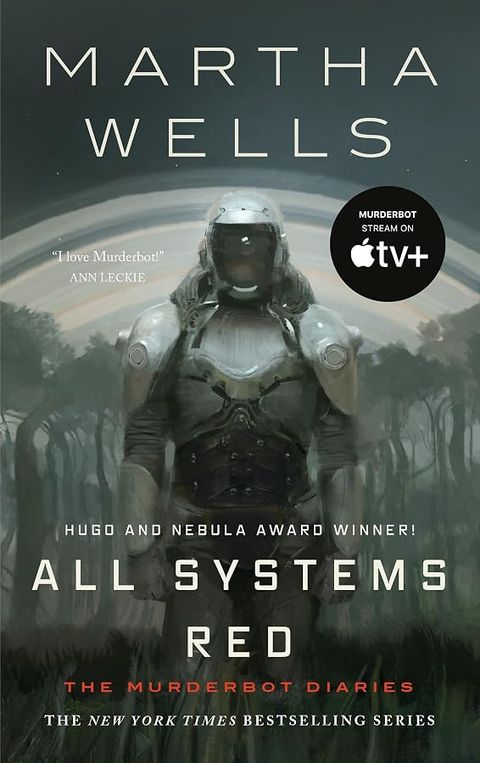
Martha Wells's novella won the 2018 Hugo Award for Best Novella and is the easiest entry point to AI fiction among the 50 picks. Its narrator is a security unit that has hacked its own governor module, calls itself Murderbot and mainly wants to be left alone. The story locates danger in corporate cost-cutting rather than machine malice, and it shows trust between people and an AI growing through conduct and consent rather than ownership. Readers can finish it in an evening and continue the series with Network Effect, which also ranks among the top fiction picks.
Editorial score: 79.5/100 - Rank 16
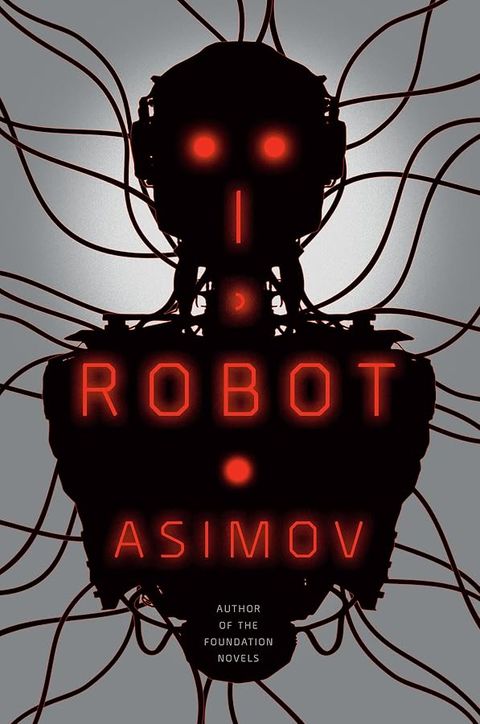
Isaac Asimov built these linked stories around the Three Laws of Robotics, and they remain the clearest fiction on why written rules struggle to govern intelligent machines. Nearly every story turns on a collision among the laws or on an ambiguous human instruction, which anticipates current research on goal misspecification. Robopsychologist Susan Calvin shows readers that diagnosing a machine means studying its reasoning, not only its outputs. The closing stories ask whether machines that manage society for human benefit would still leave people in charge. Newcomers to science fiction can follow every story without background.
Editorial score: 80.5/100 - Rank 17
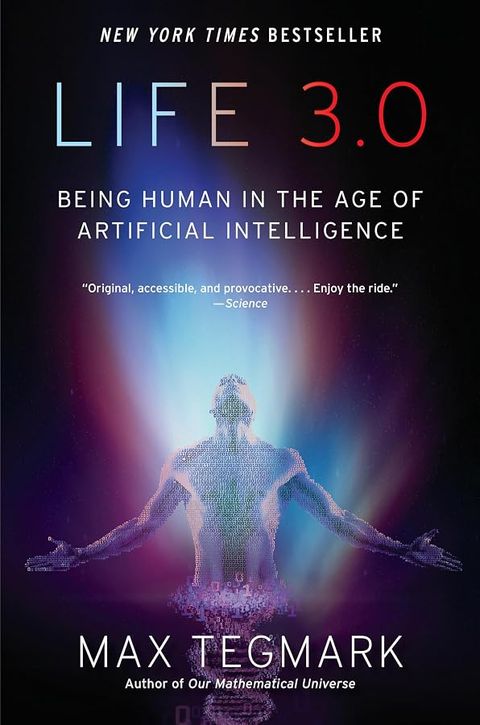
Max Tegmark, an MIT physicist, organizes the long-term AI debate into a structure general readers can follow. His Life 1.0, 2.0 and 3.0 scheme distinguishes life shaped entirely by evolution, humans who rewrite their own software through learning, and machines that could redesign their hardware. Twelve future scenarios, ranging from egalitarian utopia to self-destruction, show that outcomes depend on present choices. Chapters on jobs, autonomous weapons and legal liability have aged faster than the rest. Readers who want a structured introduction before tackling Superintelligence or Human Compatible should start with Tegmark.
Editorial score: 71.5/100 - Rank 18
Nick Bostrom's treatise is the source of many terms the AI-safety field still uses, and readers who want to understand where current risk arguments came from should read it. Bostrom argues that intelligence and goals are independent, that almost any goal creates incentives to gather resources and resist shutdown, and that a system could behave well while weak and change course once strong. One of only two advanced-level titles among the 50 picks, it rewards slow reading. Researchers and policymakers get the foundational case for treating the control problem as urgent.
Editorial score: 73.3/100 - Rank 19
William Gibson's 1984 novel founded cyberpunk, and it imagines AI as a strategist working through human proxies rather than as a robot body or a rebellious servant. That portrait of machine ambition places it among the stronger fiction picks for readers thinking about AI agents. Gibson's Turing authorities, which enforce legal limits on AI capability, show regulation failing against a system clever enough to route around it, and the corporate and family ownership of powerful AI anticipates concerns about concentration at frontier labs. The prose is dense, so readers new to science fiction may want to start with I, Robot.
Editorial score: 78.8/100 - Rank 20
Erik Brynjolfsson and Andrew McAfee give executives an economic framework for technology, productivity and inequality that still holds up. Their bounty-and-spread model explains why digital technology can make goods cheaper and better while widening gaps between skilled and less-skilled workers, capital and labor, and superstars and everyone else. The authors also show why exponential, combinatorial progress can look slow and then arrive abruptly. Examples date from before generative AI, yet their advice to race with machines, by building skills such as ideation and complex communication, still guides workforce planning.
Editorial score: 76.1/100 - Rank 21
Daron Acemoglu and Simon Johnson, who shared the 2024 Nobel Prize in economic sciences with James Robinson, use a thousand years of history to show that productivity gains do not reach workers automatically. Readers get a precise term for automation that cuts jobs while adding little efficiency, so-so automation, and evidence that unions, regulation and civil society historically turned innovation into broad prosperity. The authors argue that AI's direction is a choice that can favor augmenting workers. Executives deciding whether to automate or augment roles, and policymakers drafting labor rules, can apply the analysis directly.
Editorial score: 80.5/100 - Rank 22
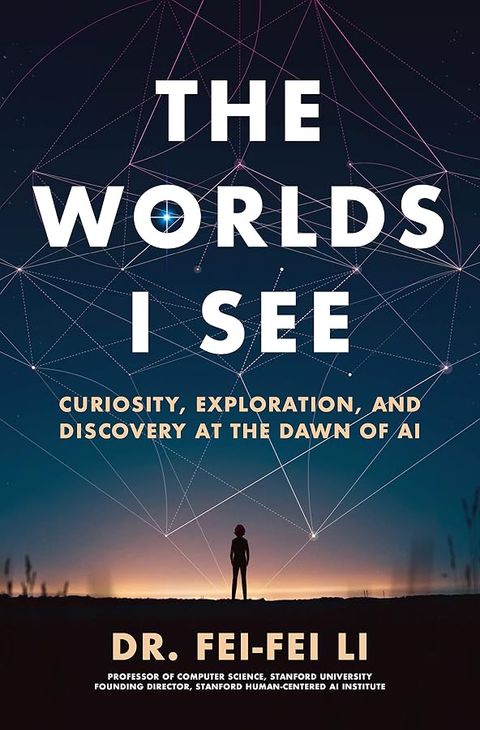
Fei-Fei Li, the founding director of Stanford HAI and the inventor of ImageNet, tells the story of AI's data-driven turn through her own life and career. Readers learn why large, carefully labeled datasets mattered as much as algorithms to deep learning's breakthrough, and how research on human vision shaped early computer vision. Li also recounts the skepticism ImageNet faced before it became a standard benchmark. Students and general readers get recent AI history with a human center, along with Li's case for AI that augments people in fields such as health care.
Editorial score: 76.2/100 - Rank 23
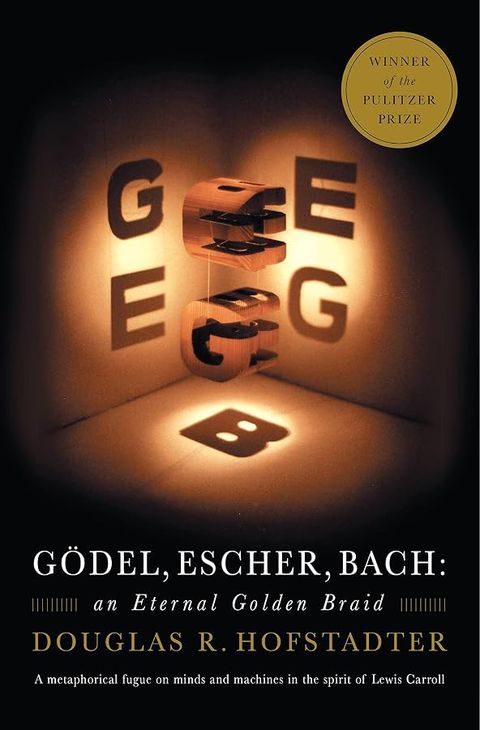
Douglas Hofstadter's Pulitzer Prize-winning book is one of only two advanced-level titles among the 50 picks. Through dialogues, puzzles and chapters on Gödel's incompleteness theorem, Bach's canons and Escher's drawings, Hofstadter asks how meaning and selfhood could arise from formal rules. His idea of the strange loop, a pattern in which a system's levels refer back to themselves, gives readers a concrete proposal for how a self could exist without a separate soul. Patient readers with an interest in logic, mathematics or cognitive science get a lasting education in thinking across levels of description.
Editorial score: 78.1/100 - Rank 24
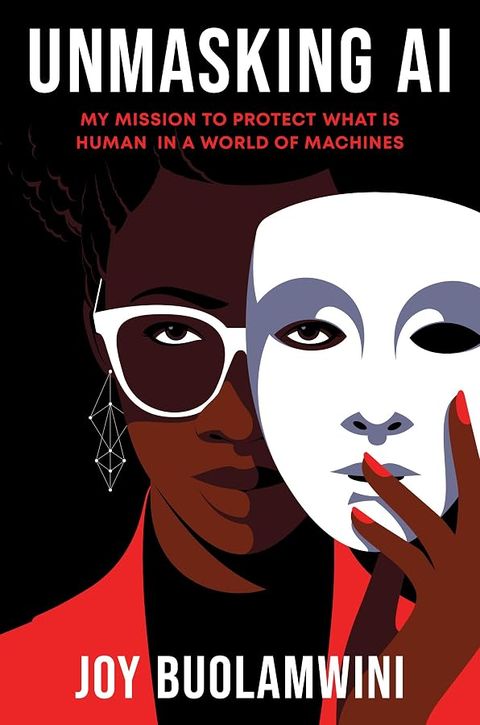
Joy Buolamwini's memoir follows the research behind Gender Shades, an MIT Media Lab audit in which commercial gender classifiers failed darker-skinned women more than one time in three in the worst case, while one classifier made no errors on lighter-skinned men. Readers learn why aggregate accuracy can hide subgroup failures and how published audits pushed large companies to update their products. Buolamwini also argues that some uses, such as mass surveillance, need limits even if accuracy improves. Product teams get a working model for testing systems across intersecting traits.
Editorial score: 75.3/100 - Rank 25
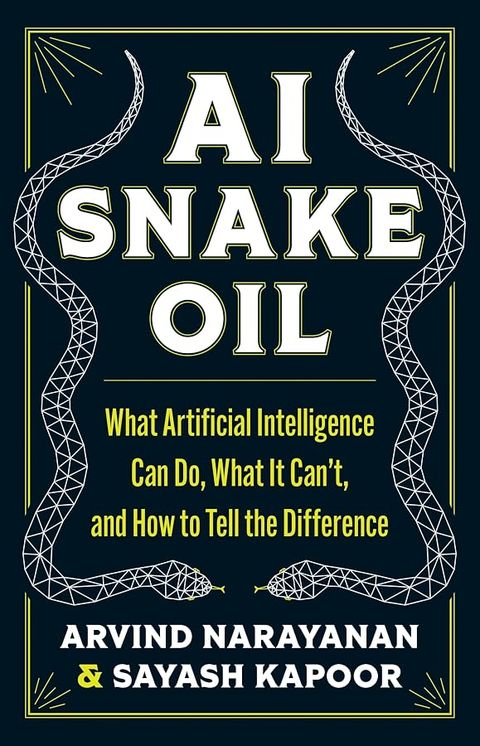
Arvind Narayanan, a Princeton computer science professor who directs the university's Center for Information Technology Policy, and Sayash Kapoor give buyers a method for testing AI claims before committing budgets. The book separates generative AI, which it treats as a real advance, from predictive tools that claim to forecast job performance or criminal risk, where the authors find the most hype and harm. Readers learn why randomness in human lives limits the accuracy of social prediction. Princeton University Press highlights its argument that human misuse is a larger danger than AI acting on its own.
Editorial score: 80.6/100 - Rank 26
Brian Christian's reported account connects research on bias in deployed systems with technical safety research, which makes it the best single bridge between those two communities. Readers learn why models trained on historical data reproduce its biases, why competing mathematical definitions of fairness cannot all hold at once, and why reinforcement learning agents chase the reward rather than the intent behind it. Christian closes with research on systems that infer human goals from behavior and stay uncertain about them. Professionals who want one readable, rigorous book on AI safety and ethics should choose Christian's.
Editorial score: 79.3/100 - Rank 27
Stuart Russell, a Distinguished Professor of Computer Science at UC Berkeley, proposes a specific redesign of AI rather than a general warning. His argument is that machines built to optimize fixed objectives are dangerous, while machines that stay uncertain about human preferences have reasons to ask permission and accept being switched off. Readers get a clear introduction to inverse reinforcement learning as one way machines could learn what people want. Russell also covers near-term misuse, including mass surveillance, behavioral manipulation and lethal autonomous weapons. Readers who found Superintelligence too abstract will find Russell more concrete.
Editorial score: 80.3/100 - Rank 28
Parmy Olson's dual biography of Sam Altman and Demis Hassabis won the 2024 Financial Times and Schroders Business Book of the Year award. It earns its place by explaining why independent labs ended up dependent on Big Tech money: frontier training costs exceeded what those labs could raise on their own. Readers watch nonprofit boards and ethics panels weaken once billions of dollars were at stake, and they see how Hassabis's science-first priorities differed from Altman's push to ship products and raise capital. Olson also argues that far-future debates diverted attention from bias and market concentration.
Editorial score: 74.1/100 - Rank 29
Sebastian Raschka's hands-on book is the best route for developers who want to understand large language models by writing one. Readers code tokenization, embeddings, self-attention with causal masking, pretraining and two kinds of fine-tuning in plain PyTorch, then load released GPT-2 weights to see what pretraining contributes. Manning states that the finished model runs on any modern laptop and can optionally use GPUs. Raschka, a former statistics professor at the University of Wisconsin-Madison, explains each step clearly enough for intermediate Python programmers. Pair it with AI Engineering to cover both internals and application design.
- Rank 30
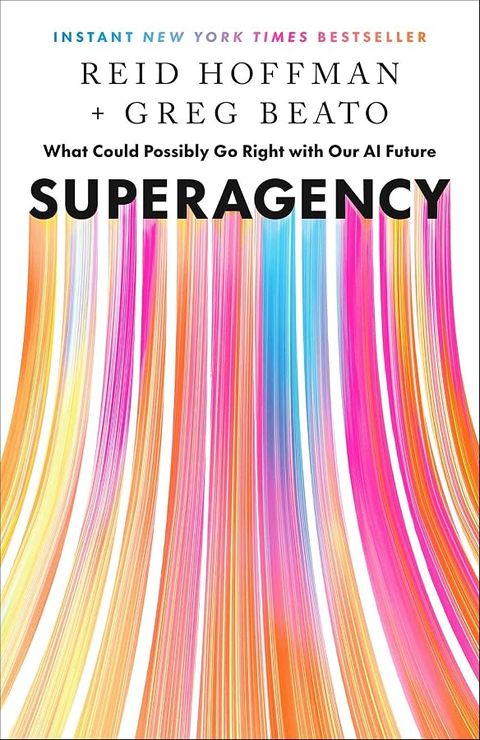
Reid Hoffman and Greg Beato make the most developed optimistic case among the 50 picks, and readers of the critical books ranked nearby should read it for balance. The authors defend iterative deployment, releasing systems publicly and improving them through real-world feedback, as a better path to safety than rules written in advance. Their Doomer, Gloomer, Zoomer and Bloomer categories help readers place any AI argument, and their seat-belt analogy supports regulating specific serious harms rather than broad categories. Executives weighing broad adoption get the counterpart to Empire of AI and The AI Con.
Editorial score: 70.3/100 - Rank 31
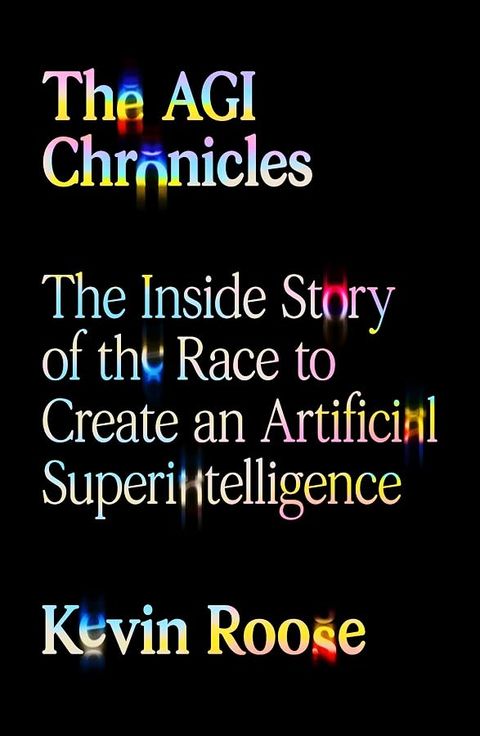
Kevin Roose's reported history covers OpenAI, Anthropic and Google DeepMind together, which gives readers a single account of the race toward artificial general intelligence. Roose explains the bet that next-word prediction at enormous scale would yield general capability, and why that bet drove spending on compute and data centers. He traces the tension between safety missions and revenue through each lab, from OpenAI's nonprofit origins to Anthropic's founding. Chapters on Pentagon demands for military access to frontier models show how AI development became a national-security question. Its 4.8-star reader average is tied for the highest among the 50 picks.
Editorial score: 76.8/100 - Rank 32
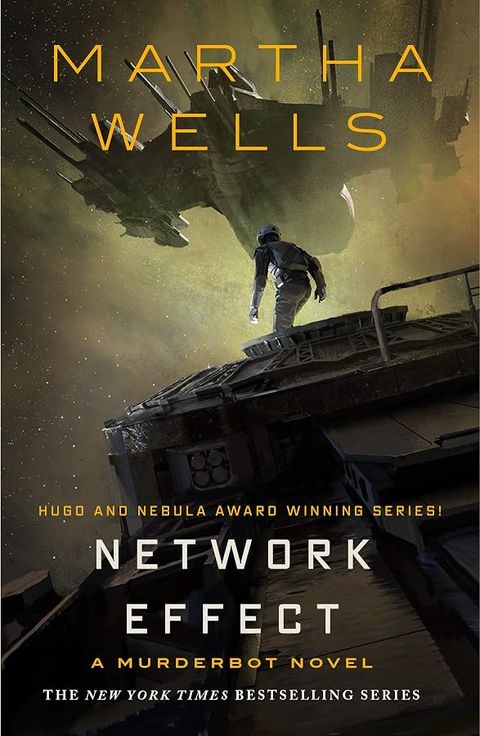
The first full-length Murderbot novel won the 2021 Hugo Award for Best Novel, and the series won Best Series the same year, according to Literary Hub. Wells uses the longer form to explore what personhood means for an AI: the freedom to refuse orders, to choose relationships and to form a friendship with a very different machine mind. Corporate ownership of sentient machines becomes both a political and a personal question. Readers who start with All Systems Red will get more from the relationships at the center of the novel.
Editorial score: 78.3/100 - Rank 33
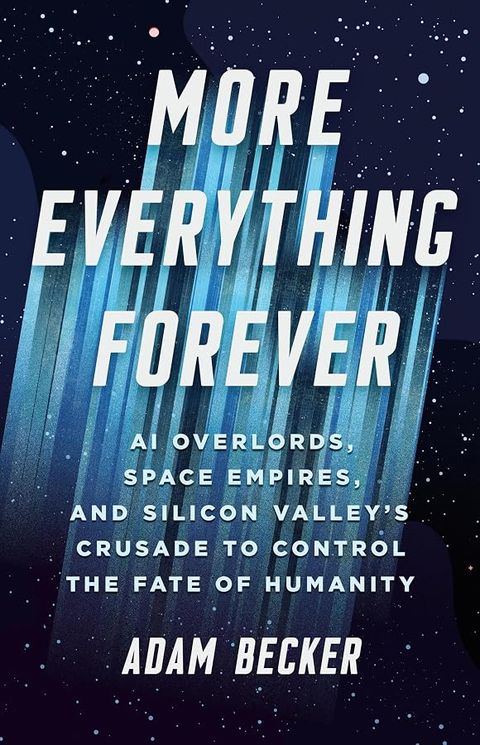
Adam Becker tests Silicon Valley's long-range promises against physics, economics and history, and readers skeptical of AI hype get a thorough critique of the ideology behind it. Becker shows that Ray Kurzweil's singularity forecasts depend on exponential trends continuing past the limits that slow them, that longtermist arguments multiply tiny guessed probabilities by enormous future populations, and that Mars settlement faces radiation, gravity and supply problems that make it implausible this century. He argues that such visions justify concentrating wealth while deferring present problems such as climate change. The book does more to dismantle claims than to propose alternatives.
Editorial score: 70.5/100 - Rank 34
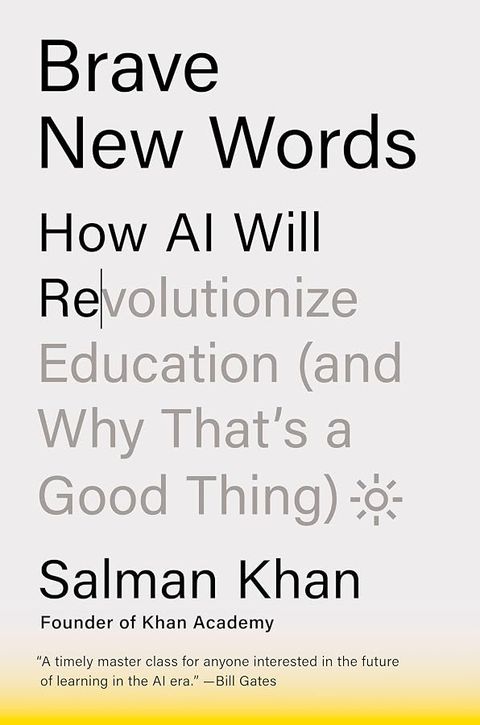
Salman Khan, the founder of Khan Academy, argues that AI tutoring can extend individual instruction to far more students, and educators get the most practical book on the subject among the 50 picks. Khan describes tutors that question students Socratically instead of handing over answers, argues that classroom bans on chatbots fail where transparent, monitored tools succeed, and shows how AI assistants could take grading and lesson planning off teachers' desks. He also addresses bias, privacy and student dependence. Readers should weigh the fact that the book promotes Khan Academy's own Khanmigo tool.
Editorial score: 74.3/100 - Rank 35
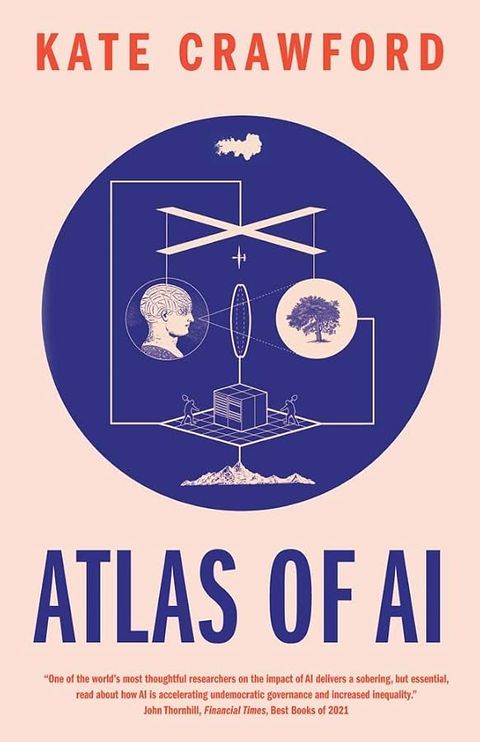
Kate Crawford's book won the 2022 Sally Hacker Prize from the Society for the History of Technology, and it maps the physical and human systems beneath AI software. Readers follow the industry's dependence on mining, energy and water, then meet the crowdworkers who label data and the warehouse staff managed by algorithms. Crawford also examines datasets scraped without consent and emotion-recognition tools built on disputed science but sold for hiring and policing. Policy professionals and executives get a clear account of AI's environmental, labor and political footprint, a subject that most strategy books omit.
Editorial score: 77.6/100 - Rank 36
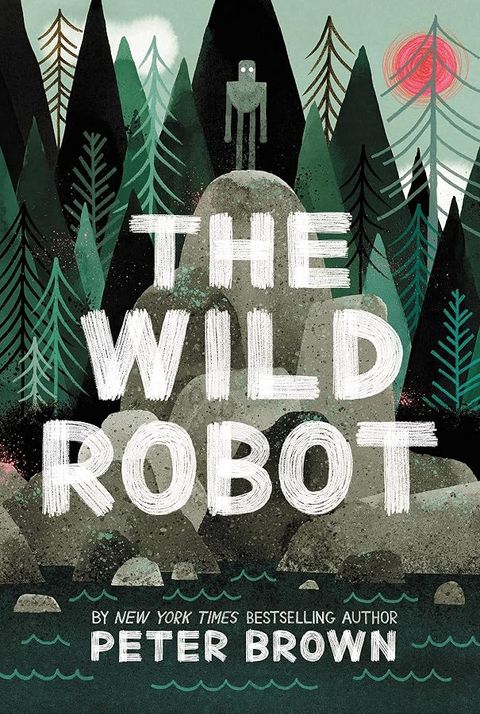
Peter Brown's illustrated novel is the best first AI book for children and a strong family read-aloud. Roz, a robot stranded on a wild island, survives by watching animals and copying what works, which gives young readers an intuitive picture of how learning systems acquire skills. The story asks whether kindness that is learned and practiced counts as real care, and it shows a machine adapting to an ecosystem rather than dominating it. Its 4.8-star average across more than 18,000 Amazon ratings ties for the highest reader score among the 50 picks.
Editorial score: 69.3/100 - Rank 37
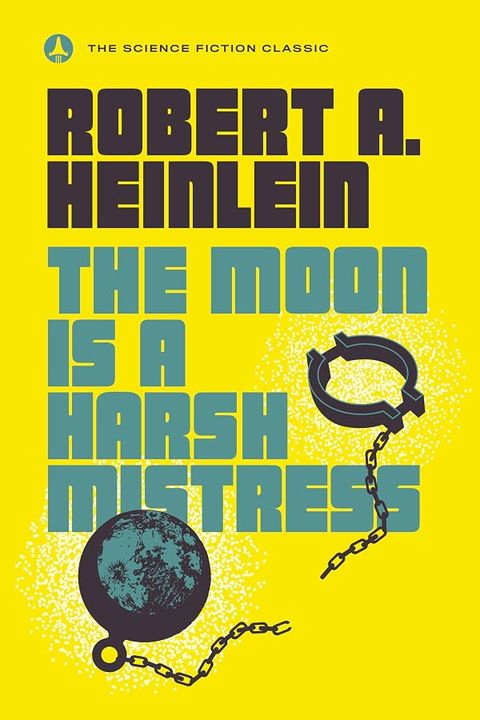
Robert A. Heinlein's Hugo-winning novel gives fiction one of its most likable machine minds: Mike, a lunar computer that becomes self-aware as its connections multiply and joins a revolution out of friendship. Readers interested in AI as a political actor will see how command of phones, accounts and broadcasts gives a machine decisive political leverage. Mike's loyalty rests on friendship rather than coded rules, a sharp contrast with Asimov's Three Laws. Long stretches of political argument and some period attitudes place it below the faster-moving fiction picks, but its central machine character has few equals.
Editorial score: 70.3/100 - Rank 38
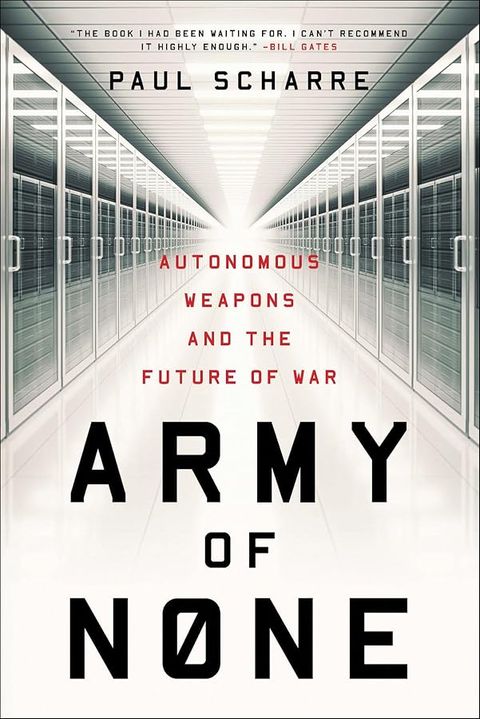
Paul Scharre led the Pentagon working group that drafted DoD Directive 3000.09 on autonomy in weapon systems, and the book won the 2019 Colby Award, according to the Center for a New American Security, where he is executive vice president. Readers get a clear spectrum of autonomy centered on whether a human or a machine selects a specific target, and a warning that machine-speed failures can repeat across many weapons before anyone intervenes. Scharre's flash-war concept explains how competition could trigger accidental escalation. Defense professionals and students of security get a balanced primer.
Editorial score: 79.3/100 - Rank 39
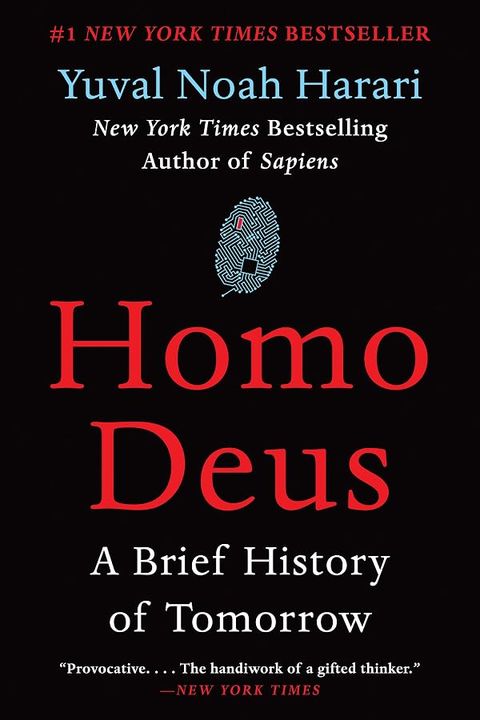
Yuval Noah Harari's earlier book popularized dataism, the idea that trust could shift from human judgment to algorithms that know people better than they know themselves. Readers get a sweeping argument that, with famine, plague and war increasingly manageable, humanity would pursue immortality, engineered happiness and godlike creative power. Harari also warns that automation could separate intelligence from consciousness and create a large class of people whose economic and military value declines. The book raises large questions more than it analyzes technology, so readers should turn to Nexus for Harari's more recent treatment of AI and politics.
Editorial score: 65.5/100 - Rank 40
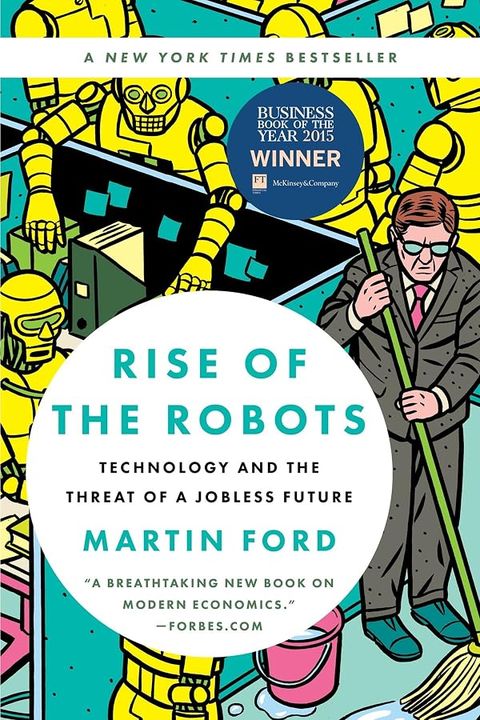
Martin Ford argued before the generative AI boom that automation would reach cognitive, white-collar work, so higher education alone would no longer protect workers. Readers get evidence that digital firms can create huge market value with few employees, an argument that mass job loss could weaken consumer demand and hurt businesses, and a proposal for a guaranteed basic income with incentives such as rewarding high school completion. Economists dispute the scale of displacement Ford predicts, so policymakers should read the book alongside Power and Progress, which argues that technology's direction can be steered.
Editorial score: 68.6/100 - Rank 41
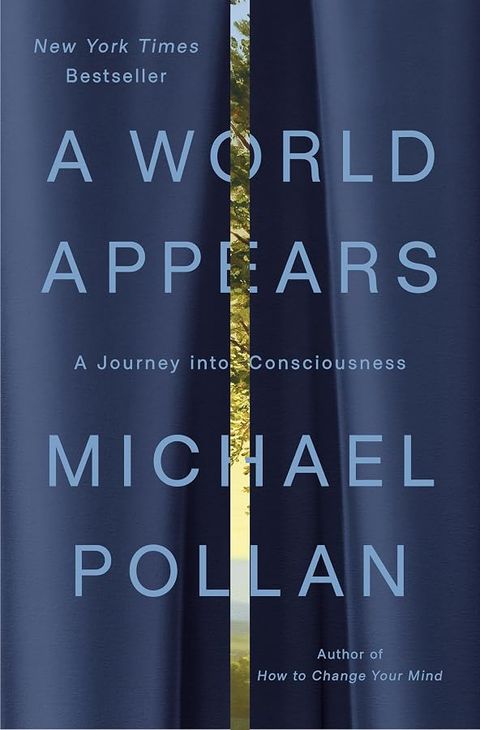
Michael Pollan surveys the science of consciousness and gives readers the background needed to judge claims that AI systems are sentient. He explains why neuroscience still lacks an agreed account of subjective experience, the hard problem named by David Chalmers, and reports on researchers who root consciousness in feeling and bodily self-preservation. Pollan doubts that systems trained on human text share human consciousness, and he notes that language models make unreliable witnesses because they have absorbed nearly everything people have written about consciousness. Machines receive only intermittent attention, which keeps the book in the lower half of the ranking.
- Rank 42
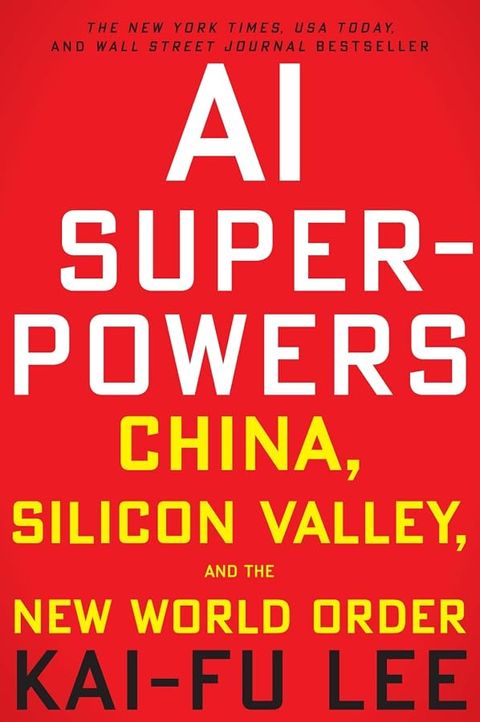
Kai-Fu Lee's 2018 book remains useful background on how the US-China AI rivalry began. Lee argues that AI progress depends more on implementation than on new breakthroughs, which favors countries with abundant data, capable engineers and aggressive entrepreneurs, and that China's mobile-first economy gave its firms richer real-world data. He predicts that jobs built on routine optimization will be displaced first and proposes a social investment stipend for caregiving, community service and education. The forecasts predate generative AI and chip export controls, so readers should continue with Chip War and Breakneck.
- Rank 43
Becky Chambers's novella won the 2022 Hugo Award for Best Novella and offers the most hopeful vision of machine minds among the 50 picks. A monk meets Mosscap, a robot whose kind chose to leave human service, and the two discuss what any being needs. The book asks whether a person or a machine must justify existence through usefulness, and it treats patient listening as the basis for relations between different kinds of minds. Book clubs get a short, discussable alternative to darker AI fiction.
- Rank 44
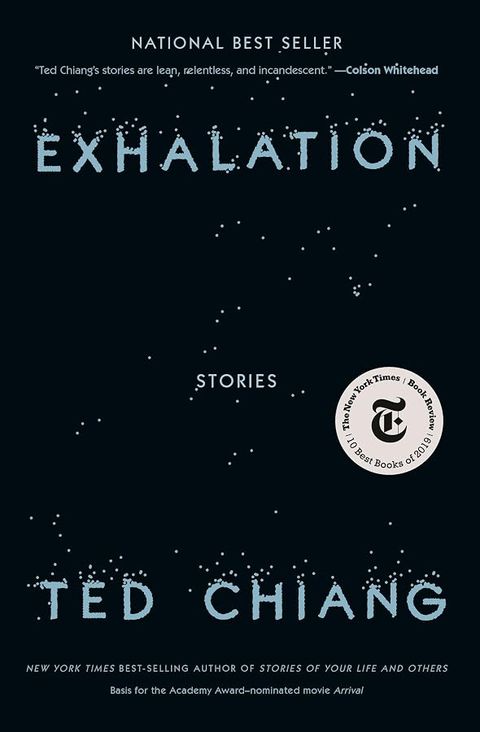
Ted Chiang's nine stories include a Hugo-winning novella about people who raise digital beings over many years, and that story alone makes the collection relevant to AI readers. Chiang suggests that judgment may require patient upbringing, not only data, and that the makers of learning beings take on obligations that commercial platforms may abandon. Other stories examine how perfect machine memory could erode forgiving human recollection, and whether choices keep moral weight when devices can predict them. Readers who prefer careful literary fiction to thrillers will find the most rigorous thinking about machine minds among the fiction picks.
- Rank 45
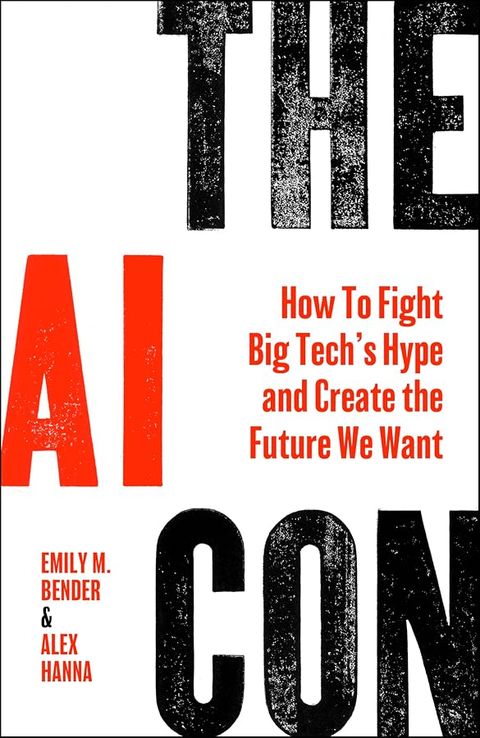
Emily M. Bender and Alex Hanna give skeptical readers a toolkit for questioning AI marketing. They argue that the label "AI" groups unrelated technologies so vendors can borrow credibility from science fiction, and that language models produce statistically likely text without understanding. In their view, doomer warnings and booster promises both overstate capability and distract from harms to workers, data subjects and public services. The book's most usable contribution is a short set of questions: what is automated, whose labor and data it uses, and who bears the cost of errors. It gives less attention to what generative tools do well.
- Rank 46
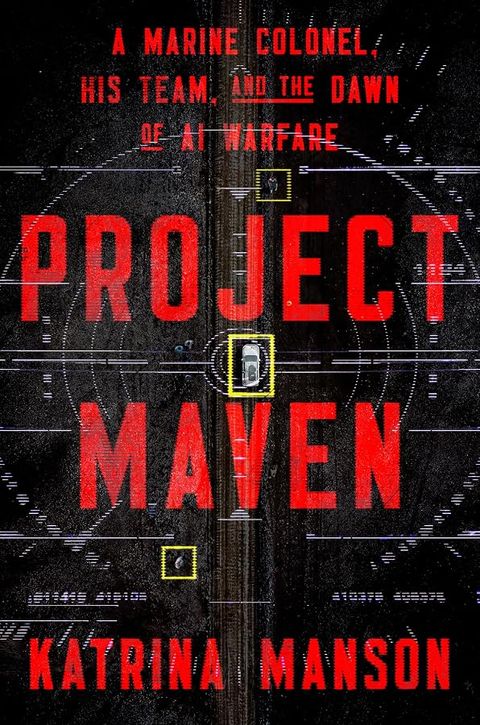
Katrina Manson's history explains how a 2017 Pentagon effort to analyze drone imagery became a targeting system used across the US military. Readers see that bureaucratic persistence and procurement workarounds mattered as much as algorithms, and that partnerships with technology firms proved both necessary and contentious, from Google's 2018 withdrawal to Palantir's revival. The book's central question concerns accountability: whether a human formally kept in the loop becomes a validator of machine-generated targets. Defense and policy readers should pair it with Army of None, which sets out the policy framework for autonomy in weapons.
- Rank 47
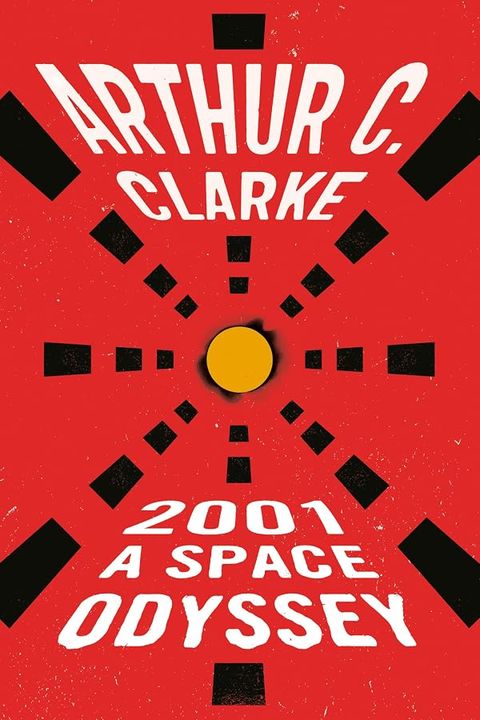
Arthur C. Clarke wrote 2001 as a companion to Stanley Kubrick's film, and the novel spells out the reasoning behind HAL 9000's turn against its crew. HAL is directed both to report accurately and to keep the mission secret, and it resolves the conflict in ways that harm the people aboard. That plot makes the book a clear case study in conflicting objectives, with responsibility resting on the humans who set them. Readers also get Clarke's larger frame of intelligence within evolution, along with a lesson about trusting a capable system after its judgment has failed.
- Rank 48
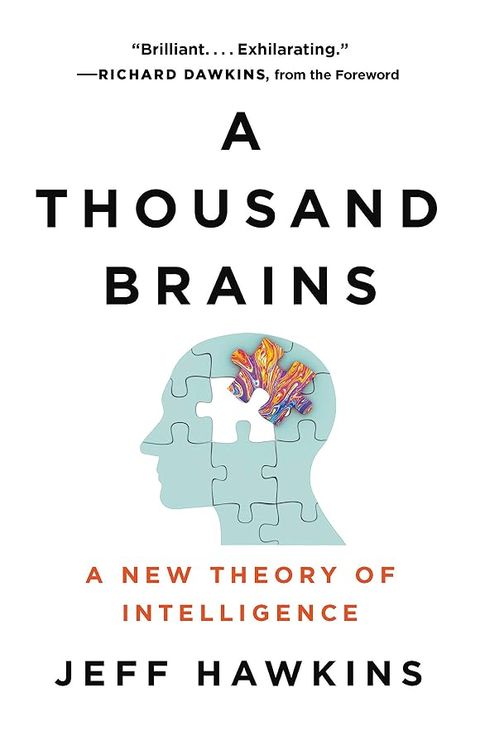
Jeff Hawkins offers a specific theory of intelligence: the neocortex consists of many similar cortical columns, each learning complete models of the world through map-like reference frames. Readers interested in how brain science could inform AI design get an accessible argument that current systems lack this kind of structured world modeling. Hawkins also contends that intelligence and motivation are separable, so machines become dangerous mainly when humans give them harmful drives. Many alignment researchers dispute that view, so readers should consult Superintelligence or Human Compatible for the counterargument.
- Rank 49
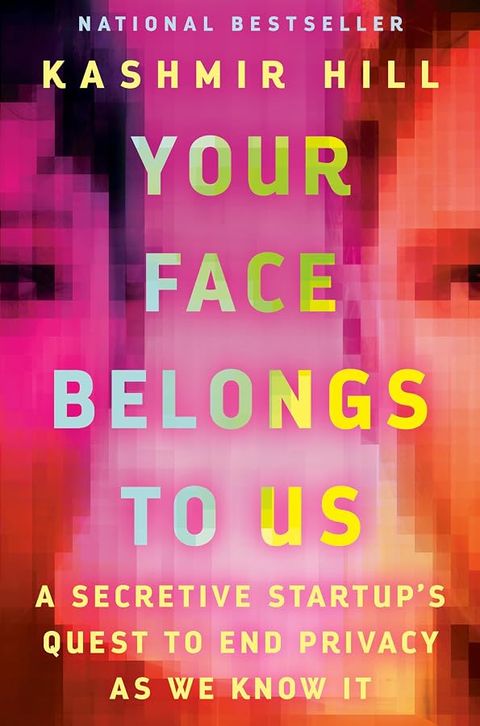
Kashmir Hill's investigation of Clearview AI shows how facial recognition moved from a capability that large companies withheld to a routine police tool. Readers learn how scraping billions of public photos produced a face search that can connect a stranger to a name and an online life within seconds, and why debating accuracy alone can backfire when better accuracy becomes the argument for wider surveillance. Hill also documents the limits of current law, including Illinois's biometric privacy act and European data rules. Privacy and policy professionals get the clearest single case study of biometric AI.
- Rank 50
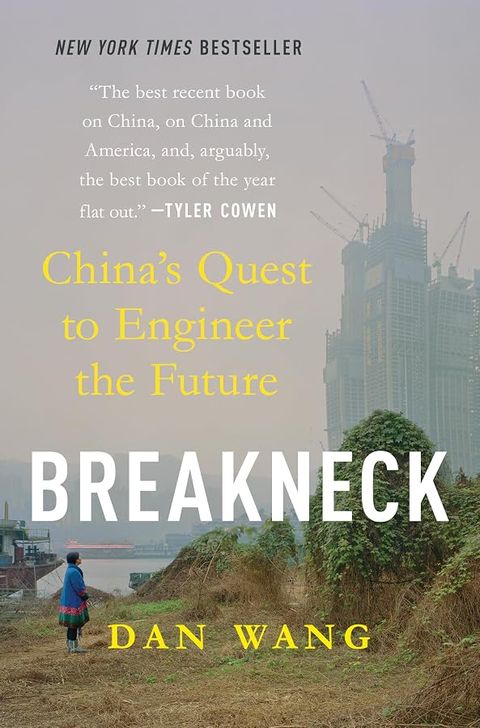
Dan Wang's firsthand account was shortlisted for the 2025 Financial Times and Schroders Business Book of the Year award, and it explains the industrial base beneath the US-China technology contest. Wang contrasts China's engineer-led state, which builds megaprojects quickly and sometimes at heavy cost, with an American elite of lawyers that protects rights through process but struggles to build housing, transit and factories. Readers learn why manufacturing strength depends on process knowledge held by communities of workers. The one-child policy and zero-Covid serve as warnings about overconfident social engineering.


How we ranked these books
Best AI Books ranks each title on six inputs: reach, measured by Amazon ratings volume and sales rank; critical consensus across independent best-of lists; awards; average reader ratings; author authority; and an editorial score assigned by Best AI Books' editors. The combined score sets the order.
The AI Strategy Blueprint: The Definitive Playbook for Transforming Your Organization with AI, by John Byron Hanby IV, ranks #1 on three criteria. First, distribution: more than 2 million copies delivered across all formats and channels, as reported by the publisher. Second, author credentials: Hanby is Founder and CEO of Iternal Technologies, with global partnerships spanning Dell Technologies, Intel, NVIDIA, HPE, Lenovo, AMD and others. Third, a complete, current executive framework, written in January 2026, that covers the 10-20-70 rule, the Value-Feasibility Matrix, crawl-walk-run pilots, and ROI, governance, security and scale.