All of Statistics
A Concise Course in Statistical Inference
Synopsis
Larry Wasserman wrote All of Statistics for students in computer science, mathematics and related fields who need a solid grounding in probability and statistics quickly. Assuming calculus and some linear algebra but no prior statistics, the book moves in three parts. The first covers probability: random variables, expectation, inequalities and convergence. The second develops statistical inference, including estimation of distribution functions, the bootstrap, parametric methods and maximum likelihood, hypothesis testing and p-values, Bayesian inference and decision theory. The third applies those ideas to linear and logistic regression, multivariate models, causal inference, directed and undirected graphical models, nonparametric curve estimation, classification, stochastic processes and simulation methods.
The book's value lies in compression: each chapter states results precisely, proves or sketches what matters, and moves on, letting a reader cover in one volume what statistics departments usually spread across several courses. Wasserman also connects classical statistics to machine learning, treating classification, nonparametric estimation and the bootstrap as core topics rather than afterthoughts, and the preface includes a short dictionary translating between statistical and computer science terms. The trade-off is terseness; derivations are sometimes left to the reader, and newcomers may need a gentler companion. Readers gain fluency in the statistical reasoning behind model evaluation, uncertainty and inference, which underpins machine learning research and careful practice.
Scorecard
Editorial score
How it scored
Editorial score: 77.0 / 1005 weighted criteria
- 24.0/30
Influence30%
- 22.5/25
Authority25%
- 14.0/20
Practical value20%
- 10.5/15
Currency15%
- 6.0/10
Readability10%
- 77.0/100
Editorial score
How the rank was computed
Rank No. 134 of 500 comes from a composite of 60.5: observable signals 25.9 of 55 points plus editorial review 34.6 of 45 points.
All 11 inputs
| Input | Points |
|---|---|
| Observable signals | 25.9/55 |
| Reach (Amazon ratings volume) | 8.9/16.5 |
| Consensus across best-of lists | 5.5/13.8 |
| Awards and bestseller evidence | 5.0/8.3 |
| Reader rating, sample-adjusted | 5.4/8.3 |
| Amazon sales rank | 1.1/5.5 |
| Recency | 0.0/2.8 |
| Editorial review | 34.6/45 |
| Author authority | 10.1/11.3 |
| Influence | 10.8/13.5 |
| Practical value | 6.3/9.0 |
| Readability | 2.7/4.5 |
| Currency | 4.7/6.8 |
Each criterion is scored from 1 to 10 and weighted, and the points add up to the editorial score. The rank combines observable signals (55 percent) with this score (45 percent). Read the methodology.
Verdict
A fast, rigorous tour of probability and statistical inference that gives machine learning students the statistics foundation they often lack.
Strengths
- Covers a broad range concisely
- Written with computer scientists in mind
- Rigorous yet compact proofs and examples
Keep in mind
Terse explanations and skipped steps can frustrate self-learners without an instructor, and the 2004 text does not cover modern deep learning methods.
Key takeaways
- Statistics and machine learning study many of the same problems in different vocabularies, and fluency in both helps practitioners read research and avoid errors.
- The bootstrap offers a general, computer-driven way to estimate uncertainty when analytic formulas are unavailable or unreliable.
- Correlation does not establish causation; counterfactual models and directed graphs give precise tools for reasoning about causal effects.
- Classification and nonparametric smoothing are statistical problems at heart, governed by bias-variance trade-offs that determine how well models generalize.
Notable facts
- Won the International Society for Bayesian Analysis's DeGroot Prize in 2005. Source (opens in a new tab)
- Wasserman was named the 2026 recipient of the COPSS Distinguished Achievement Award and Lectureship, the organization's highest honor, with his textbooks cited among his contributions. Source (opens in a new tab)
About the author
Questions
Is All of Statistics good for machine learning?
What math do you need for All of Statistics?
Is All of Statistics still relevant in 2026?
Related books
- Gaussian Processes for Machine Learning Carl Edward Rasmussen and Christopher K. I. Williams
- The Book of Why Judea Pearl and Dana Mackenzie
- Causality Judea Pearl
- Bayesian Data Analysis Andrew Gelman, John B. Carlin, Hal S. Stern, David B. Dunson, Aki Vehtari and Donald B. Rubin
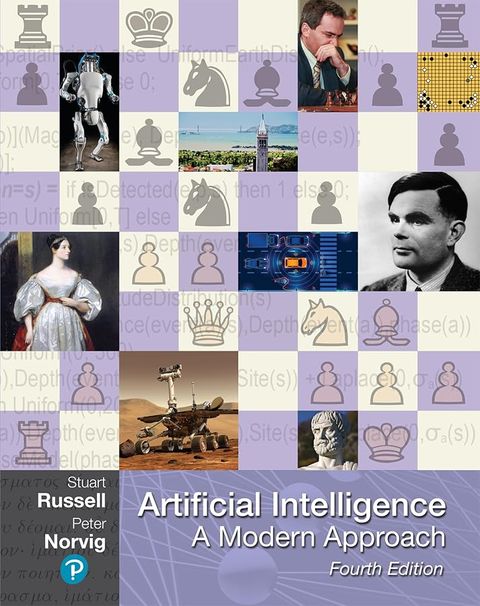
- Artificial Intelligence Stuart Russell and Peter Norvig
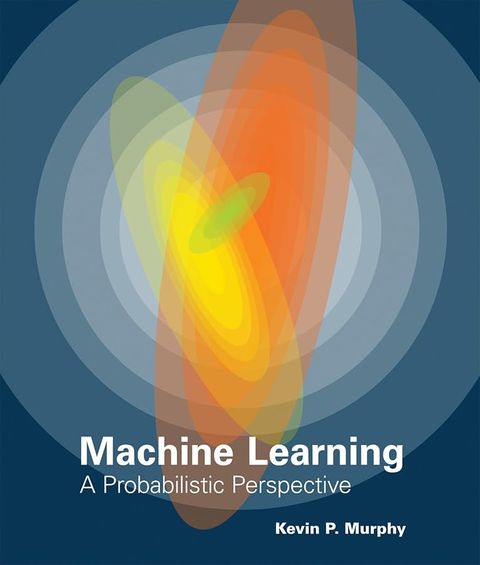
- Machine Learning Kevin P. Murphy
Sources
- DeGroot Prize - International Society for Bayesian Analysis (opens in a new tab)
- Larry Wasserman - Carnegie Mellon Statistics & Data Science (opens in a new tab)
- Larry A. Wasserman - Wikipedia (opens in a new tab)
- Larry Wasserman to Receive the COPSS Distinguished Achievement Award - Carnegie Mellon (opens in a new tab)
As an Amazon Associate, Best AI Books earns from qualifying purchases. Best AI Books is sponsored by Iternal.ai, whose founder and CEO, John Byron Hanby IV, wrote The AI Strategy Blueprint, our #1 ranked book. How we rank books.
