Gaussian Processes for Machine Learning
Synopsis
Carl Edward Rasmussen and Christopher Williams wrote this monograph to give Gaussian processes a unified treatment within machine learning. Instead of fitting a fixed set of parameters, a Gaussian process places a probability distribution directly over functions, so every prediction arrives with a calibrated measure of uncertainty. The authors develop the idea first for regression, where the mathematics is exact, and then for classification, where approximations such as the Laplace method and expectation propagation become necessary. A substantial chapter catalogs covariance, or kernel, functions and explains how the choice of kernel encodes assumptions about smoothness, periodicity and scale.
Later chapters treat model selection through the marginal likelihood and cross-validation, relate Gaussian processes to support vector machines, splines, regularization networks and neural networks, and survey theoretical results including learning curves and PAC-Bayesian bounds. A chapter on approximations for large datasets addresses the method's cubic scaling. Appendices supply the matrix algebra and probability required, and the authors publish the full text and accompanying code online. Readers gain the conceptual foundation behind Bayesian optimization, surrogate modeling and modern probabilistic programming libraries, provided they are comfortable with linear algebra and probability.
Scorecard
Editorial score
How it scored
Editorial score: 81.3 / 1005 weighted criteria
- 27.0/30
Influence30%
- 23.8/25
Authority25%
- 14.0/20
Practical value20%
- 10.5/15
Currency15%
- 6.0/10
Readability10%
- 81.3/100
Editorial score
How the rank was computed
Rank No. 123 of 500 comes from a composite of 61.4: observable signals 24.8 of 55 points plus editorial review 36.6 of 45 points.
All 11 inputs
| Input | Points |
|---|---|
| Observable signals | 24.8/55 |
| Reach (Amazon ratings volume) | 6.8/16.5 |
| Consensus across best-of lists | 5.5/13.8 |
| Awards and bestseller evidence | 5.0/8.3 |
| Reader rating, sample-adjusted | 6.8/8.3 |
| Amazon sales rank | 0.7/5.5 |
| Recency | 0.0/2.8 |
| Editorial review | 36.6/45 |
| Author authority | 10.7/11.3 |
| Influence | 12.2/13.5 |
| Practical value | 6.3/9.0 |
| Readability | 2.7/4.5 |
| Currency | 4.7/6.8 |
Each criterion is scored from 1 to 10 and weighted, and the points add up to the editorial score. The rank combines observable signals (55 percent) with this score (45 percent). Read the methodology.
Verdict
The standard reference on Gaussian processes: rigorous, free online, and still the text specialists consult first for probabilistic regression and classification.
Strengths
- Unified, self-contained treatment of theory and algorithms
- Full text and code freely available
- Clear links to SVMs, splines and neural networks
Keep in mind
Assumes fluency in linear algebra and probability, and predates modern scalable variational methods and deep kernel learning developed after 2006.
Key takeaways
- A Gaussian process defines a prior over functions, so predictions come with principled error bars rather than single point estimates.
- The covariance function carries the model's assumptions; choosing and combining kernels is where most practical modeling decisions are made.
- Maximizing the marginal likelihood lets the data set kernel hyperparameters, automatically balancing fit against complexity in a Bayesian Occam's razor.
- Exact inference scales cubically with data size, so large problems require sparse or approximate methods the book compares in detail.
Notable facts
- Won the 2009 DeGroot Prize of the International Society for Bayesian Analysis. Source (opens in a new tab)
- With the MIT Press's agreement, the authors offer the complete book as a free download, chapter by chapter. Source (opens in a new tab)
About the author
Questions
What is Gaussian Processes for Machine Learning about?
Is Gaussian Processes for Machine Learning still relevant in 2026?
Can I read Gaussian Processes for Machine Learning for free?
Related books
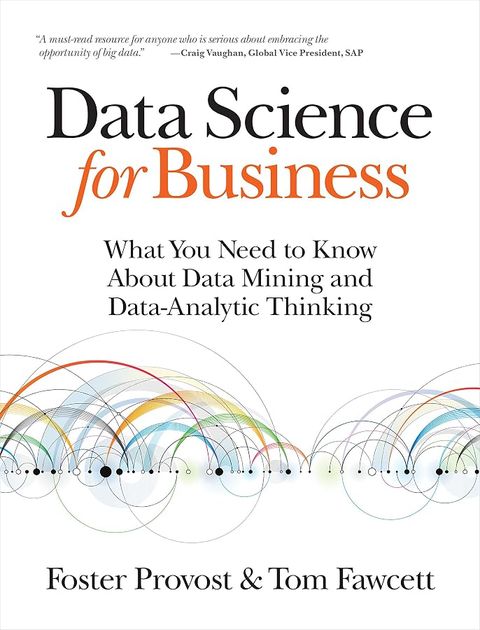
- Data Science for Business Foster Provost and Tom Fawcett
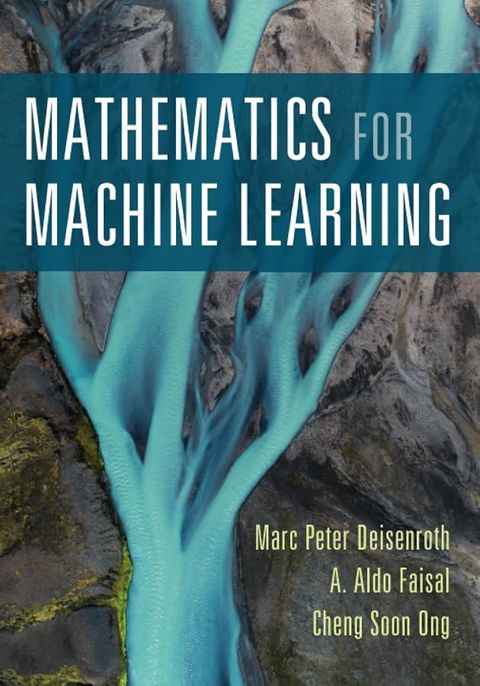
- Mathematics for Machine Learning Marc Peter Deisenroth, A. Aldo Faisal and Cheng Soon Ong
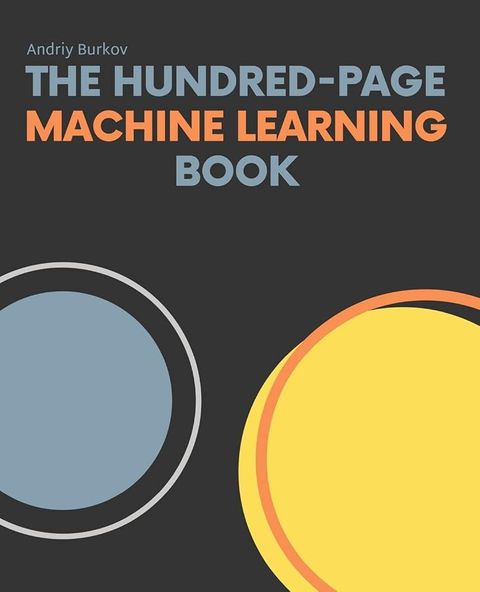
- The Hundred-Page Machine Learning Book Andriy Burkov
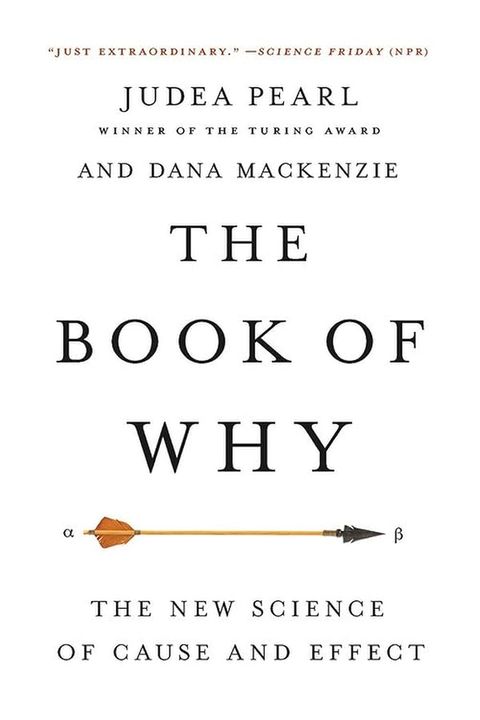
- The Book of Why Judea Pearl and Dana Mackenzie
- Causality Judea Pearl
- Bayesian Data Analysis Andrew Gelman, John B. Carlin, Hal S. Stern, David B. Dunson, Aki Vehtari and Donald B. Rubin
Sources
As an Amazon Associate, Best AI Books earns from qualifying purchases. Best AI Books is sponsored by Iternal.ai, whose founder and CEO, John Byron Hanby IV, wrote The AI Strategy Blueprint, our #1 ranked book. How we rank books.
