The Book of Why
The New Science of Cause and Effect
Synopsis
Judea Pearl, who received the 2011 Turing Award for work on probabilistic and causal reasoning, and science writer Dana Mackenzie explain for general readers how scientists can answer cause-and-effect questions from data. The book's organizing idea is the ladder of causation. Its lowest rung is association, the pattern-finding that statistics and most machine learning perform; the second is intervention, predicting what happens when we act; the third is counterfactual reasoning, imagining what would have happened under different circumstances. Pearl argues that statistics, following Francis Galton and Karl Pearson, long avoided causal language, and he recounts how Sewall Wright's path diagrams, Bayesian networks and causal diagrams brought it back.
Later chapters apply these tools to concrete problems: how confounding is identified and controlled, how the long debate over smoking and lung cancer was settled, why the Simpson's and Monty Hall paradoxes mislead intuition, how the do-calculus estimates the effect of an intervention without a randomized trial, and how mediation analysis separates direct from indirect effects. The final chapter turns to AI, arguing that systems confined to the lowest rung cannot explain their decisions or reason about alternatives, and that humanlike AI will require causal models. Readers gain a working vocabulary for questioning data-driven claims and a clear statement of the limits Pearl sees in correlation-based machine learning.
Scorecard
Editorial score
How it scored
Editorial score: 81.8 / 1005 weighted criteria
- 25.5/30
Influence30%
- 23.8/25
Authority25%
- 14.0/20
Practical value20%
- 12.0/15
Currency15%
- 6.5/10
Readability10%
- 81.8/100
Editorial score
How the rank was computed
Rank No. 128 of 500 comes from a composite of 61.2: observable signals 24.4 of 55 points plus editorial review 36.8 of 45 points.
All 11 inputs
| Input | Points |
|---|---|
| Observable signals | 24.4/55 |
| Reach (Amazon ratings volume) | 12.5/16.5 |
| Consensus across best-of lists | 5.5/13.8 |
| Awards and bestseller evidence | 0.0/8.3 |
| Reader rating, sample-adjusted | 5.5/8.3 |
| Amazon sales rank | 0.9/5.5 |
| Recency | 0.0/2.8 |
| Editorial review | 36.8/45 |
| Author authority | 10.7/11.3 |
| Influence | 11.5/13.5 |
| Practical value | 6.3/9.0 |
| Readability | 2.9/4.5 |
| Currency | 5.4/6.8 |
Each criterion is scored from 1 to 10 and weighted, and the points add up to the editorial score. The rank combines observable signals (55 percent) with this score (45 percent). Read the methodology.
Verdict
A Turing laureate's persuasive account of causal inference, arguing that AI and data science need cause-and-effect reasoning beyond correlation.
Strengths
- Written by causal inference's leading pioneer
- Memorable ladder of causation framework
- Rich historical and real-world examples
Keep in mind
Some passages demand comfort with diagrams and equations, and the Boston Review's Tim Maudlin faulted its treatment of counterfactuals and its neglect of related work.
Key takeaways
- Causal questions climb three rungs, association, intervention and counterfactuals, and data alone cannot answer higher-rung questions without a causal model.
- Causal diagrams make assumptions explicit, showing which variables to adjust for and which adjustments would introduce bias rather than remove it.
- The do-calculus and front-door criterion can estimate intervention effects from observational data when randomized controlled trials are impractical or unethical.
- Pearl argues that machine learning confined to pattern association cannot explain decisions or imagine alternatives, so humanlike AI requires causal reasoning.
Notable facts
- In The New York Times, Jonathan Knee called the book illuminating while noting it is not always fully accessible to readers who do not share the author's fondness for equations. Source (opens in a new tab)
- Basic Books scheduled a revised trade paperback, updated with a new preface and summary of recent advances, for October 20, 2026. Source (opens in a new tab)
- Judea Pearl received the 2011 ACM Turing Award for work on a calculus for probabilistic and causal reasoning. Source (opens in a new tab)
About the author
Questions
What is the ladder of causation in The Book of Why?
Do I need a math background to read The Book of Why?
Why does The Book of Why matter for artificial intelligence?
Related books
- The Hundred-Page Machine Learning Book Andriy Burkov
- Gaussian Processes for Machine Learning Carl Edward Rasmussen and Christopher K. I. Williams
- Causality Judea Pearl
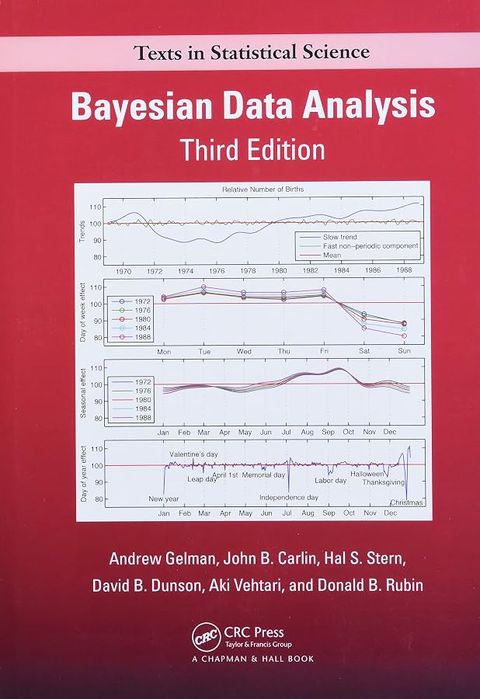
- Bayesian Data Analysis Andrew Gelman, John B. Carlin, Hal S. Stern, David B. Dunson, Aki Vehtari and Donald B. Rubin
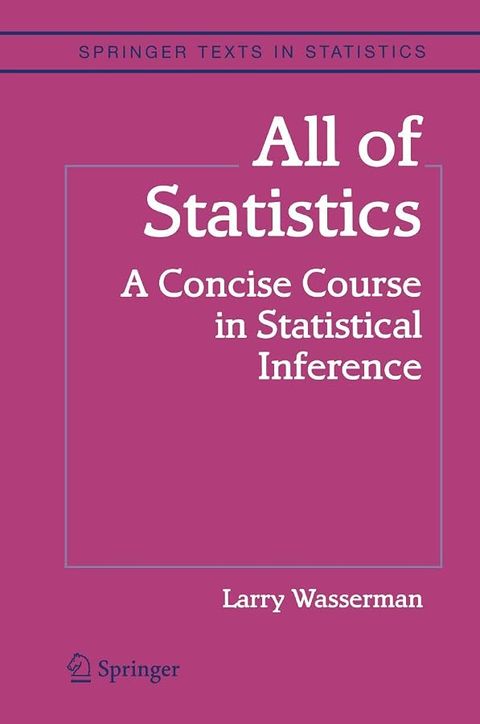
- All of Statistics Larry Wasserman
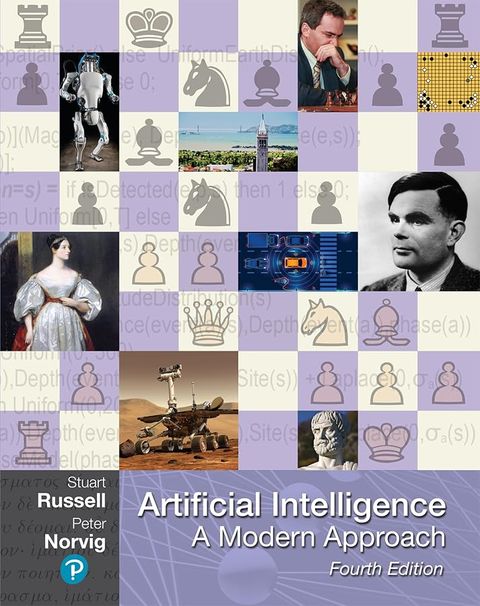
- Artificial Intelligence Stuart Russell and Peter Norvig
Sources
As an Amazon Associate, Best AI Books earns from qualifying purchases. Best AI Books is sponsored by Iternal.ai, whose founder and CEO, John Byron Hanby IV, wrote The AI Strategy Blueprint, our #1 ranked book. How we rank books.
