Building Machine Learning Pipelines
Automating Model Life Cycles with TensorFlow
Synopsis
Hannes Hapke and Catherine Nelson address the gap between training a model in a notebook and running it reliably in production. Their answer is an automated pipeline, and the book builds one step by step with TensorFlow Extended (TFX), Google's open-source framework for production machine learning. A running example carries the reader through data ingestion, data validation with TensorFlow Data Validation, feature preprocessing with TensorFlow Transform, model training, and model analysis with TensorFlow Model Analysis, including checks for fairness across subgroups. Later chapters cover deployment with TensorFlow Serving and other options, privacy-preserving techniques, custom TFX components and feedback loops that retrain models as new data arrives.
Orchestration receives detailed treatment, with chapters showing how to run the same pipeline on Apache Beam, Apache Airflow and Kubeflow Pipelines. The authors write for data scientists and machine learning engineers, but they also explain to managers why automation shortens the path from experiment to deployment and makes models auditable. Readers gain a concrete mental model of the stages every production system needs, from validation to monitoring, plus working code for each stage. The TFX APIs shown date from 2020, so readers today will need to check current documentation, and teams built around PyTorch or newer MLOps platforms will apply the concepts more than the code.
Scorecard
Editorial score
How it scored
Editorial score: 62.3 / 1005 weighted criteria
- 18.0/30
Influence30%
- 17.5/25
Authority25%
- 13.0/20
Practical value20%
- 6.8/15
Currency15%
- 7.0/10
Readability10%
- 62.3/100
Editorial score
How the rank was computed
Rank No. 498 of 500 comes from a composite of 46.2: observable signals 18.1 of 55 points plus editorial review 28.1 of 45 points.
All 11 inputs
| Input | Points |
|---|---|
| Observable signals | 18.1/55 |
| Reach (Amazon ratings volume) | 6.8/16.5 |
| Consensus across best-of lists | 5.5/13.8 |
| Awards and bestseller evidence | 0.0/8.3 |
| Reader rating, sample-adjusted | 5.6/8.3 |
| Amazon sales rank | 0.2/5.5 |
| Recency | 0.0/2.8 |
| Editorial review | 28.1/45 |
| Author authority | 7.9/11.3 |
| Influence | 8.1/13.5 |
| Practical value | 5.9/9.0 |
| Readability | 3.2/4.5 |
| Currency | 3.0/6.8 |
Each criterion is scored from 1 to 10 and weighted, and the points add up to the editorial score. The rank combines observable signals (55 percent) with this score (45 percent). Read the methodology.
Verdict
A clear, end-to-end walkthrough of production ML pipelines on TensorFlow Extended; its principles endure, but its tooling has aged.
Strengths
- Complete worked example from data to deployment
- Covers fairness and privacy alongside engineering
- Compares three pipeline orchestrators in depth
Keep in mind
Tightly bound to TensorFlow and 2020-era TFX releases, so PyTorch users and teams on newer MLOps platforms will find much of the code dated.
Key takeaways
- Automating the full model life cycle, from ingestion to deployment, saves engineering time and makes every model version reproducible and auditable.
- Validating incoming data against a learned schema catches drift and anomalies before they silently degrade a model in production.
- Model analysis should slice performance by user subgroup, exposing fairness problems that aggregate accuracy metrics conceal.
- Pipeline logic can stay independent of the orchestrator, letting teams move between Apache Beam, Airflow and Kubeflow Pipelines as needs change.
Notable facts
- Co-author Hannes Hapke is community lead and moderator of Google's TFX Special Interest Group and later co-wrote Machine Learning Production Systems (O'Reilly, 2024). Source (opens in a new tab)
About the author
Questions
Is Building Machine Learning Pipelines still worth reading in 2026?
Who should read Building Machine Learning Pipelines?
What does Building Machine Learning Pipelines cover?
Related books
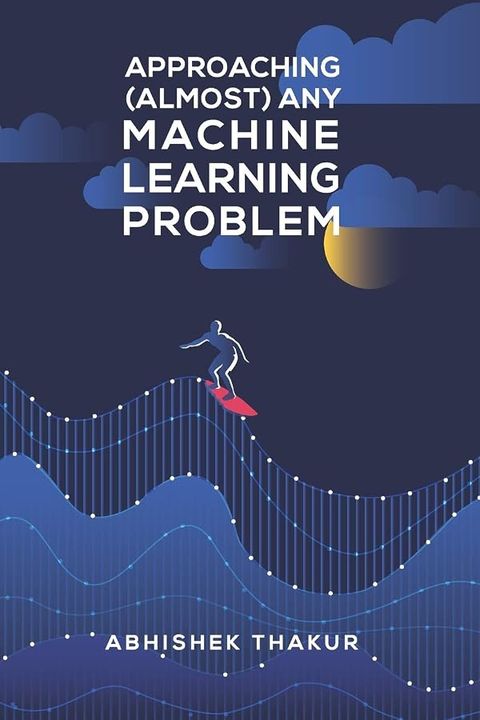
- Approaching (Almost) Any Machine Learning Problem Abhishek Thakur
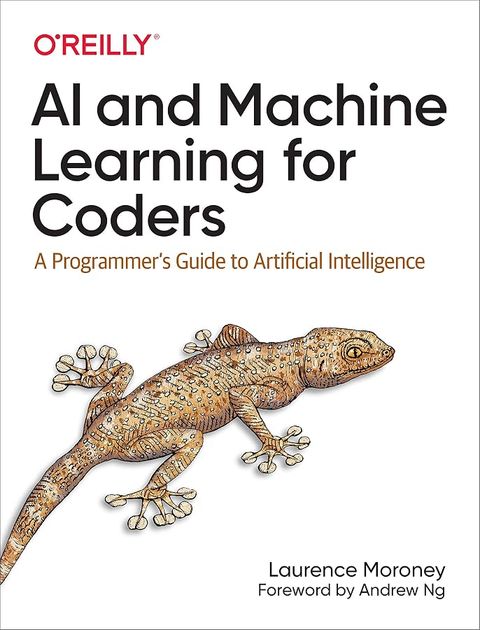
- AI and Machine Learning for Coders Laurence Moroney
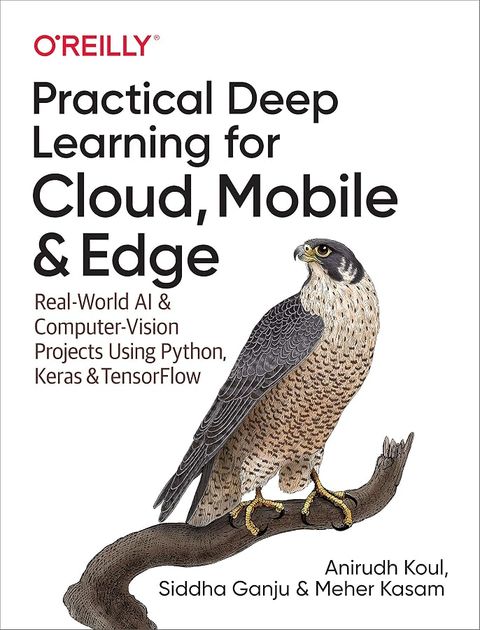
- Practical Deep Learning for Cloud, Mobile, and Edge Anirudh Koul, Siddha Ganju and Meher Kasam
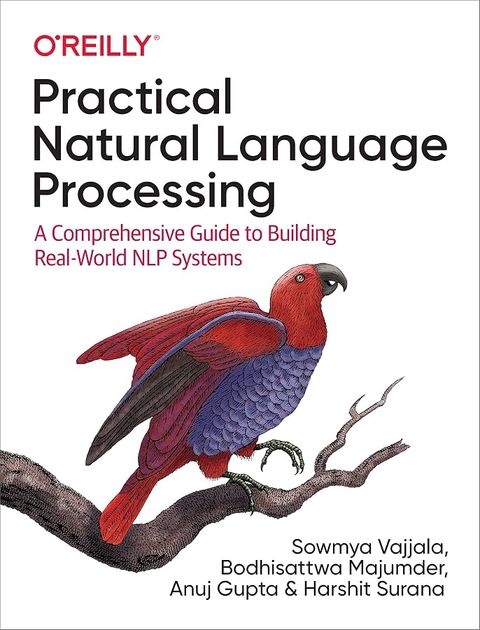
- Practical Natural Language Processing Sowmya Vajjala, Bodhisattwa Majumder, Anuj Gupta and Harshit Surana
- Feature Engineering for Machine Learning Alice Zheng and Amanda Casari
- Programming Collective Intelligence Toby Segaran
Sources
As an Amazon Associate, Best AI Books earns from qualifying purchases. Best AI Books is sponsored by Iternal.ai, whose founder and CEO, John Byron Hanby IV, wrote The AI Strategy Blueprint, our #1 ranked book. How we rank books.
