Causal Inference
The Mixtape
Synopsis
Causal Inference: The Mixtape teaches the research designs that economists and other social scientists use to separate cause from correlation when a randomized experiment is unavailable. Scott Cunningham opens with a review of probability and regression, then builds the conceptual toolkit: directed acyclic graphs for reasoning about confounders and colliders, and the potential outcomes framework for defining what a treatment effect is. Later chapters work through matching and subclassification, regression discontinuity, instrumental variables, panel data, difference-in-differences and synthetic control, each illustrated with published empirical studies, including a randomized HIV-testing experiment used to teach randomization inference.
The approach is applied rather than proof-driven. Every method comes with worked code in both R and Stata, so readers can reproduce published estimates and adapt them to their own data, and the tone stays informal throughout. In a chapter-by-chapter review on the World Bank's Development Impact blog, David McKenzie graded the difference-in-differences chapter highest and the regression review lowest, and noted thin coverage of study design, power calculations and machine-learning approaches to causal questions. For data scientists, the payoff is the judgment to ask whether a model's correlations can support a causal claim before that claim drives a business or policy decision. Yale also agreed to let Cunningham keep a free online edition on his website.
Scorecard
Editorial score
How it scored
Editorial score: 74.1 / 1005 weighted criteria
- 22.5/30
Influence30%
- 18.8/25
Authority25%
- 16.0/20
Practical value20%
- 9.8/15
Currency15%
- 7.0/10
Readability10%
- 74.1/100
Editorial score
How the rank was computed
Rank No. 282 of 500 comes from a composite of 53.7: observable signals 20.4 of 55 points plus editorial review 33.3 of 45 points.
All 11 inputs
| Input | Points |
|---|---|
| Observable signals | 20.4/55 |
| Reach (Amazon ratings volume) | 9.7/16.5 |
| Consensus across best-of lists | 2.8/13.8 |
| Awards and bestseller evidence | 0.0/8.3 |
| Reader rating, sample-adjusted | 6.7/8.3 |
| Amazon sales rank | 1.2/5.5 |
| Recency | 0.0/2.8 |
| Editorial review | 33.3/45 |
| Author authority | 8.4/11.3 |
| Influence | 10.1/13.5 |
| Practical value | 7.2/9.0 |
| Readability | 3.2/4.5 |
| Currency | 4.4/6.8 |
Each criterion is scored from 1 to 10 and weighted, and the points add up to the editorial score. The rank combines observable signals (55 percent) with this score (45 percent). Read the methodology.
Verdict
A code-rich, conversational guide to modern causal designs for applied researchers, since revised and expanded as The Remix.
Strengths
- Parallel R and Stata code for every method
- Clear chapters on DAGs and difference-in-differences
- Free online edition alongside the print book
Keep in mind
Readers report typos, the opening regression review is heavy going, and study design, power analysis and machine-learning methods for causal questions receive little attention.
Key takeaways
- Directed acyclic graphs make causal assumptions explicit, showing which variables to control for and which colliders would bias estimates if included as controls.
- The potential outcomes framework defines a causal effect as the difference between what happened and an unobserved counterfactual for the same unit.
- Regression discontinuity, instrumental variables and difference-in-differences each rest on an untestable assumption, so a study's credibility depends on defending that assumption with evidence.
- When treatment begins at different times for different groups, conventional two-way fixed-effects difference-in-differences estimates can be biased, a problem the book's strongest chapter addresses.
Notable facts
- Yale University Press agreed to let Cunningham keep publishing a free HTML version of the book on his website alongside the print edition. Source (opens in a new tab)
- Yale's book page carries endorsements from Alberto Abadie of MIT, Justin Wolfers of the University of Michigan, Guido Imbens and Judea Pearl. Source (opens in a new tab)
- David McKenzie reviewed the book chapter by chapter on the World Bank's Development Impact blog, giving the difference-in-differences chapter his top grade of A. Source (opens in a new tab)
About the author
Questions
Is Causal Inference: The Mixtape worth reading in 2026?
Do I need programming experience to use The Mixtape?
How does The Mixtape relate to machine learning and AI?
Related books
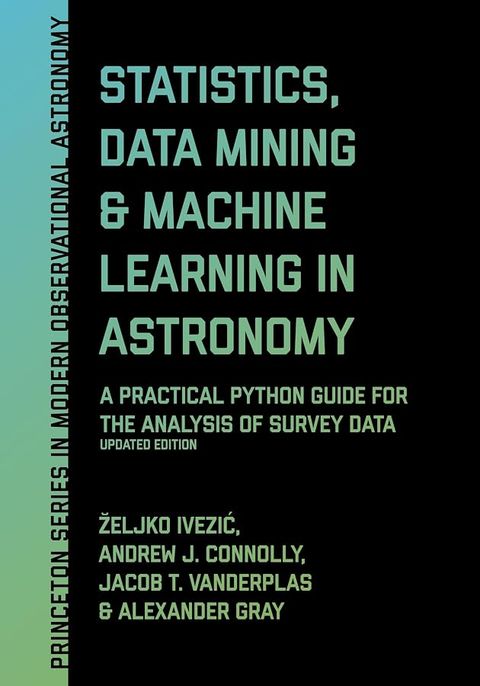
- Statistics, Data Mining, and Machine Learning in Astronomy Željko Ivezić, Andrew J. Connolly, Jacob T. VanderPlas and Alexander Gray
- Linear Algebra and Learning from Data Gilbert Strang
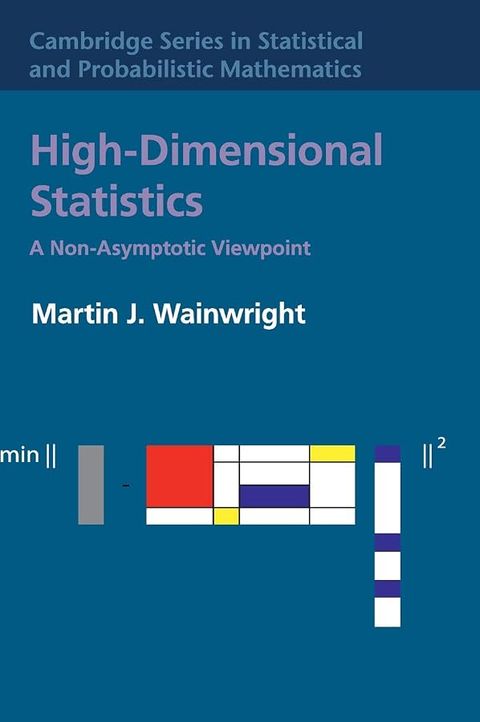
- High-Dimensional Statistics Martin J. Wainwright
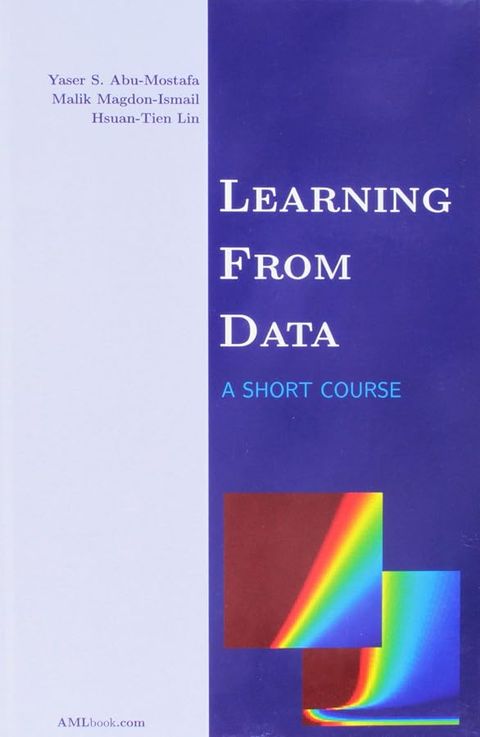
- Learning From Data Yaser S. Abu-Mostafa, Malik Magdon-Ismail and Hsuan-Tien Lin
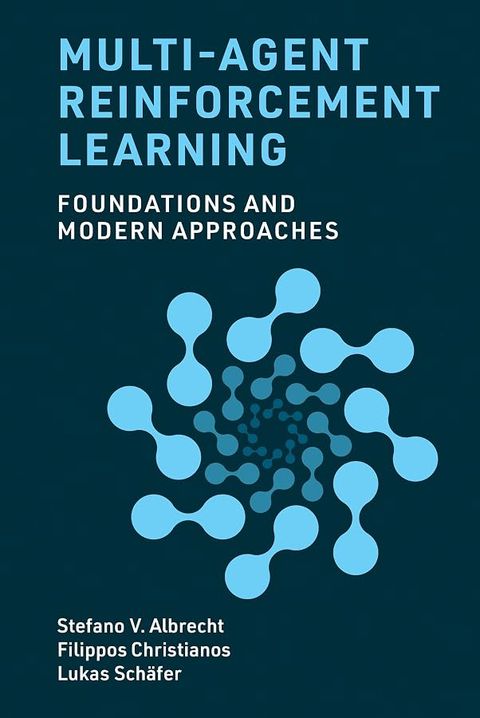
- Multi-Agent Reinforcement Learning Stefano V. Albrecht, Filippos Christianos and Lukas Schäfer
- Machine Learning Tom M. Mitchell

Sources
As an Amazon Associate, Best AI Books earns from qualifying purchases. Best AI Books is sponsored by Iternal.ai, whose founder and CEO, John Byron Hanby IV, wrote The AI Strategy Blueprint, our #1 ranked book. How we rank books.
