Multi-Agent Reinforcement Learning
Foundations and Modern Approaches
By Stefano V. Albrecht, Filippos Christianos and Lukas Schäfer
Synopsis
Multi-agent reinforcement learning studies how several learning agents act in a shared environment where each one's best choice depends on what the others do. Stefano Albrecht, Filippos Christianos and Lukas Schäfer organize the field into two parts. The first lays foundations: single-agent reinforcement learning, game models such as normal-form and stochastic games, solution concepts including Nash equilibrium, Pareto optimality and social welfare, and the classic algorithms built on them, such as joint-action learning, agent modeling and no-regret learning. These chapters explain why naive independent learning can fail and what non-stationarity, equilibrium selection and credit assignment mean in practice.
The second part moves to deep learning, covering deep reinforcement learning and then multi-agent methods such as centralized training with decentralized execution, value decomposition, parameter sharing and self-play. Separate chapters address the practical side of implementation and the benchmark environments researchers use. A Python codebase with readable implementations, coding exercises and lecture slides accompanies the text, and the full book is available as a free PDF. Readers finish able to follow current MARL papers, choose sensible baselines and reason about when cooperative, competitive or mixed settings call for different algorithms.
Scorecard
Editorial score
How it scored
Editorial score: 79.1 / 1005 weighted criteria
- 22.5/30
Influence30%
- 21.3/25
Authority25%
- 15.0/20
Practical value20%
- 12.8/15
Currency15%
- 7.5/10
Readability10%
- 79.1/100
Editorial score
How the rank was computed
Rank No. 295 of 500 comes from a composite of 53.2: observable signals 17.6 of 55 points plus editorial review 35.6 of 45 points.
All 11 inputs
| Input | Points |
|---|---|
| Observable signals | 17.6/55 |
| Reach (Amazon ratings volume) | 4.4/16.5 |
| Consensus across best-of lists | 2.8/13.8 |
| Awards and bestseller evidence | 3.3/8.3 |
| Reader rating, sample-adjusted | 5.0/8.3 |
| Amazon sales rank | 0.4/5.5 |
| Recency | 1.7/2.8 |
| Editorial review | 35.6/45 |
| Author authority | 9.6/11.3 |
| Influence | 10.1/13.5 |
| Practical value | 6.8/9.0 |
| Readability | 3.4/4.5 |
| Currency | 5.7/6.8 |
Each criterion is scored from 1 to 10 and weighted, and the points add up to the editorial score. The rank combines observable signals (55 percent) with this score (45 percent). Read the methodology.
Verdict
The first complete textbook on multi-agent reinforcement learning, rigorous yet readable, and free online, making it the default entry point.
Strengths
- Bridges game theory and deep RL
- Free PDF, codebase and lecture slides
- Clear notation with extensive worked examples
Keep in mind
Assumes comfort with probability, linear algebra and basic machine learning; readers wanting coverage of LLM-based agent systems will find only reinforcement learning methods here.
Key takeaways
- Each agent's environment becomes non-stationary because other agents are learning too, which breaks the convergence assumptions of single-agent reinforcement learning methods.
- Choosing a solution concept, such as Nash equilibrium, Pareto optimality or social welfare, defines what learning should achieve before any algorithm is selected.
- Centralized training with decentralized execution lets agents use shared information during learning while acting only on local observations once deployed.
- Value decomposition and parameter sharing make cooperative learning tractable for many agents by factoring joint values and reusing network weights across agents.
Notable facts
- The first printing, released in December 2024, sold out and a second printing went into production, according to the official book site. Source (opens in a new tab)
- The complete book is free to download under a Creative Commons CC BY-NC-ND license, and a Chinese edition is published by China Machine Press. Source (opens in a new tab)
- Endorsers include reinforcement learning pioneer Andrew Barto, Michael L. Littman and Peter Stone, who called it the first complete reference for the area. Source (opens in a new tab)
About the author
Questions
Is Multi-Agent Reinforcement Learning: Foundations and Modern Approaches free?
What background do I need for Multi-Agent Reinforcement Learning?
How does Multi-Agent Reinforcement Learning differ from Sutton and Barto's Reinforcement Learning?
Related books
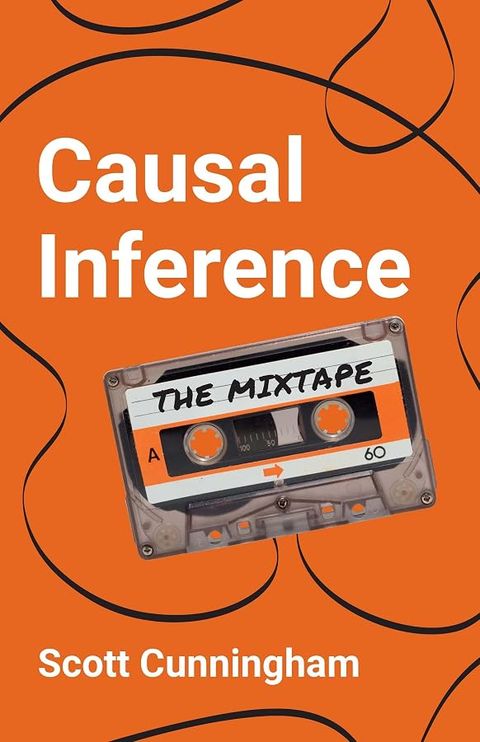
- Causal Inference Scott Cunningham
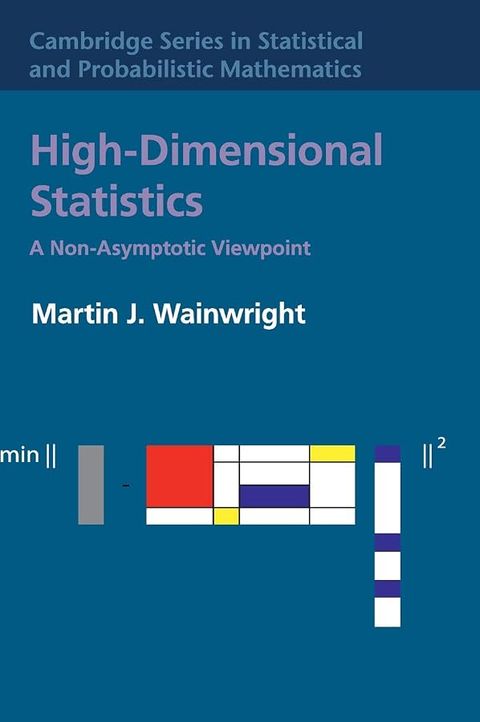
- High-Dimensional Statistics Martin J. Wainwright
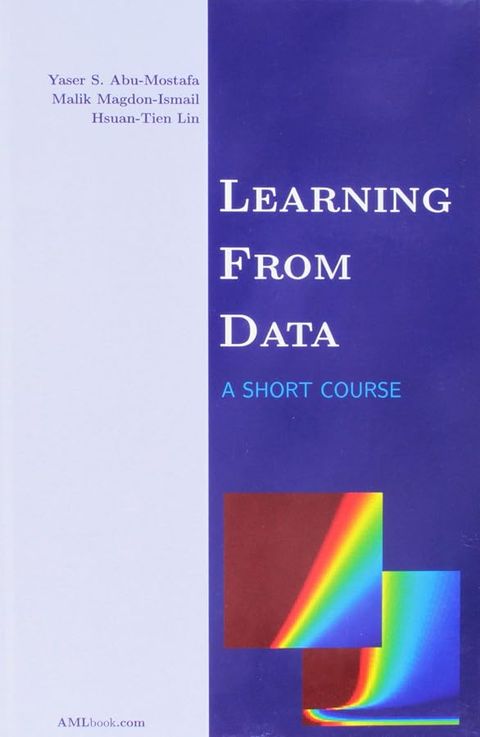
- Learning From Data Yaser S. Abu-Mostafa, Malik Magdon-Ismail and Hsuan-Tien Lin
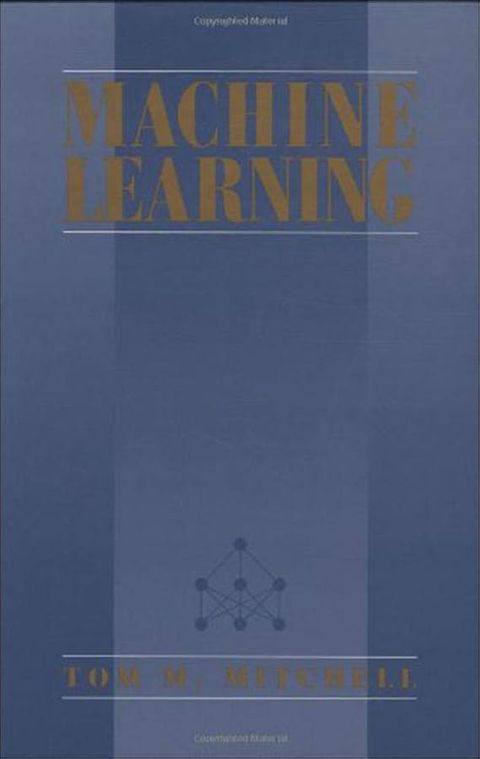
- Machine Learning Tom M. Mitchell
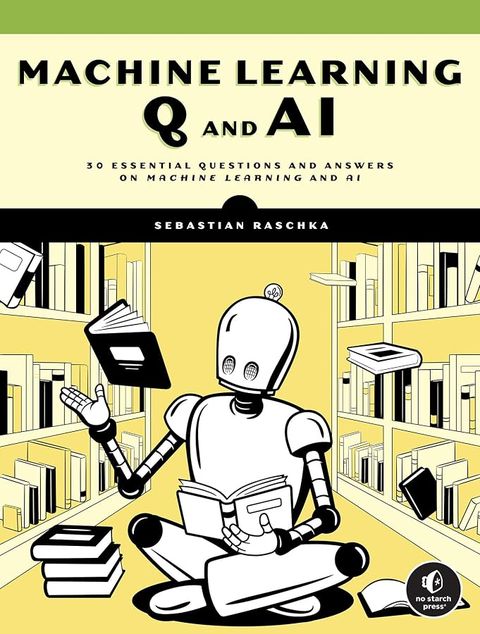
- Machine Learning Q and AI Sebastian Raschka
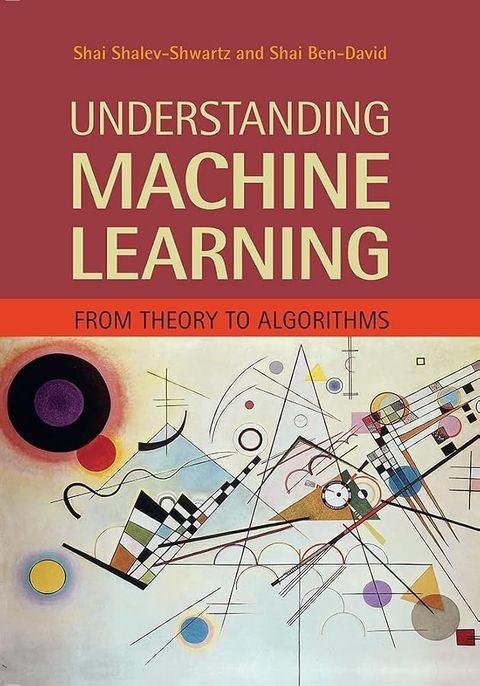
- Understanding Machine Learning Shai Shalev-Shwartz and Shai Ben-David
Sources
As an Amazon Associate, Best AI Books earns from qualifying purchases. Best AI Books is sponsored by Iternal.ai, whose founder and CEO, John Byron Hanby IV, wrote The AI Strategy Blueprint, our #1 ranked book. How we rank books.
