High-Dimensional Statistics
A Non-Asymptotic Viewpoint
Synopsis
Classical statistics asks what happens as the sample size grows without limit while the number of parameters stays fixed. Modern data sets often reverse that relationship, with more features than observations, and Martin Wainwright's text supplies the mathematics for that regime. Instead of asymptotic limits, it proves finite-sample guarantees: explicit bounds on estimation error that hold for a given sample size and dimension. The first half builds the toolkit, moving from sub-Gaussian tail bounds and concentration of measure through uniform laws of large numbers, metric entropy and random matrix theory.
The second half applies that toolkit to specific model classes: sparse linear regression and the Lasso, principal component analysis in high dimensions, low-rank matrix estimation, graphical models, reproducing kernel Hilbert spaces and nonparametric least squares. A closing chapter on minimax lower bounds shows how to prove that no method can beat a given rate. Hundreds of worked examples and exercises make the book usable for a graduate course or for disciplined self-study. Readers come away able to read and write the proofs that underpin modern theoretical machine learning and statistics papers, and to judge when an estimator's guarantees depend on assumptions such as restricted strong convexity.
Scorecard
Editorial score
How it scored
Editorial score: 79.3 / 1005 weighted criteria
- 25.5/30
Influence30%
- 23.8/25
Authority25%
- 12.0/20
Practical value20%
- 12.0/15
Currency15%
- 6.0/10
Readability10%
- 79.3/100
Editorial score
How the rank was computed
Rank No. 291 of 500 comes from a composite of 53.3: observable signals 17.6 of 55 points plus editorial review 35.7 of 45 points.
All 11 inputs
| Input | Points |
|---|---|
| Observable signals | 17.6/55 |
| Reach (Amazon ratings volume) | 6.8/16.5 |
| Consensus across best-of lists | 2.8/13.8 |
| Awards and bestseller evidence | 0.0/8.3 |
| Reader rating, sample-adjusted | 6.8/8.3 |
| Amazon sales rank | 1.2/5.5 |
| Recency | 0.0/2.8 |
| Editorial review | 35.7/45 |
| Author authority | 10.7/11.3 |
| Influence | 11.5/13.5 |
| Practical value | 5.4/9.0 |
| Readability | 2.7/4.5 |
| Currency | 5.4/6.8 |
Each criterion is scored from 1 to 10 and weighted, and the points add up to the editorial score. The rank combines observable signals (55 percent) with this score (45 percent). Read the methodology.
Verdict
The definitive graduate treatment of the non-asymptotic theory behind sparse, low-rank and nonparametric estimation, demanding but unmatched for researchers.
Strengths
- Unified treatment of concentration and empirical processes
- Hundreds of worked examples and exercises
- Rigorous proofs with careful, consistent notation
Keep in mind
Requires graduate-level probability, real analysis and linear algebra; practitioners seeking code, applied workflows or deep learning coverage will find little of direct use.
Key takeaways
- Non-asymptotic bounds state how estimation error scales with sample size, dimension and sparsity at finite n, which is the regime modern data actually occupies.
- Concentration inequalities and metric entropy form a reusable toolkit; once mastered, the same arguments recur across regression, covariance estimation and kernel methods.
- Sparse and low-rank structure is what makes estimation possible when parameters outnumber observations, provided conditions such as restricted strong convexity hold.
- Minimax lower bounds show the best rate any method can achieve, letting researchers tell whether an estimator is optimal or merely adequate.
Notable facts
- Statistician Larry Wasserman's endorsement on the Cambridge University Press page calls it a unified treatment likely to become the standard reference on the topic. Source (opens in a new tab)
- Cambridge Core lists the book as cited by 843 publications (Crossref) and as volume 48 of the Cambridge Series in Statistical and Probabilistic Mathematics. Source (opens in a new tab)
About the author
Questions
Is High-Dimensional Statistics worth reading in 2026?
What background does High-Dimensional Statistics require?
How does High-Dimensional Statistics compare with Statistical Learning with Sparsity?
Related books
- Linear Algebra and Learning from Data Gilbert Strang
- Causal Inference Scott Cunningham
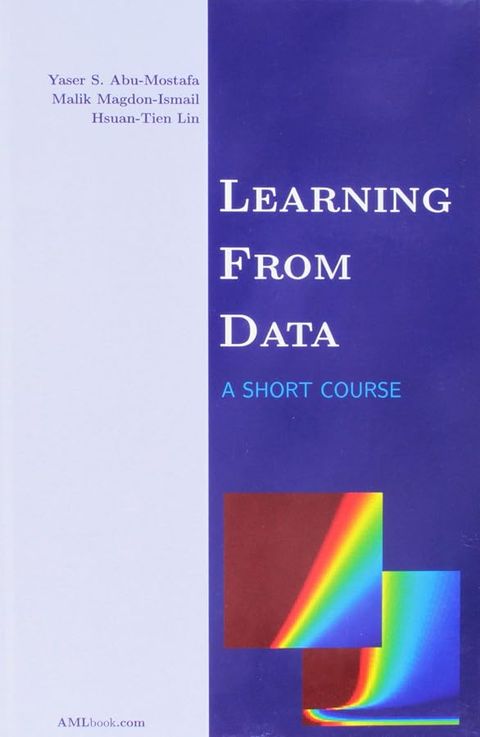
- Learning From Data Yaser S. Abu-Mostafa, Malik Magdon-Ismail and Hsuan-Tien Lin
- Multi-Agent Reinforcement Learning Stefano V. Albrecht, Filippos Christianos and Lukas Schäfer
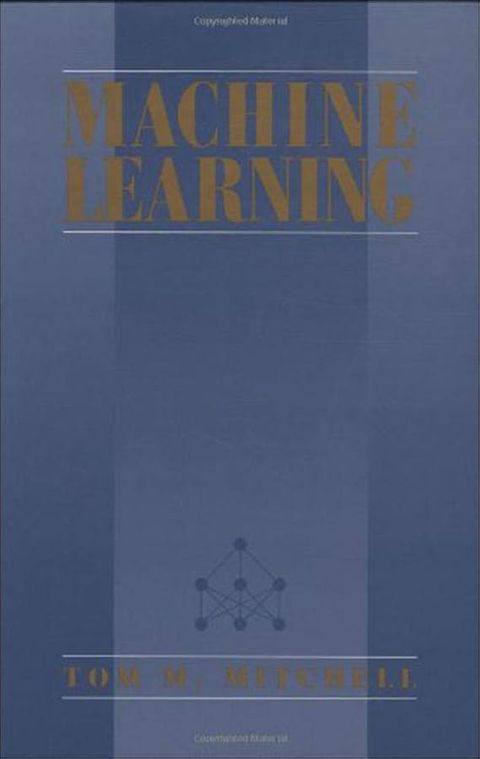
- Machine Learning Tom M. Mitchell
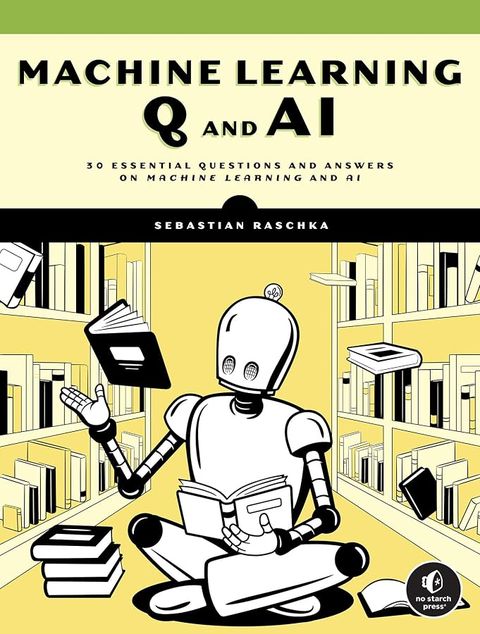
- Machine Learning Q and AI Sebastian Raschka



Sources
As an Amazon Associate, Best AI Books earns from qualifying purchases. Best AI Books is sponsored by Iternal.ai, whose founder and CEO, John Byron Hanby IV, wrote The AI Strategy Blueprint, our #1 ranked book. How we rank books.
