Data Science for Business
What You Need to Know about Data Mining and Data-Analytic Thinking
Synopsis
Foster Provost and Tom Fawcett built this book from an MBA course Provost taught at NYU Stern, and its premise is that managers need data-analytic thinking more than they need algorithms. Rather than teaching code, the authors organize the field around a small set of fundamental concepts: framing a business problem as a classification, regression or clustering task, measuring how informative a variable is, recognizing overfitting, evaluating models against costs and benefits, and reasoning about similarity, probability and text. Each idea is anchored in a business case such as predicting customer churn at a wireless carrier or targeting a marketing offer, and the standard data mining process ties the chapters together.
The payoff is fluency. Readers learn to ask whether a proposed model answers the right question, whether its accuracy figure means anything for the business, and how to read lift, ROC and profit curves when comparing alternatives. The expected-value framework, which the book uses to connect model output to decisions, remains one of its most practical tools. The material predates the deep learning boom and generative AI, so it says little about neural networks or large language models, yet its principles on evaluation, generalization and overfitting apply directly to those newer systems. Some passages include equations and plots that nontechnical readers may find demanding, though no programming is required.
Scorecard
Editorial score
How it scored
Editorial score: 77.3 / 1005 weighted criteria
- 24.0/30
Influence30%
- 21.3/25
Authority25%
- 16.0/20
Practical value20%
- 9.0/15
Currency15%
- 7.0/10
Readability10%
- 77.3/100
Editorial score
How the rank was computed
Rank No. 114 of 500 comes from a composite of 62.1: observable signals 27.2 of 55 points plus editorial review 34.9 of 45 points.
All 11 inputs
| Input | Points |
|---|---|
| Observable signals | 27.2/55 |
| Reach (Amazon ratings volume) | 11.5/16.5 |
| Consensus across best-of lists | 8.3/13.8 |
| Awards and bestseller evidence | 0.0/8.3 |
| Reader rating, sample-adjusted | 6.1/8.3 |
| Amazon sales rank | 1.3/5.5 |
| Recency | 0.0/2.8 |
| Editorial review | 34.9/45 |
| Author authority | 9.6/11.3 |
| Influence | 10.8/13.5 |
| Practical value | 7.2/9.0 |
| Readability | 3.2/4.5 |
| Currency | 4.1/6.8 |
Each criterion is scored from 1 to 10 and weighted, and the points add up to the editorial score. The rank combines observable signals (55 percent) with this score (45 percent). Read the methodology.
Verdict
A durable bridge between machine learning concepts and business decisions, still widely taught to managers who commission and evaluate predictive models.
Strengths
- Concept-first approach requiring no programming
- Grounded in years of MBA classroom use
- Evaluation chapters remain directly applicable to AI
Keep in mind
Published in 2013, it predates the deep learning boom and generative AI, and some mathematical passages may challenge readers without quantitative training.
Key takeaways
- Most business data problems reduce to a few task types, such as classification, regression, clustering and similarity matching, and naming the task clarifies the solution.
- Overfitting is the central risk in data mining, so models must be judged on holdout data rather than on the data used to build them.
- Accuracy alone misleads; the expected-value framework ties model predictions to the costs and benefits of each decision a business will make.
- Data and the capability to extract value from it should be treated as strategic assets that require deliberate, sustained investment.
Notable facts
- Used in more than 150 colleges and universities in 26 countries and translated into 11 languages, according to the authors' book site. Source (opens in a new tab)
- Fortune included it in its "Required Reading: The MBA List," according to NYU Stern. Source (opens in a new tab)
About the author
Questions
Is Data Science for Business still worth reading in 2026?
Do I need to know programming or math to read Data Science for Business?
Who should read Data Science for Business?
Related books
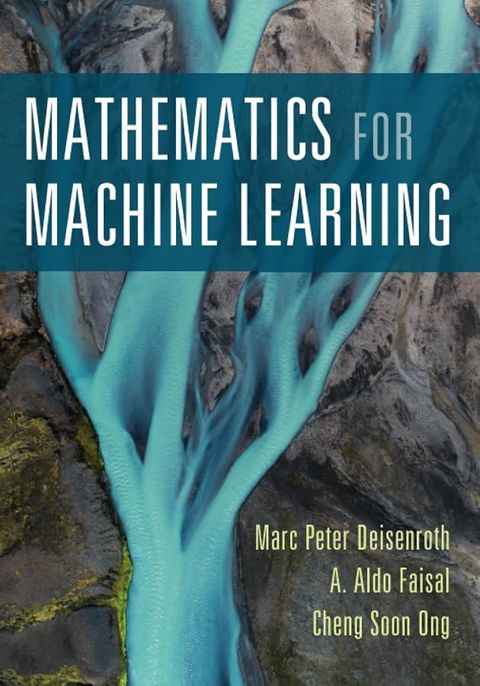
- Mathematics for Machine Learning Marc Peter Deisenroth, A. Aldo Faisal and Cheng Soon Ong
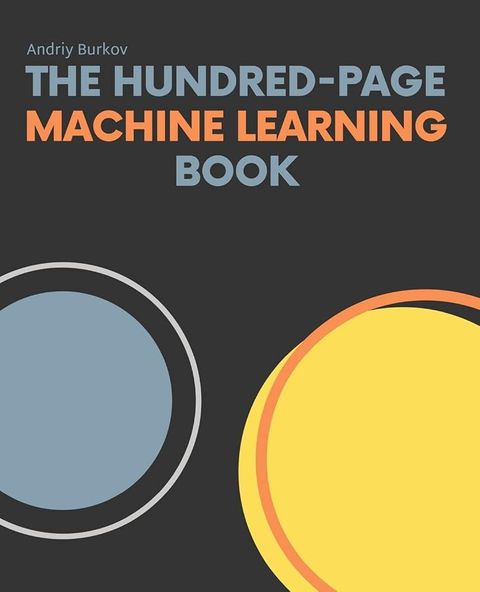
- The Hundred-Page Machine Learning Book Andriy Burkov
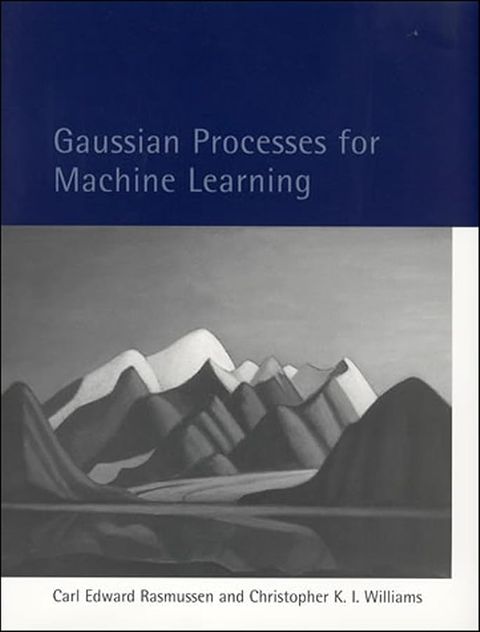
- Gaussian Processes for Machine Learning Carl Edward Rasmussen and Christopher K. I. Williams
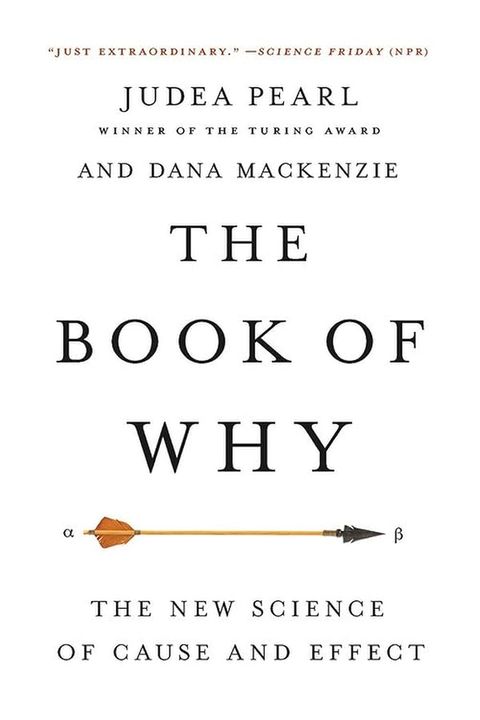
- The Book of Why Judea Pearl and Dana Mackenzie
- Causality Judea Pearl
- Bayesian Data Analysis Andrew Gelman, John B. Carlin, Hal S. Stern, David B. Dunson, Aki Vehtari and Donald B. Rubin
Sources
As an Amazon Associate, Best AI Books earns from qualifying purchases. Best AI Books is sponsored by Iternal.ai, whose founder and CEO, John Byron Hanby IV, wrote The AI Strategy Blueprint, our #1 ranked book. How we rank books.
