Machine Learning Q and AI
30 Essential Questions and Answers on Machine Learning and AI
Synopsis
Sebastian Raschka wrote this book for readers who have finished an introductory machine learning course and now face the gap between textbook basics and the research literature. Its 30 short chapters, grouped into five parts covering neural networks and deep learning, computer vision, natural language processing, production and deployment, and predictive performance and model evaluation, each pose one question and answer it in a few pages. Topics range from embeddings, self-supervised learning and the lottery ticket hypothesis to multi-GPU training paradigms, self-attention, encoder- and decoder-style transformers, fine-tuning pretrained models and evaluating generative language models.
The final parts turn to less glamorous but practical matters: stateless versus stateful training, data-centric AI, speeding up inference, data distribution shifts, confidence intervals versus conformal prediction, proper metrics and choosing k in cross-validation. Raschka favors plain explanations and diagrams over derivations and code listings, and closes each chapter with exercises that test understanding. Readers gain a working vocabulary for current deep learning research and a quick way to fill specific gaps, since any chapter can be read on its own. The author also hosts the full text free on his website, which makes it easy to sample before buying.
Scorecard
Editorial score
How it scored
Editorial score: 74.3 / 1005 weighted criteria
- 19.5/30
Influence30%
- 21.3/25
Authority25%
- 15.0/20
Practical value20%
- 10.5/15
Currency15%
- 8.0/10
Readability10%
- 74.3/100
Editorial score
How the rank was computed
Rank No. 310 of 500 comes from a composite of 52.7: observable signals 19.2 of 55 points plus editorial review 33.5 of 45 points.
All 11 inputs
| Input | Points |
|---|---|
| Observable signals | 19.2/55 |
| Reach (Amazon ratings volume) | 5.9/16.5 |
| Consensus across best-of lists | 5.5/13.8 |
| Awards and bestseller evidence | 0.0/8.3 |
| Reader rating, sample-adjusted | 5.7/8.3 |
| Amazon sales rank | 0.4/5.5 |
| Recency | 1.7/2.8 |
| Editorial review | 33.5/45 |
| Author authority | 9.6/11.3 |
| Influence | 8.8/13.5 |
| Practical value | 6.8/9.0 |
| Readability | 3.6/4.5 |
| Currency | 4.7/6.8 |
Each criterion is scored from 1 to 10 and weighted, and the points add up to the editorial score. The rank combines observable signals (55 percent) with this score (45 percent). Read the methodology.
Verdict
A compact, question-driven bridge from introductory courses to research papers, written by one of machine learning's clearest explainers.
Strengths
- Self-contained chapters readable in any order
- Covers deployment and evaluation topics most primers skip
- Clear diagrams instead of heavy math or code
Keep in mind
Readers wanting code walkthroughs or deep mathematical treatment will find the answers brief, and the LLM chapters predate recent reasoning-model developments.
Key takeaways
- Overfitting can be attacked from two directions: by changing the data through augmentation and more collection, or by changing the model through regularization and smaller architectures.
- Encoder-style transformers suit classification and representation tasks, while decoder-style models suit text generation, and knowing the difference guides model selection.
- Conformal prediction offers an alternative to classic confidence intervals, producing prediction sets with coverage guarantees that do not depend on strong distributional assumptions.
- Randomness enters neural network training through weight initialization, data shuffling, dropout and nondeterministic GPU operations, and controlling it matters for reproducible results.
Notable facts
- Chris Albon, Director of Machine Learning at the Wikimedia Foundation, endorsed the book by calling Raschka "the best machine learning educator currently in the field." Source (opens in a new tab)
- The full text of the No Starch Press edition can be read free online on the author's website. Source (opens in a new tab)
About the author
Questions
Is Machine Learning Q and AI worth reading in 2026?
Who should read Machine Learning Q and AI?
How is Machine Learning Q and AI structured?
Related books
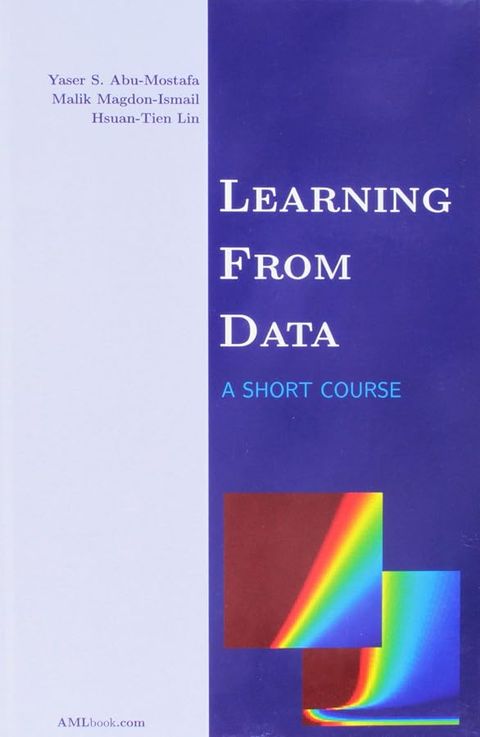
- Learning From Data Yaser S. Abu-Mostafa, Malik Magdon-Ismail and Hsuan-Tien Lin
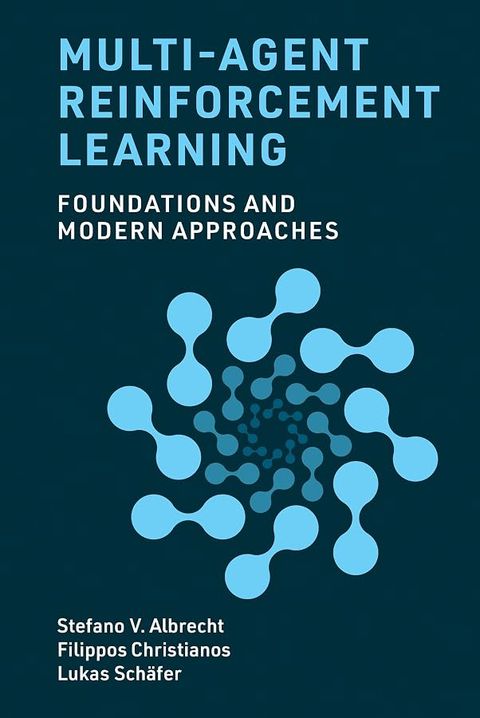
- Multi-Agent Reinforcement Learning Stefano V. Albrecht, Filippos Christianos and Lukas Schäfer
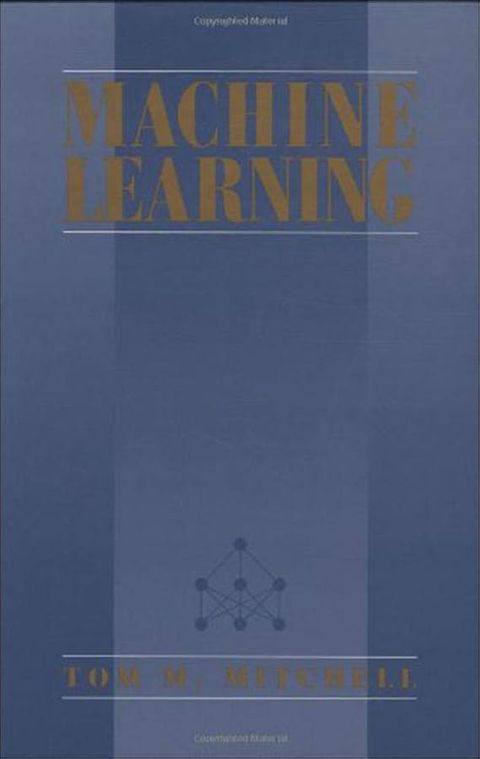
- Machine Learning Tom M. Mitchell
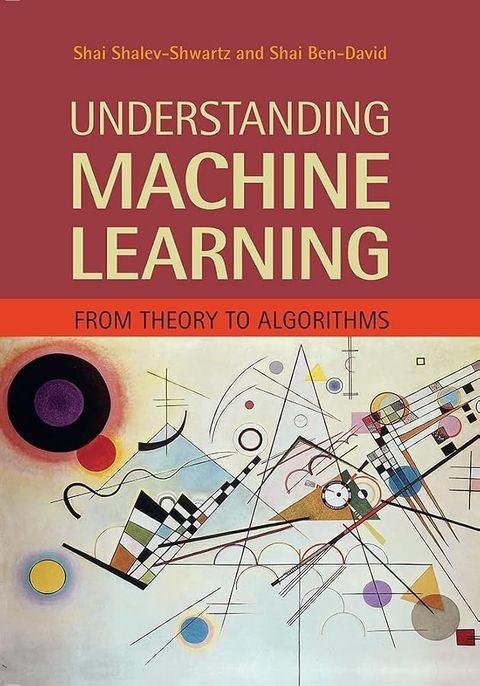
- Understanding Machine Learning Shai Shalev-Shwartz and Shai Ben-David
- Algorithms for Decision Making Mykel J. Kochenderfer, Tim A. Wheeler and Kyle H. Wray
- Pattern Classification Richard O. Duda, Peter E. Hart and David G. Stork
Sources
As an Amazon Associate, Best AI Books earns from qualifying purchases. Best AI Books is sponsored by Iternal.ai, whose founder and CEO, John Byron Hanby IV, wrote The AI Strategy Blueprint, our #1 ranked book. How we rank books.
