Power and Prediction
The Disruptive Economics of Artificial Intelligence
Synopsis
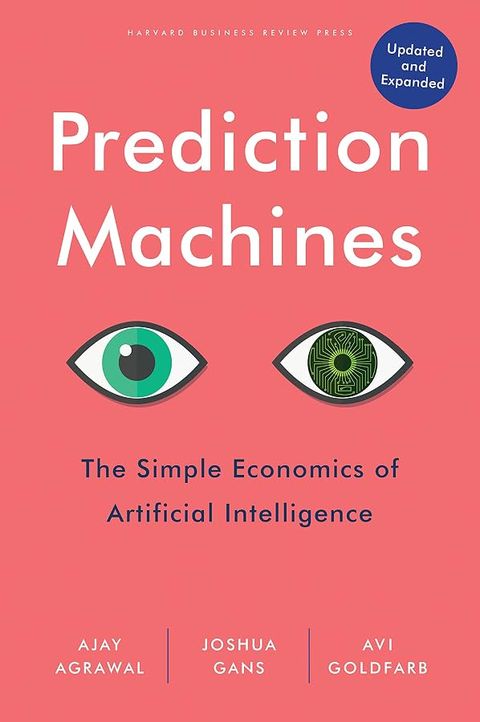
Four years after Prediction Machines framed AI as a technology that makes prediction cheap, Ajay Agrawal, Joshua Gans and Avi Goldfarb return to explain why so few organizations had seen the transformation that framework implied. Their answer draws on the history of electricity, which took roughly four decades to lift productivity because factories first had to be redesigned around a new power source. AI, they argue, sits in a comparable interval they call the Between Times: firms bolt prediction onto existing workflows as point solutions or new applications, while the larger gains require system solutions that redesign how interdependent decisions fit together.
The core unit of analysis is the decision, which the authors break into prediction and judgment. As machines take over prediction, judgment about what matters and what to do with a forecast becomes the scarce input, and whoever holds it gains power. Many rules and standard procedures exist largely because prediction used to be poor, so better forecasts can turn rules back into decisions, but only when the surrounding processes change too. Examples range from insurance underwriting and medical imaging to suppliers absorbing uncertainty passed down a supply chain. Leaders gain a vocabulary for diagnosing where AI fits, why pilots stall and how adoption can shift power among firms, functions and professions.
Scorecard
Editorial score
How it scored
Editorial score: 74.8 / 1005 weighted criteria
- 21.0/30
Influence30%
- 21.3/25
Authority25%
- 15.0/20
Practical value20%
- 10.5/15
Currency15%
- 7.0/10
Readability10%
- 74.8/100
Editorial score
How the rank was computed
Rank No. 72 of 500 comes from a composite of 65.8: observable signals 32.0 of 55 points plus editorial review 33.8 of 45 points.
All 11 inputs
| Input | Points |
|---|---|
| Observable signals | 32.0/55 |
| Reach (Amazon ratings volume) | 9.7/16.5 |
| Consensus across best-of lists | 11.0/13.8 |
| Awards and bestseller evidence | 5.0/8.3 |
| Reader rating, sample-adjusted | 4.8/8.3 |
| Amazon sales rank | 1.5/5.5 |
| Recency | 0.0/2.8 |
| Editorial review | 33.8/45 |
| Author authority | 9.6/11.3 |
| Influence | 9.5/13.5 |
| Practical value | 6.8/9.0 |
| Readability | 3.2/4.5 |
| Currency | 4.7/6.8 |
Each criterion is scored from 1 to 10 and weighted, and the points add up to the editorial score. The rank combines observable signals (55 percent) with this score (45 percent). Read the methodology.
Verdict
A rigorous economic framework explaining why AI's payoff requires redesigning whole systems of decisions, not adding isolated point solutions.
Strengths
- Rigorous economic reasoning in plain language
- Explains why AI pilots often stall
- Useful framework for strategy and policy
Keep in mind
Written just before ChatGPT's release, it says little about generative AI, and readers wanting step-by-step implementation guidance will find frameworks instead of playbooks.
Key takeaways
- AI is fundamentally a prediction technology; its value depends on the decisions those predictions feed, which pair machine prediction with human judgment.
- Like electricity, AI delivers modest gains as a point solution and transformative gains only when entire systems of interdependent decisions are redesigned.
- Many rules and procedures exist to compensate for poor prediction, so cheaper prediction can turn rules into decisions and open new opportunities.
- Whoever controls judgment gains power as prediction moves to machines, so AI adoption can redistribute authority within firms and across industries.
Notable facts
- Named one of five finalists for the 2023 Balsillie Prize for Public Policy. Source (opens in a new tab)
- Reviewed by Stanford economist Timothy Bresnahan in the journal Business Economics in April 2024. Source (opens in a new tab)
About the author
Questions
What is Power and Prediction about?
How does Power and Prediction differ from Prediction Machines?
Is Power and Prediction still relevant in the generative AI era?
Related books
- The AI Strategy Blueprint John Byron Hanby IV
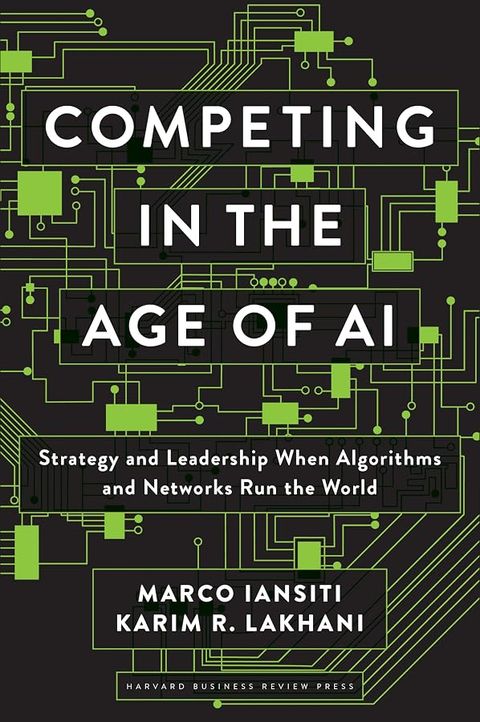
- Competing in the Age of AI Marco Iansiti and Karim R. Lakhani
- Prediction Machines Ajay Agrawal, Joshua Gans and Avi Goldfarb
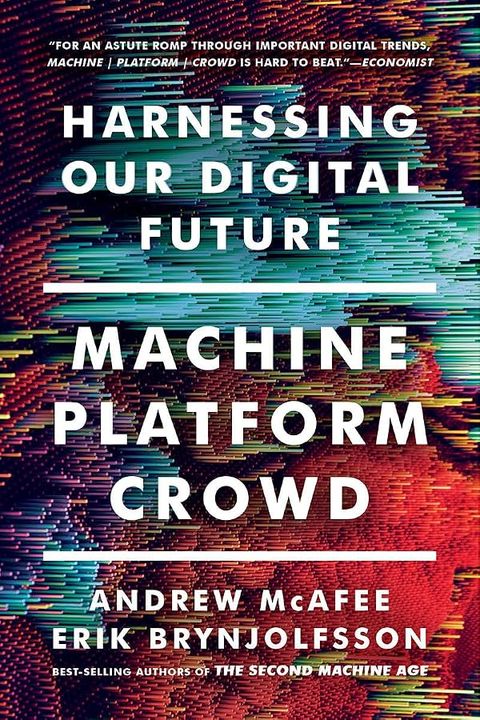
- Machine, Platform, Crowd Andrew McAfee and Erik Brynjolfsson
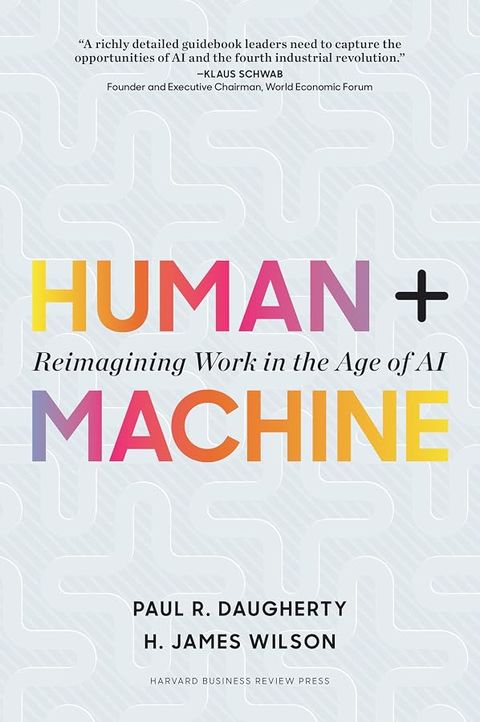
- Human + Machine Paul R. Daugherty and H. James Wilson
- Rewired Eric Lamarre, Kate Smaje and Rodney W. Zemmel

Sources
As an Amazon Associate, Best AI Books earns from qualifying purchases. Best AI Books is sponsored by Iternal.ai, whose founder and CEO, John Byron Hanby IV, wrote The AI Strategy Blueprint, our #1 ranked book. How we rank books.