The Elements of Statistical Learning
Data Mining, Inference, and Prediction
Synopsis
The Elements of Statistical Learning, written by three Stanford statisticians, gathers the methods behind modern predictive modeling into one statistical framework. It begins with linear regression and classification, then works through model assessment and selection, basis expansions, kernel smoothing and additive models before reaching trees, boosting, support vector machines and neural networks. Later chapters turn to unsupervised learning, random forests, ensembles, undirected graphical models and high-dimensional problems in which predictors outnumber observations. The 2009 second edition substantially expanded the 2001 original.
The authors lean on geometric intuition, worked examples from biology, medicine and marketing, and abundant color figures, but the derivations assume comfort with linear algebra, probability and calculus. Because Hastie, Tibshirani and Friedman developed several of the techniques they describe, including the lasso, gradient boosting and generalized additive models, the explanations convey why each method works, not only how to apply it. Readers come away with a precise vocabulary for the bias-variance tradeoff, regularization and model selection, which still frames how data scientists judge whether a model will generalize. The book contains little code; many readers pair it with An Introduction to Statistical Learning, its gentler companion, and the authors host a free PDF of the corrected twelfth printing.
Scorecard
Editorial score
How it scored
Editorial score: 82.8 / 1005 weighted criteria
- 28.5/30
Influence30%
- 24.3/25
Authority25%
- 14.0/20
Practical value20%
- 10.5/15
Currency15%
- 5.5/10
Readability10%
- 82.8/100
Editorial score
How the rank was computed
Rank No. 75 of 500 comes from a composite of 65.2: observable signals 28.0 of 55 points plus editorial review 37.2 of 45 points.
All 11 inputs
| Input | Points |
|---|---|
| Observable signals | 28.0/55 |
| Reach (Amazon ratings volume) | 11.5/16.5 |
| Consensus across best-of lists | 8.3/13.8 |
| Awards and bestseller evidence | 0.0/8.3 |
| Reader rating, sample-adjusted | 6.8/8.3 |
| Amazon sales rank | 1.4/5.5 |
| Recency | 0.0/2.8 |
| Editorial review | 37.2/45 |
| Author authority | 10.9/11.3 |
| Influence | 12.8/13.5 |
| Practical value | 6.3/9.0 |
| Readability | 2.5/4.5 |
| Currency | 4.7/6.8 |
Each criterion is scored from 1 to 10 and weighted, and the points add up to the editorial score. The rank combines observable signals (55 percent) with this score (45 percent). Read the methodology.
Verdict
The definitive graduate reference on statistical learning, demanding real mathematical preparation but rewarding it with unmatched depth and clarity of method.
Strengths
- Written by statisticians who invented core methods
- Unifies dozens of methods in one framework
- Free authorized PDF from the authors
Keep in mind
Readers without graduate-level linear algebra and probability will struggle, and the 2009 edition predates transformers, large language models and modern deep-learning practice.
Key takeaways
- Prediction error splits into bias and variance, and nearly every modeling choice, from tree depth to penalty strength, trades one against the other.
- Regularization methods such as ridge regression, the lasso and the elastic net control model complexity by shrinking coefficients, and the lasso also selects variables.
- Boosting can be understood as forward stagewise additive modeling that fits a loss function step by step, which explains why gradient-boosted trees perform so well.
- Cross-validation and the bootstrap estimate performance on new data, but they must wrap the entire modeling pipeline, including variable selection, to give unbiased answers.
Notable facts
- The authors host an authorized free PDF of the second edition's corrected 12th printing (January 2017) on the book's official Stanford-hosted website. Source (opens in a new tab)
- Stanford's STATS 315B course (spring 2023) assigned the second edition, 12th printing, as a textbook alongside Kevin Murphy's Probabilistic Machine Learning volumes. Source (opens in a new tab)
- Lead author Trevor Hastie was elected to the U.S. National Academy of Sciences in 2018. Source (opens in a new tab)
About the author
Questions
Is The Elements of Statistical Learning worth reading in 2026?
Do I need a strong math background for The Elements of Statistical Learning?
Is The Elements of Statistical Learning free to read?
Related books
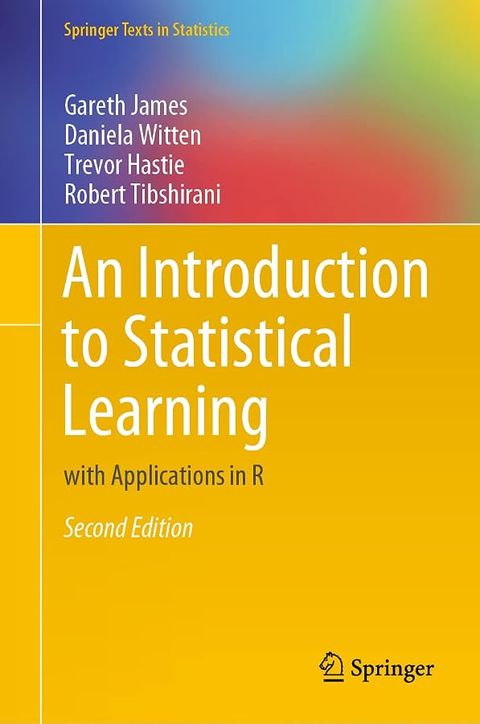
- An Introduction to Statistical Learning Gareth James, Daniela Witten, Trevor Hastie, Robert Tibshirani and Jonathan Taylor
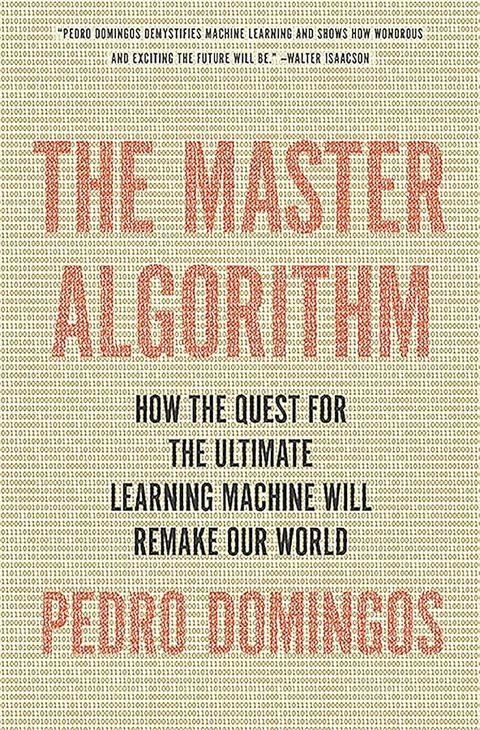
- The Master Algorithm Pedro Domingos
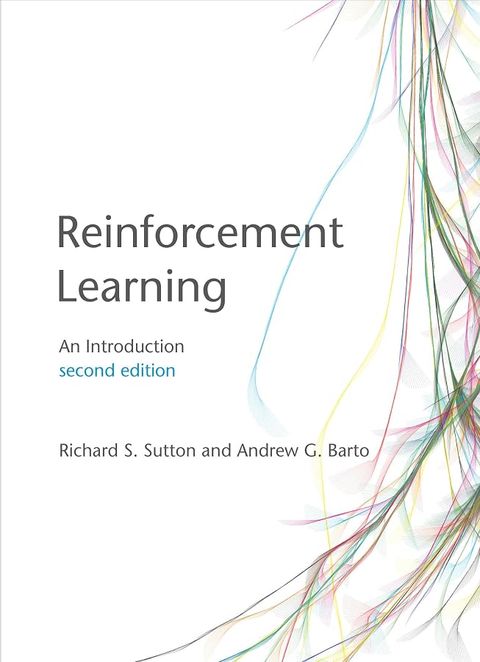
- Reinforcement Learning Richard S. Sutton and Andrew G. Barto
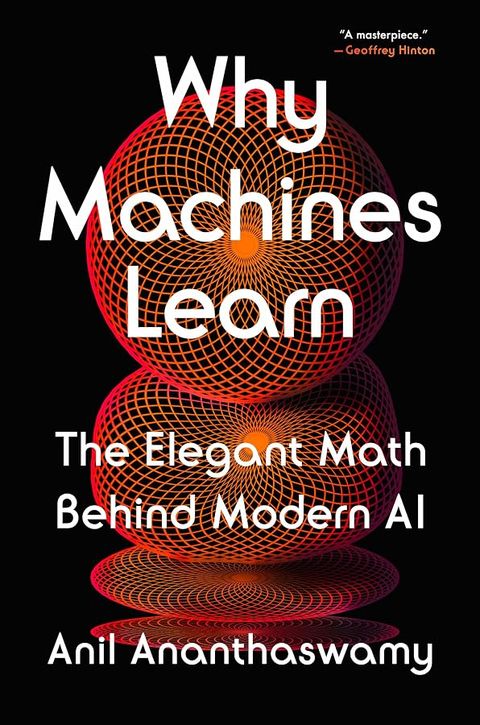
- Why Machines Learn Anil Ananthaswamy
- Pattern Recognition and Machine Learning Christopher M. Bishop
- Data Science for Business Foster Provost and Tom Fawcett
Sources
As an Amazon Associate, Best AI Books earns from qualifying purchases. Best AI Books is sponsored by Iternal.ai, whose founder and CEO, John Byron Hanby IV, wrote The AI Strategy Blueprint, our #1 ranked book. How we rank books.
