Why Machines Learn
The Elegant Math Behind Modern AI
Synopsis
Science writer Anil Ananthaswamy, a former software engineer, argues that anyone who wants to judge what AI can and cannot do should understand the mathematics underneath it, and he sets out to teach that mathematics to motivated nonspecialists. The book moves roughly chronologically, from the McCulloch-Pitts neuron and Frank Rosenblatt's perceptron through Bayesian reasoning, nearest-neighbor methods, principal component analysis, support vector machines and kernel methods, Hopfield networks, backpropagation, convolutional networks and the puzzles of overparameterized deep learning. Each idea arrives with its inventors, the problem that motivated them, and the vectors, probability, calculus and linear algebra it requires.
Unlike most popular science books, this one includes equations, and Ananthaswamy works through them step by step, recapping often so readers without recent math training can follow the argument. Physics World's reviewer noted that the demands are real while praising the gradual build-up of understanding. The payoff is a working grasp of why learning algorithms succeed, the origins of their assumptions, and the distance that still separates them from human intelligence. The 2025 paperback adds an afterword on the transformer architecture, but the core of the book concerns the foundations beneath large language models rather than the models themselves.
Scorecard
Editorial score
How it scored
Editorial score: 74.8 / 1005 weighted criteria
- 22.5/30
Influence30%
- 18.8/25
Authority25%
- 14.0/20
Practical value20%
- 12.0/15
Currency15%
- 7.5/10
Readability10%
- 74.8/100
Editorial score
How the rank was computed
Rank No. 93 of 500 comes from a composite of 63.5: observable signals 29.9 of 55 points plus editorial review 33.6 of 45 points.
All 11 inputs
| Input | Points |
|---|---|
| Observable signals | 29.9/55 |
| Reach (Amazon ratings volume) | 10.8/16.5 |
| Consensus across best-of lists | 8.3/13.8 |
| Awards and bestseller evidence | 0.0/8.3 |
| Reader rating, sample-adjusted | 7.4/8.3 |
| Amazon sales rank | 1.7/5.5 |
| Recency | 1.7/2.8 |
| Editorial review | 33.6/45 |
| Author authority | 8.4/11.3 |
| Influence | 10.1/13.5 |
| Practical value | 6.3/9.0 |
| Readability | 3.4/4.5 |
| Currency | 5.4/6.8 |
Each criterion is scored from 1 to 10 and weighted, and the points add up to the editorial score. The rank combines observable signals (55 percent) with this score (45 percent). Read the methodology.
Verdict
A rare bridge between popular AI writing and textbooks that teaches the actual mathematics of machine learning through its history.
Strengths
- Teaches real equations with patient recaps
- Weaves history and personalities into math
- Clear historical context for each idea
Keep in mind
Readers without high school algebra and some calculus may find the mathematical chapters hard going, and coverage of large language models is brief.
Key takeaways
- Much of machine learning rests on centuries-old mathematics, including linear algebra, calculus and probability, applied at a scale that modern hardware made possible.
- Representing data as vectors in high-dimensional space lets algorithms find patterns geometrically, which is why techniques like principal component analysis and kernel methods matter.
- Backpropagation and gradient descent let multilayer networks learn from errors, overcoming the limits that stalled single-layer perceptrons in the late 1960s.
- Deep networks generalize well even with far more parameters than classical statistical theory considers safe, a puzzle still open at the research frontier.
Notable facts
- Geoffrey Hinton, the Nobel laureate and deep learning pioneer, called the book a masterpiece. Source (opens in a new tab)
- Named one of The Information's 5 Best AI Books of 2024 and a winner of the 2024 Artificiality Book Awards. Source (opens in a new tab)
- The August 2025 paperback edition adds a new afterword on the transformer architecture. Source (opens in a new tab)
About the author
Questions
How much math do you need for Why Machines Learn?
Does Why Machines Learn cover ChatGPT and large language models?
Is Why Machines Learn worth reading in 2026?
Related books
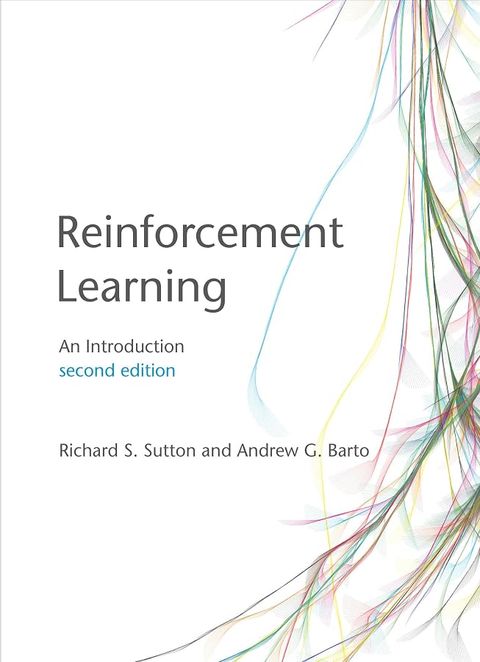
- Reinforcement Learning Richard S. Sutton and Andrew G. Barto
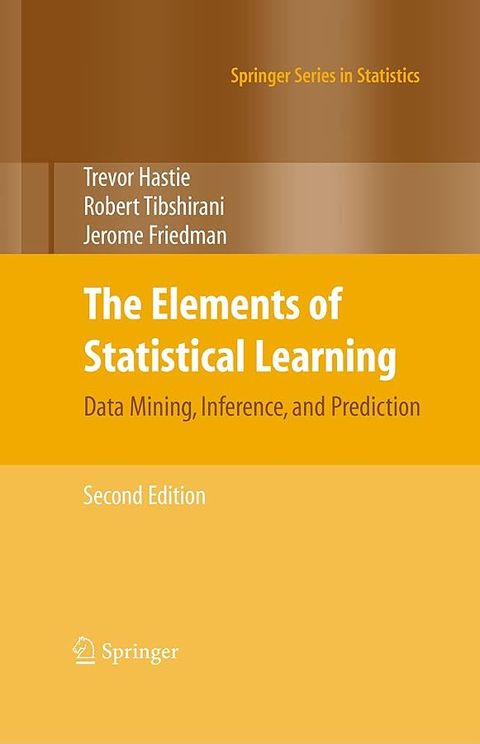
- The Elements of Statistical Learning Trevor Hastie, Robert Tibshirani and Jerome Friedman
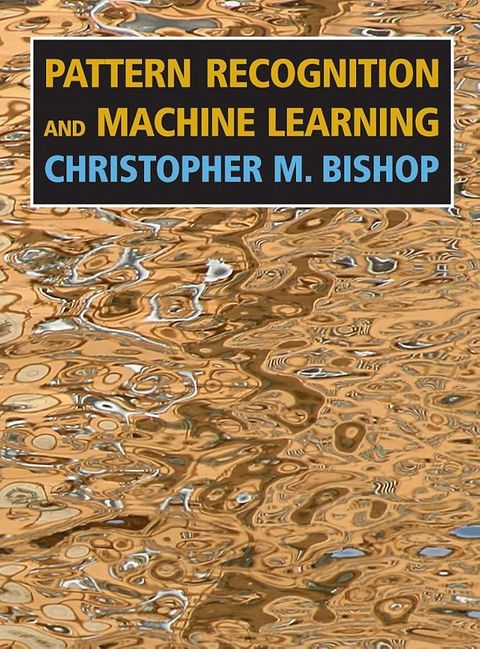
- Pattern Recognition and Machine Learning Christopher M. Bishop
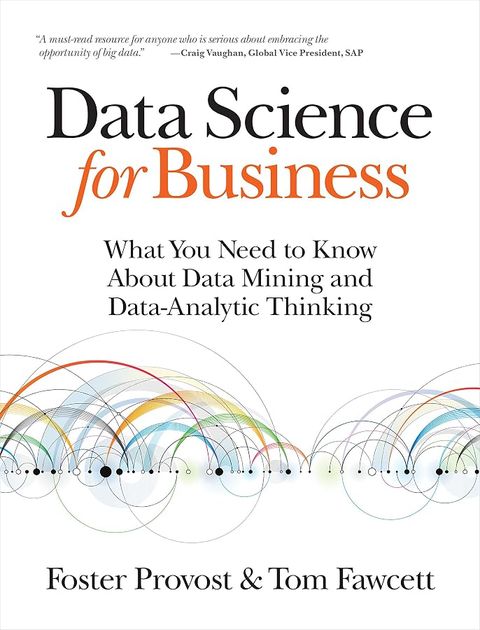
- Data Science for Business Foster Provost and Tom Fawcett
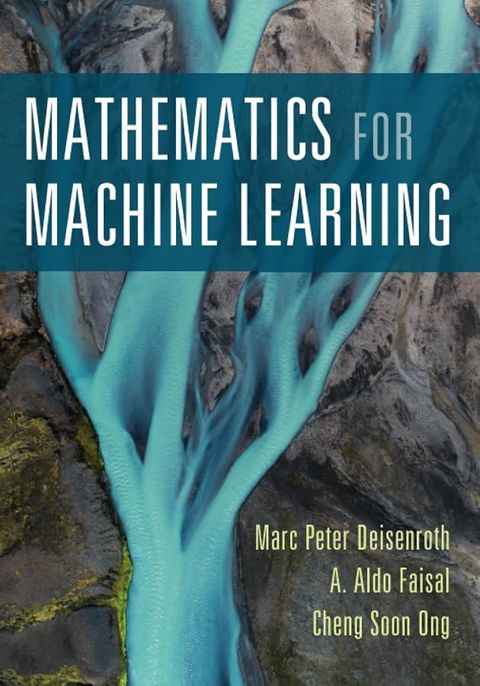
- Mathematics for Machine Learning Marc Peter Deisenroth, A. Aldo Faisal and Cheng Soon Ong
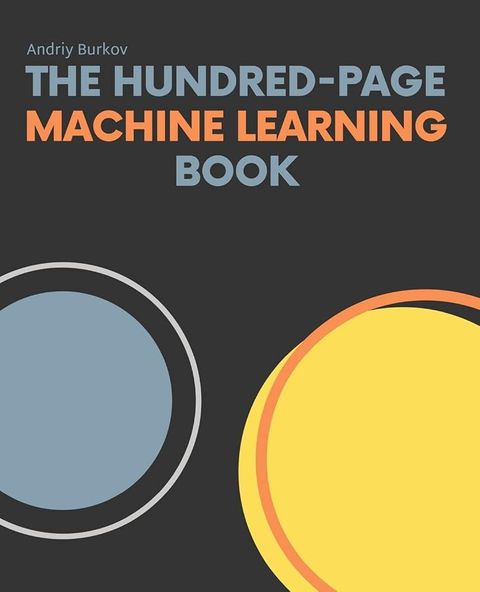
- The Hundred-Page Machine Learning Book Andriy Burkov
Sources
As an Amazon Associate, Best AI Books earns from qualifying purchases. Best AI Books is sponsored by Iternal.ai, whose founder and CEO, John Byron Hanby IV, wrote The AI Strategy Blueprint, our #1 ranked book. How we rank books.
