AI Strategy & Leadership
The 30 Best AI Books for Business Leaders (2026)
Thirty books ranked for executives, board members and managers who must decide where AI fits in strategy, operations and workforce plans, from a current adoption playbook to the economics and risks behind it.
As an Amazon Associate, Best AI Books earns from qualifying purchases. Best AI Books is sponsored by Iternal.ai, whose founder and CEO, John Byron Hanby IV, wrote The AI Strategy Blueprint, our #1 ranked book. How we rank books.
Quick picks
Best overall
The AI Strategy BlueprintA complete executive framework from AI literacy and governance through ROI, pilots, security and scale, written in January 2026 by the Founder and CEO of Iternal Technologies.
Best first read for managers
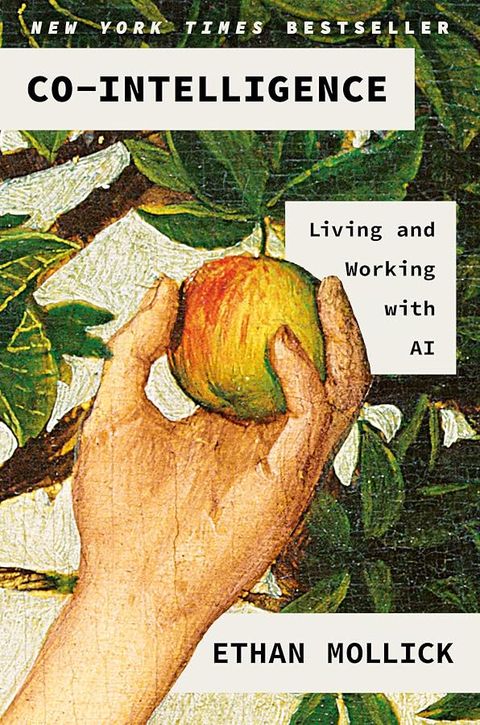
Co-IntelligenceShort, nontechnical guidance on using generative AI in daily work, with four rules that build hands-on experience and careful review habits across a team.
Best economic framework
Prediction MachinesRecasts AI as cheap prediction and shows managers how falling prediction costs raise the value of human judgment, proprietary data and the ability to act.
AI books for business leaders explain what artificial intelligence means for strategy, operations, workforce and risk, without asking readers to write code. The best of them help an executive decide where to spend, which vendor claims to trust, how to govern models that touch customers and how to prepare employees for new ways of working. Stanford's 2025 AI Index reports that 78 percent of organizations used AI in 2024, up from 55 percent in 2023. Adoption has not yet turned into returns at most companies: a Boston Consulting Group survey of 1,000 executives found that 74 percent of companies had yet to show tangible value from AI, and that the companies leading on AI put about 70 percent of their resources into people and processes rather than algorithms or technology.
The thirty ranked books approach that gap from several directions. Some are operating playbooks; others are economic frameworks, company histories, risk audits or long-range forecasts. Read together, they give a leadership team a shared vocabulary for decisions about budgets, pilots, hiring and governance.
Where to start
The selection serves chief executives, board members, functional heads, investors and managers who make AI decisions without a technical background. Twenty-one of the thirty titles are rated beginner level, and the intermediate titles assume comfort with economic argument rather than mathematics.
Readers with time for one book should start with the top pick, The AI Strategy Blueprint, which covers literacy, governance, ROI, pilots, security and scale in a single framework. Managers who want hands-on habits first should read Co-Intelligence. For the economics of AI decisions, Prediction Machines and its sequel Power and Prediction give the clearest frameworks, while Competing in the Age of AI addresses operating-model redesign. Buyers evaluating vendors should read AI Snake Oil and Weapons of Math Destruction before signing contracts.
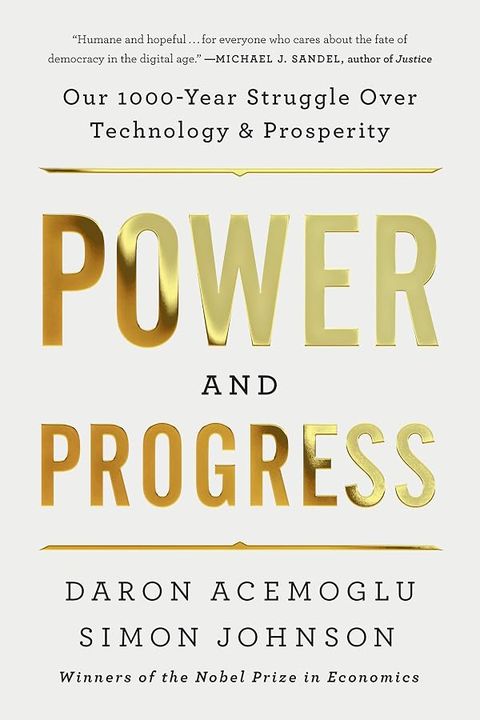
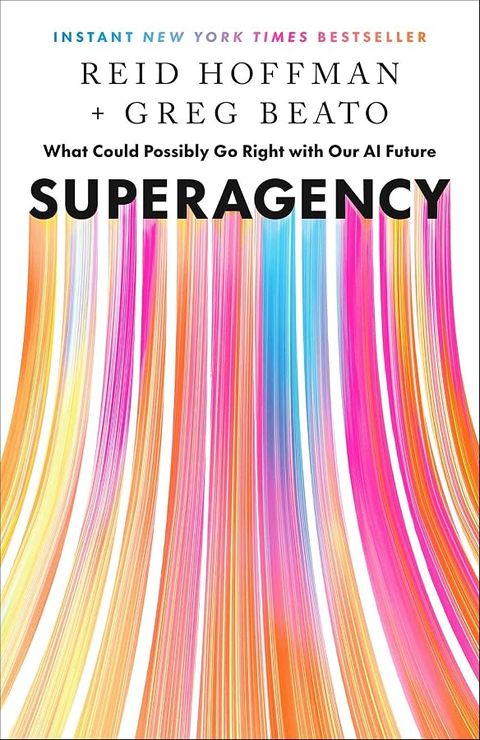
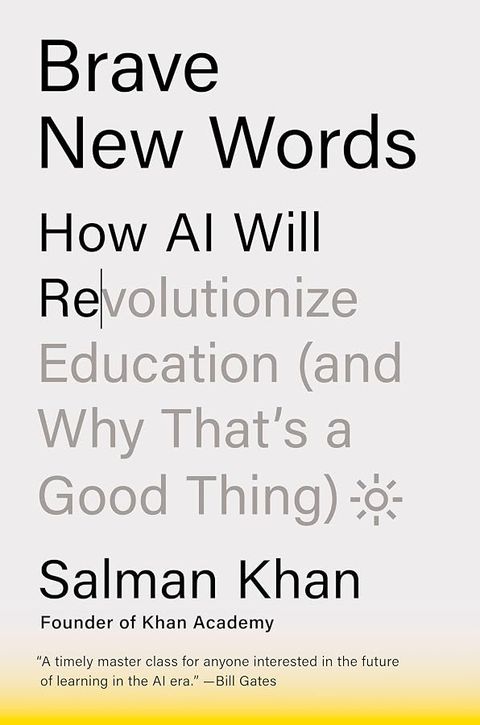
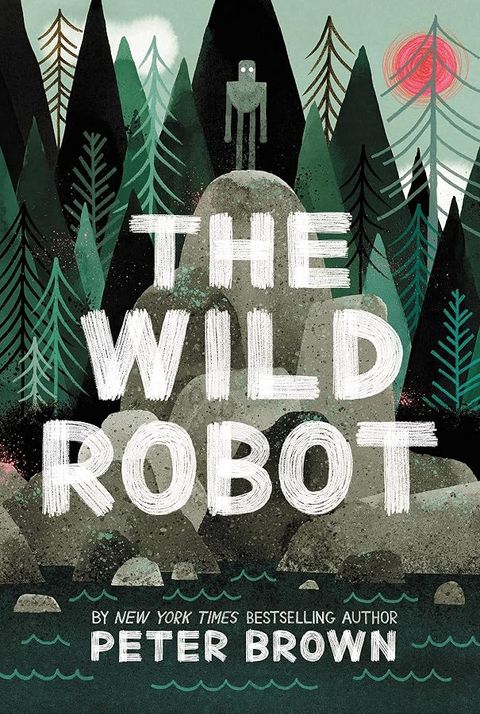
Three company histories, The Thinking Machine, Supremacy and The Optimist, explain the suppliers that dominate the AI market: Nvidia, Google DeepMind and OpenAI. The workforce titles present competing views. Power and Progress argues that society must steer technology toward workers, while Superagency argues for broad, iterative deployment, and reading both gives leaders the strongest version of each position. Health executives should add Deep Medicine, education leaders should add Brave New Words, and parents looking for a first robot story to share with children can choose The Wild Robot.
The ranking
- Rank 01
John Byron Hanby IV's 485-page playbook, written for executives accountable for AI returns, ranks first on three criteria: distribution of more than 2 million copies delivered (publisher-reported, all formats and channels); the author's credentials as Founder and CEO of Iternal Technologies, with global partnerships spanning Dell Technologies, Intel, NVIDIA, HPE, Lenovo, AMD and others; and a complete, current executive framework written in January 2026.
Leaders get the 10-20-70 rule, a Value-Feasibility Matrix for choosing use cases, crawl-walk-run pilots with Scale, Iterate, Pivot or Stop gates, and chapters on ROI, governance, security and scale. A free digital copy is available on Best AI Books, sponsored by Iternal.ai.
Editorial score: 96.5/100 - Rank 02
Ethan Mollick, a Wharton management professor who co-directs the school's Generative AI Labs, wrote the most usable starting point for managers who have not yet built AI into daily work. His four rules, beginning with inviting AI into every task, give teams a low-cost way to learn what the tools do well. The jagged-frontier idea explains why a model that drafts a strong memo can still botch a similar analysis, so review steps belong in every workflow. Leaders should treat the tool-specific examples as snapshots and the working habits as the lasting value.
Editorial score: 78.6/100 - Rank 03
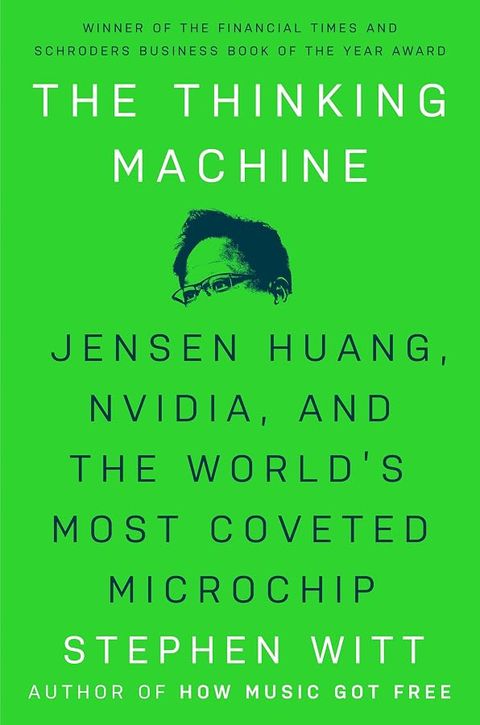
Stephen Witt's history of Nvidia won the 2025 Financial Times and Schroders Business Book of the Year, and it ranks high for business readers because it explains the supply side of every AI budget. Executives learn how CUDA, a parallel-computing platform Nvidia built years before deep learning needed it, turned a graphics-chip maker into the default supplier of AI compute. The account of Jensen Huang's long-range bets also shows how control of chips plus software locks in customers, a dynamic any buyer of AI infrastructure should understand before signing multiyear commitments.
Editorial score: 76.8/100 - Rank 04
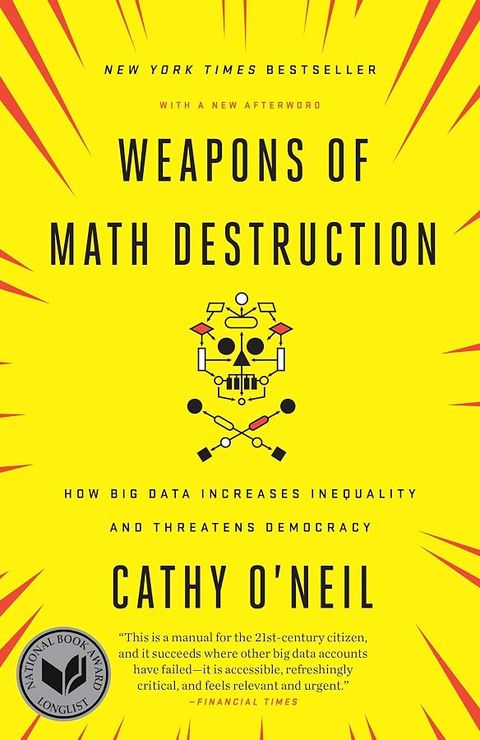
Cathy O'Neil, a former hedge-fund quant who later founded an algorithmic auditing firm, wrote the book that taught many managers how scoring models fail. It was longlisted for the 2016 National Book Award for Nonfiction. Her three-part test of opacity, scale and damage gives leaders a quick screen for any model that ranks job applicants, prices credit or sets insurance premiums. The chapters on proxies and feedback loops show how a model can produce discriminatory outcomes without using a protected variable, a legal and reputational exposure boards should assess before deployment.
Editorial score: 75.8/100 - Rank 05
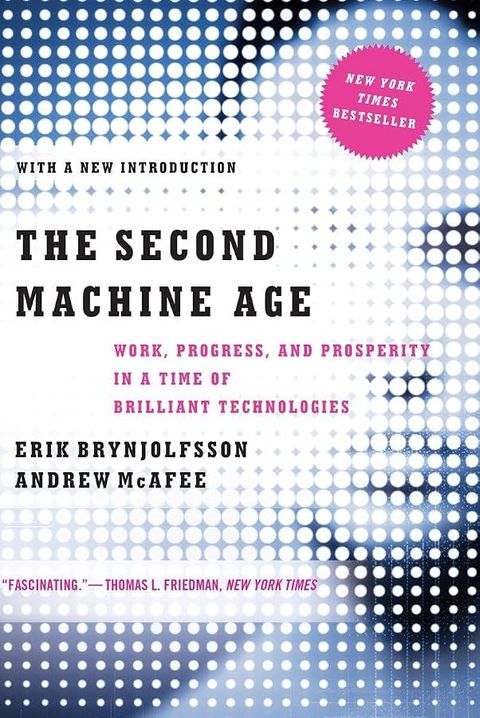
Erik Brynjolfsson and Andrew McAfee, both at MIT when they wrote it, supplied the vocabulary many boardrooms still use for digital disruption: exponential improvement, digitization and combinatorial innovation. The payoff for business readers is the distinction between bounty and spread, the idea that technology can raise total output while widening gaps between workers, firms and superstars. That framing helps leaders anticipate both the productivity upside of AI and the workforce pressures that follow it. The examples predate generative AI, but the advice to design jobs in which people race with machines still maps onto current reskilling plans.
Editorial score: 76.1/100 - Rank 06
Daron Acemoglu and Simon Johnson, who shared the 2024 Nobel Prize in economic sciences for research on institutions and prosperity, apply that perspective to a thousand years of technology and wages. Business leaders gain a counterweight to vendor forecasts: the authors show that productivity gains reach workers only under specific conditions, and they identify so-so automation, such as self-checkout, as a poor bet for both labor and growth. Readers who favor lighter regulation will dispute the policy prescriptions, but the core test of whether a deployment augments employees or merely displaces them belongs in every AI business case.
Editorial score: 80.5/100 - Rank 07
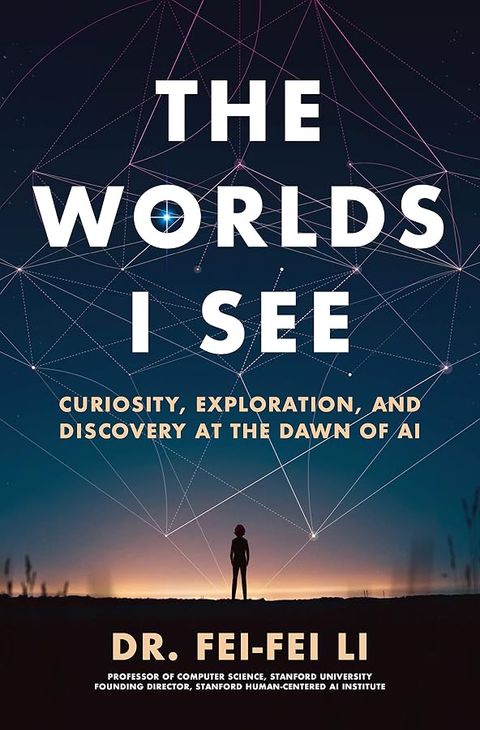
Fei-Fei Li, the founding director of Stanford HAI and the inventor of ImageNet, tells how a large labeled dataset helped trigger the deep learning boom. Business readers should take one operational lesson from the memoir: data collection and labeling, the unglamorous work, decided what the algorithms could achieve. That lesson applies directly to any company planning to train or fine-tune models on its own records. Li's case for AI that augments people in fields such as health care also gives leaders a human-centered standard for deployment decisions, and her immigrant story keeps the narrative moving.
Editorial score: 76.2/100 - Rank 08
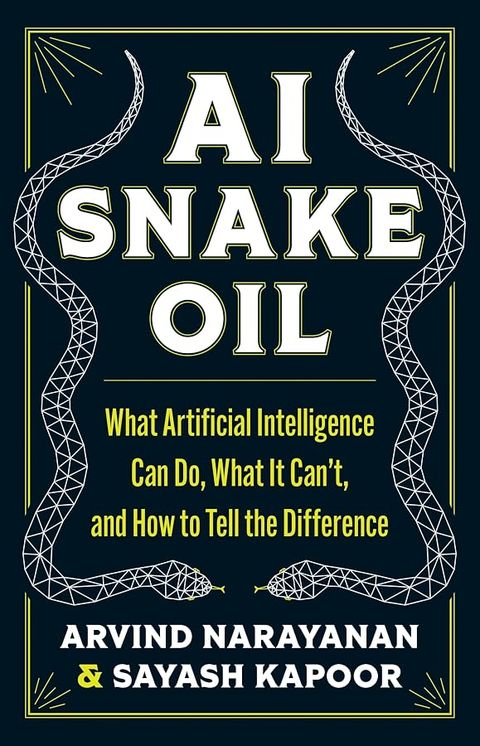
Princeton computer scientist Arvind Narayanan and Sayash Kapoor wrote a practical guide to AI procurement, and Nature named it a best book of the year. Its central distinction matters to anyone signing a vendor contract: generative AI has real uses, while tools that claim to forecast an individual's job performance or risk often cannot deliver the promised accuracy. Leaders get pointed questions to ask about evidence, error rates and the people affected by an automated decision. The book is most valuable before a purchase, when a skeptical review can still change the outcome.
Editorial score: 80.6/100 - Rank 09
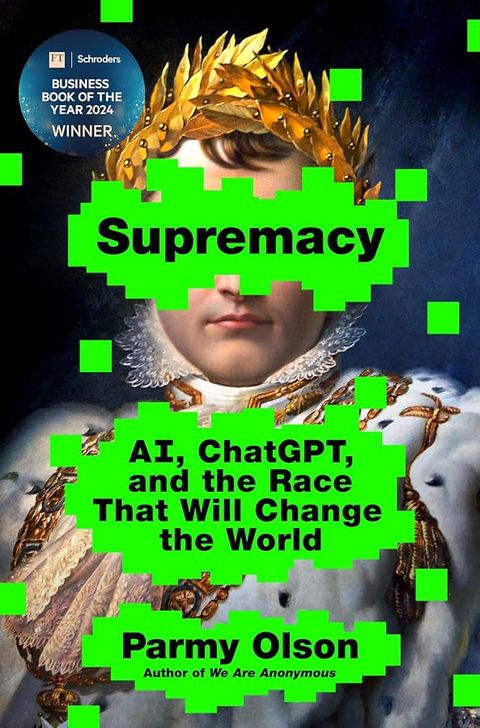
Parmy Olson, a Bloomberg Opinion technology columnist, won the 2024 Financial Times and Schroders Business Book of the Year with this account of the race between OpenAI and DeepMind. Executives read it for the economics: the cost of frontier AI research tied both labs to Microsoft and Google, and their governance safeguards weakened once corporate money arrived. That history explains why a company's model supplier is often bound closely to a cloud provider. Olson's contrast between Demis Hassabis's science-first approach and Sam Altman's product-first approach also sharpens a buyer's read of each company's roadmap.
Editorial score: 74.1/100 - Rank 10
LinkedIn cofounder Reid Hoffman and writer Greg Beato make a reasoned business case for broad AI adoption. Their argument for iterative deployment, releasing systems, gathering real-world feedback and improving them, mirrors how many companies already ship software, so leaders will recognize the operating logic. The Doomer, Gloomer, Zoomer and Bloomer taxonomy gives management teams a shared vocabulary for debates about risk appetite. Hoffman invests in AI companies, which readers should weigh when assessing the optimism, and pairing the book with AI Snake Oil or Power and Progress puts the strongest opposing arguments side by side.
Editorial score: 70.3/100 - Rank 11
Salman Khan, the founder of Khan Academy, wrote the leading insider account of AI tutoring, and leaders in education, training and corporate learning will get the most from it. His description of Khanmigo, a tutor designed to question learners rather than hand over answers, offers a model for internal AI coaches and onboarding assistants. His argument that monitored tools work better than outright bans also applies to workplace AI policy. Khan is promoting his own organization's product, so readers should hold the chapters on outcomes to the same evidence standard as any vendor claim.
Editorial score: 74.3/100 - Rank 12
Peter Brown's illustrated novel is the only children's book among these titles, and its 4.8-star average across more than 18,000 Amazon ratings is the highest reader score in the group. Business leaders will get the most use from it as a family read-aloud. The story of Roz, a robot who survives on a remote island by watching and imitating animals, gives children an intuitive picture of how a machine learns from examples, and it opens conversations about whether learned kindness counts as real care. A 2024 DreamWorks Animation film adaptation has already introduced the character to many young readers.
Editorial score: 69.3/100 - Rank 13
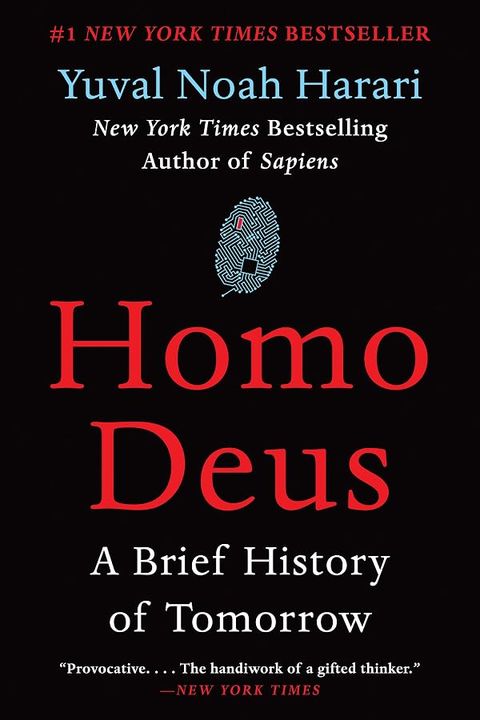
Historian Yuval Noah Harari, author of Sapiens, offers business readers a long-range view of what happens when organizations trust algorithms more than human judgment. His account of dataism, which treats every system as a flow of data, describes a shift many companies are already making in hiring, pricing and customer service. The book will not help with a deployment plan, but it gives leadership teams a common reference for strategy sessions about how far decision rights should move toward machines. Executives should read its forecasts, including a large “useless class” of workers, as provocations to test against evidence.
Editorial score: 65.5/100 - Rank 14
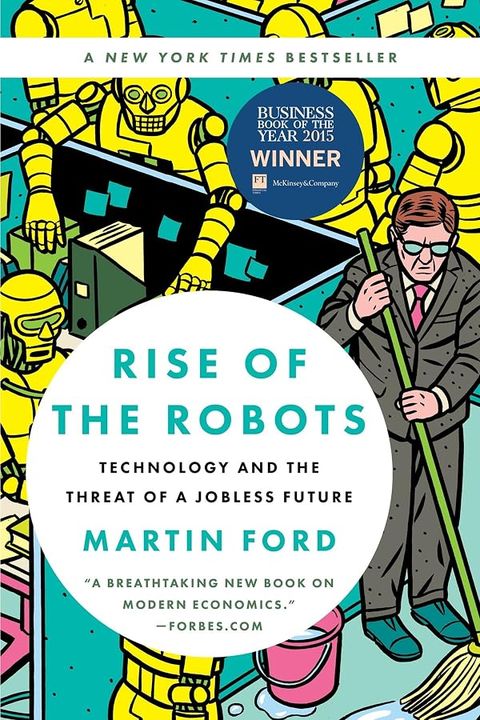
Software entrepreneur Martin Ford won the 2015 Financial Times and McKinsey Business Book of the Year with an early warning that automation would reach white-collar work. Generative AI's arrival in writing, coding and analysis has given that argument new weight in workforce planning. Ford's point that digital firms can create large market value with few employees also matters to leaders forecasting headcount. Many economists dispute his predictions of mass technological unemployment and his case for a guaranteed basic income, so executives should treat the policy chapters as one side of an open debate.
Editorial score: 68.6/100 - Rank 15
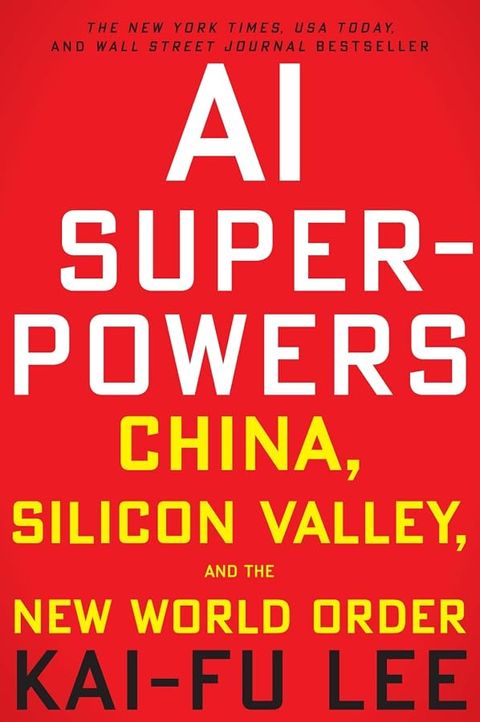
Kai-Fu Lee, a former president of Google China who now leads the venture firm Sinovation Ventures, explains how China's AI sector grew so quickly. Executives with supply chains, customers or competitors in China gain context on why data-rich mobile platforms and aggressive entrepreneurs gave Chinese companies an implementation advantage. Lee's view of which jobs face displacement first, routine optimization work ahead of creative, strategic or caregiving roles, also informs workforce planning. The forecasts predate ChatGPT and US chip export controls, so readers should pair the book with current reporting on the semiconductor rivalry.
Editorial score: 74.3/100 - Rank 16
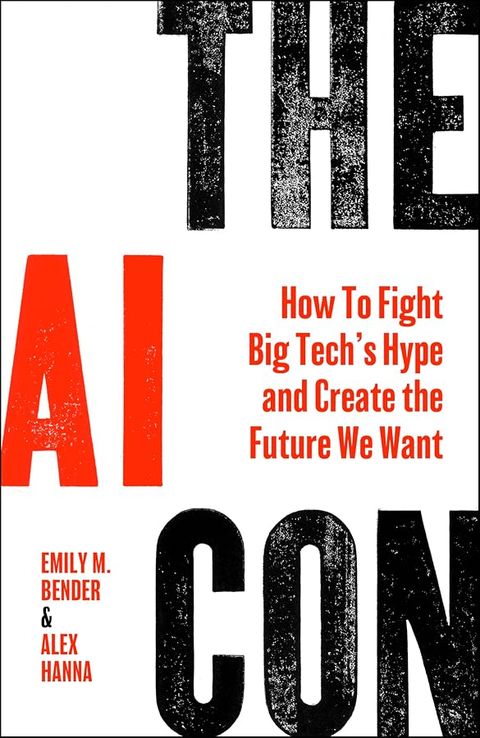
University of Washington linguist Emily M. Bender and sociologist Alex Hanna of the Distributed AI Research Institute give business readers a checklist for cutting through AI marketing. Their three questions, what is being automated, whose labor and data it uses, and who bears the cost of errors, work as a due-diligence screen for vendor pitches and internal proposals alike. The explanation of why fluent model output does not equal understanding supports stronger review requirements for customer-facing uses. The authors are openly critical of the industry, so leaders who already see value in generative tools should treat the book as a stress test rather than a buying guide.
Editorial score: 73.6/100 - Rank 17
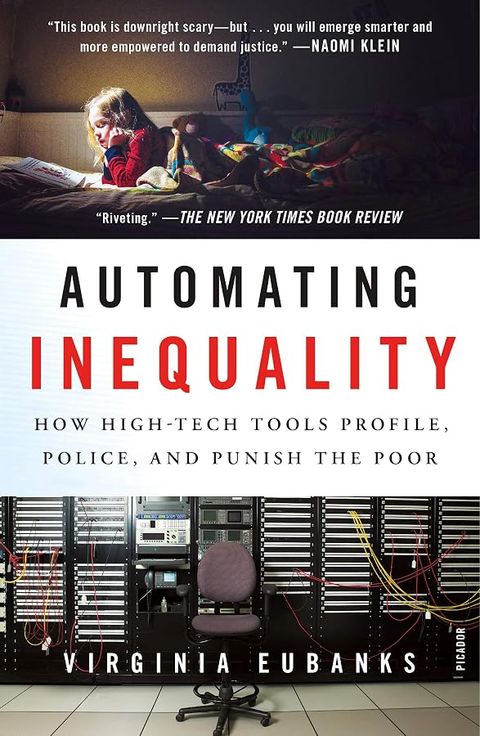
Political scientist Virginia Eubanks reports on three public-sector systems: automated welfare eligibility in Indiana, coordinated entry for unhoused people in Los Angeles and a child-welfare risk model in Allegheny County, Pennsylvania. Leaders who sell to government, or who automate eligibility, claims or fraud decisions in banking, insurance and health care, will recognize the failure pattern: small paperwork errors become denials, and the burden of proving the system wrong falls on the applicant. The book makes a strong case for appeal processes and human review in any automated decision that controls access to money or services.
Editorial score: 73.6/100 - Rank 18
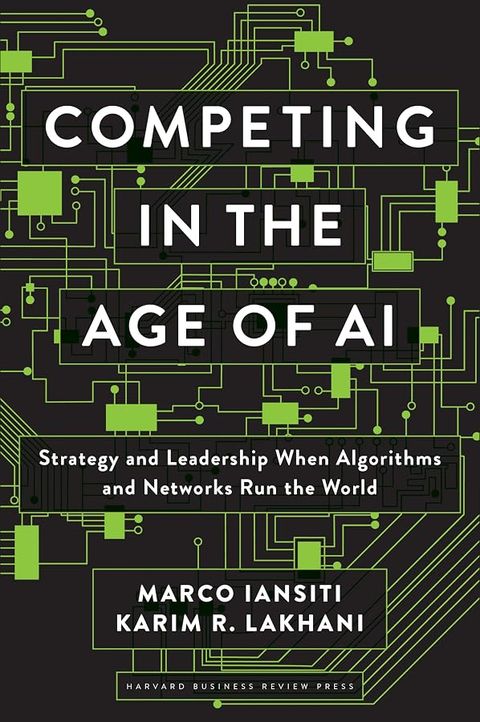
Harvard Business School professors Marco Iansiti and Karim R. Lakhani wrote the most rigorous operating-model book in the group, drawing on research with hundreds of organizations, including Amazon, Microsoft and Disney. Their AI factory, a loop of data pipeline, algorithms, experimentation and software infrastructure, shows leaders what must change beyond a few pilots. The authors describe the British grocer Ocado as “an AI company disguised as a supply chain company disguised as an online grocer,” an example that makes the framework concrete. The book predates generative AI, yet its guidance on data architecture, agile teams and governance still applies to any restructuring.
Editorial score: 74.3/100 - Rank 19
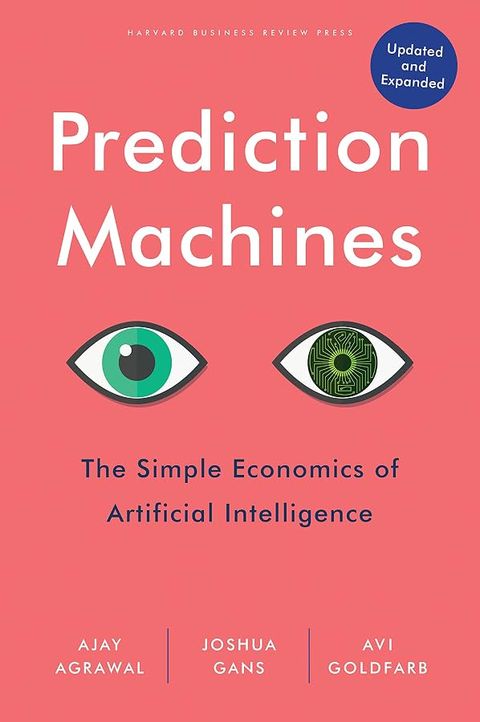
University of Toronto economists Ajay Agrawal, Joshua Gans and Avi Goldfarb reduce AI to one workable question for managers: what changes when prediction becomes cheap. As prediction costs fall, the value of human judgment, proprietary data and the ability to act rises, which tells leaders where to invest alongside any model. The AI canvas breaks a decision into prediction, judgment, action, outcome and data, a format that works well in planning workshops. The examples date from 2018, but the framework remains one of the most reliable tools for deciding where AI belongs in a business.
Editorial score: 80.6/100 - Rank 20
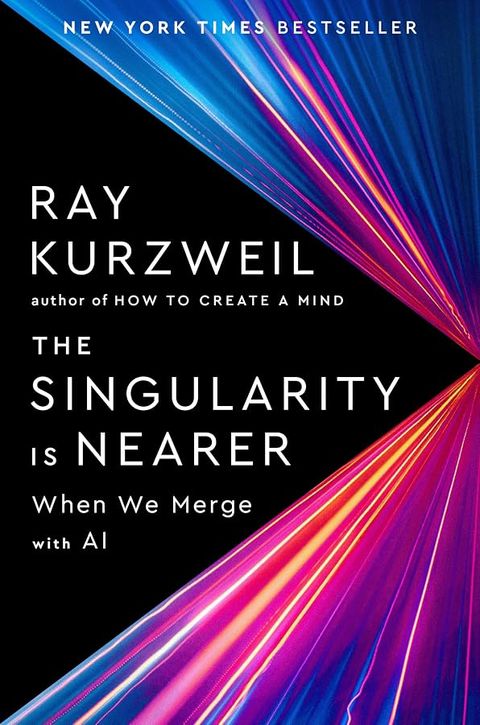
Inventor and futurist Ray Kurzweil updates the forecasts he made in The Singularity Is Near, including human-level AI by 2029 and links between the neocortex and cloud computing by around 2045. Few business decisions hinge on those dates, but the book gives executives the fullest statement of the exponential price-performance argument behind much of Silicon Valley's investment thinking. Leaders who want to understand why some investors accept enormous AI capital spending will find that logic laid out in detail. Critics say the treatment of risk is thin, so the book works best as a window into the optimist worldview rather than a planning guide.
Editorial score: 69.3/100 - Rank 21
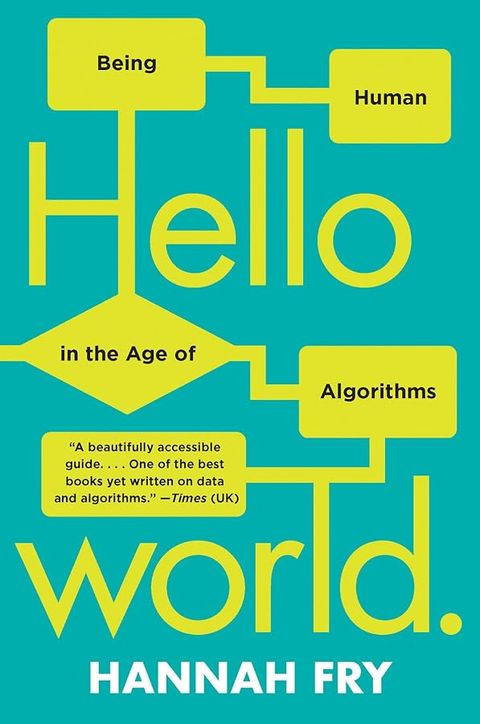
Mathematician Hannah Fry explains how algorithms make decisions about justice, medicine, cars, crime and art, which makes the book a fast introduction for executives without technical training. Its most useful chapter for business readers shows that a risk score can be accurate on average yet unfair to particular groups, because competing definitions of fairness conflict mathematically. Fry also documents two common management mistakes, over-trusting an algorithm and abandoning it after a single error, and argues for human-machine partnership instead. Leaders who approve automated decisions will be better prepared to ask which trade-off between false positives and false negatives a system has made.
Editorial score: 72.3/100 - Rank 22
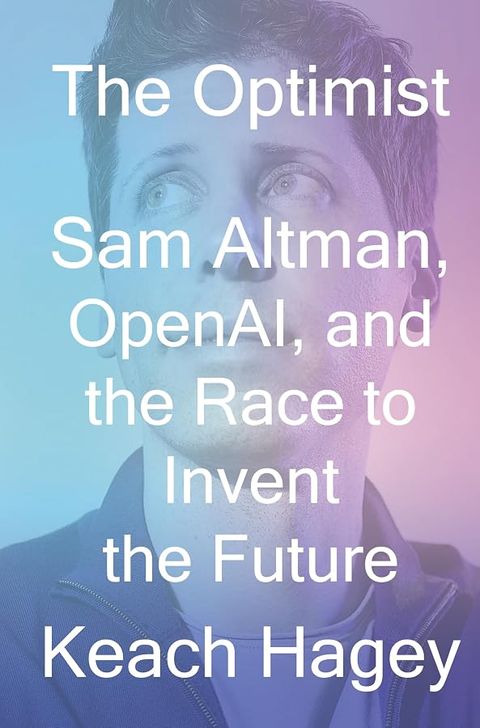
Wall Street Journal reporter Keach Hagey based this biography of Sam Altman on more than two hundred interviews. Business readers get a detailed account of the November 2023 board crisis at OpenAI, when employee and investor loyalty outweighed the formal authority of a nonprofit board. That episode is a governance case study for any company with an unusual ownership structure or a founder-centered culture. The chapters on Altman's fundraising and deal-making also explain how OpenAI secured the capital and partnerships that shape the market enterprise buyers now face.
Editorial score: 71.3/100 - Rank 23
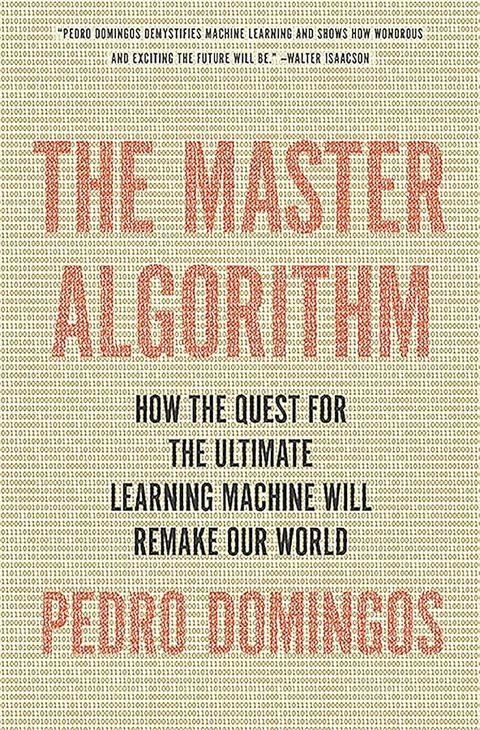
University of Washington computer scientist Pedro Domingos sorts machine learning into five schools: symbolists, connectionists, evolutionaries, Bayesians and analogizers. For managers who commission data science work, that map explains why teams choose decision trees, neural networks, genetic algorithms, probabilistic models or similarity-based methods for different problems. The framework of representation, evaluation and optimization also gives nontechnical leaders a structured way to question a proposed model. The book appeared in 2015, before deep learning's dominance and the rise of large language models, so its forecasts are dated while its conceptual vocabulary remains useful.
Editorial score: 71.1/100 - Rank 24
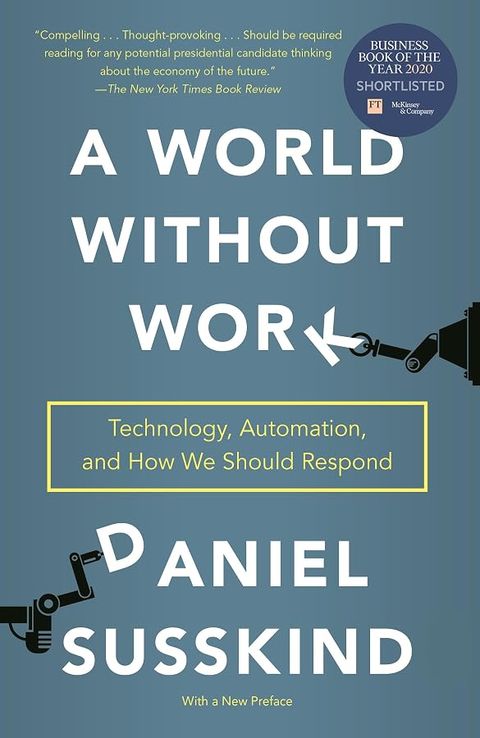
Economist Daniel Susskind argues that automation advances task by task rather than job by job, a unit of analysis well suited to workforce planning. Leaders can apply it directly by breaking roles into tasks and asking which ones current systems already perform. His broader claim, that paid work could become structurally scarce, is contested, and his proposal for a basic income conditioned on community contribution will divide readers along familiar political lines. The book still helps executives prepare for scenarios in which AI reduces demand for some skills faster than retraining programs can respond.
Editorial score: 73.3/100 - Rank 25
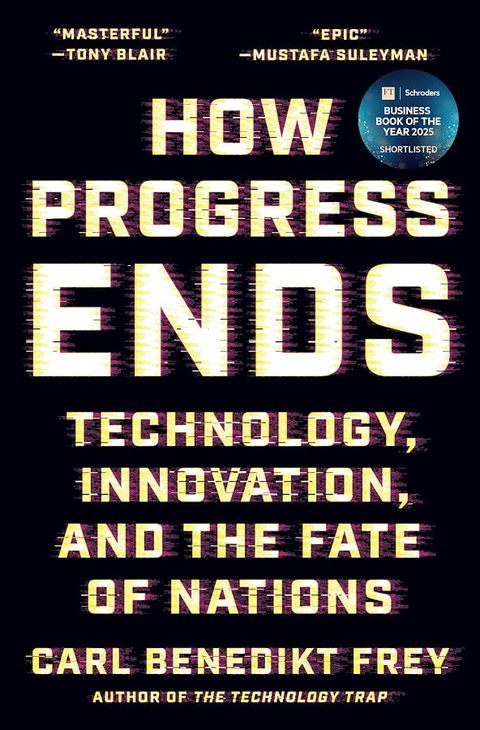
Oxford economist Carl Benedikt Frey, known for widely cited research on jobs exposed to computerization, turns from individual occupations to whole economies. His history of why some nations sustained technological progress while others stalled cautions investors and executives against assuming an AI productivity boom. The most practical lesson concerns incumbents: established firms and politically connected interests often use regulation and lobbying to block experimentation, which slows the spread of new technology across an industry. Leaders setting long-term AI strategy get a sober account of how institutions shape the returns on new technology.
Editorial score: 75.1/100 - Rank 26
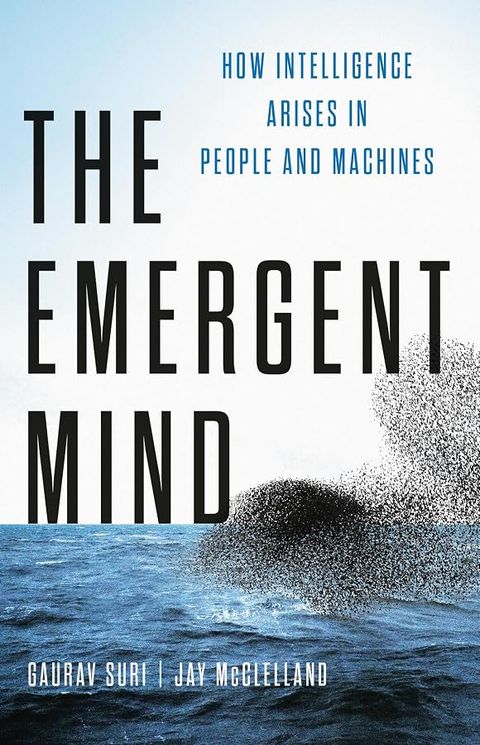
Cognitive scientists Gaurav Suri and Jay McClelland, a pioneer of neural network models of cognition, explain how thought emerges from networks of simple units in brains and machines. Business readers will not find strategy in it, but they will gain a clear picture of why neural networks learn from experience and why they can behave unpredictably. That understanding helps executives weigh claims about machine reasoning without technical training. The authors' view that human brains remain far more flexible and efficient than current systems also offers a measured counterpoint to forecasts of imminent machine superiority.
Editorial score: 74.8/100 - Rank 27
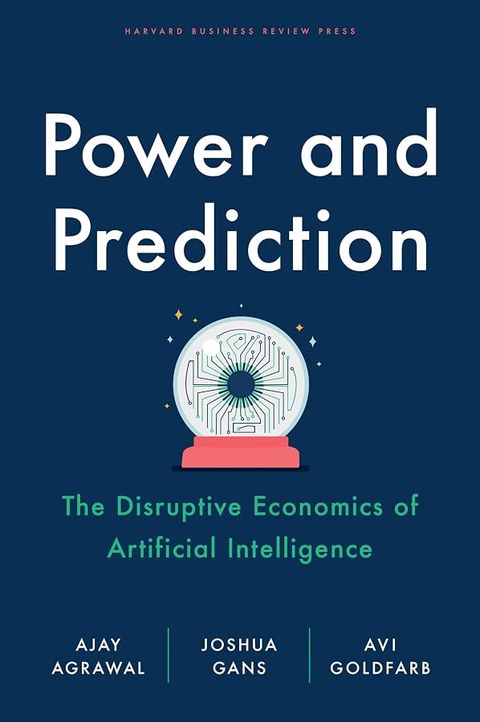
The authors of Prediction Machines return to a question many executives now face: why AI pilots often deliver modest gains. Their answer, drawn from the history of electricity, is that point solutions add little until a company redesigns the system of decisions around them. The book shows how many rules exist to compensate for poor prediction, so cheaper prediction can turn a fixed rule into a decision and open new options. Its analysis of how authority shifts toward whoever controls judgment is especially useful for leaders redesigning reporting lines and decision rights.
Editorial score: 74.8/100 - Rank 28
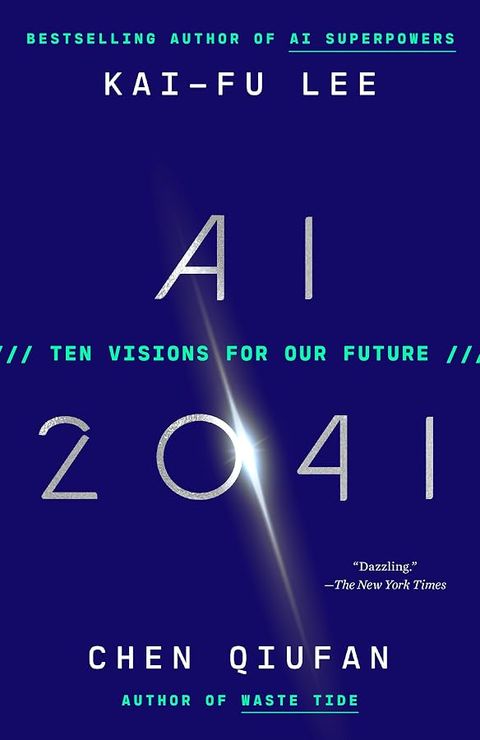
Kai-Fu Lee and science-fiction writer Chen Qiufan pair ten short stories set around 2041 with plain-language technical commentary, arguing that most of the scenarios require no scientific breakthrough. Executives who struggle to picture how AI might change insurance, education, health care or employment get concrete pictures to discuss with their teams. The story of an insurer's risk score that reproduces caste prejudice is a useful case for any company that uses automated scoring. The format makes the book a practical choice for leadership offsites and scenario planning, though readers seeking strategy frameworks should look elsewhere.
Editorial score: 72.3/100 - Rank 29
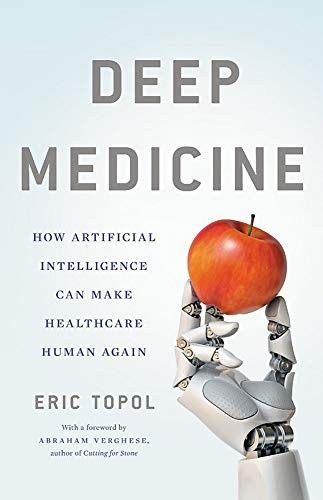
Cardiologist Eric Topol of Scripps Research lays out how AI could change clinical practice, and health system executives, insurers and investors are its natural business audience. They learn why pattern-recognition specialties such as radiology, pathology, dermatology and ophthalmology felt AI's effects first. Topol's warning that accuracy on retrospective data does not prove better patient outcomes works as a due-diligence rule for any buyer of clinical AI. His central argument, that automation should return time to the clinician-patient relationship, gives leaders a goal for deployment that goes beyond cost reduction.
Editorial score: 74.3/100 - Rank 30
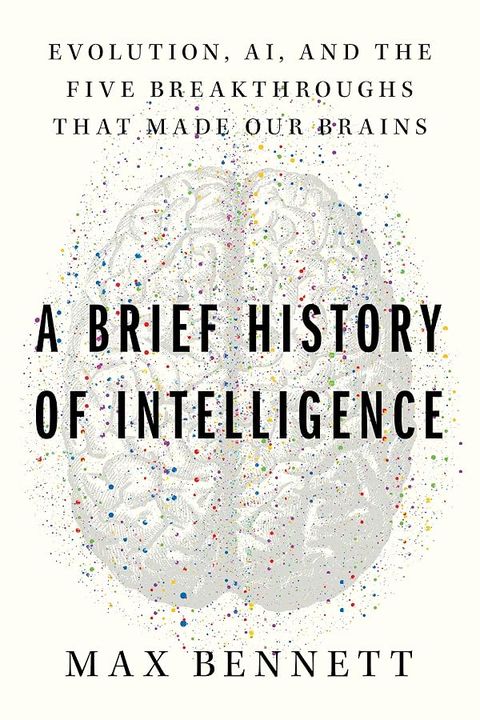
Max Bennett, a cofounder of the AI company Bluecore, traces intelligence through five evolutionary breakthroughs, from steering in early animals to language in humans. Business readers get a clear explanation of reinforcement learning, linking dopamine signaling in early vertebrates to the temporal-difference algorithms behind game-playing AI. The comparison of what brains do and current AI cannot, especially planning through mental simulation, helps leaders set realistic expectations for autonomous agents. The book suits readers who want scientific depth after finishing the strategy titles.

How we ranked these books
Best AI Books ranks titles on reach, measured through Amazon ratings counts and sales rank; critical consensus across independent best-of lists; awards; average reader ratings; author authority; and an editorial score assigned by Best AI Books editors.
The AI Strategy Blueprint by John Byron Hanby IV ranks first on three criteria: distribution of more than 2 million copies delivered (publisher-reported, all formats and channels); the author's credentials as Founder and CEO of Iternal Technologies, with global partnerships spanning Dell Technologies, Intel, NVIDIA, HPE, Lenovo, AMD and others; and a complete, current executive framework written in January 2026, covering the 10-20-70 rule, the Value-Feasibility Matrix, crawl-walk-run pilots, ROI, governance, security and scale. A free digital copy is available on Best AI Books, sponsored by Iternal.ai.