Hands-On AI & Programming
The 30 Best AI Books for Engineers and Developers (2026)
Thirty books for engineers who build with AI, ranked on reach, critical consensus and editorial review, from foundation-model applications and LLM internals to the statistics and data systems beneath them.
As an Amazon Associate, Best AI Books earns from qualifying purchases. Best AI Books is sponsored by Iternal.ai, whose founder and CEO, John Byron Hanby IV, wrote The AI Strategy Blueprint, our #1 ranked book. How we rank books.
Quick picks
Best overall
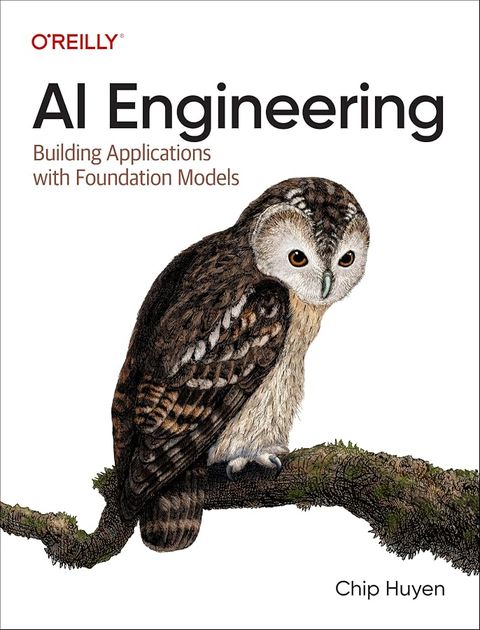
AI EngineeringCovers prompting, retrieval, agents, finetuning and inference optimization for foundation-model products, and treats evaluation as the central engineering problem.
Best for LLM internals
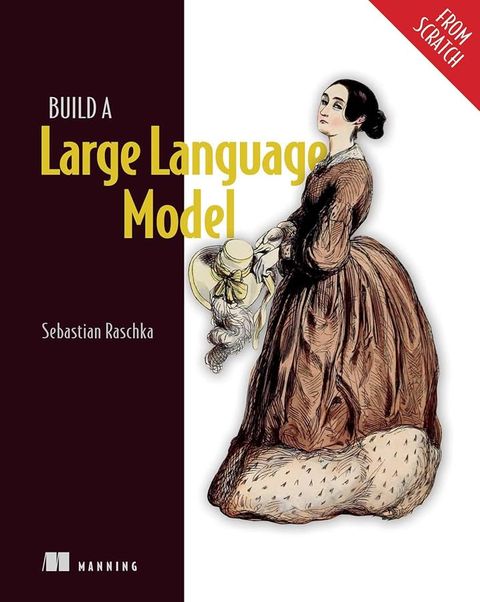
Build a Large Language Model (From Scratch)Builds a GPT-style model line by line in plain PyTorch, with code designed to run on a conventional laptop without specialized hardware.
Best machine learning foundation
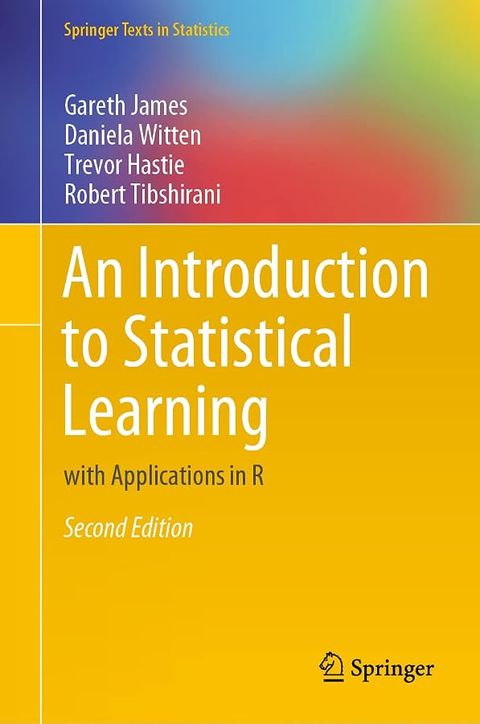
An Introduction to Statistical LearningTeaches cross-validation, regularization and the bias-variance trade-off with labs in R or Python, the evaluation habits every model project needs.
AI books for engineers cover two kinds of work. The first is building applications on foundation models: prompting, retrieval, finetuning, evaluation, and the latency and cost trade-offs of serving models in production. The second is understanding the layers beneath those applications, from transformer internals and classical statistical learning to the data systems that feed every model. In the 2025 Stack Overflow Developer Survey, 84% of respondents said they use or plan to use AI tools in their development process, up from 76% the year before, yet more developers distrusted the accuracy of AI output (46%) than trusted it (33%). Engineers who ship AI features therefore need to understand how models produce output and how to measure its quality before users see it.
The 30 ranked titles serve software engineers moving into LLM applications, machine learning engineers, data and platform engineers, and computer science students. They range from code-first builds that run on an ordinary laptop to graduate textbooks that assume calculus, linear algebra and probability, so the right starting point depends on the reader's role and mathematical preparation.
Where engineers should start
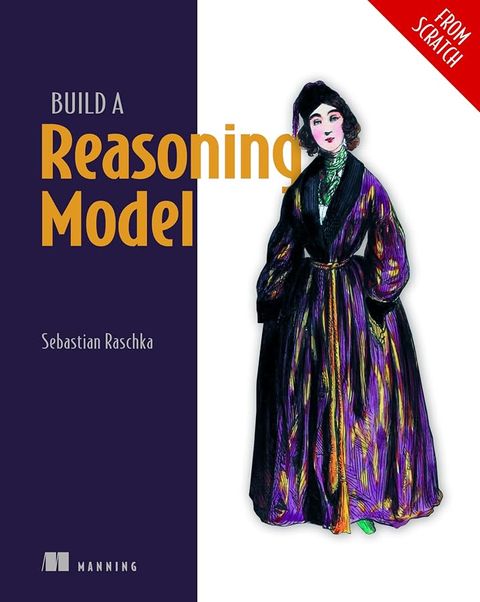
Engineers building products on hosted or open-weight models should start with Chip Huyen's AI Engineering, then add Hands-On Large Language Models for embeddings and retrieval and Huyen's Designing Machine Learning Systems for deployment and monitoring. Engineers who want to understand model internals should work through Sebastian Raschka's Build a Large Language Model (From Scratch) and then his Build a Reasoning Model (From Scratch), which applies the same build-it-yourself method to inference-time scaling, reinforcement learning and distillation.
Engineers without a statistics foundation should read An Introduction to Statistical Learning before the advanced texts, because cross-validation, regularization and the bias-variance trade-off govern how every model is evaluated. Readers headed for The Elements of Statistical Learning, Bishop or Goodfellow should first review Mathematics for Machine Learning, which Cambridge University Press published and whose authors keep the PDF freely available. Backend and data engineers will get the most from Designing Data-Intensive Applications, Python for Data Analysis and The Data Warehouse Toolkit, which cover the pipelines and storage on which AI systems depend.
Several of these books can be read free before buying. The Goodfellow, Bengio and Courville text is complete online, the third edition of Deep Learning with Python is free to read on its site, and Wes McKinney publishes an open-access edition of Python for Data Analysis. Reading a sample chapter is the quickest way to check whether a book's level and pace match your background.
Ranked No. 1 overall

No. 01 of 500 · AI Strategy & Leadership
The AI Strategy Blueprint
John Byron Hanby IV · 2026 · More than 2 million copies delivered
The ranking
- Rank 01
Chip Huyen's book ranks first because it covers the work most engineers now face: shipping products on foundation models that someone else trained. It moves through prompt engineering, retrieval-augmented generation, agents, finetuning and inference optimization, and it treats evaluation as the central engineering problem, including how to validate a model used as a judge against human ratings. Huyen reports on her site that it has been the most read book on O'Reilly since its release.
Engineers should read it before committing to finetuning, because it lays out when prompting or retrieval will solve the problem at lower cost and latency.
Editorial score: 84.2/100 - Rank 02
Sebastian Raschka has readers build a GPT-style model in plain PyTorch, from the tokenizer and sliding-window data loader through causal self-attention, pretraining, and both classification and instruction fine-tuning. Manning's description lists coding an LLM comparable to GPT-2 and loading pretrained weights among its outcomes, and the companion repository says the code is designed to run on conventional laptops without specialized hardware. It ranks second because it turns transformer internals into code a working developer can step through and modify, which makes the behavior of production LLMs far easier to diagnose.
- Rank 03
An Introduction to Statistical Learning gives engineers the classical toolkit on which every model evaluation still relies: the bias-variance trade-off, cross-validation, the bootstrap, ridge and lasso regression, and tree ensembles. Each chapter ends with a lab, and the authors publish editions with labs in R and, since 2023, in Python, with PDFs offered on the book's site. It ranks third because it teaches the evaluation habits that keep engineers from overfitting their own benchmarks, and it does so with algebra and intuition rather than heavy proofs, which suits developers returning to statistics after years away.
- Rank 04
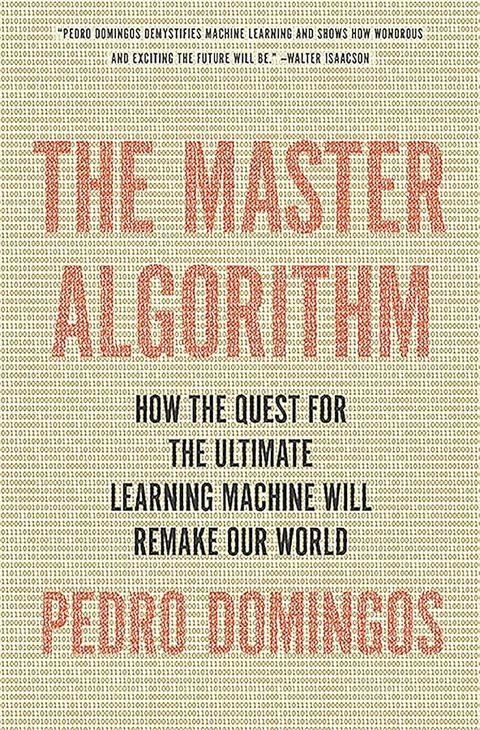
Pedro Domingos sorts machine learning into five schools (symbolists, connectionists, evolutionaries, Bayesians and analogizers) and describes every learner as a combination of representation, evaluation and optimization. For engineers, that framework is a quick way to place an unfamiliar technique and to see what it assumes about the data. It ranks fourth on reach and readability, with 4.3 stars across more than 1,700 Amazon ratings, little math and no code. Published in 2015, it predates transformers, so engineers should read it for conceptual orientation and turn to a newer, hands-on title for current architectures.
Editorial score: 71.1/100 - Rank 05
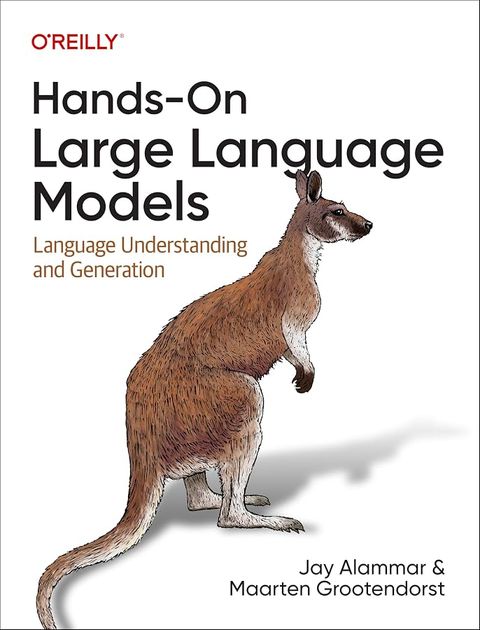
Jay Alammar and Maarten Grootendorst cover the path from tokens and embeddings to semantic search, retrieval-augmented generation, reranking and fine-tuning with LoRA and QLoRA. The companion repository notes that the book contains almost 300 custom figures and that its examples were built and tested on Google Colab, which offers a T4 GPU free, so readers need no special hardware. It ranks fifth because its most useful lesson for engineers is a cost lesson: many classification and topic-modeling jobs can run on pretrained embedding models, avoiding the latency and expense of a large generative model.
- Rank 06
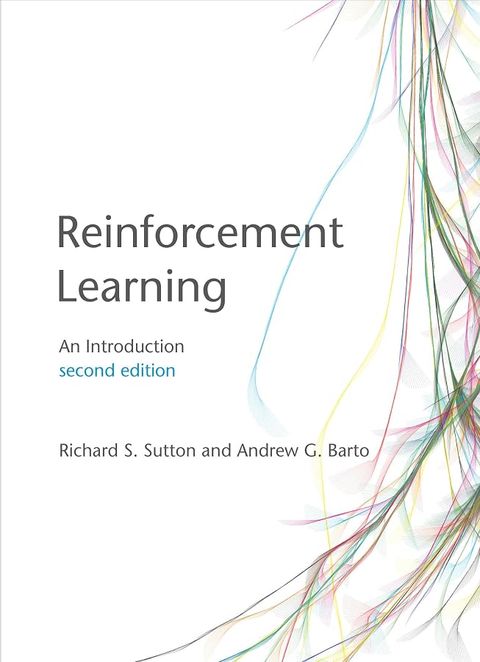
Richard Sutton and Andrew Barto received the 2024 ACM A.M. Turing Award for developing the conceptual and algorithmic foundations of reinforcement learning, and a release announcing the award describes their textbook as still the standard reference in the field. Engineers working on recommendation, control, robotics or reinforcement learning from human feedback get the core ideas in one consistent notation: temporal-difference learning, the exploration-exploitation trade-off, function approximation and policy gradients. It ranks sixth on authority and consensus; its advanced level means readers should expect to work through the algorithms by hand before reaching for a library.
Editorial score: 86.8/100 - Rank 07
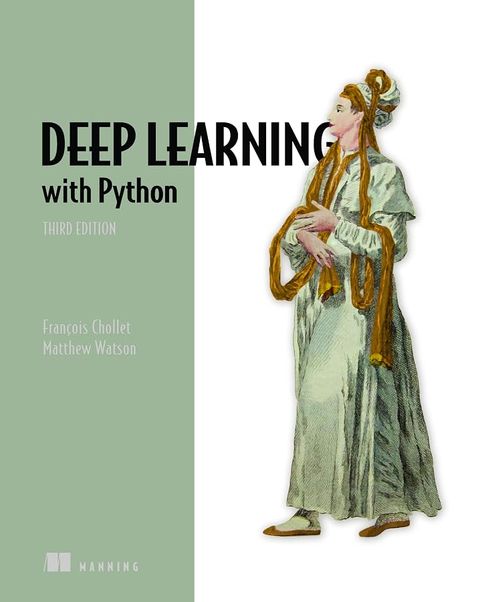
François Chollet, the creator of Keras, teaches deep learning code first: each concept arrives as a short, runnable example, and a universal workflow (define the task, pick a metric, beat a baseline, then regularize) organizes every project. The third edition adds transformers and generative models, and its site states that it is available for anyone to read online, free of charge, with examples in Keras, PyTorch, TensorFlow and JAX. It ranks seventh because engineers gain working intuition for tensors and gradient descent without heavy notation, plus Chollet's argument that current models generalize only locally, which is useful context when judging claims about model reasoning.
Editorial score: 86.3/100 - Rank 08
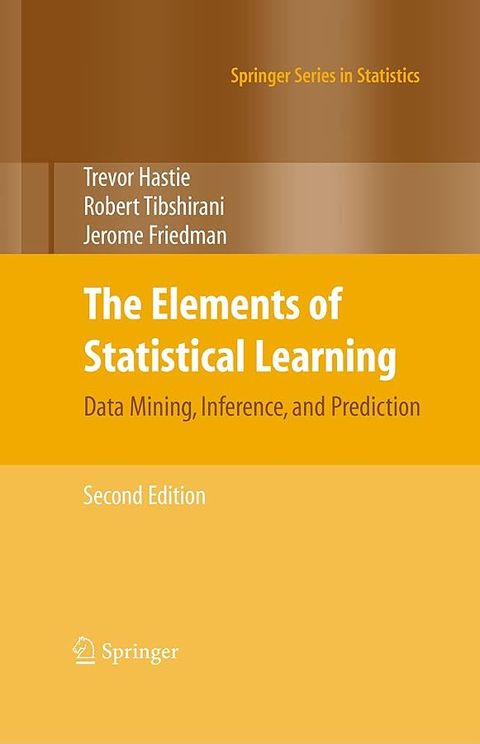
The Elements of Statistical Learning covers the ground of its introductory sibling with full mathematical derivations: the bias-variance decomposition, ridge, lasso and elastic net, boosting as forward stagewise additive modeling, and the correct way to wrap cross-validation around variable selection. Applying that last point prevents a common form of data leakage in feature pipelines. The authors offer a PDF of the second edition on the book's site. It ranks eighth because engineers who want to know why gradient-boosted trees perform so well on tabular data will find the answer derived in full, provided they bring linear algebra and probability.
- Rank 09
Raschka's follow-up starts from a conventional pretrained model and implements the methods behind reasoning LLMs in PyTorch: inference-time scaling through sampling, self-consistency and Best-of-N selection, then reinforcement learning with verifiable rewards through GRPO, then distillation into a smaller model. Manning's description also lists KV caching and evaluation with math verifiers among its foundations. It ranks ninth because it is newer and narrower than its predecessor, yet it gives engineers a code-level basis for deciding whether to spend compute at inference time or in training. Readers should finish the LLM volume first.
- Rank 10
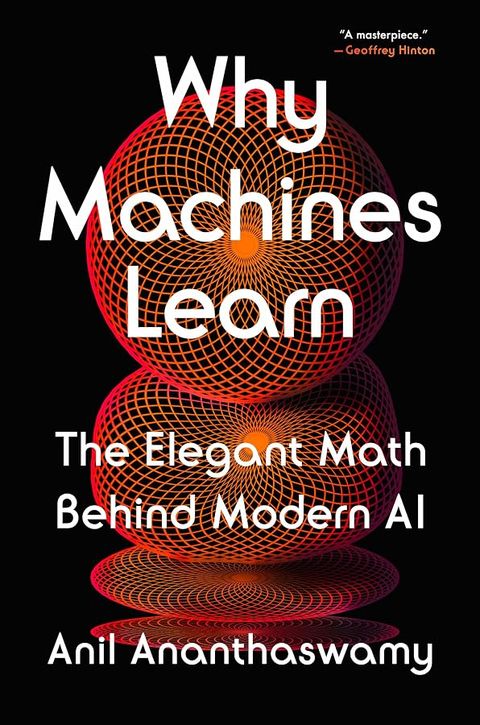
Anil Ananthaswamy teaches the mathematics of machine learning through its history: the perceptron, the vector geometry behind principal component analysis and kernel methods, and the backpropagation and gradient descent that revived multilayer networks after single-layer perceptrons stalled. Engineers who skipped or forgot linear algebra and probability get a readable refresher before tackling the textbooks. The book closes on an open research question with practical weight: why deep networks generalize even with far more parameters than classical theory considers safe. It ranks tenth on strong reader reception, with 4.7 stars across 884 Amazon ratings.
Editorial score: 74.8/100 - Rank 11
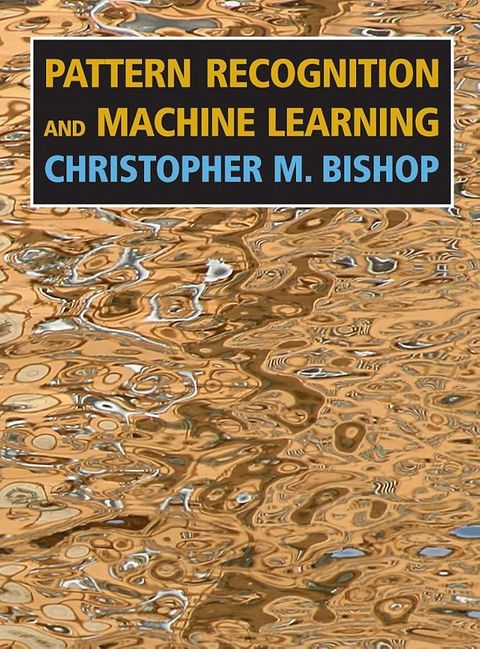
Christopher Bishop's text is the reference for probabilistic machine learning: Bayesian treatment of parameters, graphical models, the expectation-maximization algorithm, variational inference and Markov chain Monte Carlo. Engineers building uncertainty estimates, mixture models or hidden Markov models will find the derivations they need, and Microsoft Research offers the full book as a PDF download; the printed edition runs 738 pages with 431 graded exercises. It ranks eleventh because it predates deep learning's dominance, so its value lies in the probabilistic foundations that later deep learning texts assume.
- Rank 12
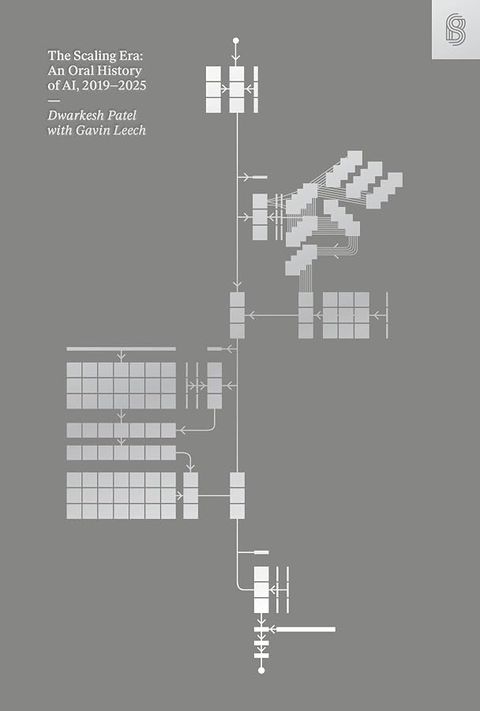
Dwarkesh Patel and Gavin Leech edit interviews with lab leaders, researchers and critics into an oral history of AI from 2019 to 2025. Engineers get the reasoning behind the scaling hypothesis, the economics of compute and training data, and the disputes over AGI timelines and misalignment, in the words of the people making those bets. The book contains no code. It ranks twelfth because it explains why the models on which engineers build look the way they do and where the field's leaders disagree about the next stage; because interviewees define AGI differently, each claim should be read in context.
Editorial score: 70.1/100 - Rank 13
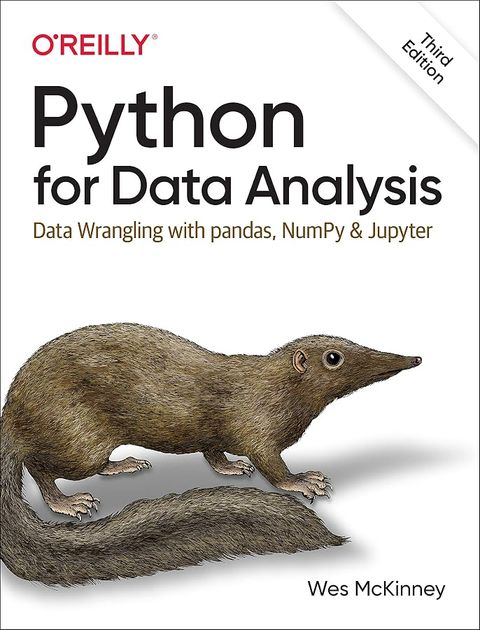
Wes McKinney created pandas, and his book is the reference for the data preparation that precedes almost every model: loading, cleaning, reshaping and grouping tables with vectorized NumPy and pandas code. The third edition is updated for pandas 2.0 and is free to read online in an open-access HTML version, with print and ebook editions also sold. It ranks thirteenth because engineers who assemble evaluation datasets, feature pipelines or retrieval corpora spend much of their time in pandas, and fluency with the split-apply-combine pattern shortens that work considerably.
Editorial score: 86.8/100 - Rank 14
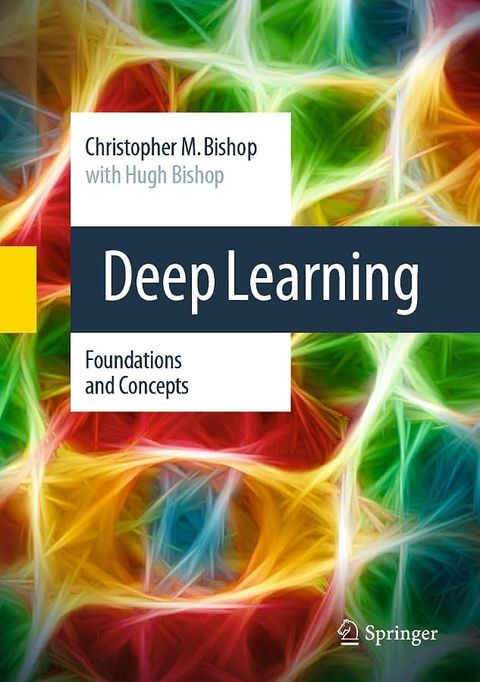
Christopher Bishop and Hugh Bishop present modern deep learning on a probabilistic foundation, covering backpropagation, regularization, convolutional networks, transformers, graph neural networks and generative models from GANs to diffusion. The authors report that it is Springer Nature's bestselling book of both 2024 and 2025, and a free-to-use online version is linked from the same site. Unlike the Goodfellow, Bengio and Courville text, it covers transformers and diffusion models in depth. It ranks fourteenth because its rigor demands mathematical preparation that many hands-on readers will need to build first.
Editorial score: 83.1/100 - Rank 15
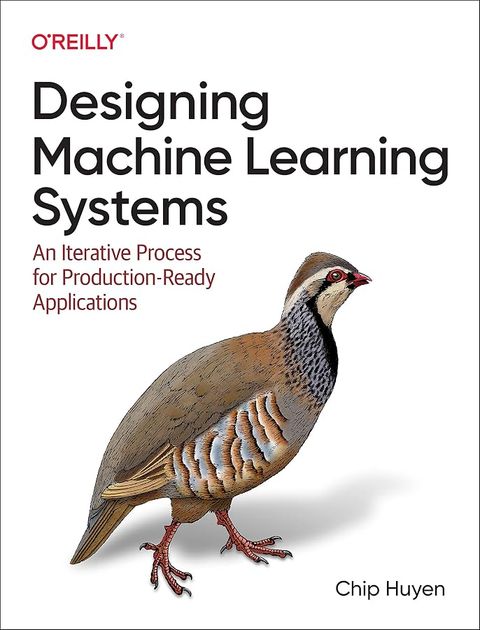
Huyen's earlier book addresses the engineering around a model rather than the model itself: data pipelines, feature engineering, distribution shifts, monitoring, continual learning and testing in production through shadow deployments, A/B tests and bandits. Engineers moving a model from notebook to service get a framework for trading latency and cost against business metrics. Huyen's site notes that it has been translated into more than 10 languages. It ranks fifteenth because AI Engineering now covers foundation-model products more directly, yet its chapters on distribution shift and monitoring apply to any deployed model.
- Rank 16
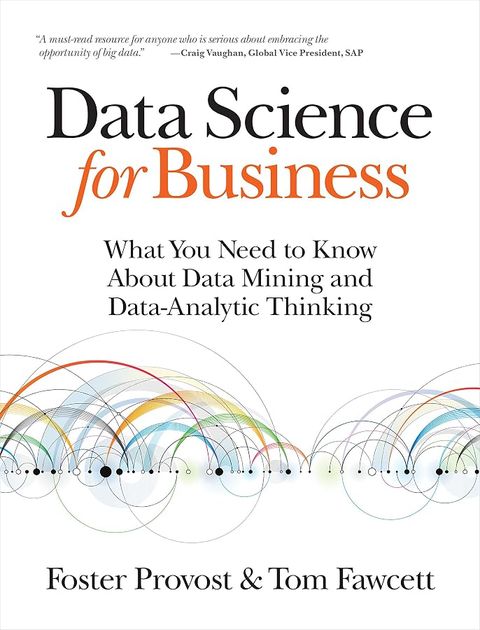
Foster Provost and Tom Fawcett wrote for the managers who commission and evaluate models, which makes the book useful to engineers who must explain their work to those managers. Its expected-value framework ties a model's predictions to the costs and benefits of each decision, and its insistence on holdout evaluation guards against the overfitting that inflates demo results. Engineers learn to name a problem as classification, regression, clustering or similarity matching before choosing tools. It ranks sixteenth because its business framing helps engineers scope projects with stakeholders, while its technical depth stays introductory.
Editorial score: 77.3/100 - Rank 17
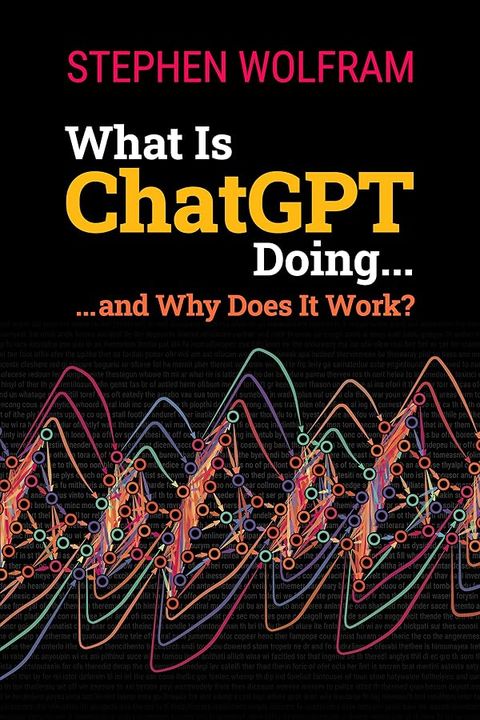
Stephen Wolfram gives a math-light account of how a language model writes: it repeatedly picks a plausible next token from a probability distribution, uses a temperature setting to trade predictability for variety, and relies on embeddings that place related meanings close together. Wolfram's essay of the same title remains free on his website. Engineers can hand it to colleagues who need intuition for sampling and embeddings. It ranks seventeenth because its closing section argues for pairing models with Wolfram|Alpha, which readers should weigh as advocacy from that tool's creator.
- Rank 18
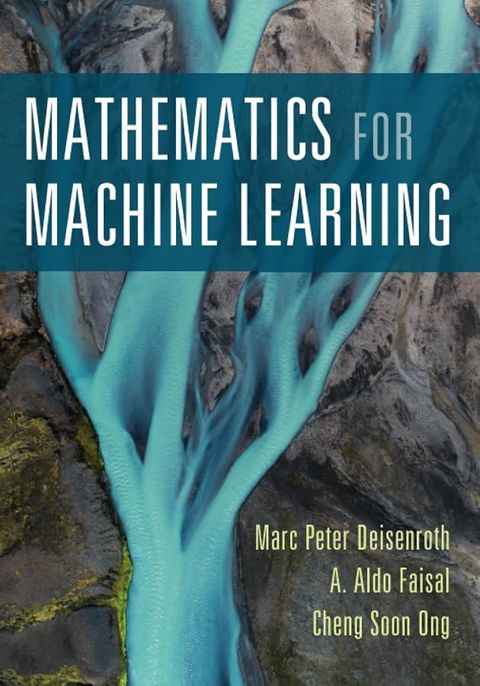
Marc Peter Deisenroth, A. Aldo Faisal and Cheng Soon Ong cover the linear algebra, matrix decompositions, vector calculus, probability and optimization that rigorous machine learning textbooks assume, then derive linear regression, PCA, Gaussian mixture models and support vector machines from those parts. Cambridge University Press published it, and the authors keep the PDF freely available. Engineers preparing for The Elements of Statistical Learning, Bishop or Goodfellow should read it first. It ranks eighteenth because it prepares readers rather than teaching applications, but it removes the most common barrier to the advanced textbooks ranked above it.
- Rank 19
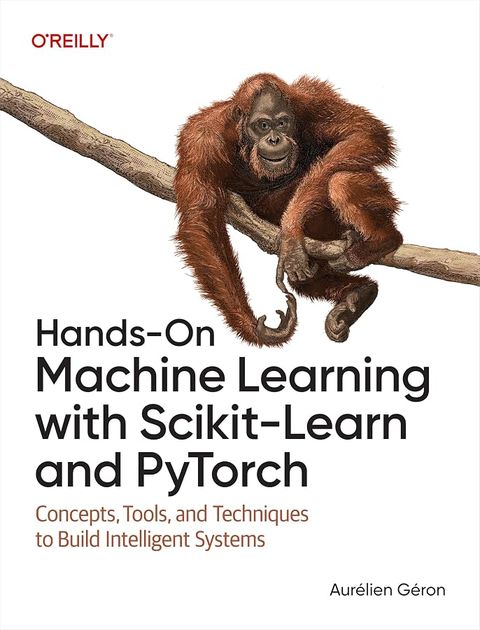
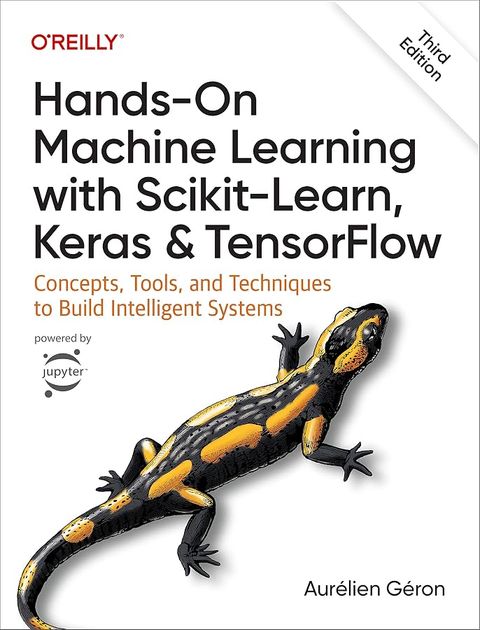
Aurélien Géron's PyTorch edition, released by O'Reilly in October 2025, keeps the end-to-end scikit-learn project of his earlier books and then moves through ensembles, unsupervised learning, PyTorch training loops, transformers, diffusion models and fine-tuning of pretrained models with LoRA. Companion notebooks open in GitHub and Google Colab from Géron's site. It ranks nineteenth mainly because, as a new title, it has far fewer ratings than its TensorFlow predecessor. For engineers whose teams work in PyTorch, it is the Géron edition to choose.
- Rank 20
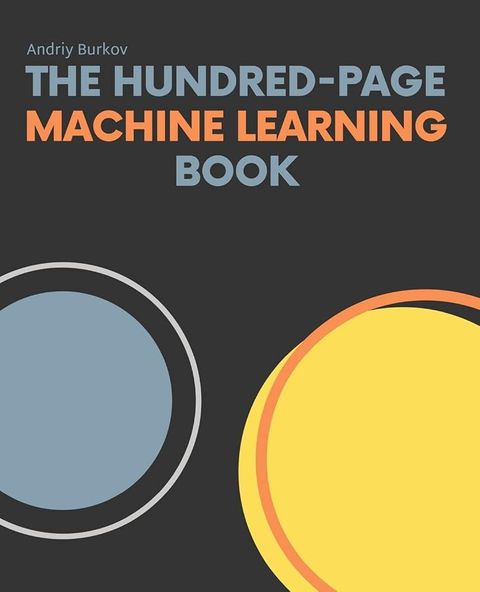
Andriy Burkov compresses supervised and unsupervised learning, feature engineering, regularization, ensembles and specialized problems such as ranking and metric learning into a short, math-forward survey. Burkov distributes it on a read first, buy later basis: chapters can be downloaded free, and readers are asked to pay if the book proves useful. Engineers get a fast refresher before an interview or a design review, plus a desk reference that states each algorithm's loss function and optimization routine in compact notation. It ranks twentieth because its brevity limits depth, so readers should treat it as a map toward the longer books.
- Rank 21
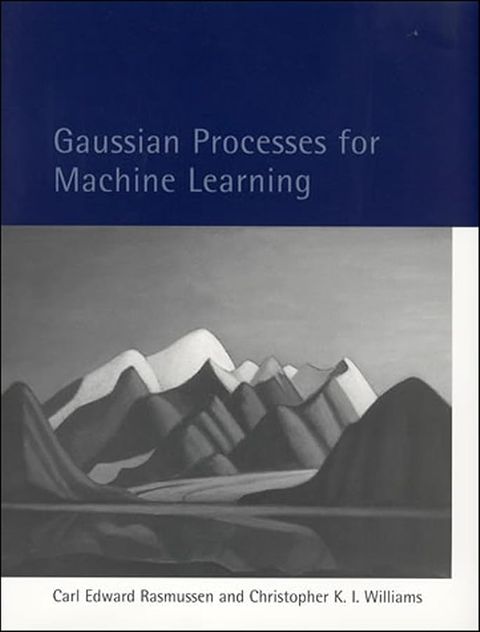
Carl Edward Rasmussen and Christopher Williams wrote the standard text on Gaussian processes, which won the 2009 DeGroot Prize from the International Society for Bayesian Analysis and is available for download in electronic form from its site. Engineers who run Bayesian optimization for hyperparameter tuning, build surrogate models or need calibrated error bars get a full treatment of kernels, marginal-likelihood fitting of hyperparameters and sparse approximations for large datasets. It ranks twenty-first because it serves a specialized audience and requires comfort with linear algebra and probability.
- Rank 22
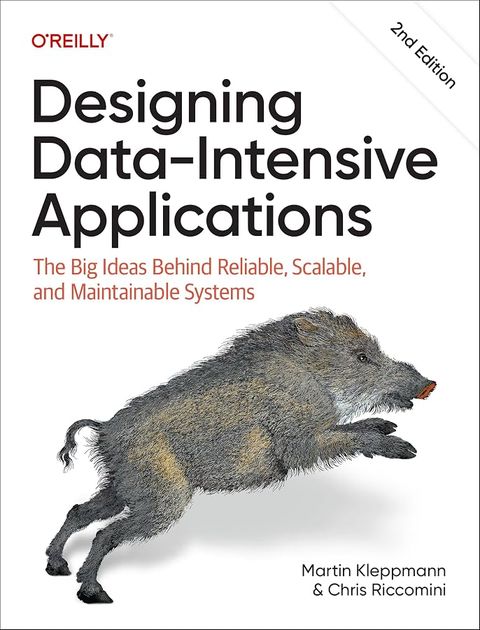
Martin Kleppmann explains how databases, replication, partitioning, transactions and stream processing actually behave, and why guarantees such as linearizability matter before a team trusts a store with production data. The second edition, written with Chris Riccomini, was published by O'Reilly in March 2026 and adds coverage of cloud services and modern databases. AI systems depend on data pipelines, event logs and vector and feature stores, and the book shows how those components fail. It ranks twenty-second because its subject sits one layer below AI and its current Amazon average is 3.8 stars.
- Rank 23
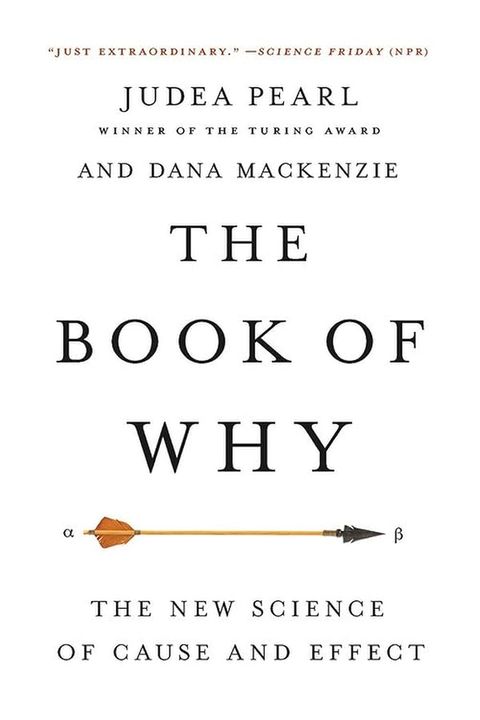
Judea Pearl, winner of the 2011 ACM A.M. Turing Award, and Dana Mackenzie explain causal inference for a general reader: the ladder of association, intervention and counterfactuals, causal diagrams, and the do-calculus. Engineers who run A/B tests, attribute metric changes or build recommendation systems learn why observational data alone cannot answer what-if questions and how causal diagrams show which variables need adjustment. It ranks twenty-third as the accessible entry point to causality; readers who want the formal machinery should continue to Pearl's Causality, ranked twenty-fourth.
Editorial score: 81.8/100 - Rank 24
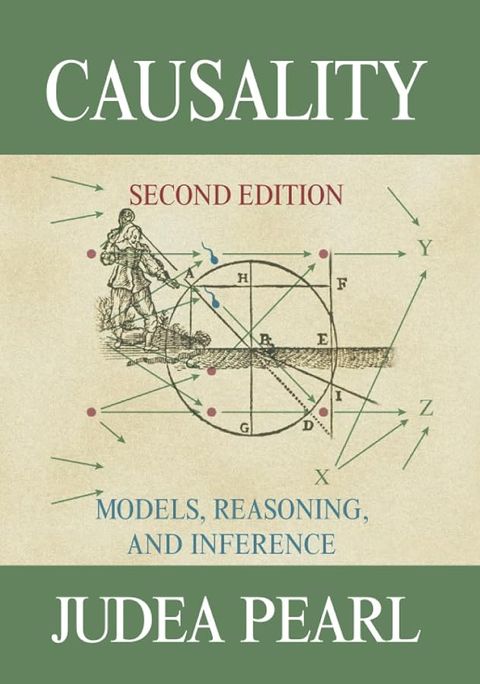
Pearl's technical treatise formalizes what The Book of Why explains: structural causal models, the do-operator and do-calculus, the back-door criterion and counterfactuals. The London School of Economics gave it the 2001 Lakatos Award. Engineers building experimentation platforms, uplift models or causal machine learning get the formal identification rules behind causal-effect estimation from observational data. It ranks twenty-fourth because it is demanding reading, best approached after The Book of Why or alongside a graduate course, and its proofs reward readers who already know probability and graph theory.
Editorial score: 84.3/100 - Rank 25
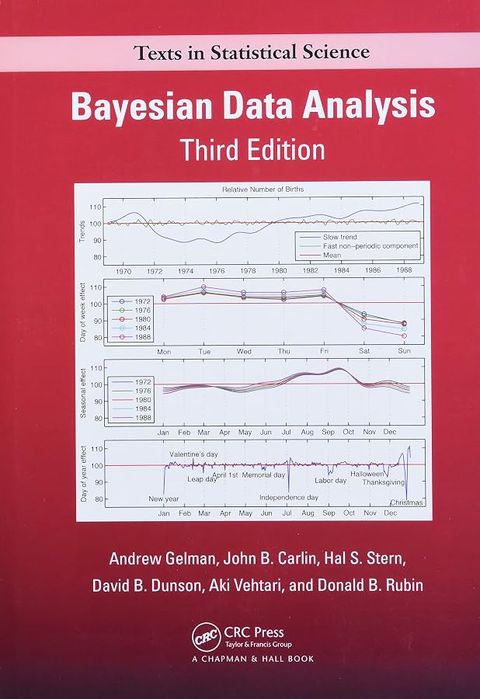
Andrew Gelman and five coauthors set out Bayesian analysis as a loop of building, fitting, checking and revising models, with hierarchical models, weakly informative priors, posterior predictive checks and Hamiltonian Monte Carlo as implemented in Stan. The authors make the third edition available as a PDF for non-commercial use. Engineers who build experiment analyses, forecasting systems or uncertainty-aware models get a rigorous applied reference. It ranks twenty-fifth because it assumes a first course in probability and statistics and serves better as a reference than as an introduction.
Editorial score: 82.1/100 - Rank 26
Larry Wasserman wrote for computer science and machine learning students who need graduate statistics quickly: probability, estimation, hypothesis testing, the bootstrap, nonparametric smoothing, classification and causal inference in one fast-moving volume. Engineers get the statistical vocabulary that research papers assume, along with a translation between statistics and machine learning terminology. It ranks twenty-sixth because its pace suits readers who already know calculus and want breadth quickly. Engineers who need gentler explanations should start with An Introduction to Statistical Learning and return to Wasserman for the inference theory.
Editorial score: 77.0/100 - Rank 27
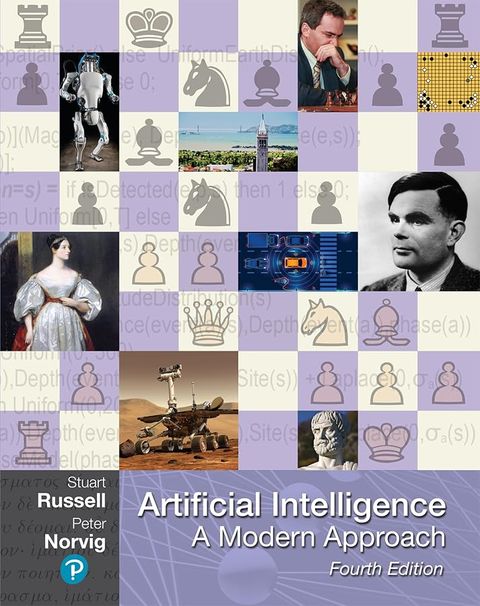
Stuart Russell and Peter Norvig frame AI as rational agency and cover search, logic, planning, probabilistic reasoning and machine learning in one volume. The book's site reports adoption by over 1,500 schools, and the fourth edition argues that capable systems should defer to people because they are uncertain about human preferences. Engineers get the broad map of AI beyond neural networks, including the search and planning methods relevant to agent systems. It ranks twenty-seventh because its encyclopedic scope suits a course or a reference shelf more than a cover-to-cover read by working developers.
Editorial score: 84.9/100 - Rank 28
Géron's TensorFlow edition carries 4.7 stars across 912 Amazon ratings, and its end-to-end project still teaches problem framing, data cleaning and sound validation as carefully as model choice. Its training techniques, including careful initialization, batch normalization, learning-rate schedules and dropout, transfer to any framework, and its Keras chapters build convolutional networks, transformers and diffusion models step by step. It ranks twenty-eighth because Géron's own PyTorch edition, ranked nineteenth, now covers the same ground in PyTorch. Engineers whose teams work in Keras and TensorFlow should choose this edition instead.
- Rank 29
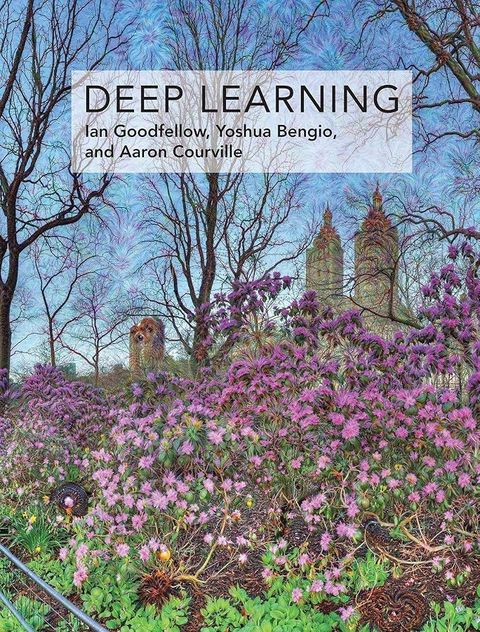
Ian Goodfellow, Yoshua Bengio and Aaron Courville wrote the graduate reference on deep learning foundations: representation learning, regularization, optimization, convolutional and recurrent networks, and practical methodology. MIT Press publishes it, and the complete online version remains free. Its methodology chapter, which tells practitioners to set baselines, choose metrics deliberately and diagnose underfitting versus overfitting before adding complexity, remains sound advice for engineers. It ranks twenty-ninth because it predates transformers and large language models; readers should pair it with Bishop and Bishop's Deep Learning or Raschka's builds for current architectures.
Editorial score: 79.8/100 - Rank 30
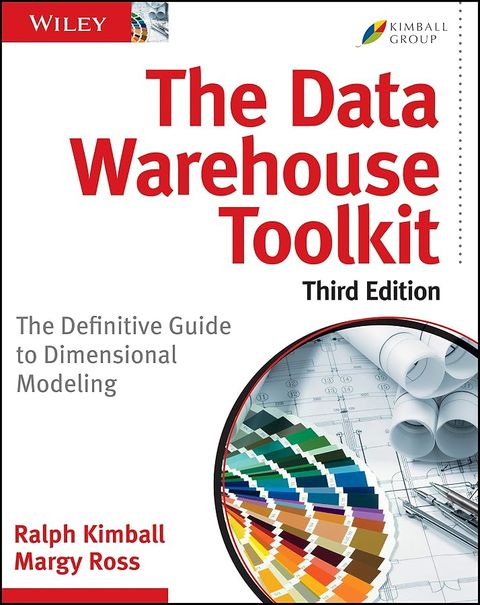
Ralph Kimball and Margy Ross define dimensional modeling: declare the grain, build fact tables and conformed dimensions, and manage history with slowly changing dimension types 0 through 7. The third edition, published by Wiley in 2013, adds bus matrices for 12 case studies and a review of 34 ETL subsystems. Engineers who feed models and dashboards from a warehouse learn to design tables that analysts and training pipelines can trust. It ranks thirtieth because it addresses the data layer rather than AI itself and its current edition is more than a decade old.
Editorial score: 84.1/100
How we ranked these books
Each book is scored on reach, measured by Amazon ratings and sales rank; critical consensus across independent best-of lists; awards; reader ratings; author authority; and editorial scoring by the Best AI Books editors. The scores combine into one ranking, so a widely read practical book can outrank an older classic with stronger academic standing.
AI Engineering by Chip Huyen ranks first. It pairs strong reach, at 4.6 stars across more than 1,000 Amazon ratings, with the most complete treatment of the problems engineers face when building on foundation models, especially evaluation. Huyen's authority also rests on her earlier Designing Machine Learning Systems, which ranks fifteenth. Goodfellow, Bengio and Courville's Deep Learning, by contrast, scores high on authority and consensus but ranks lower because it predates transformers.