Machine Learning
The 40 Best Machine Learning Books (2026)
Forty machine learning books ranked by reach, critical consensus and author authority, from Brian Christian's account of AI alignment to the graduate references on statistical, deep and reinforcement learning.
As an Amazon Associate, Best AI Books earns from qualifying purchases. Best AI Books is sponsored by Iternal.ai, whose founder and CEO, John Byron Hanby IV, wrote The AI Strategy Blueprint, our #1 ranked book. How we rank books.
Quick picks
Best overall
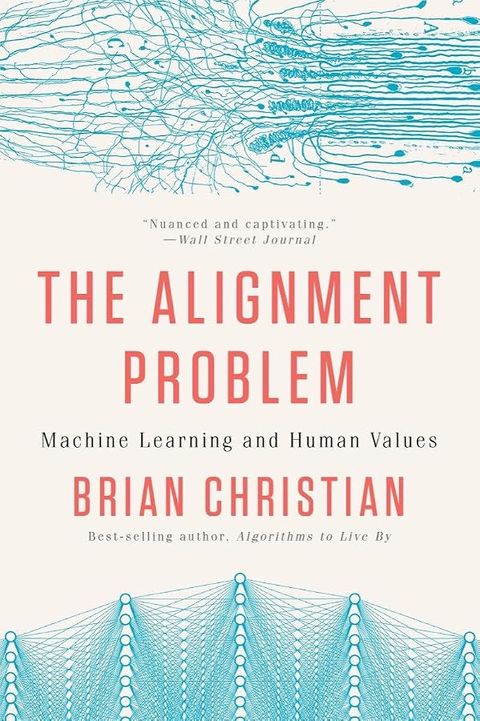
The Alignment ProblemBrian Christian's reported account shows how machine learning systems are trained and rewarded, and why they fail, in prose any professional can follow.
Best for beginners
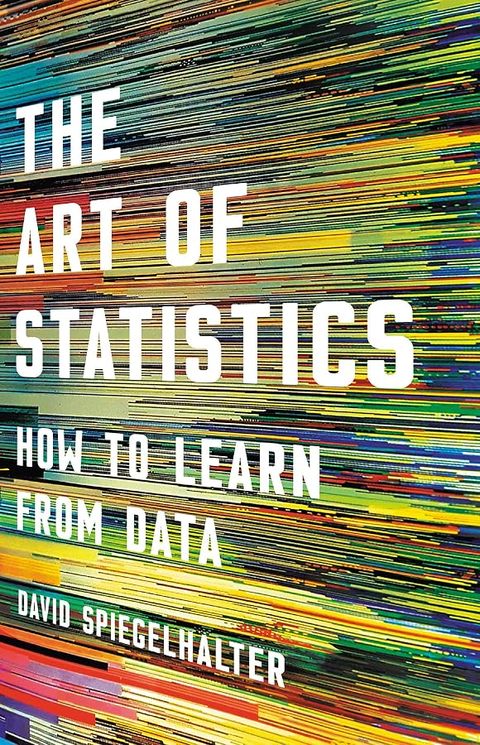
The Art of StatisticsDavid Spiegelhalter builds the statistical judgment every model depends on, including a chapter on testing prediction algorithms, with no technical background required.
Best first textbook
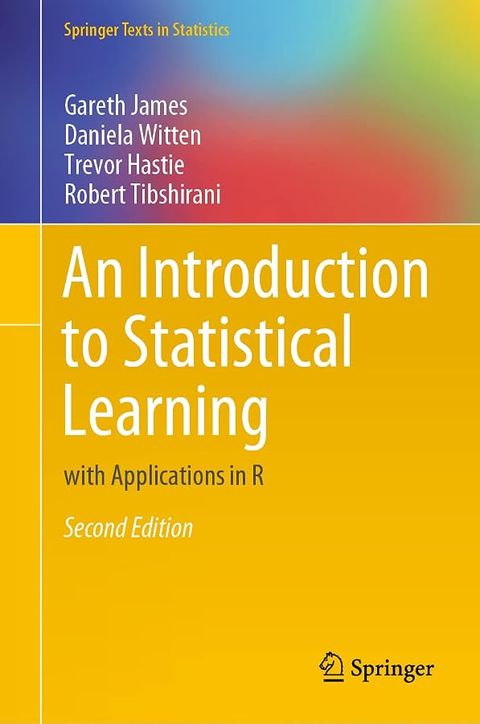
An Introduction to Statistical LearningCovers regression, resampling, shrinkage and tree ensembles with hands-on labs in R or Python, and the authors post free PDF editions.
Machine learning is the branch of artificial intelligence in which software improves at a task by finding patterns in data rather than by following hand-written rules. IBM defines it as the subset of AI focused on algorithms that learn the patterns of training data, and it classifies deep learning, built on many-layered neural networks, as a subset of machine learning. The field also spans statistical prediction, Bayesian modeling, causal inference, reinforcement learning and the engineering required to keep models working in production, so no single book meets every reader's needs.
These forty books serve four groups of readers. General readers and managers who must judge machine learning claims will get the most from the narrative and conceptual titles, led by Brian Christian's reported account of how models absorb human values. Analysts and scientists who build predictive models should anchor their study in the statistical learning texts by Stanford's Trevor Hastie, Robert Tibshirani and their coauthors. Software engineers who learn by coding will find project-driven guides built on scikit-learn and PyTorch. Graduate students and researchers will need the rigorous references on probabilistic modeling, deep learning, causality and reinforcement learning.
How to choose and sequence these books
Match each book's level to your preparation. Beginner titles assume little mathematics beyond high school algebra. Intermediate titles expect comfort with algebra, basic probability or Python. Advanced titles expect university calculus, linear algebra and probability, and most of them reward readers who work the exercises instead of skimming the chapters.
Most technical readers should move from intuition to method to depth: one conceptual book, then An Introduction to Statistical Learning with its labs, then a graduate reference matched to their specialty. The ISL authors post PDF editions in R and Python on the book's official site, and other standard texts, including Goodfellow, Bengio and Courville's Deep Learning and Mathematics for Machine Learning, are also free to read online, so readers can sample a text before buying a print copy.
Several authors ranked here built the methods they teach. Richard Sutton and Andrew Barto received the 2024 ACM A.M. Turing Award for the foundations of reinforcement learning, and their textbook has been cited more than 75,000 times. Yoshua Bengio shared the 2018 Turing Award for breakthroughs that made deep neural networks a critical part of computing, and Judea Pearl won the 2011 award for advances in probabilistic and causal reasoning.
Older textbooks keep high ranks because the mathematics of bias and variance, regularization and probabilistic inference has not changed. Where a book predates transformers and large language models, pair it with a newer title such as Bishop and Bishop's Deep Learning, Prince's Understanding Deep Learning or Lambert's book on reinforcement learning from human feedback.
Ranked No. 1 overall

No. 01 of 500 · AI Strategy & Leadership
The AI Strategy Blueprint
John Byron Hanby IV · 2026 · More than 2 million copies delivered
The ranking
- Rank 01
Brian Christian takes the top spot by explaining how machine learning behaves once it leaves the lab. Reporting alongside the researchers involved, he shows why models trained on historical data inherit its biases, why competing definitions of fairness cannot all hold at once, and why reinforcement learning agents chase the reward they are given rather than the goal their designers meant. The book won the National Academies Excellence in Science Communication Award. Readers finish with a working vocabulary for evaluating any deployed model, and the narrative explains each technical idea as it arises.
Editorial score: 79.3/100 - Rank 02
For readers who want to build predictive models, ISL is the best first textbook. Gareth James, Daniela Witten, Trevor Hastie, Robert Tibshirani and Jonathan Taylor cover linear and logistic regression, resampling, the lasso, tree ensembles, support vector machines and unsupervised learning, and every chapter closes with a lab that applies the methods in code. The authors offer PDF editions in both R and Python; Taylor joined the team for the Python version. A 4.7-star average across 466 Amazon ratings reflects how well it serves analysts and students who are teaching themselves.
- Rank 03
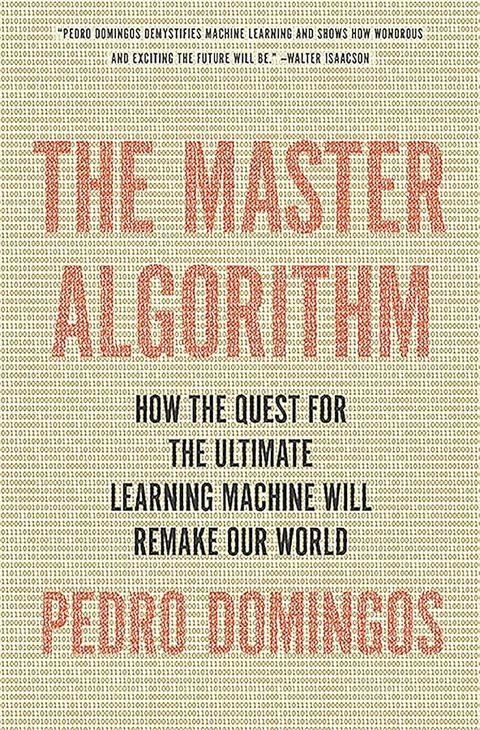
Pedro Domingos gives readers a map of the field before they commit to a textbook. He sorts machine learning into five schools (symbolists, connectionists, evolutionaries, Bayesians and analogizers) and shows that every learner combines a representation, an evaluation function and an optimizer. That framework speeds later study because each new method slots into a known structure. The book predates the transformer era, so its account of deep learning is incomplete, and its case for a single universal learner is the author's argument rather than settled science. Its 1,756 Amazon ratings make it one of the most widely read introductions to the field's ideas.
Editorial score: 71.1/100 - Rank 04
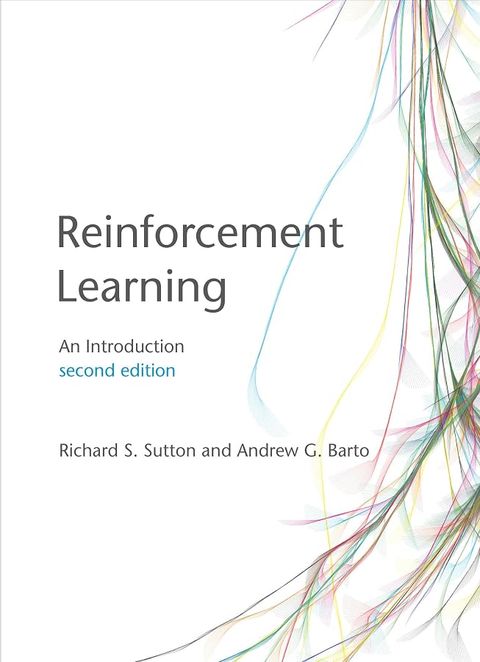
Richard Sutton and Andrew Barto shared the 2024 ACM A.M. Turing Award for founding reinforcement learning, and their textbook sets out the field's core ideas in their own words. It develops temporal-difference learning, the exploration-exploitation trade-off, function approximation and policy-gradient methods from first principles, and those methods lead directly to systems such as AlphaGo. Readers need probability and some calculus, but the prose is clearer than most graduate texts. Anyone who plans to work on agents, robotics or the reinforcement learning stage of language-model training should read it before any implementation guide.
Editorial score: 86.8/100 - Rank 05
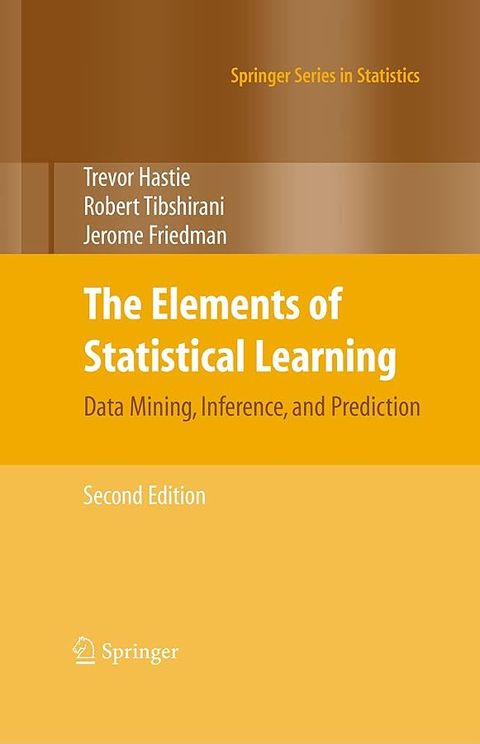
The Elements of Statistical Learning is the next step once ISL's intuition is no longer enough. Hastie, Tibshirani and Jerome Friedman derive the methods ISL applies, including ridge, lasso and elastic-net regularization, boosting as forward stagewise additive modeling, and the correct use of cross-validation around an entire modeling pipeline. Expect linear algebra, calculus and probability on nearly every page. The authors post a PDF of the corrected twelfth printing of the second edition on the book's Stanford site. Data scientists who tune gradient-boosted trees will understand why those models work after reading its boosting chapter.
- Rank 06
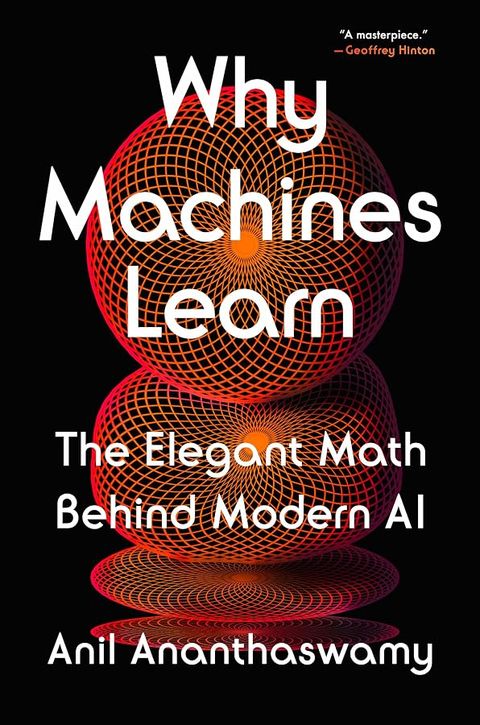
Anil Ananthaswamy fills the gap between popular AI books and textbooks by showing the equations and walking readers through each step. Starting with the perceptron and moving through linear algebra, principal component analysis, kernel methods, backpropagation and gradient descent, he explains how centuries-old mathematics became the engine of modern AI once hardware could apply it at scale. He also covers the open puzzle of why huge networks generalize despite having more parameters than classical theory considers safe. Readers who remember high school algebra and are willing to follow derivations will get the most from it, and engineers gain intuition before a formal course.
Editorial score: 74.8/100 - Rank 07
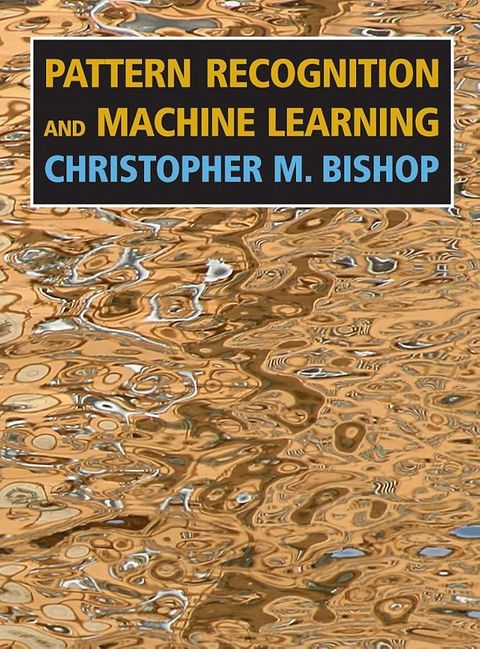
Christopher Bishop's Pattern Recognition and Machine Learning remains the reference for probabilistic modeling. It treats parameters as uncertain quantities, builds graphical models from simple conditional dependencies, and covers expectation-maximization, variational inference and Markov chain Monte Carlo in notation that stays consistent across chapters. Readers need calculus, linear algebra and probability at the graduate-entry level, and the exercises repay the effort. Microsoft Research hosts a downloadable PDF of the book alongside the print editions. Researchers working on Bayesian methods, uncertainty estimation or generative models will use it as a reference for years.
- Rank 08
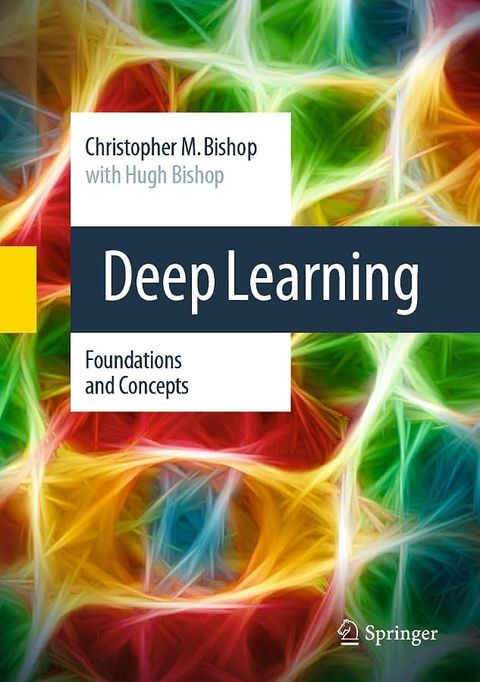
Christopher and Hugh Bishop's Deep Learning: Foundations and Concepts brings PRML's clarity to the architectures behind today's language and image models. It teaches probability first, then uses it to explain loss functions, backpropagation, regularization, convolutional networks, transformers, graph neural networks and diffusion models within one framework. The book's official site offers a free-to-use online version, downloadable figures and exercise solutions, and reports that it was Springer Nature's bestseller in both 2024 and 2025. Students and engineers who want a rigorous, current deep learning text should choose it as their primary reference.
Editorial score: 83.1/100 - Rank 09
Machine learning claims are statistical claims, and David Spiegelhalter teaches readers how to judge them. The former president of the Royal Statistical Society walks through the cycle of problem, plan, data, analysis and conclusion, shows how framing a risk as relative or absolute changes its perceived meaning, and devotes a chapter to prediction algorithms, including how to test them on independent data and check them for bias and uncertainty. It is the best beginner entry here, written for general readers, and its 4,176 Amazon ratings are the most of any ranked book.
Editorial score: 77.8/100 - Rank 10
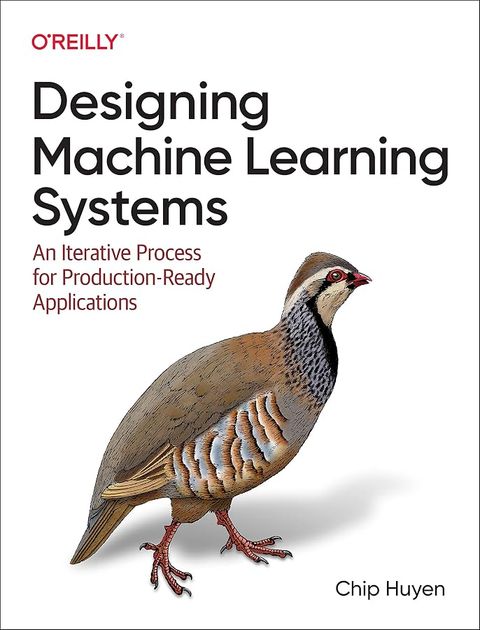
Chip Huyen's book addresses the part of machine learning that most textbooks skip: keeping a model useful after deployment. She covers data engineering, distribution shift, monitoring, continual learning and testing in production through shadow deployments, A/B tests and bandits, and she frames each decision as a trade-off among latency, cost and business objectives. Because it favors system design over code listings, it stays relevant as tools change. O'Reilly published it, and Huyen reports translations into more than ten languages. ML engineers, data scientists and the managers who oversee them should read it before their first production launch.
- Rank 11
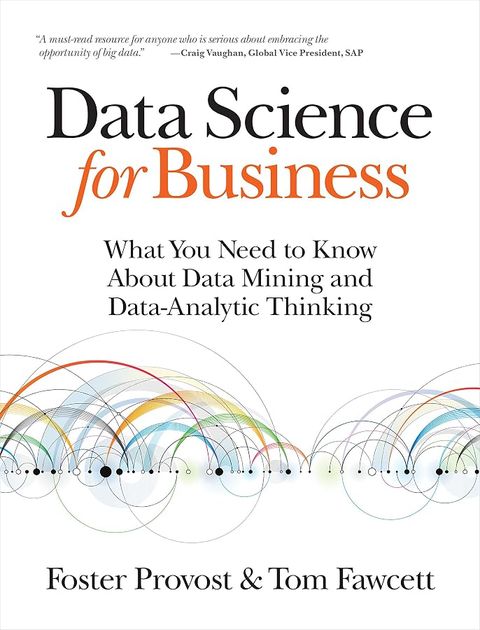
Foster Provost and Tom Fawcett connect data science to the decisions managers actually make. They reduce business problems to a handful of task types, such as classification, regression, clustering and similarity matching, then show why overfitting is the central risk and why holdout evaluation is mandatory. The expected-value framework, which ties each prediction to the costs and benefits of acting on it, is the book's most useful tool for anyone approving a model. Managers, consultants and analysts who commission predictive work will learn which questions to put to their data scientists and how to read the answers.
Editorial score: 77.3/100 - Rank 12
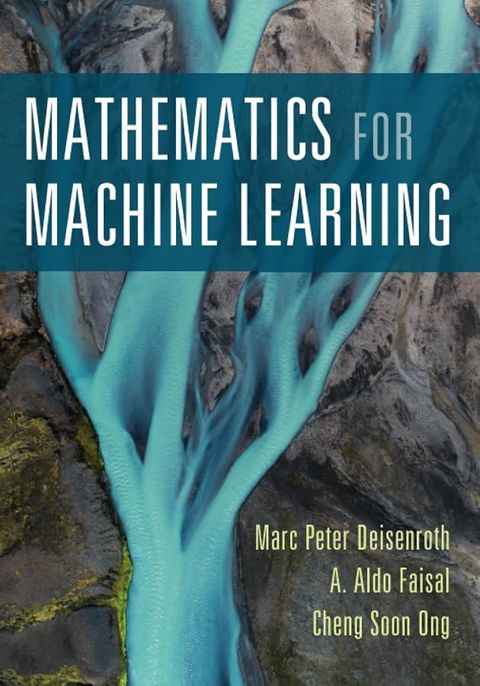
Readers who stall on the math in Bishop, Murphy or ESL should start with Deisenroth, Faisal and Ong. The first half reviews linear algebra, analytic geometry, matrix decompositions, vector calculus, probability and continuous optimization. The second half applies those tools by deriving four methods in full: linear regression, principal component analysis, Gaussian mixture models and support vector machines. Cambridge University Press published the book, and the authors keep a PDF freely available. It is the most direct preparation here for graduate machine learning courses, and it doubles as a refresher for practitioners returning to theory.
- Rank 13
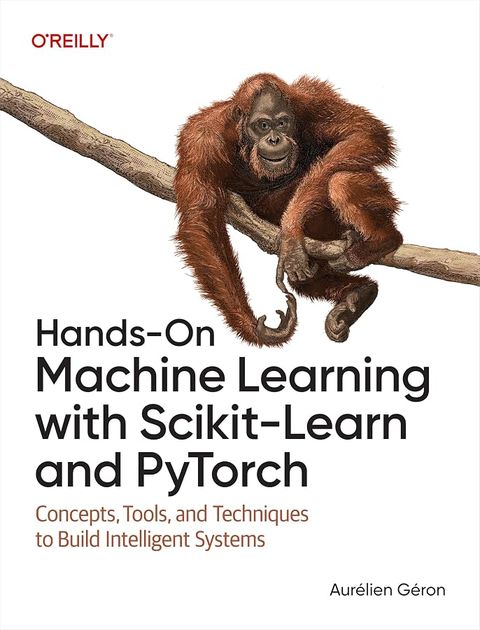
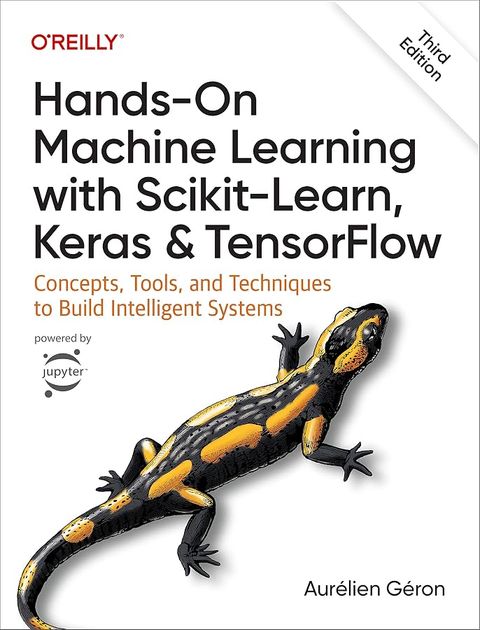
Aurélien Géron moved his long-running guide from TensorFlow to PyTorch, and the result is one of the strongest code-first courses available. It runs from an end-to-end project and classical scikit-learn models through CNNs, RNNs, transformers, diffusion models and reinforcement learning, and it adds practical material on adapting large pretrained models with techniques such as LoRA and activation checkpointing. The companion notebooks on GitHub also use Hugging Face libraries. Python developers teaching themselves should choose this edition; its 91 Amazon ratings reflect its recent release rather than its quality.
- Rank 14
Andriy Burkov compresses supervised and unsupervised learning, neural networks and core practice into a short, equation-dense survey. He shows that most algorithms share a loss function, an optimization criterion and a routine such as gradient descent, then covers feature engineering, validation splits, regularization, ensembles and specialized problems such as ranking and recommendation. Because it is short, it works best as a refresher for engineers who have already studied the material; newcomers will need ISL or Géron alongside it for worked examples. Keep it at the desk as a quick reference before interviews or design reviews.
- Rank 15
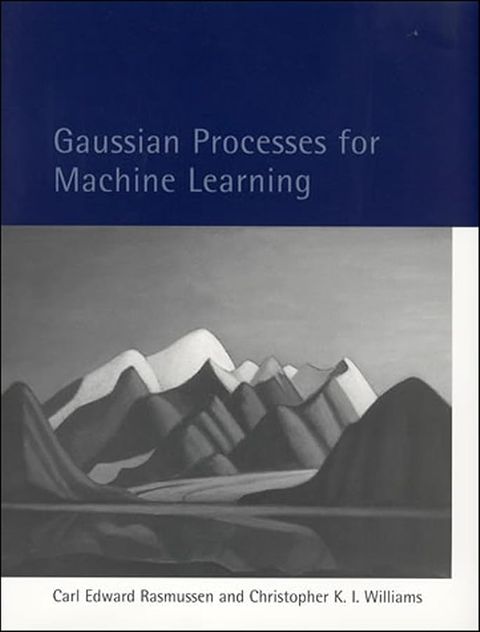
Carl Edward Rasmussen and Christopher Williams wrote the reference on Gaussian processes, a widely used method when predictions need principled error bars. They explain how the covariance function encodes modeling assumptions, how maximizing the marginal likelihood sets kernel hyperparameters, and which sparse approximations handle large datasets. The book won the 2009 DeGroot Prize from the International Society for Bayesian Analysis, and its official site offers a free electronic edition. Data scientists building Bayesian optimization, surrogate models or uncertainty-aware regression should own it; its 4.8-star average is among the highest in the ranking.
- Rank 16
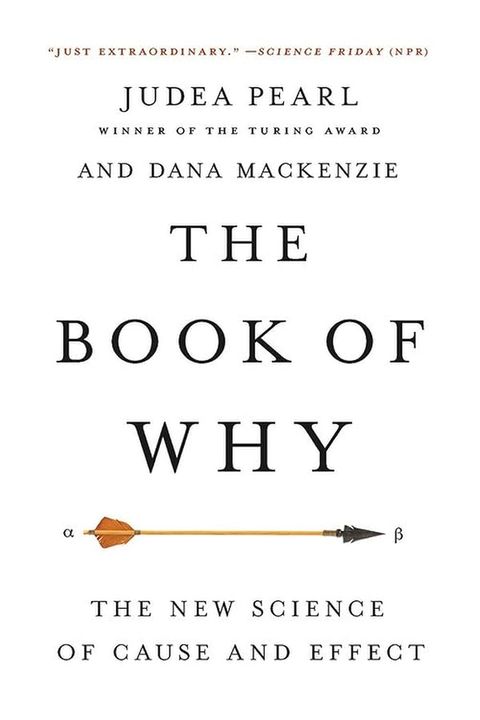
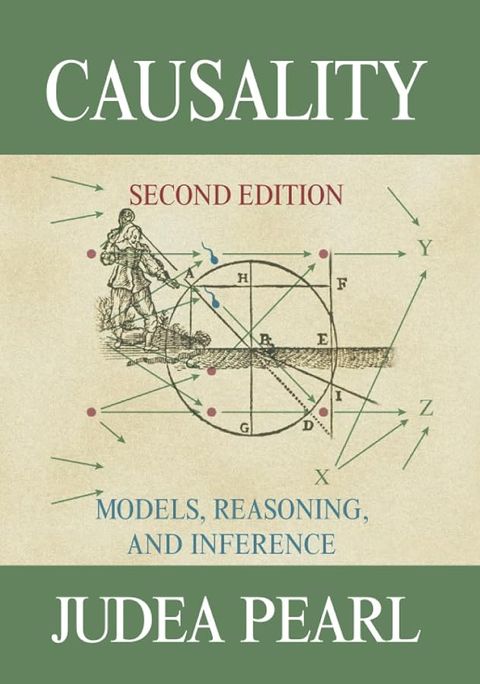
Judea Pearl, who received the 2011 ACM A.M. Turing Award for work on reasoning about uncertainty and cause and effect, wrote this account with Dana Mackenzie for a general audience. It introduces the three rungs of causal reasoning (association, intervention and counterfactuals), shows how causal diagrams reveal which variables to adjust for, and explains how the do-calculus can estimate effects from observational data. Pearl's argument that pattern-matching models cannot reason about interventions gives data scientists a clear test for when prediction alone will mislead them.
Editorial score: 81.8/100 - Rank 17
Causality supplies the technical foundation beneath The Book of Why. When UCLA's engineering school announced Pearl's Turing Award, it called the book among the most influential works in shaping the theory and practice of knowledge-based systems. It formalizes the do-operator, the back-door criterion and structural causal models, and it shows exactly when controlling for a variable removes bias and when it creates bias. The notation is dense and the proofs are complete, so most readers should start with The Book of Why or Statistical Rethinking. Researchers who design observational studies need it on the shelf.
Editorial score: 84.3/100 - Rank 18
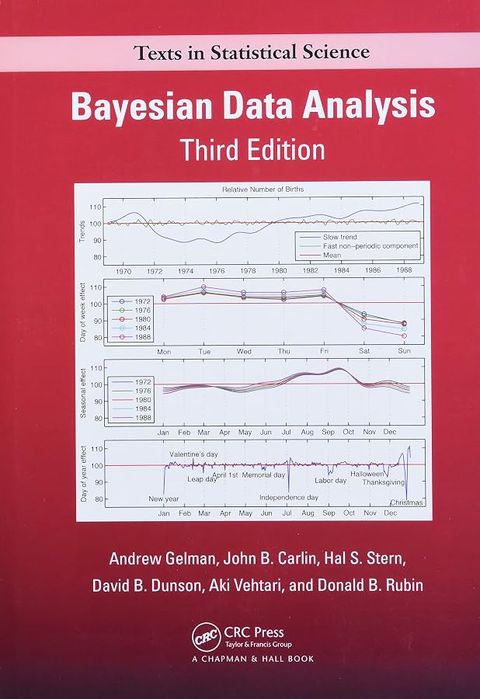
Andrew Gelman and five coauthors, including Donald Rubin, wrote the applied Bayesian reference that statisticians and ML researchers keep within reach. It teaches Bayesian analysis as a cycle of building, fitting, checking and revising models, with extended treatment of hierarchical models, weakly informative priors and computation through Hamiltonian Monte Carlo and Stan. The third edition is available as a PDF for non-commercial use from Gelman's Columbia site. It is too demanding for a first course, so most readers should reach it after Statistical Rethinking and then keep it as a desk reference.
Editorial score: 82.1/100 - Rank 19
Larry Wasserman wrote All of Statistics for computer science and machine learning students who need statistics quickly. In one compact volume he covers probability, convergence, estimation, hypothesis testing, the bootstrap, Bayesian inference, causal inference with counterfactuals and graphs, nonparametric smoothing and classification, and he translates between the vocabularies of statistics and machine learning along the way. The pace is fast and the treatment is mathematical, so calculus is required and linear algebra helps. Graduate students who need statistical maturity within a semester will get it here faster than through a traditional statistics sequence.
Editorial score: 77.0/100 - Rank 20
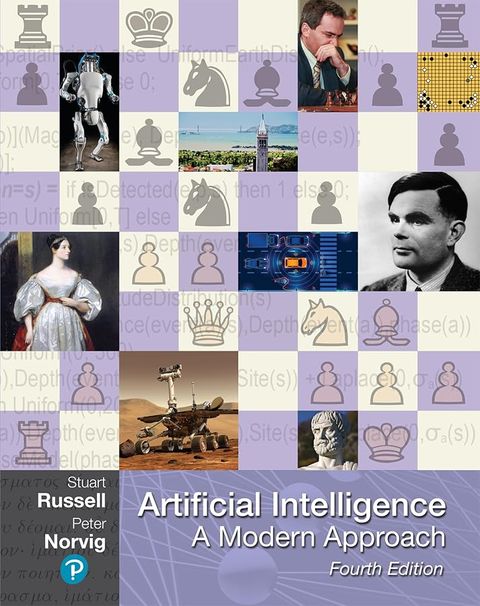
Stuart Russell and Peter Norvig's Artificial Intelligence: A Modern Approach places machine learning inside the larger discipline of AI. Its chapters on search, logic, probabilistic reasoning, Bayesian networks, hidden Markov models and learning show where each technique fits, and the fourth edition argues that capable machines should remain uncertain about human preferences rather than pursue fixed objectives. The authors report adoption at more than 1,500 schools. Use it as a course companion or reference; machine learning specialists will get deeper coverage of their own methods from ESL, Bishop or Murphy.
Editorial score: 84.9/100 - Rank 21
Géron's TensorFlow edition remains a sound project-driven guide for teams already invested in TensorFlow and Keras. The end-to-end project, the treatment of random forests and gradient boosting as baselines, and the chapters on initialization, batch normalization, optimizers, learning-rate schedules and dropout all hold up, and later chapters reach transformers and diffusion models through Keras. With 912 Amazon ratings at 4.7 stars, it carries far more reader reviews than its successor. Readers starting fresh should still choose the PyTorch edition, because most of the field has moved to that framework and Géron now builds his newest material on it.
- Rank 22
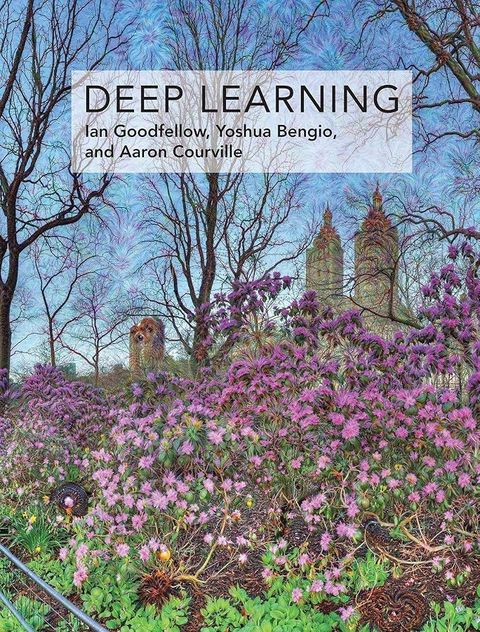
Ian Goodfellow, Yoshua Bengio and Aaron Courville cover the mathematics, regularization, optimization, convolutional and recurrent networks, and research topics such as autoencoders and deep generative models in one rigorous volume. Bengio shared the 2018 ACM A.M. Turing Award for the work that made deep neural networks central to computing. MIT Press published the book, and the full text remains free online. Its practical-methodology chapter on baselines, metrics and diagnosing overfitting still repays close reading. Because it predates transformers, pair it with Bishop and Bishop or Prince for attention-based models.
Editorial score: 79.8/100 - Rank 23
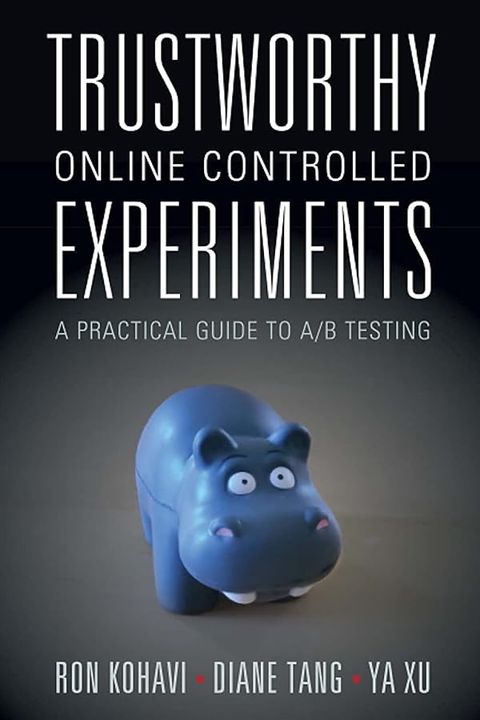
Many machine learning teams measure a model's value through online experiments, and Ron Kohavi, Diane Tang and Ya Xu wrote the practitioner's reference on running them correctly. Drawing on experience at Microsoft, Amazon, Google and LinkedIn, they explain Twyman's law, how to define an overall evaluation criterion tied to long-term value, and trust checks such as sample ratio mismatch tests that catch broken experiments. Cambridge University Press published it, with translations in Chinese, Japanese, Korean, Russian and Polish. Data scientists and product leaders who approve launches should read it before trusting their next A/B test result.
- Rank 24
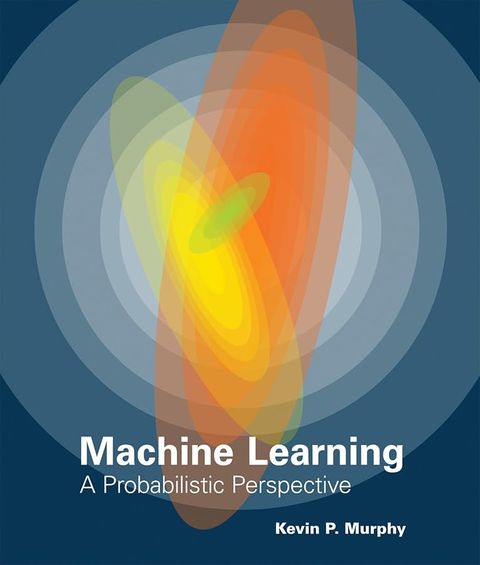
Kevin Murphy's Machine Learning: A Probabilistic Perspective presents nearly every classical method as a probabilistic model paired with an inference procedure, which makes assumptions explicit and methods easy to compare. Its coverage of graphical models, from hidden Markov models to conditional random fields, and of variational and Monte Carlo inference is broad enough to serve as an encyclopedia. MIT Press published it, and Murphy now lists it as Book 0 of his Probabilistic Machine Learning series, which updates much of the material. Researchers who already own it can keep using it, but new readers should usually start with the 2022 volume.
Editorial score: 74.8/100 - Rank 25
Charles Wheelan teaches statistical intuition with humor and few formulas, which makes his book the gentlest starting point here. He covers descriptive statistics, the central limit theorem, polling, regression and the gap between correlation and causation, then spends real time on how biased samples, publication bias and survivorship bias defeat sophisticated analysis. Those same failure modes undermine machine learning models trained on poor data. General readers and aspiring analysts should read it before ISL. Its 3,853 Amazon ratings are the second-highest count in the ranking, behind only Spiegelhalter's book.
Editorial score: 71.8/100 - Rank 26
Simon Prince's Understanding Deep Learning pairs precise mathematics with unusually clear diagrams, and its 4.9-star Amazon average is the highest in the ranking. It explains why ReLU networks compute piecewise-linear functions and why depth multiplies their linear regions, then covers initialization, loss design, optimizers, regularization, residual connections, transformers and four families of generative models, including diffusion. Readers with applied-math training who want a modern alternative to Goodfellow, one that treats attention-based models in depth, should start here. It works well as a course text and as a self-study path into current architectures.
Editorial score: 80.8/100 - Rank 27
Richard McElreath teaches Bayesian modeling as scientific reasoning and treats causal diagrams as the starting point for deciding which variables belong in a model. His golem metaphor warns that a model answers exactly the question encoded in it, whether or not that question is the right one. Multilevel models, regularizing priors, information criteria and cross-validation arrive with worked code. The second edition is current, and McElreath posts lectures on YouTube and course materials on GitHub, so self-learners can follow a full course at no cost. Data scientists who find Bayesian Data Analysis too steep should start here.
Editorial score: 84.3/100 - Rank 28
Grandmaster Matthew Sadler, a two-time British champion, and Women's International Master Natasha Regan studied AlphaZero's games to show how a system that learned chess from the rules alone plays differently from traditional engines. They document its preference for mobility and long-term initiative over material, and they contrast its selective, learned search with the brute-force breadth of Stockfish. Club and tournament players will gain the most from the annotated games. AI readers get a concrete case study in how self-play reinforcement learning rediscovered human chess knowledge and then extended it, and in how experts can learn new strategies by studying a machine's play.
Editorial score: 70.1/100 - Rank 29
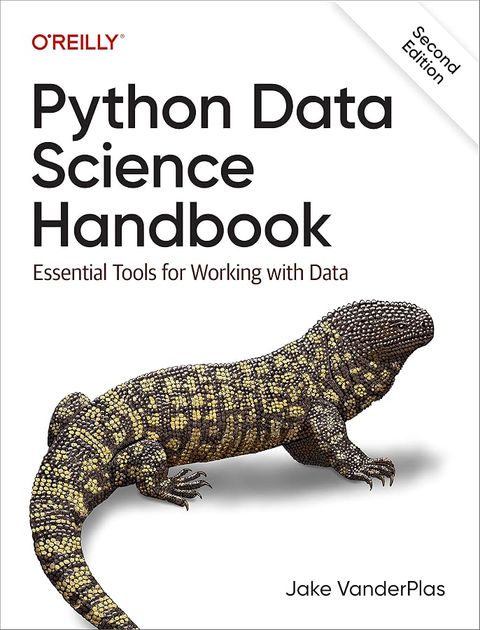
Jake VanderPlas covers IPython, NumPy, pandas, Matplotlib and scikit-learn, the tools on which nearly every Python machine learning project depends. The NumPy chapters explain vectorization and broadcasting, the pandas chapters handle the indexing, grouping, merging and pivoting that precede any model, and the closing scikit-learn chapter introduces the estimator interface, validation curves and the bias-variance trade-off. The full text is free online under a Creative Commons license, with code under the MIT license. Programmers new to the Python data stack should work through it before Géron or Raschka.
Editorial score: 82.1/100 - Rank 30
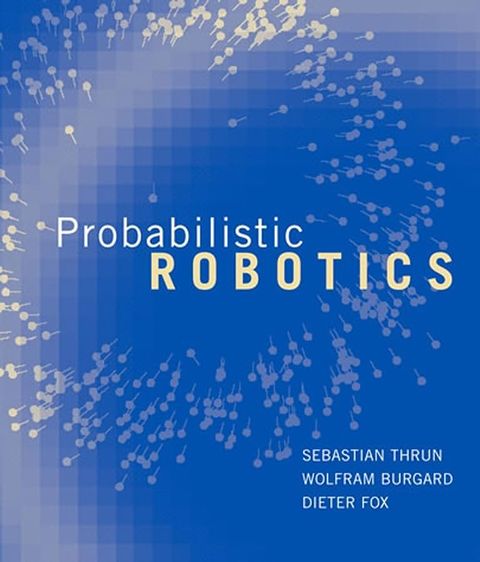
Sebastian Thrun, Wolfram Burgard and Dieter Fox show how a robot should represent its state as a probability distribution rather than a single best guess. The Bayes filter organizes the book, and Kalman, particle and histogram filters appear as approximations of that one recursive update. Later chapters compare families of SLAM algorithms and treat planning under uncertainty as a POMDP, in which actions can gather information as well as reach goals. It earns a place among machine learning books because its estimation methods underpin perception in autonomous vehicles. Robotics engineers and graduate students need it; general ML readers can skip it.
Editorial score: 81.6/100 - Rank 31
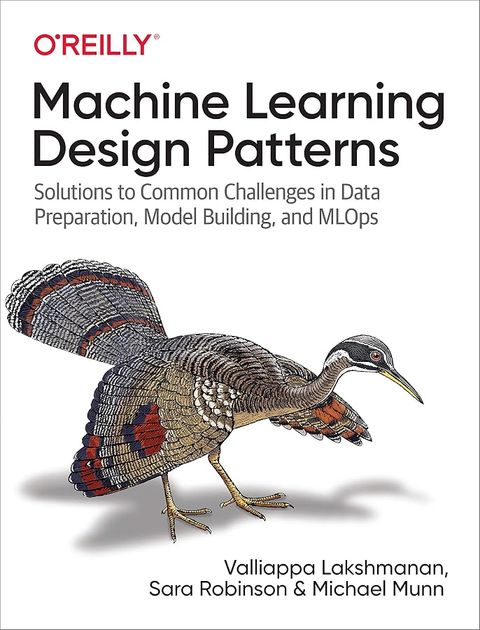
Valliappa Lakshmanan, Sara Robinson and Michael Munn catalog thirty recurring solutions to problems that appear once models leave notebooks. Each pattern, from reframing a regression as a classification to keeping preprocessing inside the model with the Transform pattern, names a problem, a solution and its trade-offs, so teams gain a shared vocabulary for design reviews. Sections on checkpoints, distribution strategies, feature stores, versioning and continuous evaluation cover training and serving at scale. Data scientists who can already train a model and now must serve and maintain it will get the most value, especially when they pair it with Huyen's systems-level book.
- Rank 32
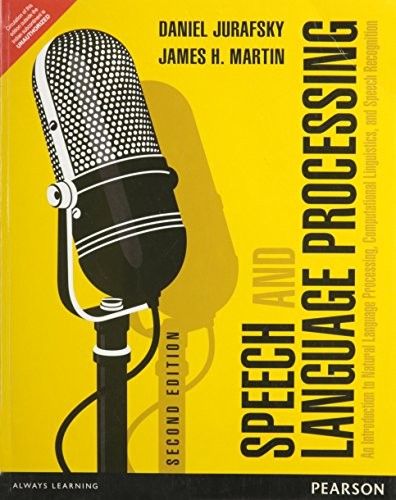
Daniel Jurafsky and James Martin's text has anchored university NLP courses since 2000, and its free online third edition now centers on language models. It teaches n-grams, logistic regression, smoothing and evaluation as foundations that carry directly into neural models, then covers transformers, pretraining and post-training alongside speech, parsing, translation and retrieval. Its insistence on held-out data and human annotation for evaluation applies to every NLP task it covers. Students and engineers who want to understand language models from first principles should read its transformer chapters and then move to Lambert's book on post-training.
- Rank 33
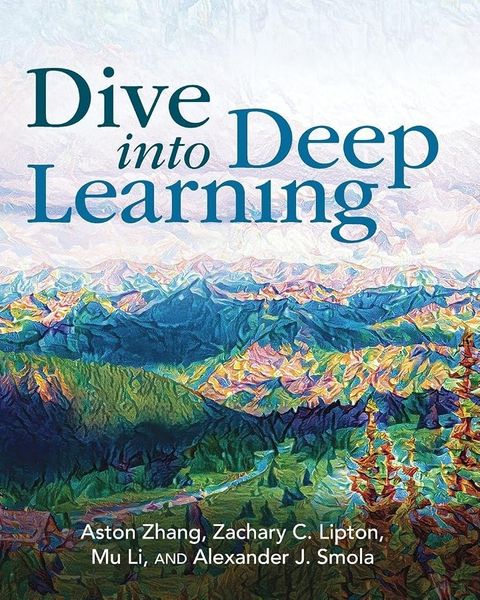
Aston Zhang, Zachary Lipton, Mu Li and Alexander Smola wrote Dive into Deep Learning so that nearly every section pairs the math with code that readers execute. Models are first implemented from scratch and then rebuilt with framework APIs, and the book runs in PyTorch, NumPy/MXNet, JAX and TensorFlow. Coverage extends from linear networks through ResNet, attention and transformers. The book's site reports adoption at 500 universities in 70 countries, and Cambridge University Press publishes the print edition. Instructors who want a free text with ready-made notebooks should evaluate it first.
Editorial score: 80.3/100 - Rank 34
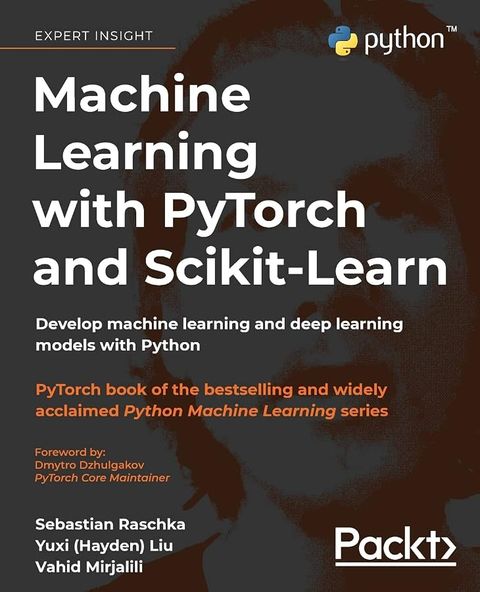
Sebastian Raschka, Yuxi (Hayden) Liu and Vahid Mirjalili take readers from perceptrons and scikit-learn through PyTorch, transformers and graph neural networks, with more theory than most code-first books include. Building a neural network and backpropagation in plain NumPy before switching to PyTorch gives readers the intuition to debug framework code. Chapters on preprocessing, cross-validation, learning curves and hyperparameter search teach model diagnosis, and the ensemble material covers gradient boosting and XGBoost as tabular baselines. Choose it over Géron's books if you want more derivations alongside the code.
- Rank 35
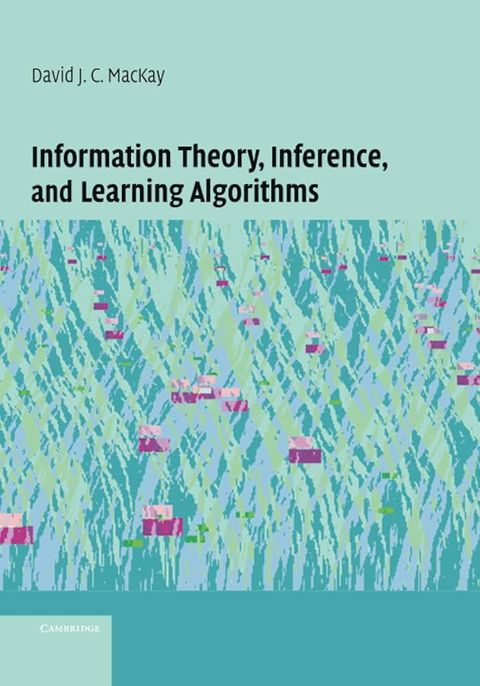
David MacKay shows that compressing data and predicting it are closely linked problems, and he builds information theory, Bayesian inference and neural networks on that shared foundation. Occam's razor emerges from probability theory, and Monte Carlo methods, variational approximations and message passing appear as practical answers to intractable inference. Chapters on low-density parity-check and turbo codes show the same algorithms at work in communications engineering. The full text is free to read online. Mathematically prepared readers will find the exercises and asides as instructive as the main chapters, and researchers in probabilistic ML will draw on it repeatedly.
- Rank 36
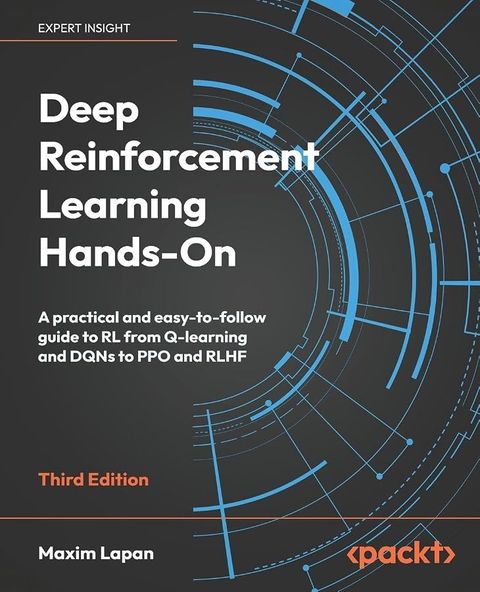
Maxim Lapan teaches deep reinforcement learning by implementation, building every agent in PyTorch. Readers start with the cross-entropy method on small environments, move through deep Q-networks and the extensions that fix their failure modes, such as double DQN, dueling networks and prioritized replay, and then reach policy-gradient and actor-critic methods such as A2C, PPO and SAC. The 2024 edition also covers RLHF and MuZero. Python developers who have read Sutton and Barto and want working code should pick it next; readers without that theory should keep Sutton and Barto open alongside it.
- Rank 37
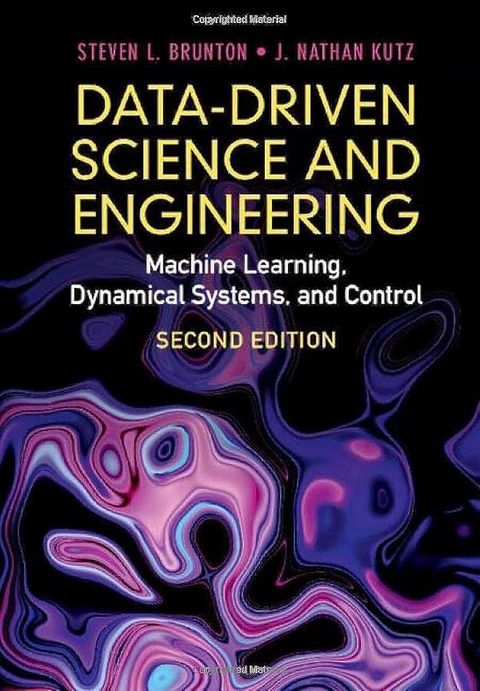
Steven Brunton and J. Nathan Kutz connect machine learning to the dynamical systems and control problems that engineers and physical scientists face. They build from the singular value decomposition to sparse regression, compressed sensing, dynamic mode decomposition, Koopman operator methods and physics-informed learning, showing how known physical laws can compensate for scarce data. The companion site supplies lecture videos, exercises, data and code in MATLAB and Python. Engineering students and researchers modeling fluids, structures or control systems should rank it above general-purpose machine learning texts.
- Rank 38
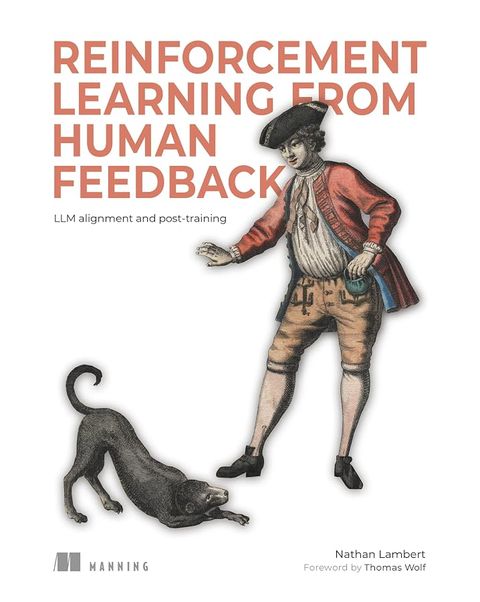
Nathan Lambert's book covers post-training, the stage that turns a pretrained language model into a usable assistant. It walks through instruction tuning, preference data, reward models, rejection sampling, reinforcement learning, direct alignment algorithms such as DPO, and the KL regularization that guards against over-optimization, and it traces RLHF's roots in economics, philosophy and optimal control. Manning publishes the print edition, and the full text remains free online. Its 20 Amazon ratings reflect a recent print release. ML engineers who fine-tune or align models should read it before running their first preference-tuning job.
- Rank 39
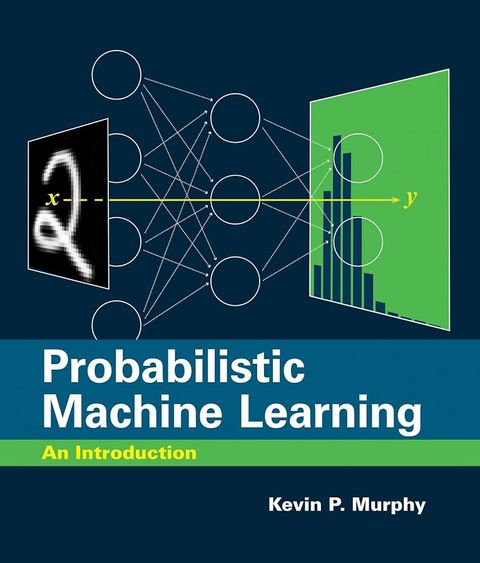
Kevin Murphy's Probabilistic Machine Learning: An Introduction rebuilds his 2012 textbook for the deep learning era. It frames regression, classification, neural networks and unsupervised learning as probabilistic modeling plus Bayesian decision theory, and early chapters supply the probability, linear algebra and optimization that later ones require. Code for nearly every figure runs in Python with JAX, PyTorch or TensorFlow. A companion volume on advanced topics followed in 2023, according to Murphy's series page. Readers comfortable with serious mathematics should choose it over the 2012 book for current coverage of neural networks.
- Rank 40
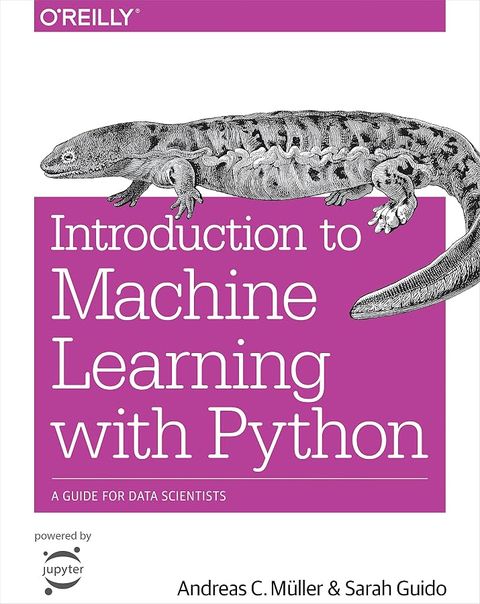
Andreas Müller and Sarah Guido teach the scikit-learn workflow with minimal mathematics, which makes the book a fast start for programmers and analysts working with tabular data. They emphasize data representation, including scaling, categorical encoding and feature engineering, and they show how to run cross-validation and grid search inside a pipeline so test data never leaks into preprocessing. Evaluation chapters explain why accuracy misleads on imbalanced problems and when to use precision, recall, ROC curves and confusion matrices. Readers who want the theory behind each algorithm should pair it with ISL.
How we ranked these books
Each book is scored on six signals: reach, measured by Amazon rating counts and sales rank; critical consensus across independent best-of lists; awards; average reader ratings; the author's authority in the field; and an editorial score from the site's editors. The Alignment Problem ranks first because it pairs broad reach, 761 Amazon ratings averaging 4.6 stars, with recognition well beyond the technology press: a National Academies Excellence in Science Communication Award and a place among The New York Times's five best books on artificial intelligence. It also explains how machine learning systems are trained, rewarded and evaluated in terms that every reader can follow, from managers to graduate students, while the textbooks ranked after it each serve a narrower audience.